This article was originally published on July 22, 2016. To read the stories behind other celebrated architecture projects, visit our AD Classics section.
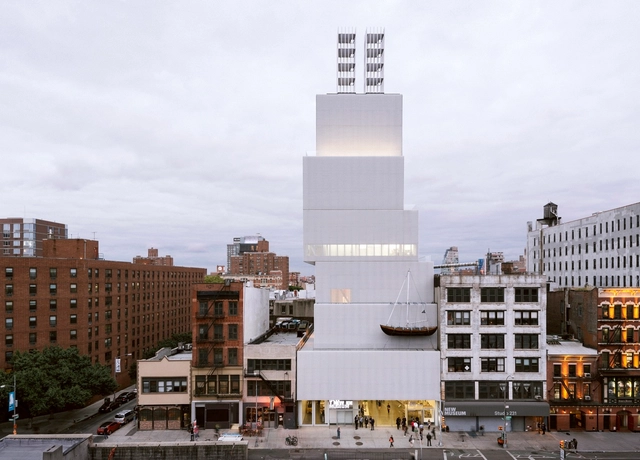
The New Museum is the product of a daring vision to establish a radical, politicized center for contemporary art in New York City. With the aim of distinguishing itself from the city’s existing art institutions through a focus on emerging artists, the museum’s name embodies its pioneering spirit. Over the two decades following its foundation in 1977, it gained a strong reputation for its bold artistic program, and eventually outgrew its inconspicuous home in a SoHo loft. Keen to establish a visual presence and to reach a wider audience, in 2003 the Japanese architectural firm SANAA was commissioned to design a dedicated home for the museum. The resulting structure, a stack of rectilinear boxes which tower over the Bowery, would be the first and, thus far, the only purpose-built contemporary art museum in New York City.[1]
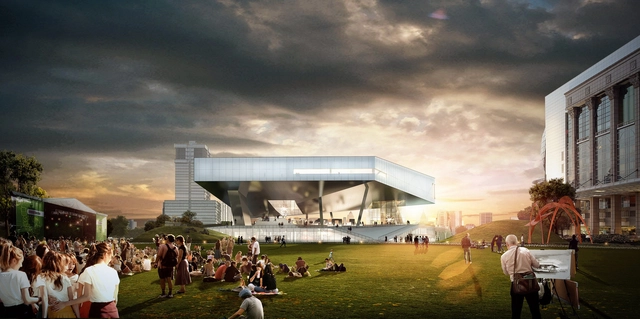
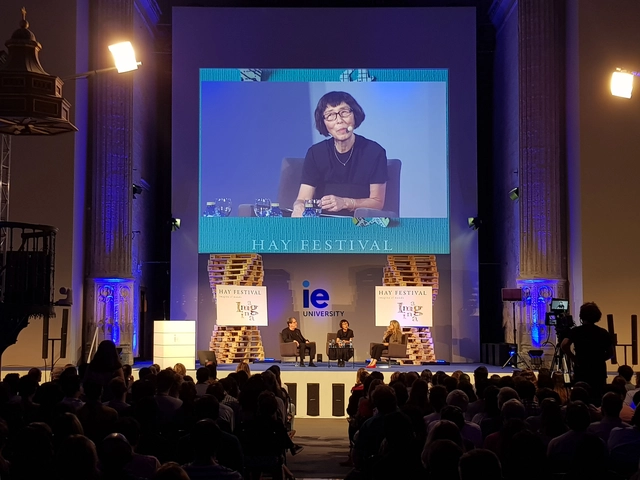
Kazuyo Sejima, co-founder of the architecture firm SANAA, shared details of their upcoming project the New National Gallery – Ludwig Museum in Budapest at the Hay Festival Segovia in Spain. The 2010 Pritzker Prize winner linked the underlying premise of this project to three iconic museums: the 21st Century Museum of Contemporary Art in Kanazawa (2004), the New Art Museum in New York (2007), and the Louvre Lens in France (2012).
In this conversation, Laszló Baán, General Director of the National Gallery, Budapest and Ministerial Commissioner of the Liget Budapest Project, explained the details of the 100-hectare (247-acre) masterplan at the heart of Hungary's capital city. The Liget Budapest Project will feature ten museums, including Sou Fujimoto's House of Hungarian Music, the expansion of the Budapest Zoo, and SANAA's New National Gallery for Budapest — a museum that will host 19th, 20th century, and contemporary artworks.
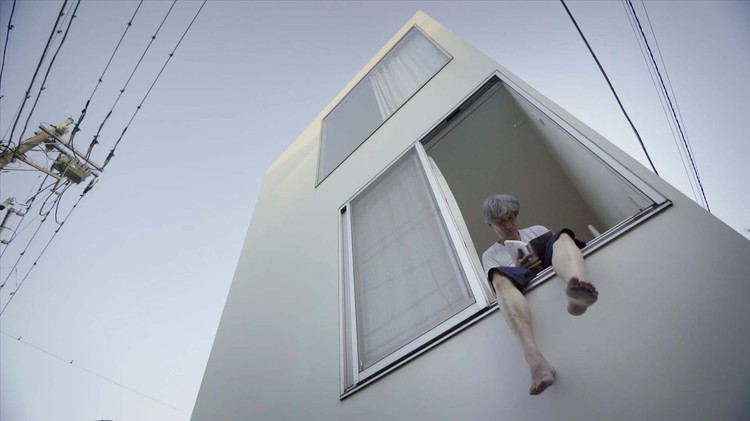
"Moriyama-San" - a film by Bêka & Lemoine - has been awarded the 2018 Best Prize at the Arquiteturas Film Festival in Lisbon. Centered around the famous Moriyama House by Pritzker Prize LaureateRyue Nishizawa, it becomes part of a developing series called “Living Architectures,” in which the filmmakers aim to “put into question the fascination with the picture, which covers up the buildings with preconceived ideas of perfection, virtuosity, and infallibility.” In its unique approach, the film “masterfully combines image, sound, and narrative in a compelling story about a unique character and its relation to his house and music.”
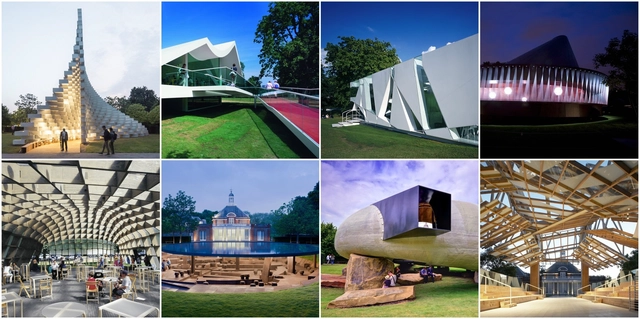
Lasting for close to two decades now, the annual Serpentine Gallery Pavilion Exhibition has become one of the most anticipated architectural events in London and for the global architecture community. Each of the previous eighteen pavilions have been thought-provoking, leaving an indelible mark and strong message to the architectural community. And even though each of the past pavilions are removed from the site after their short summer stints to occupy far-flung private estates, they continue to be shared through photographs, and in architectural lectures. With the launch of the 18th Pavilion, we take a look back at all the previous pavilions and their significance to the architecturally-minded public.
Rem Koolhaas and Shohei Shigematsu, both partners at OMA, have been tapped to design the recently-announced expansion of the New Museum in New York. OMA will design a new building adjacent to SANAA's tiered-box museum. The project is expected to break ground in 2019 and will give the New Museum an additional 50,000 square feet (4,650 square meters) for "galleries, improved public circulation and flexible space for the institution’s continued exploration of new platforms and programs." This will be Koolhaas' first public building in New York. According to the New York Times, the New Museum—the only museum in New York City exclusively devoted to contemporary art—has already raised 50 percent of the cost.
https://www.archdaily.com/881400/oma-shohei-shigematsu-and-rem-koolhaas-selected-to-design-new-museum-expansion-in-new-yorkAD Editorial Team
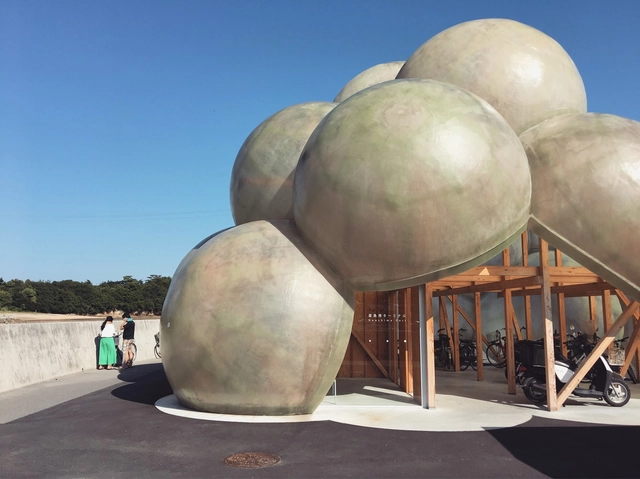
The cloud-shaped bicycle terminal on the island of Naoshima is SANAA's latest work. The pavilion is known for its impressive collection of outdoor art and contemporary architecture, with works by prominent exponents such as Yayoi Kusama and Tadao Ando.
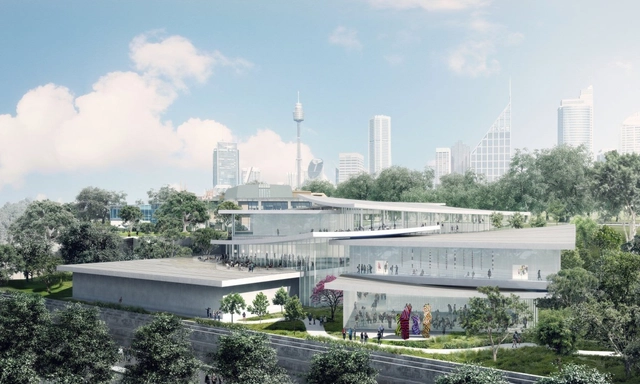
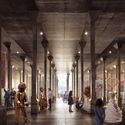
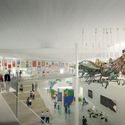
New images have been revealed of SANAA’s design for the expansion of the Art Gallery of New South Wales in Sydney, Australia, as the project has received a $244 million AUD ($186 million USD) commitment from the NSW Government, more than two-thirds of the project’s total estimated budget. A supplemental campaign will be launched later this year for the remaining $100 million, $70 million of which has already been pledged.
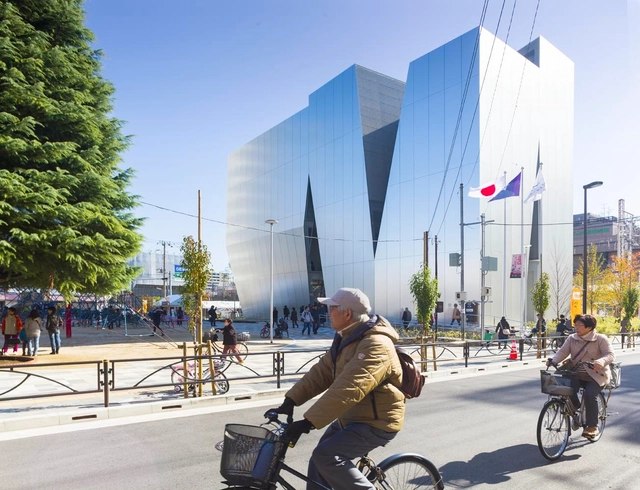
Located in Tokyo's Sumida Ward, in which Sumida Hokusai (Katsushika Hokusai) was born and spent the majority of his life, this museum—completed in November 2016 to designs by Kazuyo Sejima—is a temple to the Japanese artist's work, including the likes of The Great Wave off Kanagawa and Red Fuji. Sejima, who was awarded the Pritzker Prize in 2010, is commonly known as one-half of SANAA (alongside Ryue Nishizawa). This project, while seeking to celebrate Hokusai's work, has also been designed as a cultural beacon. In this photoset, photographer Laurian Ghinitoiu has turned his lens to the new cultural landmark.
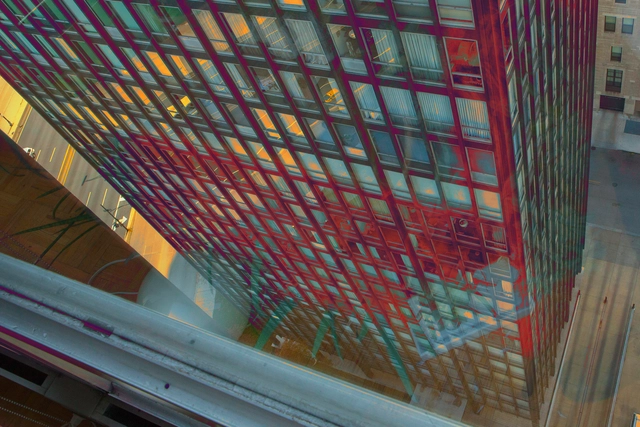
James Welling, 8183, 2016 from the series Chicago, 2016-2017, Courtesy the Artist and David Zwirner, New York and London. Image Courtesy of Chicago Architecture Biennial
The Chicago Architecture Biennial has announced the list of participants invited to contribute to the event’s second edition, which will be held from September 16 to January 7, 2018 in Chicago. More than 100 architecture firms and artists have been selected by 2017 artistic directors Sharon Johnston and Mark Lee, founders of Los Angeles–based Johnston Marklee, to design exhibitions that will be displayed at the Chicago Cultural Center and throughout the city.
“Our goal for the 2017 Chicago Architecture Biennial is to continue to build on the themes and ideas presented in the first edition,” explained Johnston and Lee. “We hope to examine, through the work of the chosen participants, the continuous engagement with questions of history and architecture as an evolutionary practice.”
Flagship stores excite both fashion shoppers and designers alike due to their role as visionary laboratories for the latest trends and stimulating retail experiences. Architects have developed various ways to dress haute couture stores, from distinctive icons in the day to seductive night-time images. The images accompanying this article, created by the Portuguese architect and illustrator André Chiote, help to explore the graphic potential of famous brands like Dior, Prada and Tod's. The illustrations clearly reveal the various techniques of playing with diaphanous layers, intimate views inside or the contrast of light and shadow.
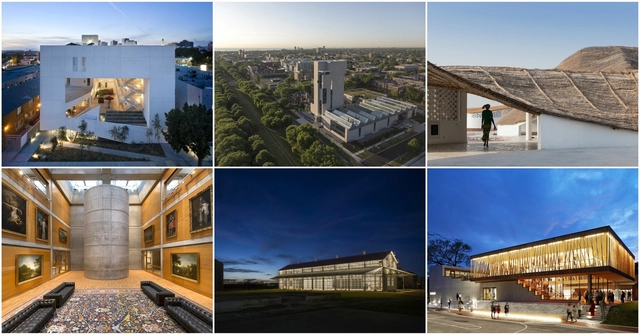
The American Institute of Architects (AIA) have named 18 architectural and interior projects as recipients of the 2017 Institute Honor Awards, the profession’s highest recognition for excellence in design.
According to the AIA, “the 2017 Architecture program celebrates the best contemporary architecture regardless of budget, size, style, or type. These stunning projects show the world the range of outstanding work architects create and highlight the many ways buildings and spaces can improve our lives.”
The awarded projects were selected from nearly 700 submissions. The winners will be honored at the 2017 AIA National Convention in Orlando.
In this photoset, Vincent Hecht takes his lens into the recently completed Sumida Hokusai Museum, designed by pritzker prize winner Kazuyo Sejima, one half of the acclaimed international firm SANAA. Located in the Tokyo neighborhood of Sumida, the 4-story, angular structure will house a collection of over 1800 works by world-renowned ukiyo-e woodblock painter Katsushika Hokusai, who lived in Sumida over 200 years ago.
SANAA's Zollverein School of Management and Design in Essen, Germany, is a perfect 35 meter-cube. The building's dominant presence, which is particularly striking amid its suburban context, extends to the interior spaces. The architects felt "that exceptional ceiling heights were appropriate for the educational spaces, particularly for the studio level that occupies an entire slab of the structure." Indeed, this production floor is "an unusually lofty and fully flexible space," enclosed only by the external structural walls. Photographer Laurian Ghinitoiu has visited the building, which was completed in 2010, to capture a fresh view on this seminal project.
“Among a strong group of projects Grace Farms emerged as a clear winner for the clarity and consistency of its architectural solution,” said Stan Allen, MCHAP Jury President.
“The jury was struck by the radical way in which the line between architecture and landscape is blurred by the ‘River’ building. The firsthand experience of the building reveals a confident realization and the immediacy of its detailing. Finally, the Grace Farms project uniquely demonstrates architecture’s capacity to make a place for an innovative new institution.”
Winner of the 2010 Pritzker Prize and founder of SANAA (Sejima + Nishizawa and Associates), Japanese architect Kazuyo Sejima talks to us about the importance of white in their designs, with the intention of bringing and diffusing natural light to all the spaces. Sejima also describes how their buildings are able to integrate and bring people together through open spaces that connect, in an almost extreme way, the interiors and exteriors.
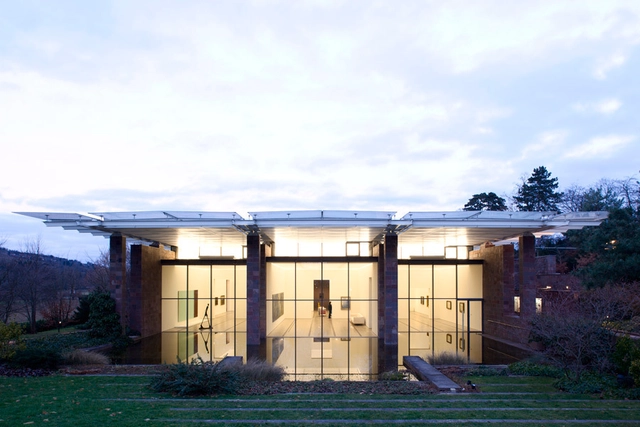
The office of Peter Zumthor has been selected to design an expansion to the Beyeler Foundation, located just outside Zumthor’s childhood home of Basel, Switzerland. The Swiss architect was chosen from a prestigious shortlist of 11 firms to add to the existing museum building, designed by Renzo Piano Building Workshop and completed in 1997.
“The sky above Basel, the city and its surroundings–those are the landscapes of my youth,” said Zumthor. “It is heart-warming to be able to design a major building here.”
Recently, Shanghai organized an international competition for the new Art Museum of Pudong. The site of the project is located at a prominent spot on the tip of Pudong’s Lujiazui CBD area directly below the Oriental Pearl Tower. Looking across Huangpu River from the Bund, the iconic skyline of Lujiazui has been such a symbolic image of modern Shanghai that any addition or alteration to this image is extremely sensitive. So the site has been deliberately left vacant for years, awaiting a significant cultural institute and meaningful contribution to the urban life at the megapolis.
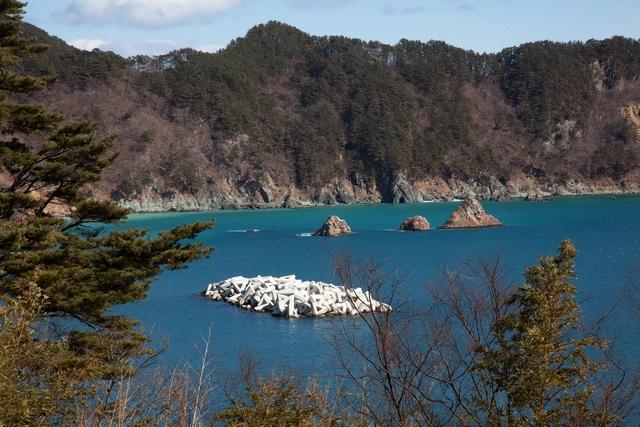
In this article, written by Christian Dimmer and illustrated with photographs by Max Creasy, the post-earthquake and tsunami coastal architectural landscape of the Japanese Prefectures of Aomori, Iwate and Miyagi are presented and studied.
Few disasters were as complex and their implications as hard to grasp as the compound calamity of earthquake, tsunami, nuclear meltdown that hit the North-East of Japan on March 11, 2011. While over 500 kilometers of coastline were devastated, the disaster unfolded in each of the hundreds of towns affected differently depending on local topographies, urban morphologies, existing landscape formations, collective memory of past disasters and preparedness, and the social ties within the communities.
.jpg?1463595741&format=webp&width=640&height=580)
.jpg?1463596013 "© Laurian Ghinitoiu")
.jpg?1463595919 "© Laurian Ghinitoiu")
.jpg?1463596094 "© Laurian Ghinitoiu")
.jpg?1463595878 "© Laurian Ghinitoiu")
.jpg?1463595741)





.jpg?1494811811&format=webp&width=640&height=580)
.jpg?1494811608 "© Laurian Ghinitoiu")
.jpg?1494811764 "© Laurian Ghinitoiu")
.jpg?1494811990 "© Laurian Ghinitoiu")
.jpg?1494811979 "© Laurian Ghinitoiu")
.jpg?1494811811)



.jpg?1482176359&format=webp&width=640&height=580)
.jpg?1482177176 "© Laurian Ghinitoiu")
.jpg?1482177234 "© Laurian Ghinitoiu")
.jpg?1482176800 "© Laurian Ghinitoiu")
.jpg?1482176583 "© Laurian Ghinitoiu")
.jpg?1482176359)
_Dean_Kaufman.jpg?1476889757&format=webp&width=640&height=580)
_Iwan_Baan_%E3%81%AE%E3%82%B3%E3%83%92%E3%82%9A%E3%83%BC.jpg?1476888073 "© Iwan Baan")

_Iwan_Baan.jpg?1476888027 "© Iwan Baan")
_Iwan_Baan_%E3%81%AE%E3%82%B3%E3%83%92%E3%82%9A%E3%83%BC.jpg?1476887986 "© Iwan Baan")
_Dean_Kaufman.jpg?1476889757)