"For more than a generation, federally funded historic tax credits (HTCs) have been instrumental in incentivizing developers to revive and reuse historic buildings and keep them economically viable, rather than replace them with shiny new objects. These credits create jobs, promote responsible development, and leverage billions in private investment to enable income-generating buildings". Read the interview between Justin R. Wolf and Meghan Elliott, founding principal of New History, a firm specializing in adaptive reuse.
https://www.archdaily.com/966687/why-use-is-the-best-form-of-preservationJustin R. Wolf
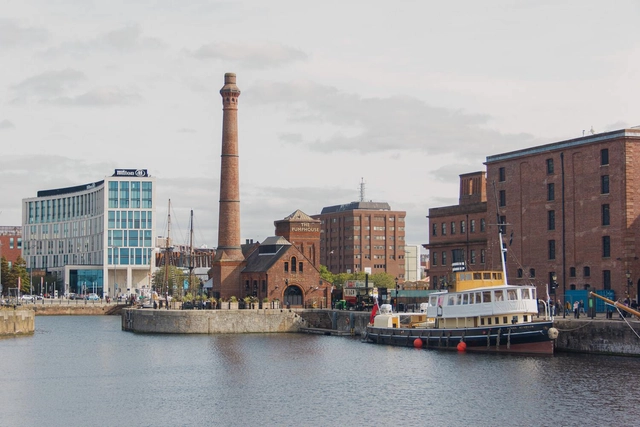
This month, UNESCO has announced a series of decisions concerning important heritage sites, giving rise to conversations around preservation and urban development. Last week, the World Heritage Committee decided to strip Liverpool of its heritage status, as the new developments are considered detrimental to the waterfront's integrity. These projects placed the city on the List of World Heritage in Danger in 2012, a designation which Venice managed to avoid earlier this week, due in great part to the recent ban on cruise ships.
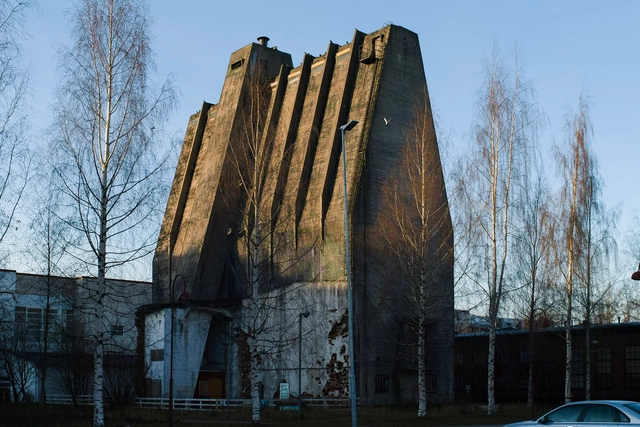
Skene Catling de la Peña and Factum Foundation are transforming Alvar Aalto’s iconic wood chip Silo into a research Centre promoting architectural preservation and re-use. The AALTOSIILO, a cathedral-like concrete structure “will become a point of focus for digitizing and communicating the importance of the industrial architecture of the north and – in turn - the impact industry has had on the environment”.
Exterior rendering of Menokin’s “The Glass House Project". Image Courtesy of Machado Silvetti
Menokin Foundation has begun construction on its “Glass House Project”, a new initiative in the preservation of historic landmarks. Protecting what remains from the 1769 house, the intervention will replace missing walls, floors, and sections of the roof with glass. Designed by Machado Silvetti, in collaboration with glass engineer Eckersley O’Callaghan, and landscape designer Reed Hilderbrand, the project will be developed in phases, to be completed in 2023.
Tour extraordinary historic homes as Pasadena Heritage presents Wallace Neff, Master Architect.
The Dr. Allan B. Kavanel House was commissioned by Dr. Kavanel from Chicago in 1921. It incorporates fine Mediterranean details that were popular during the Golden Age of Southern California architecture.
The Morse & Gates (Mrs. Ethel Guthrie) House was commissioned in 1925 by the Morse and Gates Company, a real estate, insurance and building firm. The house is a beautifully simple Spanish Colonial revival home typical of Neff's designs.
The Mr. and Mrs. Edwin D. Neff House is a Tuscan style villa designed for Neff's parents in 1927. The interior
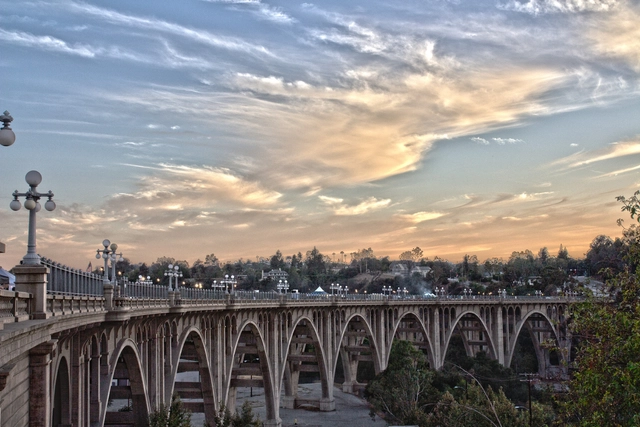
The Colorado Street Bridge, one of the beautiful historic structures in Pasadena that has been used as a film location.
On December 30th, 2019, Pasadena Heritage invites you and your holiday guests to take walking tours featuring some of Pasadena’s unique architectural treasures and/or visit Pasadena Heritage’s 1893 headquarters to see a presentation featuring Pasadena’s historic architecture in the movies! Attendees have the opportunity to participate in two different walking tours and the movie presentation, each with a 10:00 a.m. or 1:00 p.m. start time!
Pasadena Hillcrest Neighborhood Walking Tour Discover one of Pasadena’s most beautiful neighborhoods with the Hillcrest Walking Tour, which takes you by many grand homes in a variety of architectural styles. The Oak Knoll subdivision, of which Hillcrest
Anna Saint Pierre's Granito project is harvesting the ingredients for new architectural building blocks from demolished structures.
Rapid urban change comes and goes without many even noticing it. Entire slices of a city’s history disappear overnight: What was once a wall of hewn stone is now fritted glass and buffed metal. The building site is always, first, a demolition site.
This is the thread that runs through Granito, a project by the young French designer and doctoral researcher Anna Saint Pierre. Developed in response to a late-20th-century Paris office block due for a major retrofit, one involving disassembly, it hinges on a method of material preservation Saint Pierre calls “in situ recycling.” Her proposal posits that harvesting the individual granite panels of the building’s somber gray facade could form the basis of a circular economy. “No longer in fashion,” this glum stone—all 182 tons of it—would be dislodged, pulverized, and sorted on-site, then incorporated into terrazzo flooring in the building update.
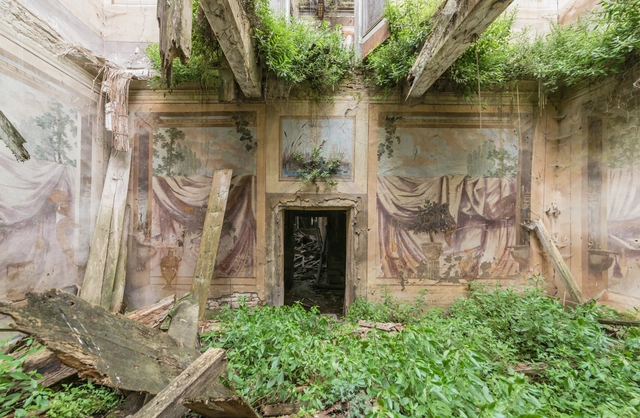
Magic lies in architectural ruins. Beneath the dirt and mold, fractured walls and deserted rooms still stand, preserving the remains that have lingered long after their owners' departure.
During his explorations of abandoned places across Europe, photographer Romain Veillon stumbled upon enchanting frescoes and paintings that were left to fade in the parlors of the aristocrats. Veillon became keen on finding more of these imaginary museums across the continent, and to his chance, managed to discover many in France, Germany, Italy, Ireland, and Portugal.
Before their art is forgotten and their houses quietly rust away, Veillon captured the murals found in these haute bourgeoisie family houses, which illustrate stories of the cities they lay in and the people they once belonged to.
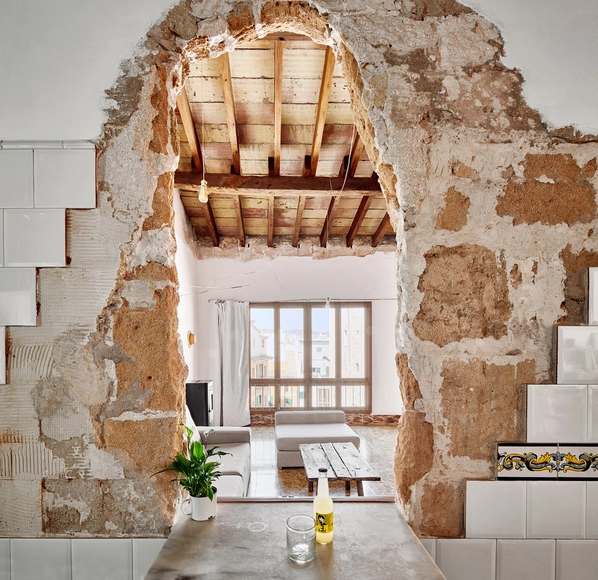
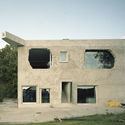
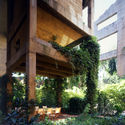
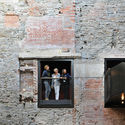
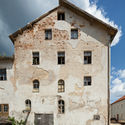
If walls could speak, they would have the most stories to tell - stories of antiquity, war, scandal, and reconciliation. Approaches to preservation are as varied as the architects behind them, but many take on the challenge with flair and restraint in equal measure. It is common to see preservation that combines ancient structure with contemporary features, creating beautiful combinations of old and new.
Take a look at some architectures from our projects database that highlight the beauty in the imperfections of ruins and great combinations of used and new materials.
This collection is one of many interesting content groupings made by our registered users. Remember you can save and manage what inspires you on My ArchDaily. Create your account here.
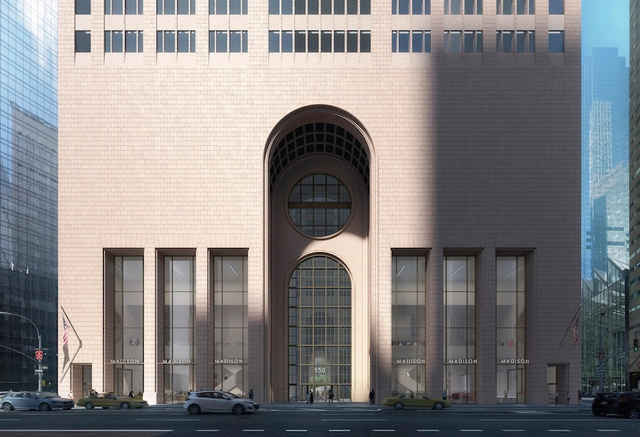
A rejection of the bland and cold functionality of Midtown's crystal skyscrapers, the AT&T building was intended to encourage a more playful approach architecture in the corporate world; the crazy socks beneath a three-piece suit. It was not without controversy. Upon its completion, the building was derided for its decorative and outsized pediment and occasionally dark interior spaces. Indeed, the building's arched entry spaces were among the only architectural elements to be met with praise from both critics and the public.
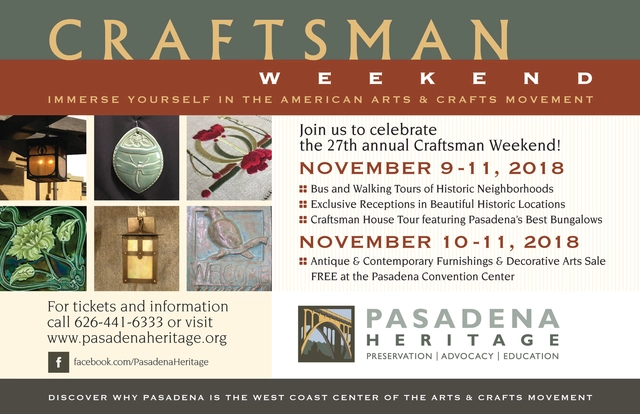
In its 27th year, Pasadena Heritage will present the Annual Craftsman Weekend on November 9-11, 2018. The Weekend will feature house tours of notable Craftsman properties, along with bus and walking tours of the surrounding neighborhoods. Other events scheduled include a Show and Sale with exhibitors of antique and contemporary furniture and decorative arts, a silent auction, workshops and presentations. In addition, Pasadena Heritage will be offering exclusive receptions at historic locations throughout the weekend.
After carefully deliberating in their annual session, UNESCO's World Heritage Committee selected 19 new sites to inscribe on the World Heritage List in the city of Manama in Bahrain. Featuring 13 cultural sites such as Buddhist mountain monasteries in Korea, the industrial city of Ivrea in Italy, and the Caliphate city of Medina Azahara in Spain, alongside three natural sites and three mixed sites (classified as both cultural and natural heritage), the list now aggregates to 1092 sites in 167 countries.
From the historical Sultan Ahmed Mosque in Istanbul to the contemporary city of Brasilia orchestrated by Oscar Niemeyer, the World Heritage List has continuously exhibited varied examples of architecture and urban planning from different eras and movements from around the world. Amongst the new additions, there are several sites of religious importance, city organization, and natural conservation.
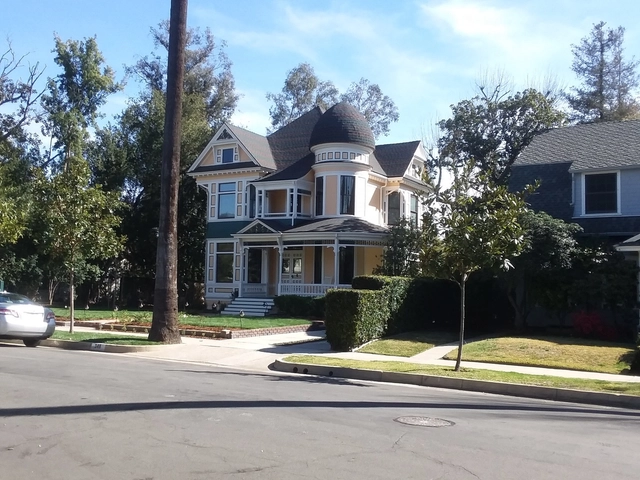
The Governor Markham Landmark District is one of the oldest neighborhoods in the City of Pasadena, and residences included in the District parallel Pasadena’s growth from incorporation as a city in 1886. Ninety-four percent of the homes were constructed between 1891 and 1933. This area became an official Landmark District in 2005 and was listed on the National Register of Historic Places in 2012, nominated by Pasadena Heritage.
Centro SCOP in Mexico City was shuttered after a series of devastating earthquakes. A new exhibition proposes rehousing its historically significant murals. Image Courtesy of Pablo López Luz/ Archivo Diseño y Arquitectura
It’s a slate-gray day in Mexico City’s Colonia Narvarte neighborhood and mounting gusts signal imminent rain. Centro SCOP, a sprawling bureaucratic complex, rises sharply against this bleak backdrop. The building is a masterful, if not intimidating, example of Mexican Modernism, an H-shaped assemblage of muscular concrete volumes designed by architect Carlos Lazo, covered in an acre-and-a-half of vibrant mosaic murals.
At its peak, the building accommodated more than 3,000 workers for the Secretariat of Communications and Transportation (SCT). Today, save a security guard in its gatehouse, it is empty.
Nominations are now open for the 2018 World Monuments Fund/Knoll Modernism Prize. Celebrating its tenth anniversary, the prize recognizes architects or designers that have demonstrated innovative solutions to preserve or save threatened modern architecture.
Get ready to add to your reading and watch lists because the Society of Architectural Historians (SAH) just announced the 2018 award recipients for the SAH Publication, Film and Video Awards. Winners received their awards at SAH’s 71st Annual International Conference awards ceremony on April 20th in Saint Paul, Minnesota. The list of SAH Award recipients represents some of the best media in architectural, urban, and landscape history, as well as historic preservation scholarship and architectural exhibition catalogs. Nominations for the 2019 awards will be accepted by SAH on June 1st of this year.
See the list of this year's SAH Award recipients below.
When architects were asked to re-imagine Chicago’s neglected buildings for an exhibition, Dirk Lohan designed a revitalization plan for Louis Sullivan'sPilgrim Baptist Church. Soon Sullivan’s landmark building will become the nation’s first National Museum of Gospel Music, complete with a cafe, retail store, event space, research and listening library, and a 350-seat auditorium.
In partnership with a 3D laser-scanning nonprofit called CyArk, Google Arts & Culture began the Open Heritage Project, a new chapter for historic preservation in the form of virtual reality. By using advanced 3D laser scanning technology, high-res drone photography, and DSLR cameras, CyArk can virtually recreate historic architecture to be more easily explored and restored.