Past, Present, Future is an interview project by Itinerant Office, asking acclaimed architects to share their perspectives on the constantly evolving world of architecture. Each interview is split into three video segments: Past, Present, and Future, in which interviewees discuss their thoughts and experiences of architecture through each of those lenses. The first episode of the project featured 11 architects from Italy and the Netherlands and Episode II is comprised of interviews with 13 architects from Spain, Portugal, France, and Belgium.
The goal of the series is to research these successful firms and attempt to understand their methods and approaches. By hopefully gaining a clearer picture of what it means to be an architect in the 21st century, the videos can also serve as inspiration for the next generation of up-and-coming architects and students as they enter the field.
Juan Herreros is an acclaimed Spanish architect with multiple award-winning projects to date. In addition to his impressive creations in the construction field, he has strived to redefine the practice of architecture by teaching at the School of Architecture in Madrid and at the GSAPPColumbia University in New York. His collaborative office, Studio Herreros, is an award-winning firm with projects built all over the world, ranging between residential and public spaces. These projects vary between small-scale, "immediate" projects, and internationally-commissioned structures and building competitions, allowing the architect to be one of the most influential Spanish architects practicing today.
Past, Present, Future is an interview project by Itinerant Office, asking acclaimed architects to share their perspectives on the constantly evolving world of architecture. Each interview is split into three video segments: Past, Present, and Future, in which interviewees discuss their thoughts and experiences of architecture through each of those lenses. The first episode of the project featured 11 architects from Italy and the Netherlands and Episode II is comprised of interviews with 13 architects from Spain, Portugal, France, and Belgium.
Past, Present, Future is an interview project by Itinerant Office, asking acclaimed architects to share their perspectives on the constantly evolving world of architecture. Each interview is split into three video segments: Past, Present, and Future, in which interviewees discuss their thoughts and experiences of architecture through each of those lenses. The first episode of the project featured 11 architects from Italy and the Netherlands and Episode II is comprised of interviews with 13 architects from Spain, Portugal, France, and Belgium.
The Midnight Charetteis an explicit podcast about design, architecture, and the everyday. Hosted by architectural designers David Lee and Marina Bourderonnet, it features a variety of creative professionals in unscripted and long-format conversations that allow for thoughtful takes and more personal discussions. Honesty and humor are used to cover a wide array of subjects: some episodes provide useful tips for designers, while others are project reviews, interviews, or simply explorations of everyday life and design. The Midnight Charetteis available for free on iTunes, YouTube, Spotify, and all other podcast directories.
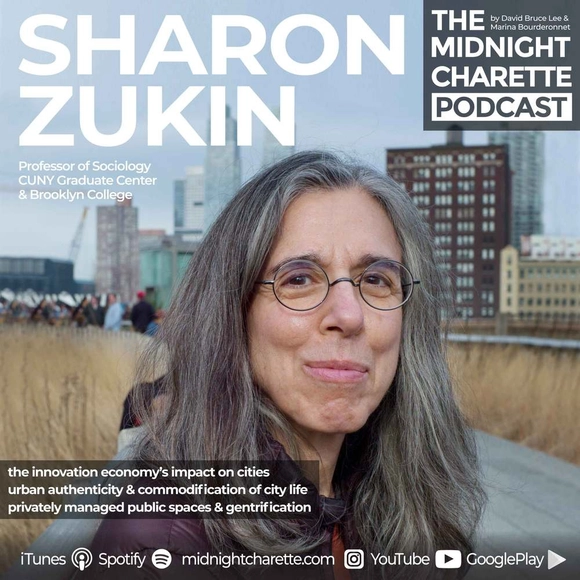
On this episode of The Midnight Charette Podcast, Sharon Zukin discusses the economic and social impact the technology industry has had on cities around the world, the relationship between gentrification and the commodification of modern life, building improvement districts and the increasing securitization of public spaces, and the desire to live in authentic neighborhoods.
https://www.archdaily.com/915882/sharon-zukin-on-privately-managed-public-spaces-gentrification-and-urban-authenticityThe Second Studio Podcast
Last year I was invited to teach design studio for the first time by Tsinghua University in Beijing, home to the top architecture school in China and one of the strongest in the world, according to the latest international ratings. There, I met husband-and-wife teaching practitioners Qing Fei and Frank Fu. As soon as I witnessed their unorthodox way of teaching by challenging students with rigorous questioning, I wanted to interview them. Their innovative approach did not fit my impression of how architecture is tackled in China. Fei and Fu are Tsinghua graduates; they moved to America in the late 1980s where they studied, worked, and researched both art and architecture for almost two decades.
Oscar Ko was born in Harbin, China and moved with his parents to Hong Kong at the age of five. He earned his Bachelor of Science in Architecture at the University of Michigan and Master’s from Columbia University in 2006. After spending seven years in America, he relocated to Europe where his original plan was to stay for four-five years or longer but after talking to older friends practicing in China he quickly realized that there are more opportunities in his native China. After working for less than two years for several prestigious firms – Josep Lluis Mateo Architects in Barcelona, David Chipperfield Architects in Berlin, and Space Group Architects in Oslo, Norway – he returned to China where he worked at two leading Beijing-based practices: Studio Zhu-Pei and Chiasmus Partners for several years.
It is the end of May 2016, Alejandro Aravena’s “Reporting from the Front” Biennale is about to kick off the next day and I just landed at Venice airport. Vaporetto waterbuses are no longer running at this late hour, so I am heading for a water taxi, thinking that it will cost me a bundle to get to the city. But maybe not! I see a lonely figure, “Are you going to Venice? Would you like to share a taxi?” A young Chinese woman agrees without hesitation. As soon as the boat leaves I keep pressing my luck, “Are you an architect, by any chance?” Yes! The next hour flew unnoticed, as we discussed our discipline and common friends. Two years passed, and I am back to Venice Biennale. At the opening of the Chinese Pavilion, I am hopping from conversation to conversation until I am introduced to Xu Tiantian, “China’s most promising female architect.” We looked at each other and said in unison, “The taxi girl/guy!” We finally exchanged contacts and on my next trip to Beijing we met at Xu’s DnA Design and Architecture studio. What follows, after a brief introduction, is an excerpt from that conversation.
American architect Kevin Roche passed away this past Friday, March 1 at the age of 96. He was born in 1922 in Dublin, Ireland, educated at the University College Dublin (1945) and Illinois Institute of Technology (1948). In 1966, he formed Kevin Roche John Dinkeloo and Associates (KRJDA). He has designed more than 200 buildings, including renovation to the American Wing at the Metropolitan Museum of Art (2012), National Conference Centre in Dublin (2010), Lafayett Tower in Washington DC (2009), J.P. Morgan Headquarters in Manhattan (1992), Central Park Zoo in Manhattan (1988), The Knights of Columbus Building Headquarters in New Haven (1969), The Ford Foundation in Manhattan (1968), and Oakland Museum of California (1966). In 1982 he became the fourth Pritzker Prize winner and in 1993 was awarded the AIA Gold Medal. The following excerpt is from our 2011 interview at the architect’s office in Hamden, Connecticut.
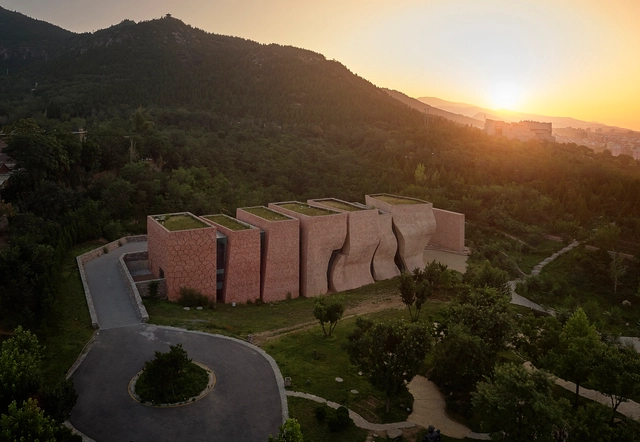
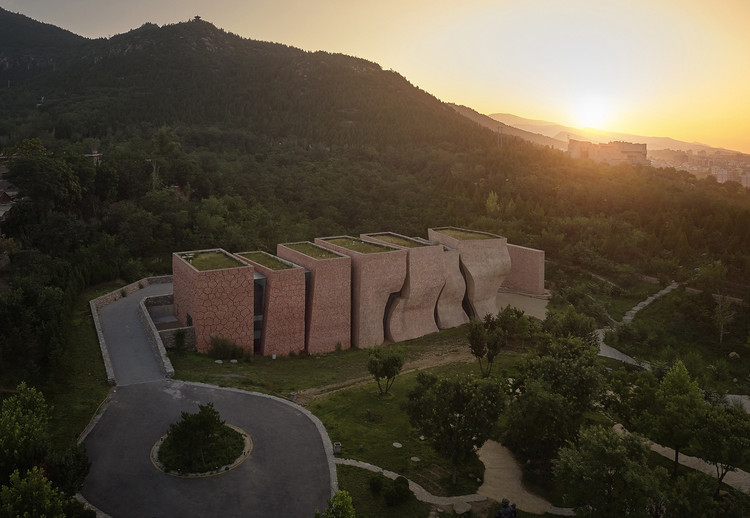
Yu Qingcheng Gallery, Tianjin, China. ImageCourtesy of Architectural Design and Research Institute of Tianjin University
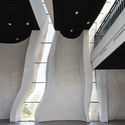
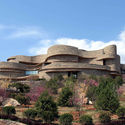
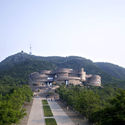
The following excerpt from my recent interview with Tianjin-based architect Zhang Hua continues an ongoing series of interviews that I’ve been conducting during my frequent trips to China. Zhang Hua is leading his design studio, Zhanghua Architects, which is a part of Tianjin University Research Institute. Professor Zhang Hua’s work follows his uncompromising form-generating theory, which is based on the desire to capture the progression of transformational processes. In his many built projects, the architect examines and expresses such formal transformations as turning from something basic to complex or from monolith to disperse. The focus is on the state of transformation itself, how a form is changing and morphing from one state to another. We spoke with Zhang Hua through an interpreter at the institute, with half a dozen young architects and researchers from his studio, seated all around and taking notes.
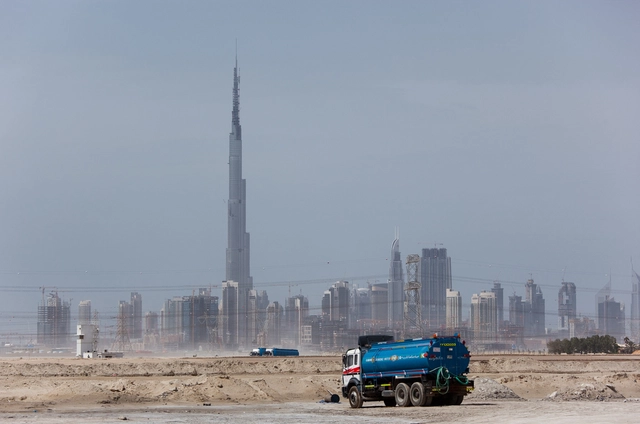
In the past three decades, Dubai has grown from a dusty desert town to a strategic hub for international business and tourism. As a result, several cities in the developing world have been competing to outdo one another in the race to replicate this development model—an urbanism largely built around the automobile, luxury villas, gleaming skyscrapers, massive shopping malls, and ambitious “smart” cities, designed and built from scratch. Across Africa, these new developments go by different names: Eko Atlantic City Nigeria, Vision City in Rwanda, Ebene Cyber City in Mauritius; Konza Technology City in Kenya; Safari City in Tanzania; Le Cite du Fleuve in DR Congo, and several others. All are mimicries of Dubai.
https://www.archdaily.com/910933/what-urban-africa-needs-to-learn-from-dubaiKatherine Allen
Beijing-based architect Zhang Ke was educated first at China’s leading school, Tsinghua University, going on to later graduate from Harvard’s GSD in 1998. The former equipped him with technical know-how, while the latter encouraged him to question the essential elements of the profession, such as why we build. After working for three years in Boston and New York, Ke returned to Beijing to open his practice in 2001.
What is architecture if it does not understand its context? Architecture is shaped and curated by the area it lives in, showcasing the culture it embodies. The more of this identity it embodies, the more meaningful (and sometimes prominent) it becomes.
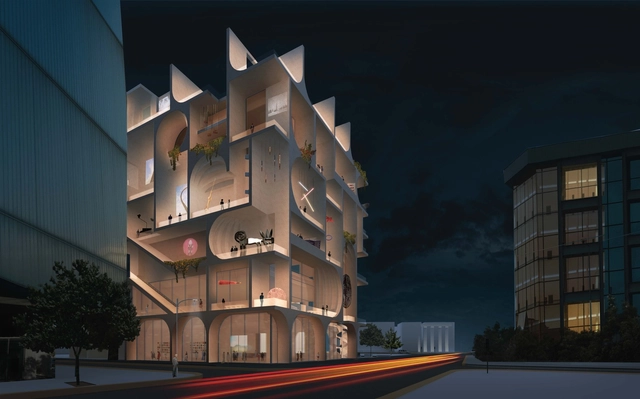
December of 2018 was a month of prosperity for Lebanese architecture: Hashim Sarkis was announced curator of the 2020 Venice Biennale and Lebanese-born Amale Andraos and partner Dan Wood of WORKac were selected to build the Beirut Museum of Art. The museum, a dynamic assembly of contoured geometries (not entirely unlike their work at Miami's Museum Garage) located in the heart of Beirut City, will house permanent and temporary exhibitions across 12,000 square meters. WORKac's winning scheme was chosen for its ability to “reveal the cultural possibilities of integrating art, architecture, and landscape within a dense urban setting and as a means to re-imagine how we can live, learn and share together.”
One of the immediate impressions that I formed of the Beijing-based architect and Tsinghua University Professor Li Xiaodong (b. 1963) is his reassuring self-confidence. Following our interview, Professor Li asked me a question of his own - would I like to teach at his school? “I never taught in my life,” I replied. He quickly countered, “I know. You can teach. Yes or no?” If I have learned anything about life, it is that when opportunities come you should grab them first and think later. "If he is so confident in me, why shouldn’t I trust him?” I reasoned.
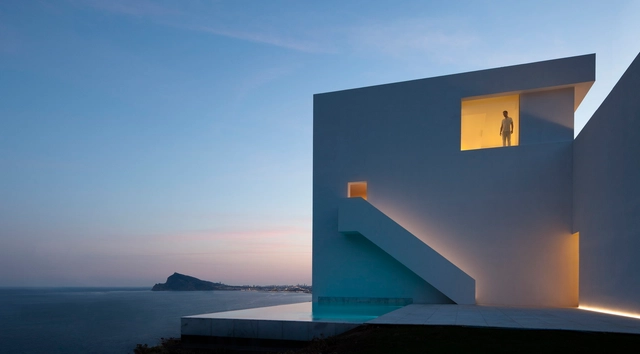
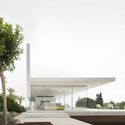
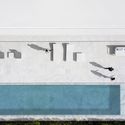
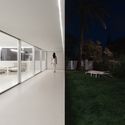
Spanish architect Fran Silvestre is well known for his portfolio of nuanced, clean, and decidedly modern works. Each project is as stunning as the next, the type of home that shows up in Bond films and populates the Pinterest boards of aspiring homeowners.
Chilean architect Alejandro Aravena shares the fundamentals of his design philosophy in a documented interview titled “To Design is to Prefer.” The Pritzker Prize winner founded his practice in 2001, committed to exploring socially conscious design practices. His firm, Elemental, first gained international recognition for its work creating social housing projects in Chile, but its portfolio continues to expand to include work from museums, universities, transportation, and urban infrastructure.
This video highlights the mental process behind Aravena’s personal practices and insights into Elemental’s unique approach to design. The interview begins discussing Aravena’s introduction to architecture as a teen and how architecture, a rather obscure phenomenon to the young Aravena, became his passion. Throughout the film, Aravena flips to the pages of his sketchbooks, illustrating the raw hand of the architect.
For young creatives, curious explorers, or simply multitaskers, The Midnight Charette's weekly podcasts provide a provocative and entertaining take on design and architectural discourse. Hosted by David Lee and Marina Bourderonnet, the segments aim to explore ideas beyond everyday conversation and engage with a multitude of individuals in the design field.
In their recent discussion featuring Marc Neveu, the Executive Editor of the Journal of Architectural Education(JAE)and head of the Architecture Program at Arizona State University (ASU), the duo covers a broad range of topics related to professional practice and architectural pedagogies.
Twin brothers Chris and Bill Sharples are two of the founding partners of SHoP Architects, a New York-based firm established 20 years ago to bring together diverse expertise in designing buildings and environments that improve the quality of public life.
The firm’s style is difficult to define, but a connective thread throughout SHoP’s portfolio is a design philosophy rooted in constraints. From digital models to next-generation fabrication and delivery techniques, technology is at the center of the firm’s movement toward an iterative approach that, as Chris Sharples says, “is beginning to blur the line between architecture and manufacturing.”

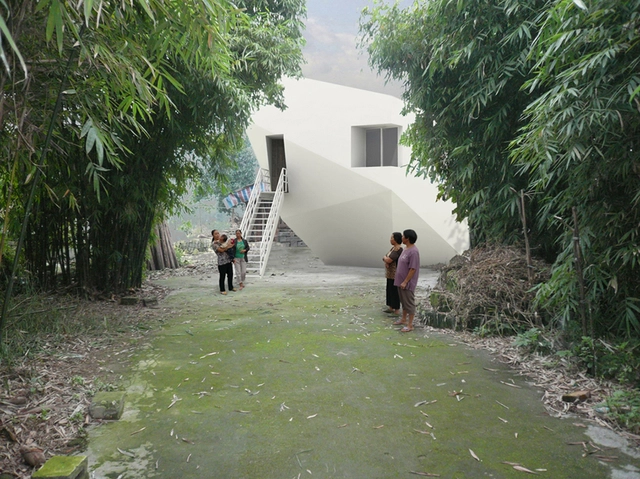
.jpg?1554911940&format=webp&width=640&height=580)
.jpg?1554912425 "Raffles Kindergarten. Image Courtesy of Oscar Ko")
.jpg?1554911800 "Tower of Bricks. Image Courtesy of Oscar Ko")
.jpg?1554912394 "Raffles Kindergarten. Image Courtesy of Oscar Ko")
.jpg?1554911617 "One Half Stadium")
.jpg?1554911940)

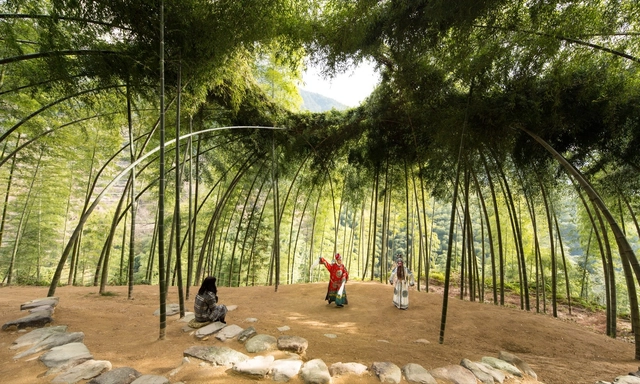


.jpg?1553867198 "Tea House. Image © Wang Ziling")

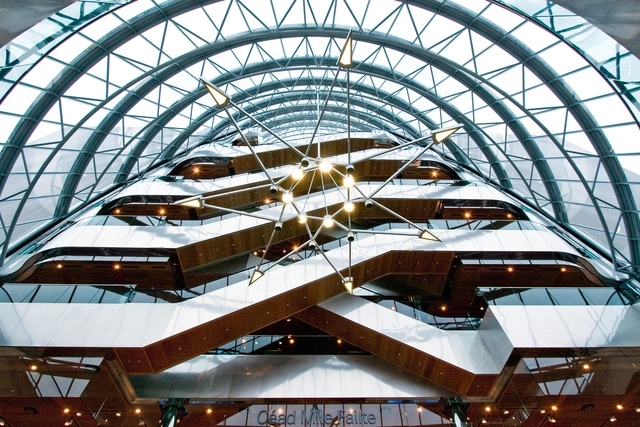


.jpg?1548614735&format=webp&width=640&height=580)
.jpg?1548614097 "Niang'ou Boat Terminal / ZAO/standardarchitecture. Image © ZAO/standardarchitecture, Wang Ziling")
.jpg?1548615395 "Micro Yuan'er Children's Library and Art Centre / ZAO/standardarchitecture. Image © ZAO/standardarchitecture, Wang Ziling")


.jpg?1548614735)





.jpg?1538563752 "Courtesy of SHoP Architects")
