Videos
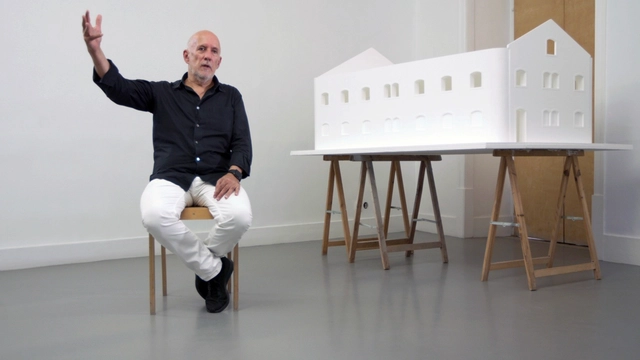
Jacques Herzog Meets Tatiana Bilbao: Everybody Deserves a Decent Home
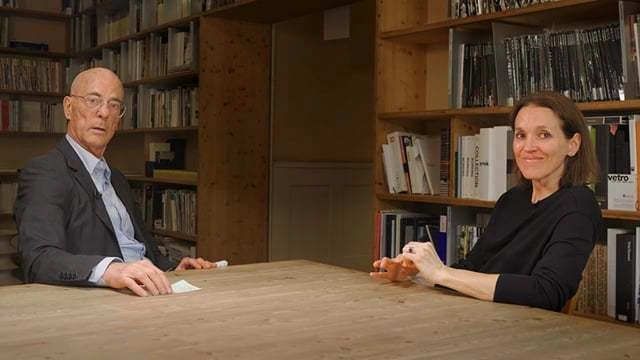
Jacques Herzog met with Tatiana Bilbao at the Herzog & de Meuron’s studio in Basel, Switzerland on May 2019, and got to discuss the Mexican architect’s projects and architectural approach. The two long-time friends and prizewinning architects talked about the defining moments in their friendship and the advice of Herzog that improved Bilbao’s method.
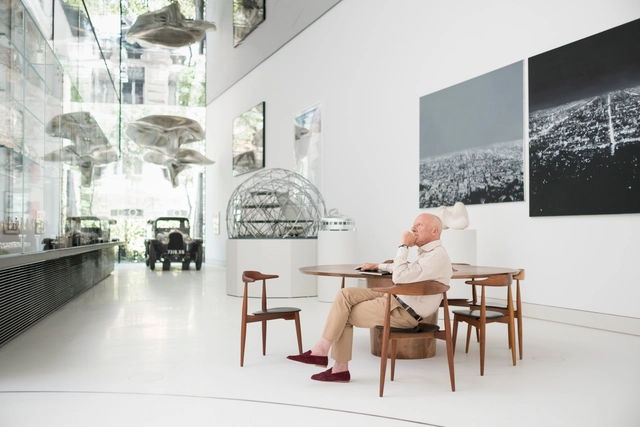
The Maestros project conducted an interview with Norman Foster, discussing with him topics related to his life, his approach to architecture, and the stories behind his buildings. Created, produced and published by Fundación Arquia, The Maestros collection is a cultural program that aims to create a platform where the most important architects can communicate “their thoughts to future generations of architects”.
Past, Present, Future is an interview project by Itinerant Office, asking acclaimed architects to share their perspectives on the constantly evolving world of architecture. Each interview is split into three video segments: Past, Present, and Future, in which interviewees discuss their thoughts and experiences of architecture through each of those lenses. The first episode of the project featured 11 architects from Italy and the Netherlands and Episode II is comprised of interviews with 13 architects from Spain, Portugal, France, and Belgium.
Past, Present, Future is an interview project by Itinerant Office, asking acclaimed architects to share their perspectives on the constantly evolving world of architecture. Each interview is split into three video segments: Past, Present, and Future, in which interviewees discuss their thoughts and experiences of architecture through each of those lenses. The first episode of the project featured 11 architects from Italy and the Netherlands and Episode II is comprised of interviews with 13 architects from Spain, Portugal, France, and Belgium.
The goal of the series is to research these successful firms and attempt to understand their methods and approaches. By hopefully gaining a clearer picture of what it means to be an architect in the 21st century, the videos can also serve as inspiration for the next generation of up-and-coming architects and students as they enter the field.
As the founder of SITE (Sculpture in the Environment), an architecture firm most widely-known for its seminal series of buildings for the BEST discount-store chain in the 1970s, James Wines (b. 1932, Oak Park, Illinois), originally an artist, introduced his unique approach of practicing architecture as a form of cultural criticism. It struck a chord by delighting the public and infuriating many architects and critics for corrupting architecture with his witty ideas. His buildings were among the first to engage nature head-on, both for pure delight and to raise environmental issues.
Past, Present, Future is an interview project by Itinerant Office, asking acclaimed architects to share their perspectives on the constantly evolving world of architecture. Each interview is split into three video segments: Past, Present, and Future, in which interviewees discuss their thoughts and experiences of architecture through each of those lenses. The first episode of the project featured 11 architects from Italy and the Netherlands and Episode II is comprised of interviews with 13 architects from Spain, Portugal, France, and Belgium.
The goal of the series is to research these successful firms and attempt to understand their methods and approaches. By hopefully gaining a clearer picture of what it means to be an architect in the 21st century, the videos can also serve as inspiration for the next generation of up-and-coming architects and students as they enter the field.
Past, Present, Future is an interview project by Itinerant Office, asking acclaimed architects to share their perspectives on the constantly evolving world of architecture. Each interview is split into three video segments: Past, Present, and Future, in which interviewees discuss their thoughts and experiences of architecture through each of those lenses. The first episode of the project featured 11 architects from Italy and the Netherlands and Episode II is comprised of interviews with 13 architects from Spain, Portugal, France, and Belgium.
The goal of the series is to research these successful firms and attempt to understand their methods and approaches. By hopefully gaining a clearer picture of what it means to be an architect in the 21st century, the videos can also serve as inspiration for the next generation of up-and-coming architects and students as they enter the field.
Past, Present, Future is an interview project by Itinerant Office, asking acclaimed architects to share their perspectives on the constantly evolving world of architecture. Each interview is split into three video segments: Past, Present, and Future, in which interviewees discuss their thoughts and experiences of architecture through each of those lenses. The first episode of the project featured 11 architects from Italy and the Netherlands and Episode II is comprised of interviews with 13 architects from Spain, Portugal, France, and Belgium.
Award-winning architect Tatiana Bilbao spoke in an interview released by Louisiana Channel about her frustrations with today’s concept of sustainability in architecture. Living in Mexico, which Bilbao describes as a “country with no resources,” she states that people are accustomed to not wasting resources and that “sustainability” is a natural part of daily life. “I hate the word ‘sustainability’ because I think it has become a word that can qualify a type of architecture, and for me it should be embedded.”
Past, Present, Future is an interview project by Itinerant Office, asking acclaimed architects to share their perspectives on the constantly evolving world of architecture. Each interview is split into three video segments: Past, Present, and Future, in which interviewees discuss their thoughts and experiences of architecture through each of those lenses. The first episode of the project featured 11 architects from Italy and the Netherlands and Episode II is comprised of interviews with 13 architects from Spain, Portugal, France, and Belgium.
The goal of the series is to research these successful firms and attempt to understand their methods and approaches. By hopefully gaining a clearer picture of what it means to be an architect in the 21st century, the videos can also serve as inspiration for the next generation of up-and-coming architects and students as they enter the field.
House in Boliqueime. Image Courtesy of bak gordon arquitectos
Past, Present, Future is an interview project by Itinerant Office, asking acclaimed architects to share their perspectives on the constantly evolving world of architecture. Each interview is split into three video segments: Past, Present, and Future, in which interviewees discuss their thoughts and experiences of architecture through each of those lenses. The first episode of the project featured 11 architects from Italy and the Netherlands and Episode II is comprised of interviews with 13 architects from Spain, Portugal, France, and Belgium.
Past, Present, Future is an interview project by Itinerant Office, asking acclaimed architects to share their perspectives on the constantly evolving world of architecture. Each interview is split into three video segments: Past, Present, and Future, in which interviewees discuss their thoughts and experiences of architecture through each of those lenses. The first episode of the project featured 11 architects from Italy and the Netherlands and Episode II is comprised of interviews with 13 architects from Spain, Portugal, France, and Belgium.
The goal of the series is to research these successful firms and attempt to understand their methods and approaches. By hopefully gaining a clearer picture of what it means to be an architect in the 21st century, the videos can also serve as inspiration for the next generation of up-and-coming architects and students as they enter the field.
Andrés Jaque is an architect, academic director, and author, who founded the international architecture firm Office for Political Innovation in 2003. Award-winning OFFPOLINN is based in New York and Madrid, and works on projects of different scales and media, intersecting design, research, and critical environmental practices. In parallel to his career as an architect, Jaque is the director of the Advanced Architectural Design Program at Columbia University Graduate School of Architecture, Planning and Preservation, and a visiting professor at Princeton University and The Cooper Union. The architect is acknowledged for his transectional approach to architectural design, "practicing architecture as the intervention on complex composites of relationships, where its agency is negotiated with the agency unfold by other entities".
Past, Present, Future is an interview project by Itinerant Office, asking acclaimed architects to share their perspectives on the constantly evolving world of architecture. Each interview is split into three video segments: Past, Present, and Future, in which interviewees discuss their thoughts and experiences of architecture through each of those lenses. The first episode of the project featured 11 architects from Italy and the Netherlands and Episode II is comprised of interviews with 13 architects from Spain, Portugal, France, and Belgium.
Italian architects Massimiliano and Doriana Fuksas were both born and grew up in Rome. Both graduated from La Sapienza University – he in 1969, she a decade later. He started his studies as a painter, she initially persued the history of art. In the early 60s, Massimiliano assisted Giorgio De Chirico and after graduation worked for Archigram in London and then for Henning Larsen and Jørn Utzon in Copenhagen. He started his first practice, the GRANMA in 1967. Doriana joined him in 1985 and became an equal partner in 1997. Subsequent offices were opened in Paris (1989) and in Shenzhen (2004). In 2000, Massimiliano Fuksas served as the Director of the 7th Venice Architecture Biennale under the theme "Less Aesthetics, More Ethics." The duo’s most recognized built works include Museum of Graffiti in Ariege, France; Shenzen Bao'an International Airport; EUR Convention Centre in Rome; New Milan Trade Fair, Rho-Pero; Zenith Music Hall in Strasbourg; and Peres Peace House in Jaffa, Tel Aviv. I met with the architects during their recent visit to New York where so far, they completed only one project, Armani 5th Avenue Flagship Store. We discussed how they start again with every project, their preoccupation with the future, and why buildings should try to become something else.
Recorded on August 31st, 2011 at the architect’s New York office
I first met Daniel Libeskind on December 18, 2002, when he presented his vision for the New World Trade Center at the newly restored Winter Garden of the World Financial Center. I see that morning as the birth of starchitecture phenomenon and him as the very first starchitect, as he presented first in front of the mainstream world media and the way he did it, it was clear – here is the winner. Something clicked, and I thought – I must interview this great architect, even though I have never interviewed anyone before. But as soon as he left the stage, the man was mobbed by the press. Dozens of superficial questions flew his way… I looked across the grand atrium and saw the architect’s wife, Nina, standing proudly, but alone. We had a quick chat and set up my very first interview for the following day!
Past, Present, Future is an interview project by Itinerant Office, asking acclaimed architects to share their perspectives on the constantly evolving world of architecture. Each interview is split into three video segments: Past, Present, and Future, in which interviewees discuss their thoughts and experiences of architecture through each of those lenses. The first episode of the project featured 11 architects from Italy and the Netherlands and Episode II is comprised of interviews with 13 architects from Spain, Portugal, France, and Belgium.
The goal of the series is to research these successful firms and attempt to understand their methods and approaches. By hopefully gaining a clearer picture of what it means to be an architect in the 21st century, the videos can also serve as inspiration for the next generation of up-and-coming architects and students as they enter the field.
João Luís Carrilho da Graça is a Portuguese architect, lecturer, and founder of Carrilho da Graça Arquitectos. In addition to his award-winning projects, the architect has taught at the Technical University of Lisbon, guest-lectured at the Autonomous University of Lisbon and University of Évora, and has been invited to several universities, seminars and conferences all over the world. His work mostly focuses on public projects, creating uniquely-designed spaces for the community.
.jpg?1563475598&format=webp&width=640&height=580)
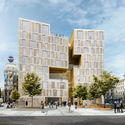
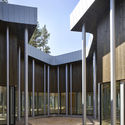
.jpg?1563468257 "Courtesy of Stéphane Beel Architects")
.jpg?1563464422 "Courtesy of Stéphane Beel Architects")

.jpg?1563467060 "Courtesy of Stéphane Beel Architects")
.jpg?1563475598)







_0001.BOLIQUEIME.PUB-FG01.06.jpg?1560477890&format=webp&width=640&height=580)
_0001.BOLIQUEIME.PUB-FG01.06.jpg?1560477890 "House in Boliqueime. Image Courtesy of bak gordon arquitectos")
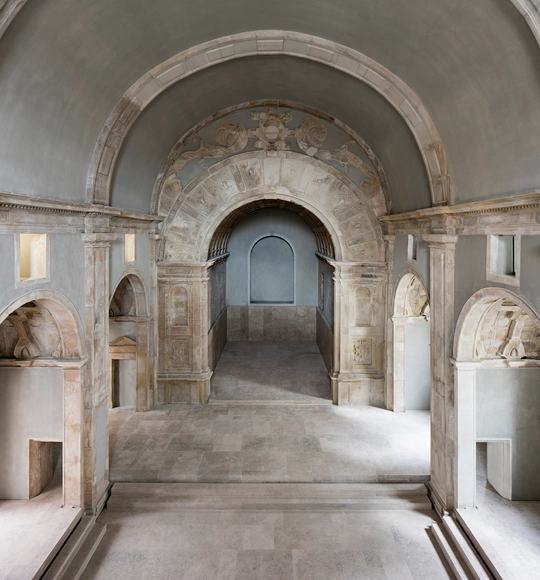
_Teatro_Romano_N.Central_Entrada.jpg?1560477635 "FUTURE: Teatro Romano. Image Courtesy of bak gordon arquitectos")
_Casa_na_Costa_do_Castelo_RBG_37.jpg?1560477725 "Casa na Costa do Castelo. Image Courtesy of bak gordon arquitectos")
_School_Romanshorn_BER04.jpg?1560477676 "School Romanshorn. Image Courtesy of bak gordon arquitectos")
_0001.BOLIQUEIME.PUB-FG01.06.jpg?1560477890)
Aki_Furudate_Niaux_03.jpg?1558971632&format=webp&width=640&height=580)
_Archivio_Fuksas_2013._DSC0197.jpg?1558972211 "© Archivio Fuksas. ImageShenzhen Airport")
_Nikolay_Kaloshin_iPad_18.jpg?1558972304 "© Archivio Fuksas. ImageRhike Park in Tbilisi")
_Leonardo_Finotti_70502_20X30_161025-065D.jpg?1558971768 "New Rome EUR. Image")
_Studio_Fuksas_New_Milan_Trade_Fair_(18).jpg?1558971850 "© Studio Fuksas. ImageNew Milan Trade Fair")
Aki_Furudate_Niaux_03.jpg?1558971632)