Last week, ArchDaily covered a story about the gender pay gap at Foster + Partners. We thought such a story was "unsurprising" given that the gender pay gap is something that is widely reported on, and present in almost every industry, and we wanted to share a case of it happening in an architectural firm many of us are familiar with. What we did not expect was that readers would think it is a non-issue, or that such reporting was sensational. Is it possible for us to talk about gender in the workplace without being up in arms? Why does the gender pay gap issue make people uncomfortable?
Some of our editors discussed how gender plays into their workplace experiences as well as some hopeful recent signs that we are on a path to change.
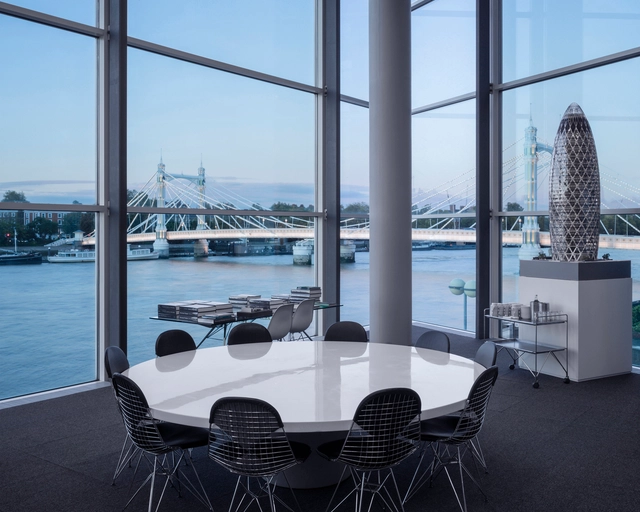
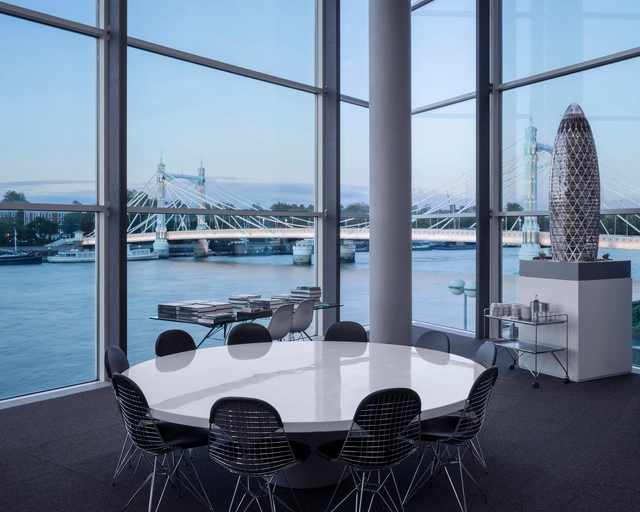
As one of the largest architecture firms in the world, and based in Battersea, London, Foster + Partners has released their report into gender pay issues, becoming one of the first architecture firms to do so. The report reveals significant under-representation of women at senior level resulting in a pay gap across the firm, and outlines a commitment to encouraging gender diversity at all levels of management.
https://www.archdaily.com/890336/theres-a-gender-pay-gap-at-foster-plus-partners-unsurprisinglyNiall Patrick Walsh
A shot of the Apple Park Visitor Center. Image Courtesy of Foster + Partners
Apple’s unwavering love for glass and seamless edges is one of the reasons designers flock in masses to purchase their products. But that aesthetic has caused a bit of a snafu at the company’s new Foster+Partners-designed headquarters in Cupertino, where employees are running into the highly transparent glass walls at an alarming rate.
With nearly 100,000 votes cast during the last two weeks, we are happy to present the winners of the 2018 ArchDaily Building of the Year Awards. This peer-based, crowdsourced architecture award showcases projects chosen by ArchDaily readers who filtered thousands of projects down to the 15 best works featured on ArchDaily in 2017.
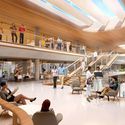
Foster + Partners has revealed designs for the new headquarters of the PGA TOUR to be located in Ponte Vedra Beach, Florida. Located on a large freshwater lake at the TPC at Sawgrass resort, the 187,000-square-foot building will create an “uplifting and inspiring” environment for employees and visitors through its transparent walls, lush greenery and all-encompassing roof structure.
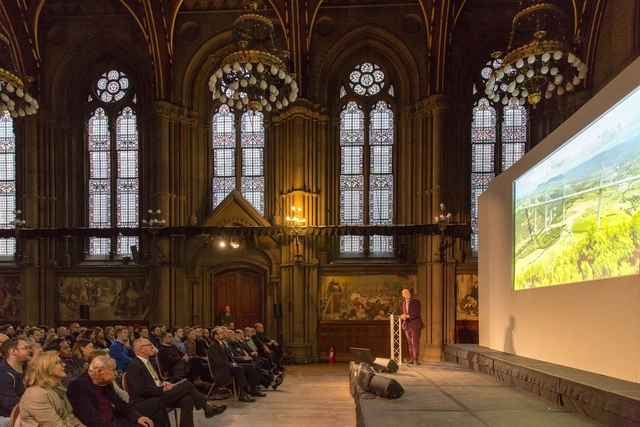
Lord Norman Foster speaking at the Royal Fine Art Commission Trust’s annual lecture in Manchester last year. Image Courtesy of Royal Fine Art Commission Trust
Lord Norman Foster has been named the next President of the UK’s Royal Fine Art Commission Trust, an independent charity aimed at promoting “visual awareness and public appreciation of high-quality design” within the United Kingdom.
Chaired by one of architecture’s foremost patrons, Lord Peter Palumbo, the organization was established in 1987 as a complement to the Royal Fine Art Commission (since absorbed into the UK Design Council), the Government’s advisor on matters affecting public amenity and aesthetics in England and Wales.
The new three-story building, designed by Foster + Partners, would require the demolition of the existing Yarra Building, and would change the character of Federation Square, a popular public location for gatherings and events. But before being announced, the project was already fast-tracked through the first stage of planning approval, thanks to a partnership with the city.
https://www.archdaily.com/886618/melbournites-protest-plans-for-apples-first-southern-hemisphere-flagship-store-over-secrecy-of-approval-processAD Editorial Team
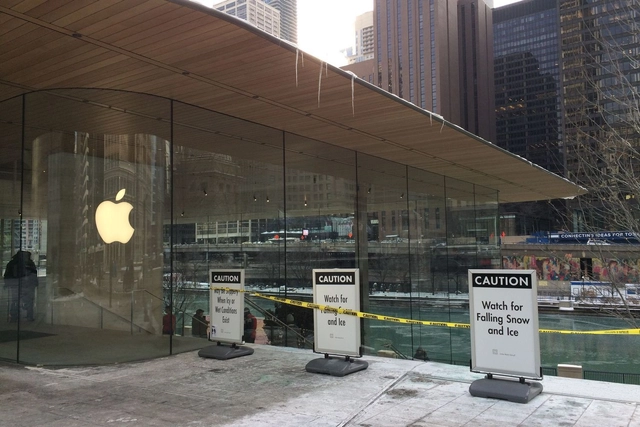
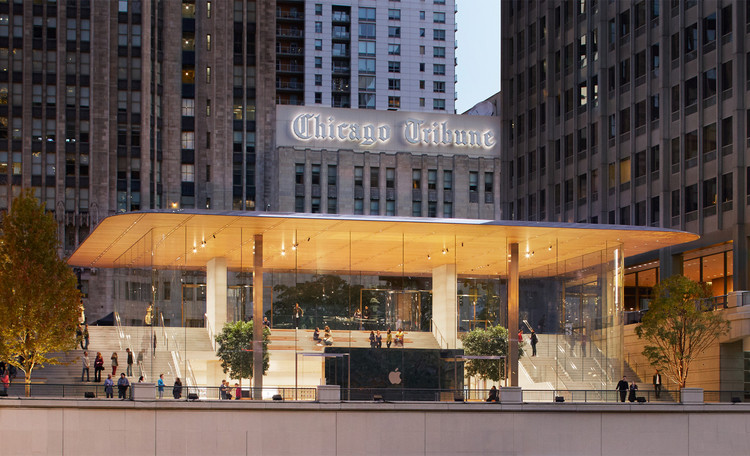
Just a few months after the opening of Apple’s first town square concept retail store, the Foster + Partners-designed glass-box structure is facing the wrath of its first Chicago winter – and it doesn’t appear to be handling it so smoothly.
As reported by the Verge and 9to5Mac, nearly all of the store’s riverfront outdoor space has been roped off due to the presence of large and potentially dangerous icicles that have formed on the edge of the building’s MacBook-shaped roof. Signs reading “watch for falling snow and ice” now surround the store and at the entrance on Pioneer Court.
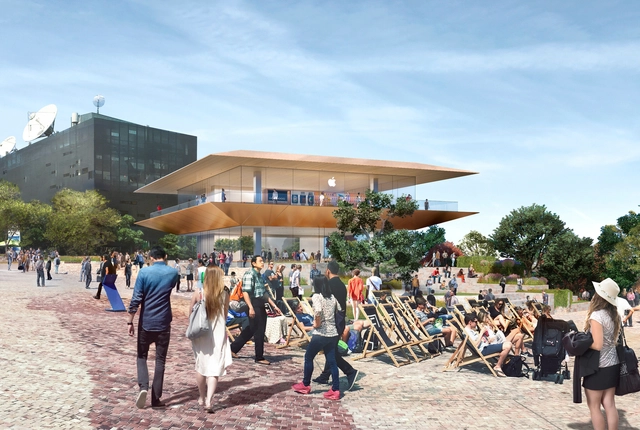
"Apple Federation Square complements the original vision for the precinct, increases public space and provides a daily program of activity to inspire and educate the community," says Apple. Image Courtesy of Apple
Apple has unveiled plans for their latest global flagship town square retail concept, to be located in Melbourne’s Federation Square. A product of a partnership between Apple, Federation Square and the Victorian Government, the store is envisioned as a shared resource that will increase the amount of public space in the square and will offer daily programs to “inspire and educate the community.”
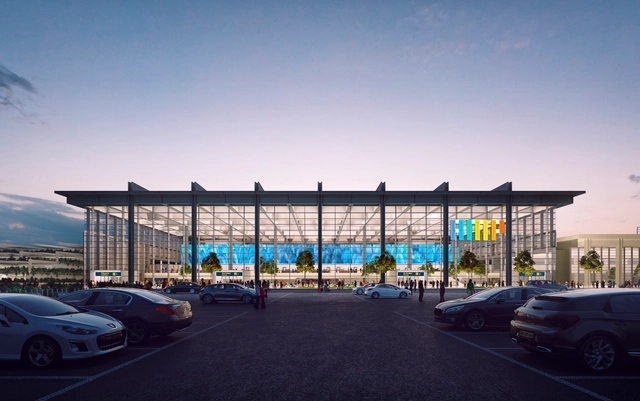
Foster + Partners has won the competition to design a new extension to Marseille Airport that will allow the building to process up to 12 million passengers a year. The 2-phase design will add a new central pavilion to the existing building—which comprises the original 1960s structure designed by Fernand Pouillon, and a 1992 extension by Richard Rogers—and a new pier to provide access to the planes.
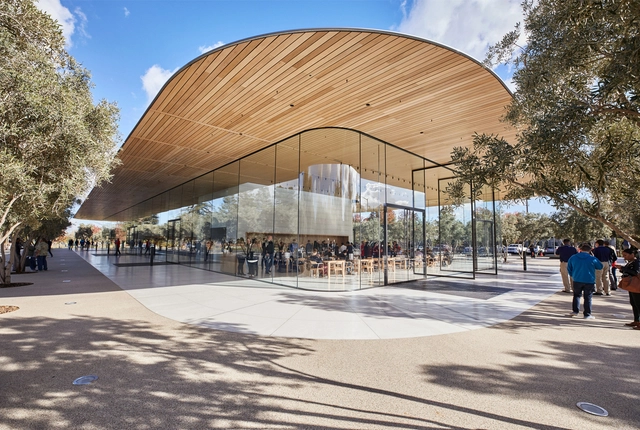
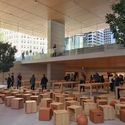
The Visitor's Center at Apple's new Cupertino campus has opened to the public. As the public face of a vast complex designed by Foster + Partners, the independent building is "a uniquely designed architectural extension" of the company's new headquarters. "With similar aesthetics in staircases, stone walls, and terrazzo floors," the center’s "cantilevered carbon fiber roof appears to float," supported only "by stone clad cores and no other extraneous columns for support."
https://www.archdaily.com/883989/foster-plus-partners-apple-park-visitors-center-opens-to-the-publicAD Editorial Team
New technological developments in construction have given architects great freedom when designing. Innovations in construction materials and their properties allow for the creation of increasingly original and surprising facades. The buildings constructed as a result can even inspire people to travel thousands of kilometers just to see these masterpieces. This week, we present 15 of most ground-breaking facades through photos by prominent photographers such as Paul Ott, Peter Bennetts and Laurian Ghinitoiu.
If you’re trying to get buildings that work with nature, that consume less energy, that are more healthy, and more joyful, you need to go out to a younger generation, and try to anticipate the future
- Norman Foster
Even for a career filled with an impressive number of peaks, right now Norman Foster seems to be having a particular moment, with the completion of the world's most sustainable office building in London and the recent opening of the new Madrid headquarter of his eponymous think tank, the Norman Foster Foundation.
These triumphs have an inspired a profile in the most recent edition of Surface Magazine that takes a look at the extraordinary path of Foster's career and how he has grown into one of the architecture world's most successful businessmen. Written by the magazine's executive editor, William Hanley, the story features quotes from Foster during his recent trips to Madrid and London on topics ranging from tackling world problems to becoming the go-to designer for Apple's corporate headquarters and flagship stores.
https://www.archdaily.com/882623/surface-magazine-talks-to-norman-foster-about-designing-for-bloomberg-and-cementing-his-legacyAD Editorial Team
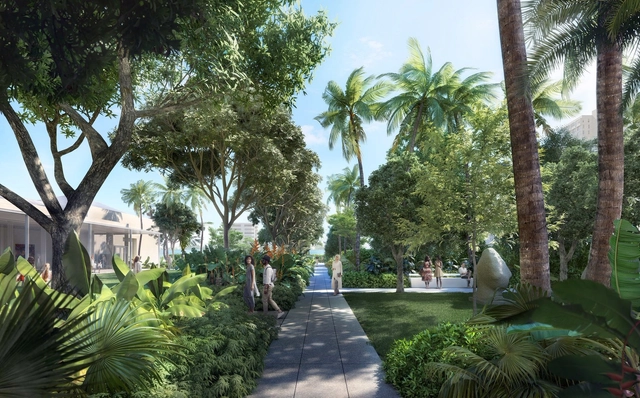
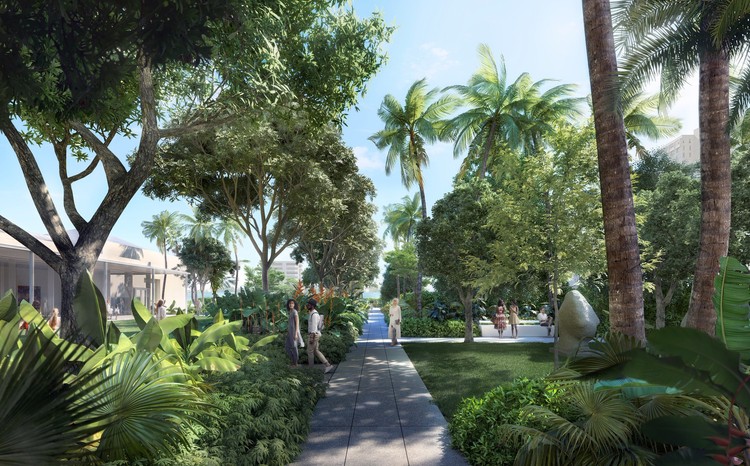
The Norton Museum of Art in West Palm Beach, Florida has announced plans for the first-ever public garden designed by Foster + Partners as part of their $100 million expansion project. To feature a variety of native sub-tropical plantings and gathering spaces, the garden is envisioned as “a new social space for the community.”
“From the beginning, we have conceived of the Norton expansion as an opportunity to create a New Norton—one that embraces its original design, while also creating a more welcoming and inviting campus,” said Lord Norman Foster.
“In our masterplan, it was important for us to define the Norton’s sense of place—in this case Florida’s lush subtropics. To do so, we conceptualized a museum within a garden. We are creating verdant spaces for art and programming that extends the museum beyond its walls.”
The first in a new generation of Apple stores has opened in the heart of Chicago. Designed by Foster + Partners, Apple Michigan Avenue employs the tech giant’s “Town Square” concept, which subverts the typical retail experience in favor of a community-inclusive approach.
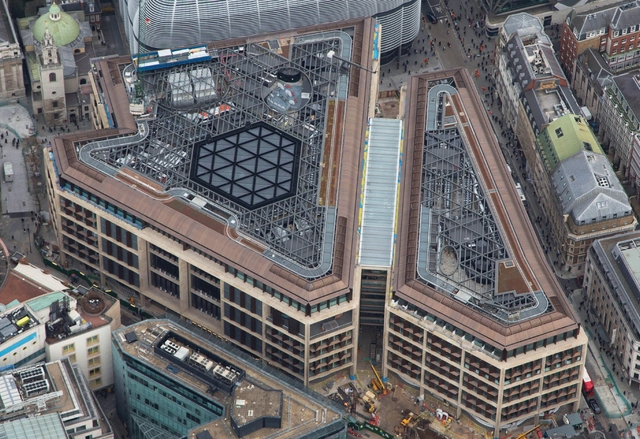
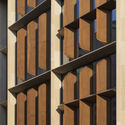
Bloomberg’s new European HQ, which is located in the heart of the City of London, has been rated the world’s most sustainable office building. Designed by Foster + Partners, the office complex has been awarded an Outstanding BREEAM rating, attaining a 98.5% score – the highest design-stage score ever achieved by any major office development.
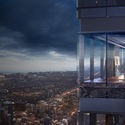
Canada’s future tallest building, The One, has broken ground in downtown Toronto. Designed by Foster + Partners, the 85-story building will become the country’s first supertall skyscraper (commonly defined as taller than 300 meters/980 feet), rising to a peak of 306 meters (1,004 feet). The tower will also take over the title of Canada’s second tallest manmade structure, behind only the CN Tower.
Located at the corner of Bloor Street and Yonge Street on the border between downtown and Yorkville, the residential tower will respond to its unique context, embodying the neighborhood character of Yorkville, the bustling commercial life of Bloor Street and the local heritage of Yonge Street.
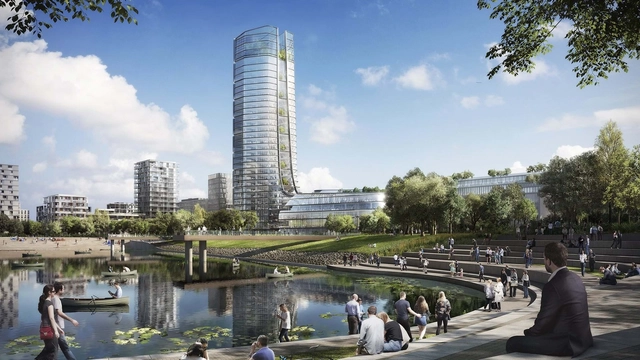
Foster + Partners have revealed designs for the sustainability-minded new headquarters of Hungarian oil and gas company MOL Group in southern Budapest. Known as MOL Campus, the plan will center on an environmentally-progressive structure located within in a park-like setting. When completed, it will become this city’s tallest building.
“This is a landmark project for several reasons, not only for MOL but also for Budapest,” said Nigel Dancey, Head of Studio, Foster + Partners. “It presents a unique challenge – to ensure that the building meets the functional needs of the organisation, follows the highest standards of sustainability, and is respectful of its historic surroundings.”






.jpg?1515101128&format=webp&width=640&height=580)