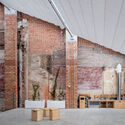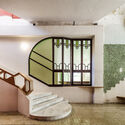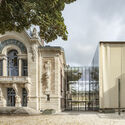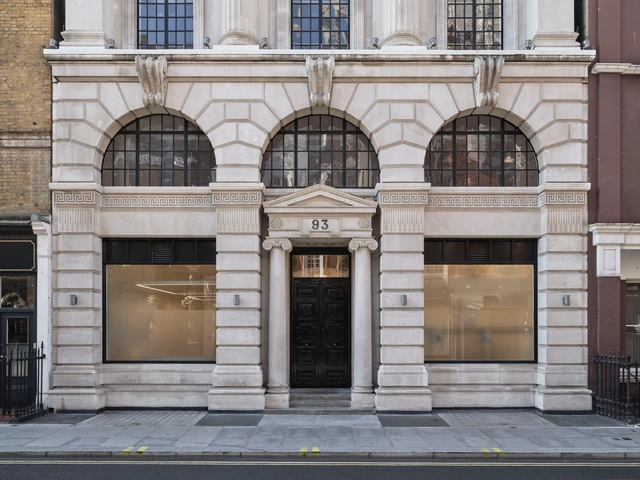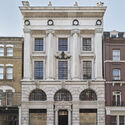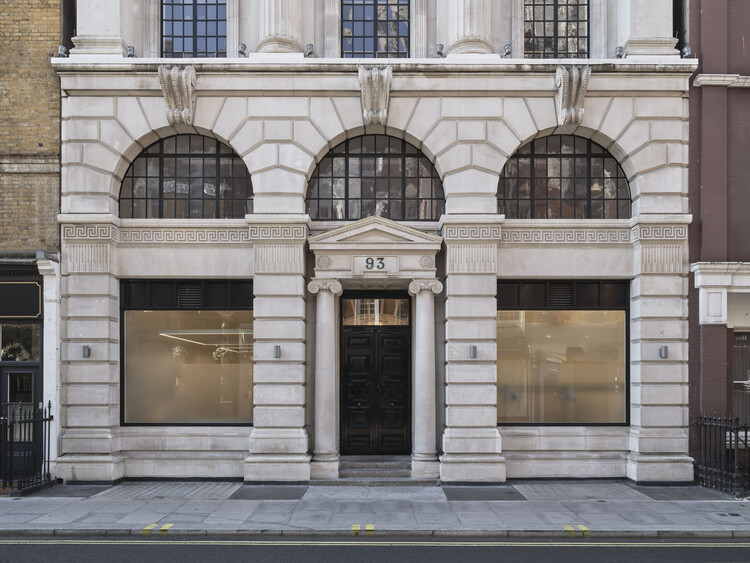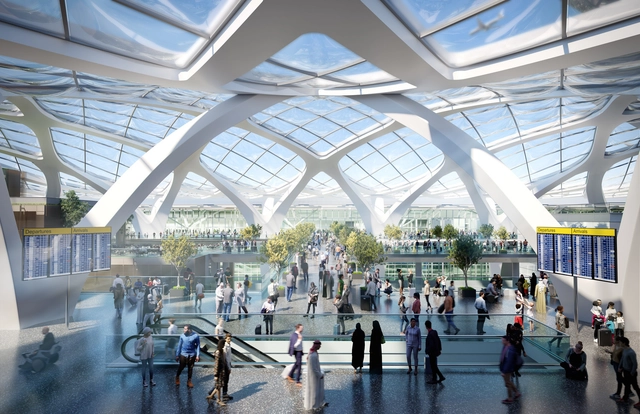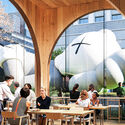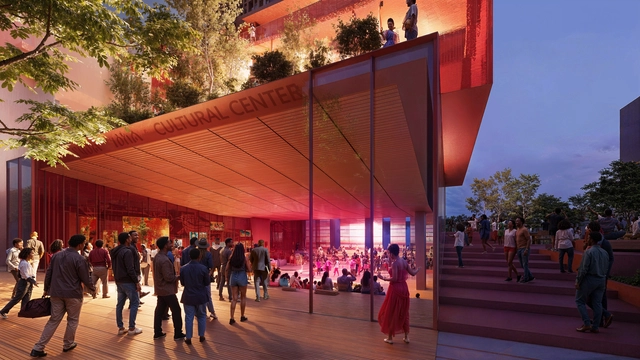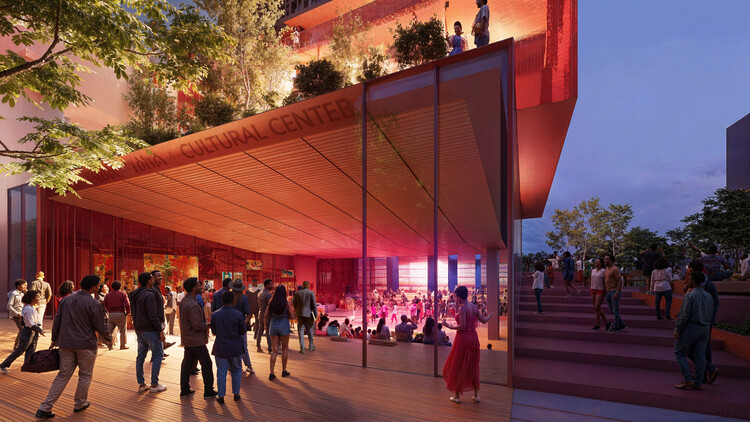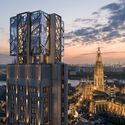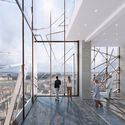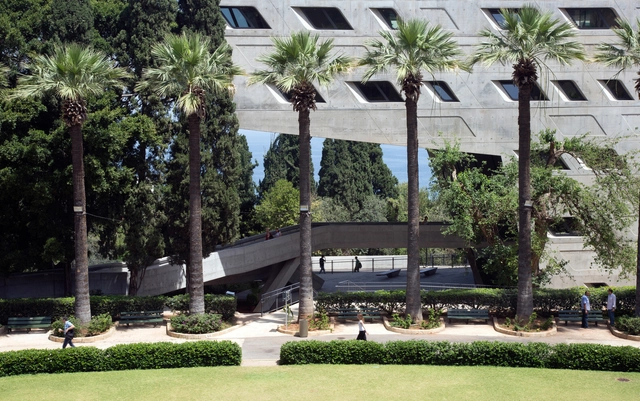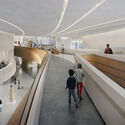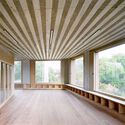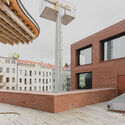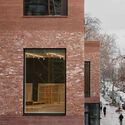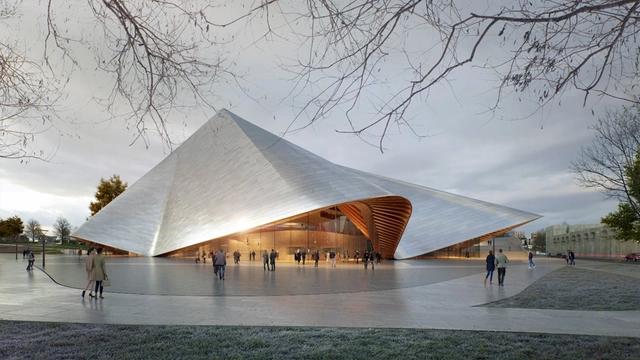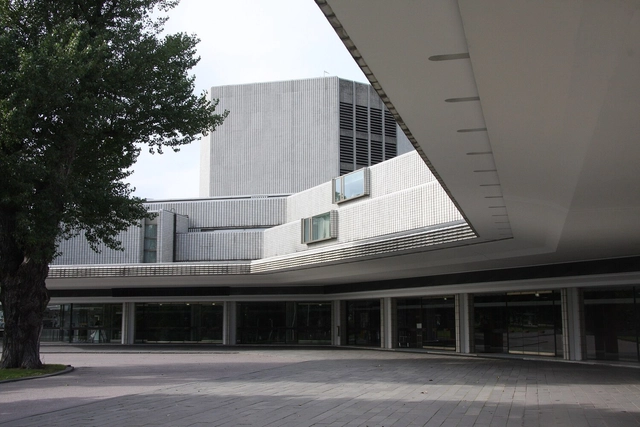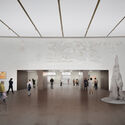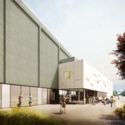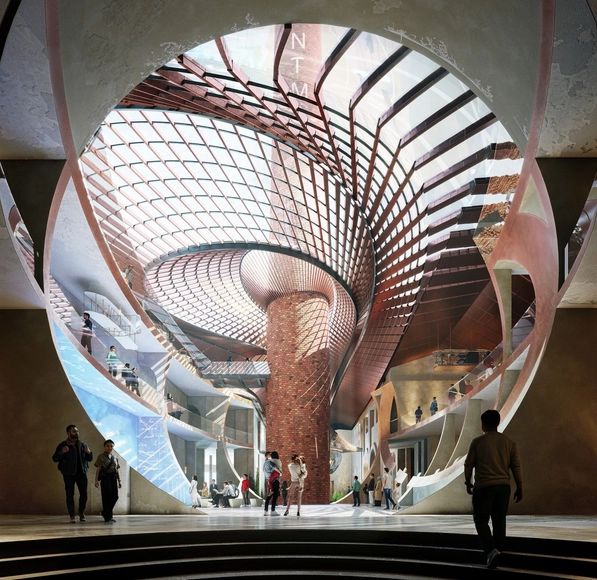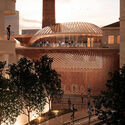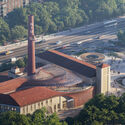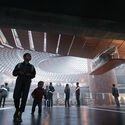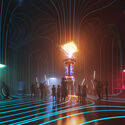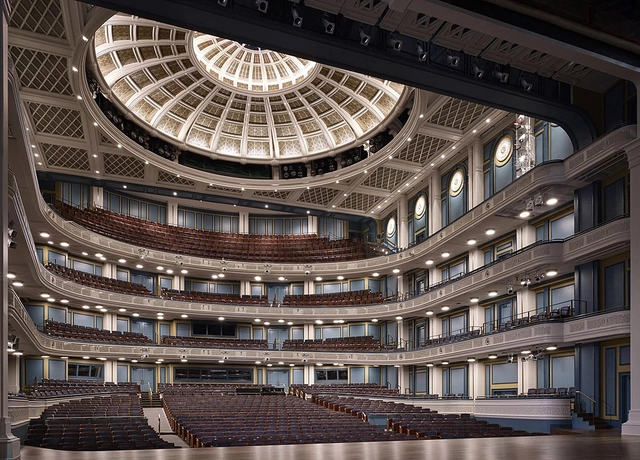
British architect Asif Khan has just unveiled the transformation of a Soviet-era cinema in Almaty, Kazakhstan, into the Tselinny Center of Contemporary Culture, a multifunctional venue designed to support the growth of Kazakh and Central Asian creatives. The project, which began in 2018, is set to open in April and will feature spaces for art exhibitions, performances, film screenings, workshops, and more. Once complete, the Tselinny Center will mark Kazakhstan's first independent cultural institution.
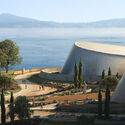
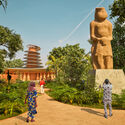
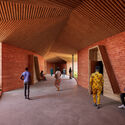
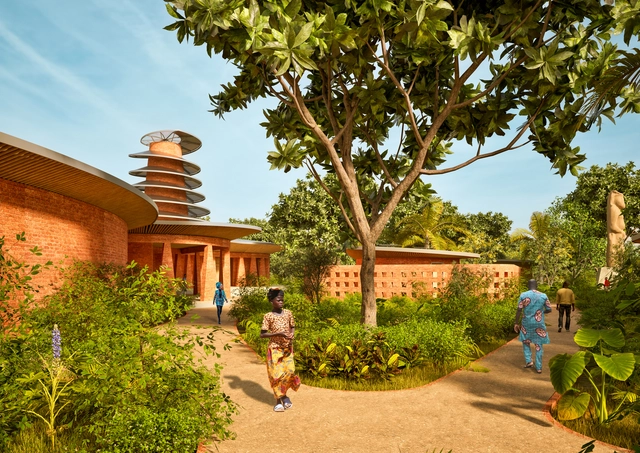
Kéré Architecture has revealed the design of a masterplan and series of buildings dedicated to the cultural and spiritual heritage of the Ewé people in the town of Notsé, in Togo. Commissioned by the Kothor Foundation, the center incorporates a sanctuary, several temples, a large-scale open-air amphitheater, as well as cultural functions such as exhibition halls, an auditorium, restaurants, and a reconstruction of the ancient royal palace of the Ewé Kingdom. The project, Francis Kéré's first in Togo, started construction in October 2024 and is scheduled for completion in February 2026.
Woodward Avenue, between the Detroit Institute of Arts and the Detroit Public Library, serves as a public mediating ground on the nation's first paved road.. Image Courtesy of Agence Ter - Akoaki
The Detroit Cultural District has announced an ambitious initiative to reshape its urban landscape. This multi-phased project led by the Detroit Cultural Center Association (DCCA) in partnership with Design Leads Akoaki and Agence Ter, will transform the district's character, creating a more vibrant and accessible environment for residents and visitors alike. The project builds upon a comprehensive master plan, outlining a 15-year vision for the 80-acre campus in Detroit, Michigan. The plan's guiding principles focus on unifying the district's twelve institutions, improving pedestrian flow, and fostering a stronger sense of community.
Cultural centers are vibrant places where art, community, and innovation intersect—each uniquely crafted to embody and celebrate its local character. This month's projects, submitted by the ArchDaily community, showcase a diverse array of cultural spaces, from the transformation of a historic townhouse in Montreal to a dynamic creative hub in Riyadh and an eco-conscious visitor center in Tennessee's mountains. Each design offers a new perspective on what a cultural center can be, whether a hub for creativity, a sanctuary for nature, or a bridge to the past.
In Belo Horizonte’s Aglomerado da Serra, Brazil’s third-largest favela complex with 50,000 residents, the Lá da Favelinha Cultural Center stands out as a vibrant hub of art and education. Founded in 2015 by the multifaceted artist Kdu do Anjos, the striking red building that stands out in the outskirts has gained recognition in both national and international architectural circles, earning several prestigious awards Yet, the recent renovation by Coletivo LEVANTE—honored as one of the Best New Architectural Practices of 2024—represents far more than vivid colors and bold design. It symbolizes the creativity and potential of the community itself. As a space for support and inspiration, Lá da Favelinha reflects a collective, democratic vision that merges the community’s dreams with the dedication of its founders.
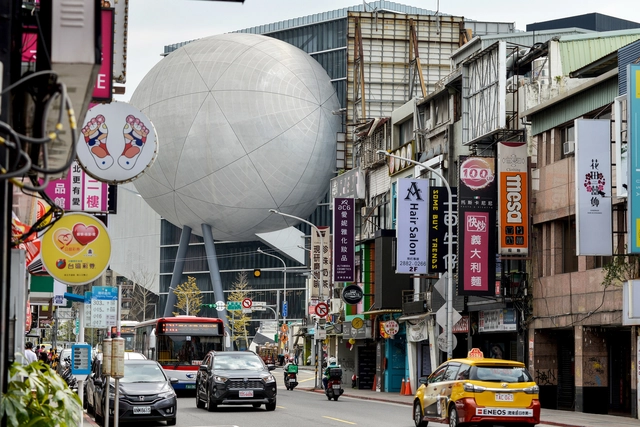
Bjarke Ingels Group (BIG) is leading the transformation of a former supermarket into the new Museum for Paper Art in Denmark's North Jutland region. With paper art deeply ingrained in Danish cultural heritage, symbolized by Le Klint's folded lampshades and H.C. Andersen's intricate paper cuttings, this renovation and expansion aim to elevate the museum's profile and double its visitor numbers. The design will celebrate paper as both an art form and a craft, extending the museum's role in promoting this unique heritage.
Educational and cultural centers serve as pivotal spaces where communities engage with knowledge, creativity, and shared experiences. As architectural programs, they offer unique opportunities to explore how physical environments can foster learning, cultural expression, and social interaction. The significance of these projects lies not just in their function but in how they reflect the values and aspirations of society. When established architecture firms take on these projects, their design choices become a lens through which we can examine contemporary approaches to space, place, and community, offering a glimpse into the evolving role of architecture in shaping educational and cultural landscapes.
Among this week's curated list of unbuilt projects submitted by established architecture practices,fala atelier’s project for a school in Broc, Switzerland, stands out with its sensitive integration of Alpine architectural elements; WXCA’s Xylopolis Centre in Poland reflects a deep contemplation on humanity’s relationship with nature, while KPF’s life sciences building in London and Jones Studio’s WaterEducation Center in Arizona further exemplify how architecture can address contemporary societal needs, from fostering innovation ecosystems to educating the public on critical environmental issues.
3XN GXN and landscape architect DETBLÅ have won the commissions for the design of a new Centre for Coastal Nature and Sport Fishing in Assens, Denmark. The proposal features a subtle oval structure to showcase local stories of the natural environment. The building aims to enhance public awareness and appreciation of the marine environment, reflecting a growing understanding of the need for better marine stewardship. It will also act as a hub for knowledge exchange about the impact of humans and climate change on the sea.
Pritzker Prize Laureate Renzo Piano has just revealed designs for Boca Rotan’s new creative campus, The Center for Arts & Innovation in Florida. The Center seeks to transform Boca Raton into an internationally recognized destination for culture, arts, innovation, and technology. In fact, the three-story structure features functions that bridge creativity across the realms of arts, education, business, and community.
Still in its early and iterative stages, the Center aims to pioneer a new approach to how the world designs, imagines, programs, and embraces its cultural infrastructure. Catalyzing future leaders and visionaries, the scheme offers a dynamic platform for new ideas, AI integration, and end-to-end STEAM education. Seeking to cultivate knowledge and community engagement, The Center is dedicated to shaping tomorrow’s cultural landscape through equipping its future leaders and occupants with the resources they need today to build a better tomorrow.
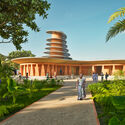
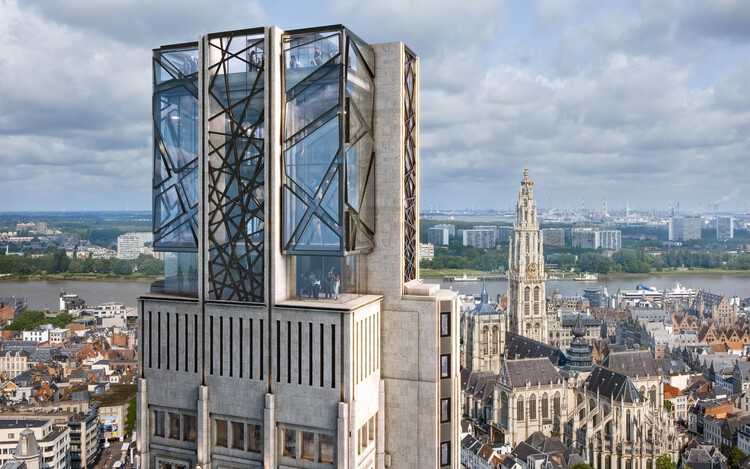
Construction has just begun on the Tor Alva, or the White Tower, the world’s largest 3-D printed tower. Designed by architects Michael Hansmeyer and Benjamin Dillenburger and printed with concrete by the technology university ETH Zurich, 8 out of 32 structural columns have been completed. Nestled in the village of Mulegns in the Swiss Alps, the White Tower is designed as a venue for music and theater events. Standing at 30 meters, the design features 32 distinct Y-shaped columns, each boasting a pattern of textured details.
In commemorating World Autism Day, it is crucial to acknowledge the impact of design on the lives of individuals with disabilities. Whether it’s the Autism Garden in Iran by Hajm.e.Sabz, the Sycamore at Northgate Park Hospital in the United Kingdom, or the Home for The Homeless, each of these projects celebrates diverse needs and seeks to foster a sense of belonging and empowerment for all.
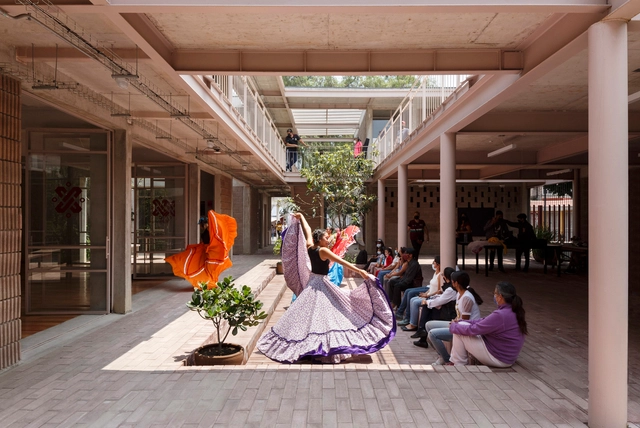
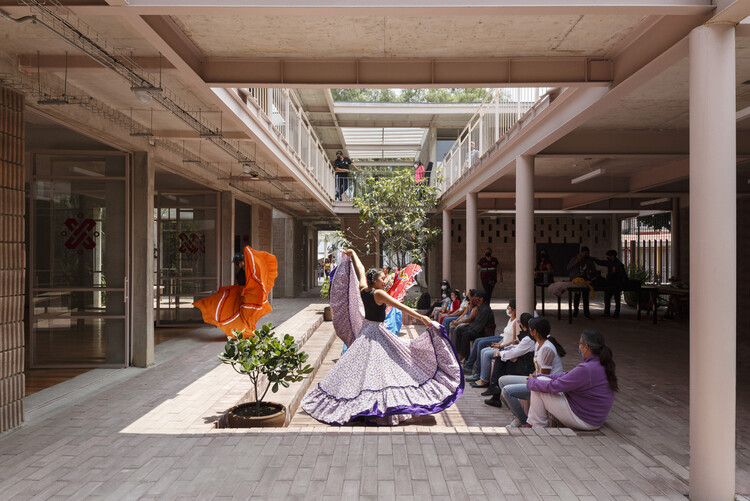
The architecture of cultural centers in Mexico has gained relevance in recent years. There has been a growing interest in providing spaces for recreation and education, transforming them into urban landmarks that attract visitors from all over the country year after year.
Foster + Partners has just unveiled the designs for the Xicen Science & Technology Center at the heart of the Yangtze River Delta Region in Shanghai,China. The project is strategically located along the Shanghai – Huzhou development axis, ensuring connectivity to the city center through high-speed rail links. Drawing inspiration from the timeless allure of the surrounding water towns, the center blends new and existing waterways to create a community featuring residential, commercial, and recreational spaces.
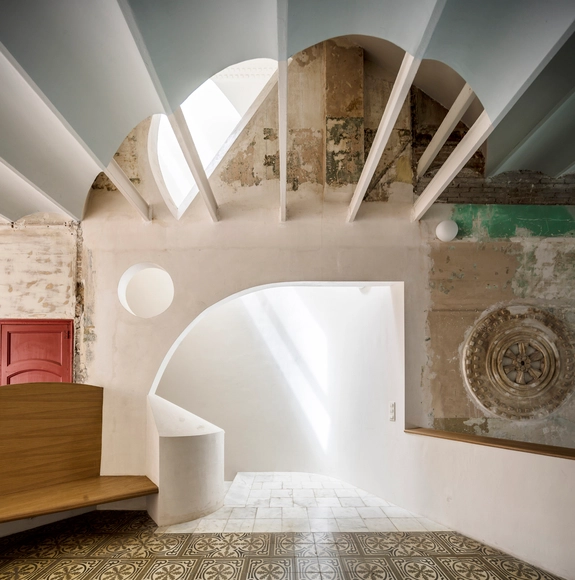
Many buildings often fall into disuse due to our cities' constant economic, social, and technological changes. The programmatic inconsistency of current times demands great versatility and adaptability from our infrastructures, increasingly leading projects to become uninhabited, and left to abandonment and decay.
Next, we present a series of 20 Latin American projects in which old warehouses, homes, prisons, mills, and markets were recovered and transformed into Cultural Centers, Museums, and Galleries.
Snøhetta’s Beijing City Library has opened its doors to the public, introducing a unique space for learning and knowledge-sharing in Beijing’s cultural scene. As one of the most anticipated projects of 2024, the library features the world's largest climatized reading space, in addition to various facilities aimed at creating a vibrant cultural destination in the city. Snøhetta was awarded the Beijing City Library in 2018 through an international competition and the project was completed with local partner ECADI.
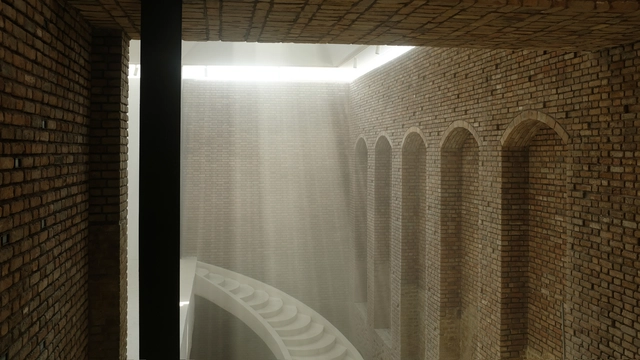
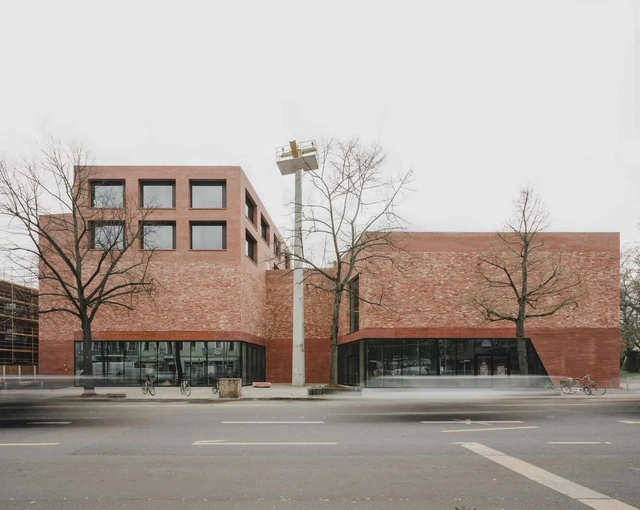
A considerable part of architectural innovation involves the use of materials. Technical development and new formal languages utilize them to "announce" the "next" architectural era. Of course, materials are essential for construction and significant for the consolidation of languages. Glass, steel, concrete, or brick convey messages about buildings. However, like any language, the meaning of words can vary according to the prevailing social organization; there is a dispute over the meaning of certain expressions, or there is pressure for the abolition—or at least the dissociation—of certain senses associated with some words. It would not be any different in architecture.