Atmosphere in Architecture and Perception of Space

ArchDaily Topic

A curated selection of articles, interviews, and essays exploring spatial atmospheres, presented by Vitrocsa.

Taming Nature: How Architecture is Redefining Its Relationship with the Environment

Taming Nature: How Architecture is Redefining Its Relationship with the Environment

Integrating natural elements into architectural design has long been a fundamental pursuit in creating comfortable, sustainable environments that enhance both individual well-being and the relationship between buildings and their surrounding context. In areas with vast landscapes, incorporating natural elements is essential for seamlessly connecting architecture with its site. Conversely, in dense urban environments dominated by built structures, introducing greenery becomes also increasingly vital, reintroducing nature into the so-called "concrete jungle."

Read more »

Less or More? The Psychological Influence of Minimalist and Maximalist Spaces

Less or More? The Psychological Influence of Minimalist and Maximalist Spaces

Between silence and chaos, we shape our world. Every space we inhabit tells a story, evokes emotions, and influences our thoughts. Minimalism, with its lightness and purpose, invites serenity. Maximalism, exuberant and vibrant, celebrates personality in every detail. But how do these philosophies affect our minds? Understanding their psychological impact can be key to creating environments that enhance well-being and bring harmony to life.

Read more »

Beyond Transforming Structures: Creating New Atmospheres in Preexisting Architecture

Beyond Transforming Structures: Creating New Atmospheres in Preexisting Architecture

How can architecture professionals transform the atmosphere of a structure? What kinds of interventions can go beyond adaptive reuse to modify spatial perception? As architectural structures are repurposed over time, new uses and needs emerge between spaces and their users. While the structures of old buildings keep the memory of communities alive, the introduction of new life through greenhouses, housing, commerce, offices, or cultural centers brings about new atmospheres where light, ventilation, the integration of nature, and other elements reshape interior experiences.

Read more »

The Power of Scale: How Proportions Shape Human Experience

The Power of Scale: How Proportions Shape Human Experience

The way we perceive and experience spaces extends beyond aesthetics—they directly influence our emotions, thoughts, and even creativity. Spacious environments with high ceilings often evoke a sense of freedom and inspiration, while smaller, enclosed spaces encourage focus and introspection. This is not merely a subjective impression but a scientifically studied phenomenon. In the 1960s, anthropologist Edward T. Hall introduced the term "Cathedral Effect" to describe how ceiling height impacts cognition and behavior. More recent research has expanded on this idea, demonstrating how architecture shapes decision-making and emotional states in various contexts.

Read more »

Designing Inclusive Cities: The Role of Universal Design in Creating Accessible Urban Atmospheres

Designing Inclusive Cities: The Role of Universal Design in Creating Accessible Urban Atmospheres

Contemporary cities are vibrant, complex, and constantly evolving. Above all, they are ever-changing, mutable, and diverse. What transformative changes are occurring, and where are they leading us? Urbanization continues to gain momentum in many regions of the world, generating visible and structural transformations. As this unfolds, data on the evolution of its configuration and the challenges we encounter begin to emerge. According to the World Bank, the urban population will continue to trend upward, with 90% of new urban residents concentrated in Africa and Asia. This growth raises essential questions: How can we consolidate a design approach that ensures equitable access to spaces, resources, and services? How can we make emerging and consolidated metropolises more inclusive and accessible?

Read more »

Transforming Industrial Heritage: Design Strategies for Creating a New Atmosphere in Cultural Spaces

Transforming Industrial Heritage: Design Strategies for Creating a New Atmosphere in Cultural Spaces

Creating an atmosphere that enhances exhibitions and enriches the visitor and user experience requires a thoughtful balance between preserving a space's unique character and adapting it to meet the needs of artistic and cultural production. The challenge lies in maintaining a building's industrial atmosphere while accommodating the specific requirements of exhibition design or the various uses the new building will require. This delicate task involves careful consideration of spatial layout, material choices, and lighting solutions, all of which play a significant role in shaping the new environment.

Read more »

Beyond Form: How Light and Shadow Define Architectural Atmosphere

Beyond Form: How Light and Shadow Define Architectural Atmosphere

Architecture is often defined by its physical form, materials, and structural elements, but light and shadow truly shape the experience of space. These elements influence perception, guide movement, and evoke emotional responses, transforming static structures into dynamic environments. Throughout history, architects have harnessed the interplay of light and shadow, using it as a fundamental design tool to create atmosphere and meaning.

Read more »

Urban Sanctuaries: Creating Peaceful Homes Amidst City Chaos
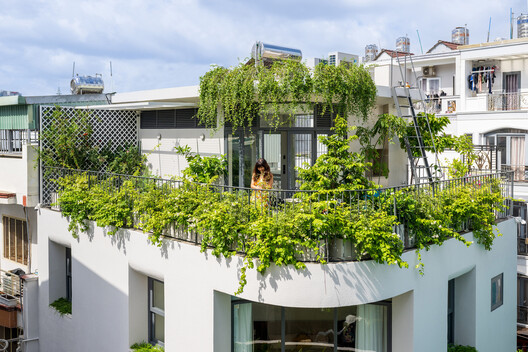
Urban Sanctuaries: Creating Peaceful Homes Amidst City Chaos

"Feeling at home" is more than just an expression—it is the sense of warmth and comfort that transforms a space into a true refuge. To achieve this, elements like color, texture, lighting, and materials play a crucial role in shaping an environment that fosters relaxation and well-being. Backed by research in environmental psychology and neuroscience, the connection between physical spaces and human behavior highlights how architecture can directly influence the atmosphere, turning chaos into tranquility.

Read more »

Are Modular Seating Systems Redefining Our Perception of Public Spaces?

Are Modular Seating Systems Redefining Our Perception of Public Spaces?

What is our vision of public spaces from the past? Consider, for instance, a park—arguably the most iconic example of this typology. It is an environment designed with winding paths and rest areas, where we often find tables and fixed benches, positioned along the way. Its design prioritizes permanence and contemplation. But when we turn to the present, how do we envision it now? Indeed, the traditional concept of public space has not disappeared entirely. However, our way of interacting with it has changed, driven by the need for flexibility in ever-changing environments. This shift has sparked the exploration of new design approaches. As a result, modular seating systems have become a dynamic field of experimentation, continuously adapting to changing uses and perceptions.

Read more »

Open-Air Chapels: Integrating Nature and Landscape into Religious Architecture in Latin America

Open-Air Chapels: Integrating Nature and Landscape into Religious Architecture in Latin America

At a global level, contemporary architecture continues to explore tools and design methodologies to integrate nature into habitable spaces, given its proven benefits and contributions to improving people's quality of life. While there are diverse religious beliefs around the world, religious architecture generally expands beyond its uses and functions to connect with the sacred. Senses, memories, and emotions are transmitted in these spaces through the use of certain materials, spatial organizations, and even sounds and aromas that enhance experiences in atmospheres of spirituality, divinity, and reflection. In Mexico, Chile, Ecuador, Brazil, and Uruguay, projects for places of worship open to the outdoors reflect an architecture that adapts to different natural environments while maintaining the premise that each religion is tied to a social identity and requires a particular connection with its community and surrounding landscape.

Read more »

Touching the Earth Lightly: How Freeing the Ground Plane Shapes Architectural Atmosphere

Touching the Earth Lightly: How Freeing the Ground Plane Shapes Architectural Atmosphere

Architecture and its atmospheric qualities have long been a subject of discussion, yet reaching a consensus on the matter remains elusive. This is largely because spatial experience is deeply personal—rooted in emotions, sensory perceptions, and individual preferences that are difficult to articulate in words alone. The way one perceives, feels, and interacts with a space adds another layer of complexity, making it challenging to define and agree upon its atmospheric impact. Nevertheless, architects and designers continuously strive to shape environments that are not only functional and comfortable but also capable of evoking emotions and leaving a lasting impression on their occupants. 

Read more »

Frank Lloyd Wright’s Mayan Revival Houses in Los Angeles: Creating Atmosphere and Perception of Space

Frank Lloyd Wright’s Mayan Revival Houses in Los Angeles: Creating Atmosphere and Perception of Space

Frank Lloyd Wright's architectural legacy is vast, but among his most enigmatic and atmospheric works are his Mayan Revival houses in Los Angeles, California. Residences such as the Hollyhock House redefine the interplay of light, materiality, constructive innovation, and spatial perception. By using modular concrete blocks in an ornamental and structural way, Wright developed a unique aesthetic deeply rooted in both the past and the future.

Read more »

Designing with Humidity: How Architecture Adapts to the World’s Dampest Climates

Designing with Humidity: How Architecture Adapts to the World’s Dampest Climates

Humid environments present some of the most complex challenges in architectural design. From the tropical monsoon season of Southeast Asia to the equatorial heat of Central Africa, these environments demand solutions that account for intense moisture, high temperatures, and the constant battle against mold, decay, and stagnation. Yet, for centuries, communities in these regions have developed architectural techniques that do not fight against humidity but instead work with it, leveraging local materials, climate-responsive design, and passive cooling techniques to create sustainable and livable spaces. By considering atmosphere as a sensory and climatic phenomenon, architects will craft spaces that are not only evocative but also responsive, adaptive, and sustainable. 

Read more »

Frameless is More: How Minimalist Windows Shape Architectural Atmospheres

Frameless is More: How Minimalist Windows Shape Architectural Atmospheres

Challenging conventions has been a constant in artistic production throughout history, always seeking to reframe established limits. In the 20th century, societal, historical, and technological changes created the perfect context for profound architectural reconfiguring. In this process, modernism introduced new ideas around functionality, breaking with the ornamentation of the past. However, building on that foundation, minimalism further refined the reduction of form to its essence. Focusing on the relationship between space, restraint, and light, the Minimalist movement transformed contemporary architecture and interior design, turning windows into a fundamental resource for sensory perception and interaction with the atmosphere and space, opening up a realm of introspective, sensitive, and refined exploration.

Read more »

Architecture for Neurodiversity: Designing for Control, Choice, and the Senses

Architecture for Neurodiversity: Designing for Control, Choice, and the Senses

Publicly occupied spaces can be overwhelming. Airports, schools, stadiums, and workplaces all feature environments with visual chaos that can be disorienting and stressful for individuals, especially those who are neurodiverse. The bombardment of stimuli, unpredictable movements, and competing visual information can create barriers to occupant comfort. Architects are regularly encouraged to create spaces that recognize and honor individual differences. Designing for neurodiversity is one way of championing inclusivity and extending principles of universal design.

Read more »

Designing the Senses: How Does Synesthesia Shape Our Built World?

Designing the Senses: How Does Synesthesia Shape Our Built World?

The Jewish Museum in Berlin, designed by Daniel Libeskind, employs synesthesia to evoke feelings of disorientation, loss, and memory through fragmented geometry, contrasting lighting, and material choices. Inspired by a shattered Star of David, the building guides visitors through slanted and narrow corridors, creating instability and discomfort. Light, either filtered through slits or almost entirely absent in certain areas, reinforces the oppressive atmosphere. The raw concrete, with its cold and rigid texture, intensifies this experience, while the void resonates with echoes and silence. In the Shalekhet (Fallen Leaves) space, metal plates shaped like faces emit unsettling sounds when stepped on, creating a disturbing auditory experience. The museum transcends its function as an exhibition space and becomes an immersive architectural experience, where light, sound, texture, and form combine to convey the pain and memory of the Holocaust.

Read more »

The City as Interface: How Legible Cities Rethink Wayfinding Using UX Design

The City as Interface: How Legible Cities Rethink Wayfinding Using UX Design

Design disciplines, like user experience (UX) design, have evolved to excel at devising experiences that make digital interfaces navigable. They accomplish this through a deep understanding of user needs and by mapping user journeys with meticulous attention to detail. The city represents a physical interface experienced by multiple users - residents, tourists, people of various ages and genders each experiencing it uniquely. In a time where digital interfaces are crafted for frictionless user experiences, why do many cities remain challenging to navigate?

Read more »