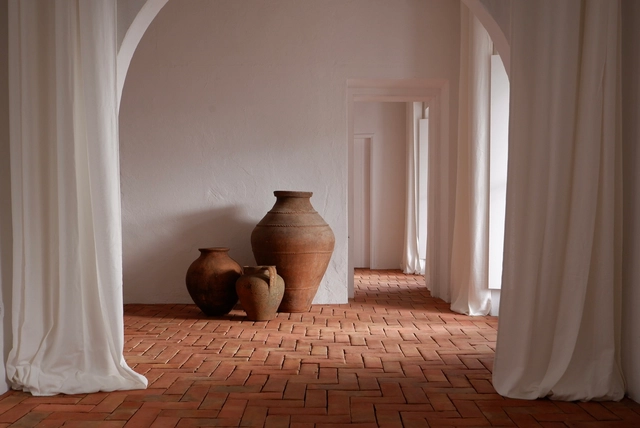
Earth-based flooring materials comprise natural elements such as clay, sand, silt, lime, and organic fibres. They offer both structural performance and sensory engagement when used in both outdoor and interior spaces. Due to their thermal properties, durability, and sustainable qualities, these materials have evolved from vernacular construction techniques into high-value architectural elements that are always being reinvented and optimized. There are several types of earthen floorings, each offering unique benefits, and they are increasingly used in interior settings.
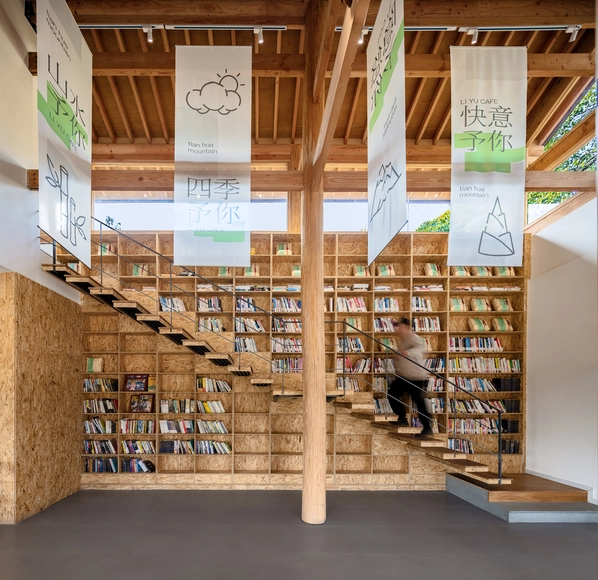
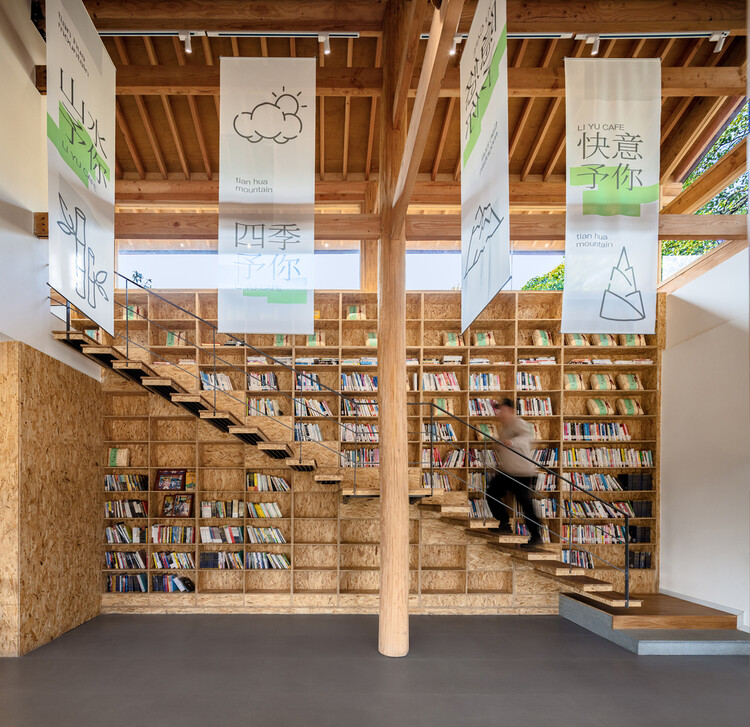
The contemporary bookstore is a paradoxical space. It is commercial, but rarely commercialized; public, but often privately owned; small in scale, but expansive in impact. As adjacent architectural typologies evolve under the pressures of digital consumption, economic precarity, and changing social habits, the bookstore has not dimensioned, but adapted to the twenty first century. It is not a site for private or institutional literary exchange, but a spatial hybrid that accommodates ritual, rest, performance, and socialization.
Symbiosis, a Prototype for Living and Working. Image Courtesy of contexo
The future of urban life is increasingly being imagined as collective, layered, and adaptable. As cities grow denser and the boundaries between work, home, and leisure blur, architects are rethinking the traditional notion of residential living, shifting from isolated units to integrated, community-driven environments. This collection of unbuilt projects, submitted by the ArchDaily community, reflects this shift: a global exploration into how design can shape more resilient, inclusive, and connected ways of living.
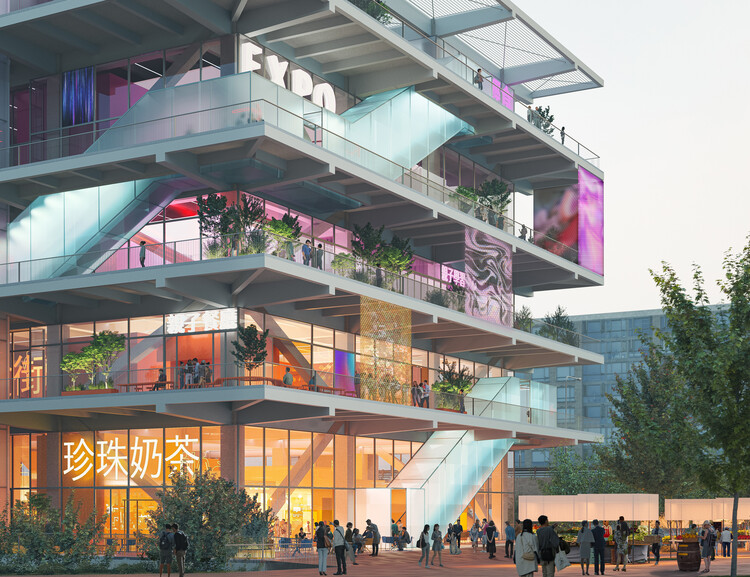
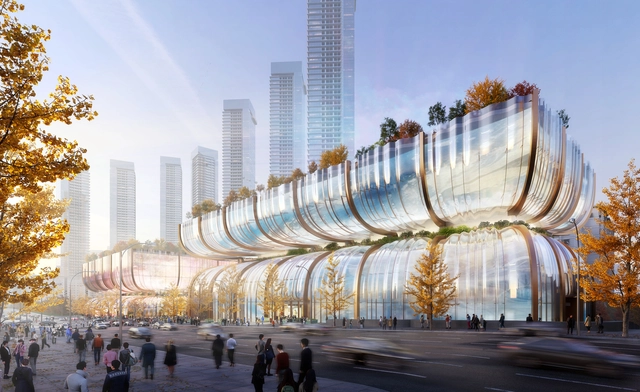
Dutch architecture firm MVRDV has won the competition to design a new multifunctional market and food hall in Zhubei, Taiwan. Developed in collaboration with local firm EKUO, the project, referred to as the "Market Cube" or "River Bank 1," aims to redefine the traditional market building through a vertically layered, highly adaptable structure. Positioned along the Touqian River at a prominent gateway between Zhubei and neighboring Hsinchu, the building is set to become a major civic destination.
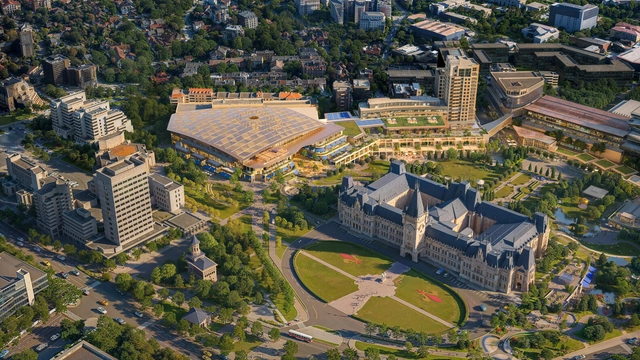
Palas Iasi development. Image Courtesy of Foster + Partners
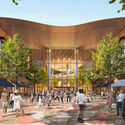
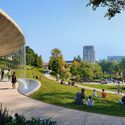
Foster + Partners has just released the design for the redevelopment of Palas Iași, a major mixed-use development in Iași, a city in eastern Romania. The proposal includes a new masterplan centered around the historic Palace of Culture and aims to improve urban connectivity, enhance public green spaces, and upgrade the existing commercial infrastructure. Developed in collaboration with Romanian developer IULIUS, the project aims to bring together retail, cultural, and landscape elements within a unified and accessible framework.
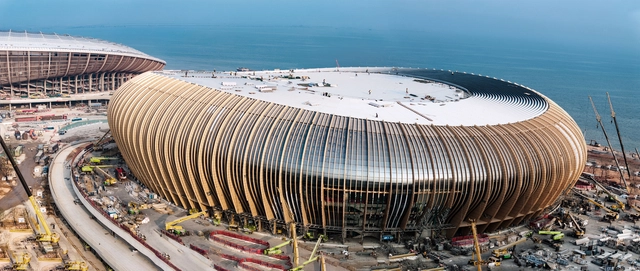
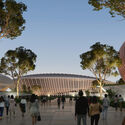
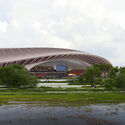
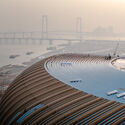
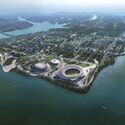
Designed by Zaha Hadid Architects in collaboration with the Guangdong Architectural Design & Research Institute, the Greater Bay Area Sports Centre in Nansha, China, is approaching completion. Construction began in August 2023, with the main structures of the stadium and arena topping out in February 2024. Roofing and curtain wall installations were finalized in February 2025, and the project has now entered its final phase of interior finishing and landscaping. The center is set for handover in June 2025, ahead of its role as a key venue for the China National Games in November.
Heatherwick Studio has been selected to lead the redesign of the Coex Convention Centre in Seoul, following a competition aimed at reimagining the building's purpose and facade. In collaboration with the Korea International Trade Association (KITA), the studio's proposal seeks to transform the convention centre into a more open and inviting public space that reflects Seoul's evolving identity.
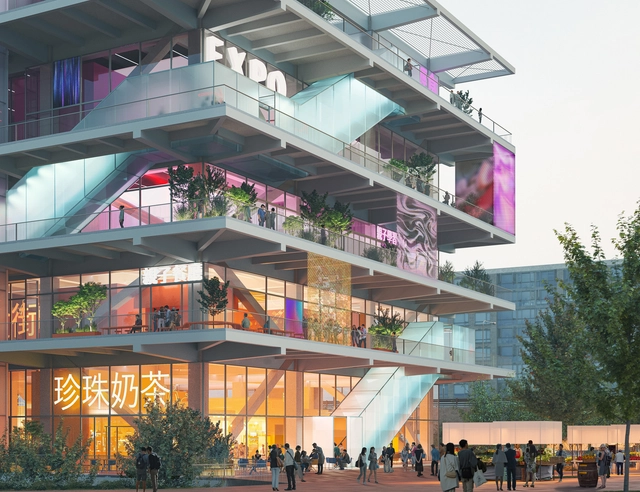
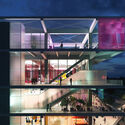
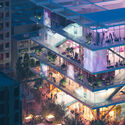
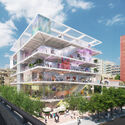
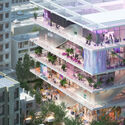
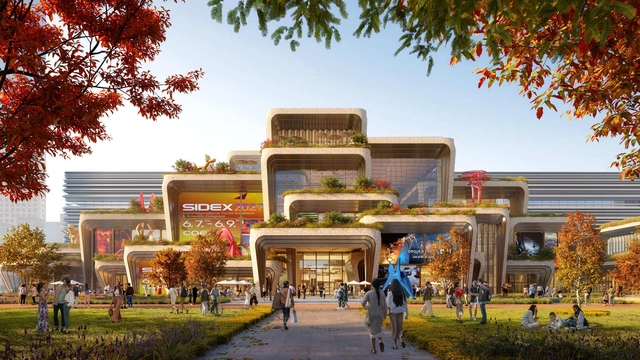
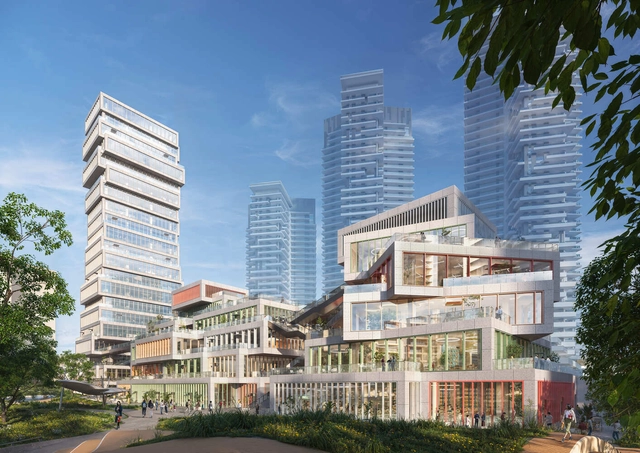
MVRDV has just released its design for LuLa Light Mall, an open-air shopping center under construction in Chengdu's Luxelakes Eco-City, China. The scheme consists of stacked boxes with open spaces between them, creating terraces, walkways, and staircases that integrate the natural surroundings and provide views of the nearby lake. Luxelakes Eco-City, a developing district in southern Chengdu, spans 5.5 square kilometers and features 1.4 square kilometers of lakes and green spaces. The mall's location, positioned between the natural landscape to the southeast and high-rise buildings to the northwest, serves as a transition between urban and natural environments.
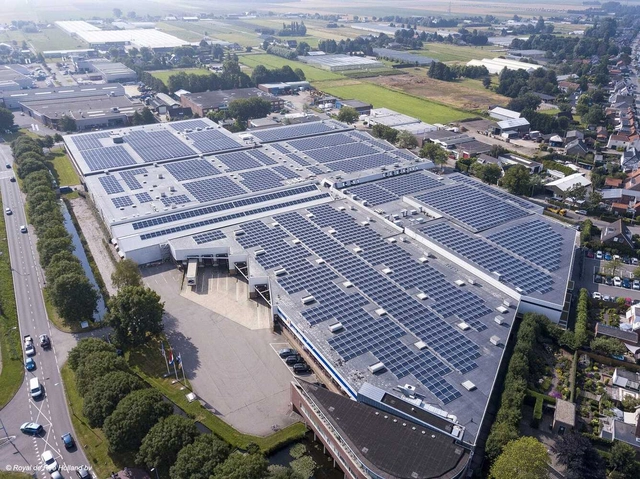
Transforming urban buildings into clean energy plants is a bold and powerful strategy to combat the climate crisis, reduce dependence on centralized grids, and promote more resilient, sustainable cities. Since 2010, cities have been responsible for over 75% of global electricity use, a demand historically met by fossil fuels as urbanization has increased since the Industrial Revolution. By the late 19th century, hydroelectric power began gaining relevance as a renewable alternative. However, with rapid advancements in solar technology, urban buildings now have the unprecedented potential to become self-sufficient power hubs.
After two weeks of open voting in the16th edition of the Building of the Year Awards, our readers have meticulously narrowed down a pool of almost 4,000 projects to a select group of 75 finalists spanning 15 categories. This year's awards honor the pinnacle of design, innovation, and sustainability on a global scale, showcasing an exceptional range of projects within the shortlist. As a crowdsourced award, we take pride in affirming that your selections authentically mirror the current state of architecture, and the caliber of this year's finalists further underscores the excellence and diversity prevalent in the field.
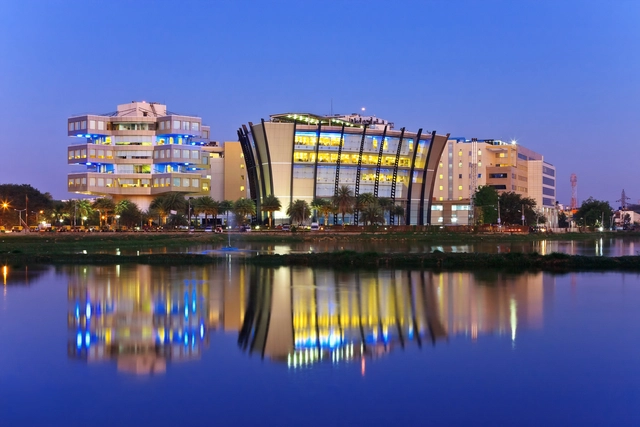
India is often recognized for its thriving technology industry, with a reputation for producing a substantial number of skilled tech professionals each year. This has attracted a dynamic technology ecosystem that increasingly draws global companies to establish operations in the country. The rise of tech parks has become a key strategy for harnessing this talent and resources, cultivating an environment conducive to innovation. What impact do these tech parks have on the urban landscape of Indian cities?
Imagine stepping into an environment that fully understands you, knows your habits, and actively works to support your wellbeing as an occupant. Air quality might be monitored and managed, and occupant circadian rhythms might be tracked to suggest ideal states of productivity. Workplace designers have been considering occupant wellbeing and health in their designs for offices of the future. Hypothesizing what time ahead may contain, there is a strong case to be made for sentient architecture and interior design being disruptive forces in how we interact with our work environments.
Heatherwick Studio has just announced its design for transforming Seoul’s renowned Hanwha Galleria. Following a competition aimed at reimagining six sites across the South Korean capital, Heatherwick Studio seeks to highlight South Korea’s rising status as a global cultural hub. Featuring two twin hourglass-shaped structures, the proposed design challenge traditionally designed luxury department stores worldwide.
Delving into the realm of unbuilt architectural projects by renowned offices offers a peak into the design principles and ethos of the studios. The curated list of unbuilt projects submitted by established architecture practices has the potential to reveal new perspectives on the socio-cultural and environmental factors shaping contemporary architecture. These designs often respond to complex challenges such as sustainability, urbanization, and cultural preservation, reflecting architects' efforts to navigate and contribute meaningfully to the built environment.
Within this curated selection, one standout project is Rafael Viñoly Architects' Médano El Pinar, marking the late architect's last contribution to the architectural landscape. Other projects such as Aedas' Ellinikon Commercial Hub explore the opportunities of new developments, such as the disused airport transformed into Europe's largest coastal park in the periphery of Athens, while others are highlighting natural landscapes or offering spaces for creative and innovative programs. Featuring internationally recognized offices like SOM, Kohn Pedersen Fox, Gensler, or GAD Architecture, the selection showcases the unrealized concepts and architectural experimentations of renowned offices.
Courtesy of [applied] Foreign Affairs, Institute of Architecture, University of Applied Arts Vienna
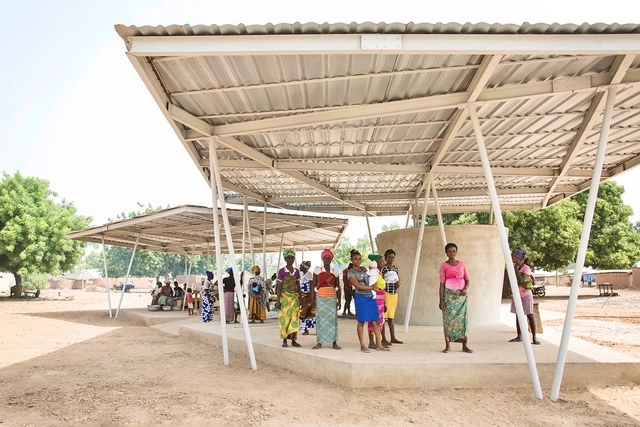
Public Markets are complex cases that beautifully combine an engineering exploration with the instigation of a beneficial public function. In fact, it doesn't take much to designate an open and accessible commercial hub that would encourage commercial exchange and economic development for small or local businesses. All one needs is a lot and a sheltering roof. However, many designers and architects have chosen to take this exercise beyond the social level and into further material and technical exploration.
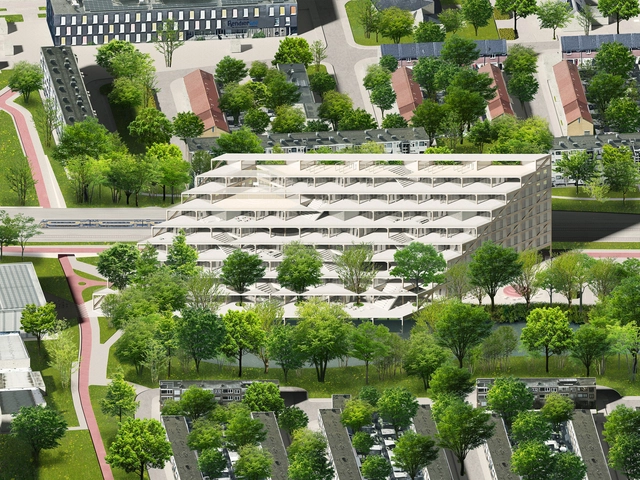
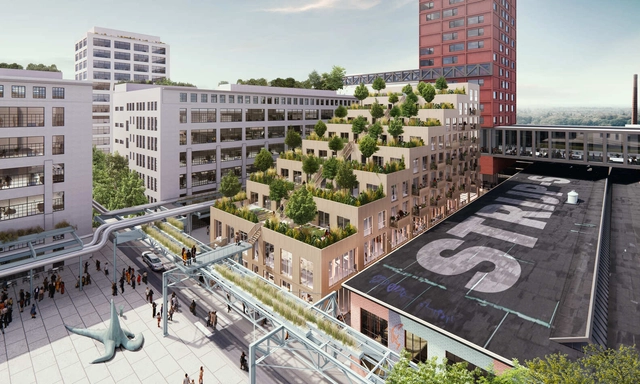
MVRDV has unveiled its design for a new mixed-use building in Eindhoven, The Netherlands. Situated in the heart of the vibrant Strijp-S district, the design was created in collaboration with the Trudo housing association. Titled “The Tribune,” the architecture boasts a stepped tribune-like structure, offering residents and visitors access and views onto the public square below.
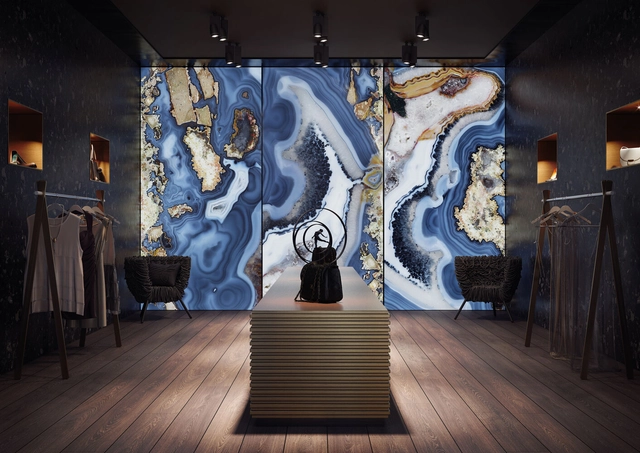
As humans, we’re under the comforting illusion that we’re masters of our own destiny, strong-willed and unaffected by influence. However, the crucial role played by interior design in the success of commercial spaces proves this not to be the case. Every aspect of these environments is carefully crafted to encourage customers to part with their cash—and be happy to do so—from the lighting and temperature to the acoustic and, perhaps most significantly, the visual landscape.
Whether by drawing consumers in with captivating individualism, relaxing them with luxury and hospitality, painting a stylish world where both consumer and product co-exist, or giving subtle prompts to diver deeper and discover more, the influence a commercial environment’s surfaces have on its success is huge.