Bangladeshi Architecture

  1. ArchDaily
  2. Countries
  3. Bangladesh

Latest projects in Bangladesh

Latest news in Bangladesh

From Tirana to Monterrey: 8 Unbuilt Housing Projects Reimagining Collective Living

Subscriber Access | 

Collective housing remains one of the most active areas for unbuilt architectural exploration, revealing how architects are rethinking domestic life, density, and shared living across different cultural and environmental contexts. In this curated Unbuilt edition, submitted by the ArchDaily community, the selected proposals investigate new forms of dwelling that span mobile units, vertical developments, adaptive reuse, and landscape-driven residential clusters. Rather than treating housing as a purely functional container, these projects position it as a social and spatial framework that shapes everyday life, community ties, and long-term urban resilience.

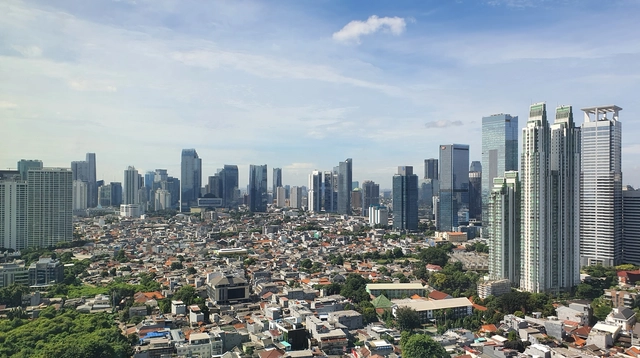
Jakarta Becomes the World’s Most Populous City, According to New UN Data

Jakarta has become the world's most populous city, according to the World Urbanization Prospects 2025 released by the United Nations Department of Economic and Social Affairs (UN DESA). Using an updated and harmonized method for defining urban areas, the report estimates Jakarta's population at nearly 42 million, placing it ahead of Dhaka, which is about 40 million, and Tokyo, 33 million. The revised ranking illustrates how updated measurement criteria and continued demographic growth are reshaping understandings of urban scale in Asia and globally.

Khudi Bari: Architecture for Climate Displacement

Subscriber Access | 

In the low-lying deltas of Bangladesh, water defines both life and loss. Every year, millions are forced to rebuild after floods wash away their homes, crops, and livelihoods. In these precarious territories, the act of building has become an act of resilience. It is here that Khudi Bari emerges as a modest yet radical proposal. Designed by Marina Tabassum Architects, the project provides a lightweight, modular, and affordable dwelling for communities displaced by climate change. Recognized as one of the winners of the 2025 Aga Khan Award for Architecture, it represents a form of architecture that empowers rather than imposes.

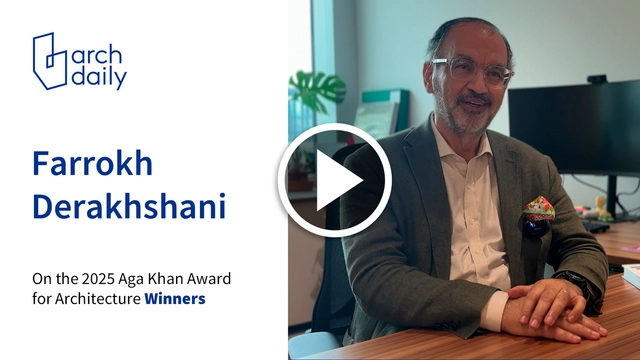
“Our Message This Time Was Optimism”: In Conversation with Farrokh Derakhshani, Director of the Aga Khan Award for Architecture

Today, September 2, the seven winners of the 16th Cycle (2023–2025) of the Aga Khan Award for Architecture were announced, following on-site reviews of the 19 shortlisted projects revealed in June. Established in 1977, the Award seeks to identify and encourage building concepts that respond to the physical, social, and economic needs of communities with a significant Muslim presence, while also addressing their cultural aspirations. To understand the vision behind this cycle's winners, ArchDaily's Editor-in-Chief, Christele Harrouk, spoke with Farrokh Derakhshani, who has been with the award for over four decades. He described the initiative as "a curated message to the world," a message that evolves with the times.

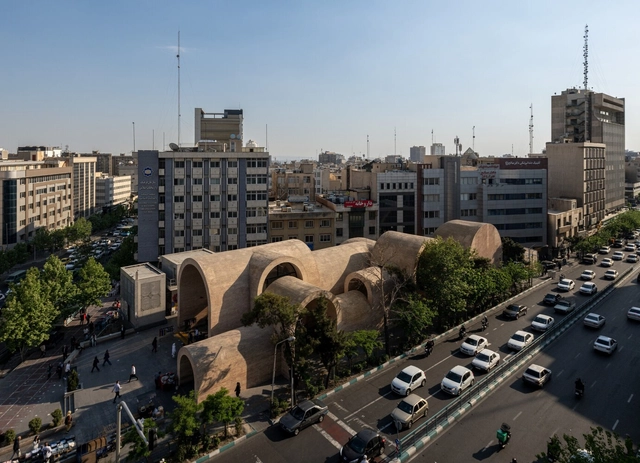
Aga Khan Award for Architecture Announces 2025 Winners

The independent Master Jury of the 16th Award Cycle (2023–2025) of the Aga Khan Award for Architecture has announced seven winners, selected following on-site reviews of projects shortlisted earlier in June. Collectively, the awarded works demonstrate architecture's potential to act as a catalyst for pluralism, community resilience, social transformation, cultural dialogue, and climate-responsive design. Two projects from Iran, and one each from Bangladesh, China, Egypt, Pakistan, and Palestine, will share a prize of $1 million, among the most significant awards in the field of architecture.

Designing with Kids: 5 Participatory Projects that Empower Young Users

A good design should be adapted to the user's needs, and participatory design aims to reduce the distance between architects and those for whom the project is made. In this sense, projects for children that welcome them as central actors in the design process demonstrate how the potential of active listening and co-designing is reflected in spaces adapted to a smaller scale and to an audience in a phase of intense learning.

The World's Largest Cities in 2025 by Population

Every year, World Population Day is observed on July 11th, aiming to increase people's awareness of various population issues, such as the importance of urbanization, gender equality, poverty, health, and human rights. In 2025, under the theme "Empowering Youth to Build the Families They Want," the United Nations draws attention to the largest generation of young people in history, many of whom are coming of age in rapidly urbanizing contexts. Urban centers remain key to understanding these demographic patterns, as cities continue to attract populations seeking opportunity, stability, and access to essential services. Today, more than half of the global population resides in urban areas, a share projected to increase to 66% by 2050.

Aga Khan Award for Architecture 2025 Announces 19 Shortlisted Projects from 15 Countries

The Aga Khan Award for Architecture (AKAA) has announced the 19 shortlisted projects for its 2025 cycle. Selected from a pool of 369 nominations, these projects will compete for a share of the USD 1 million prize, one of the most significant awards in the field. The shortlist was determined by an independent Master Jury composed of nine members: Azra Akšamija, Noura Al Sayeh-Holtrop, Lucia Allais, David Basulto, Yvonne Farrell, Kabage Karanja, Yacouba Konaté, Hassan Radoine, and Mun Summ Wong. The Jury will meet later this summer to review on-site evaluations and select the final recipients of the 16th Award Cycle (2023–2025).

Contemporary Mosques: Using Context as Driver over Symbolism

Subscriber Access | 

The configuration of the mosque, the worshipping place for Muslims, traces its history to the courtyard of the religion's founder. The first mosques were, therefore, simple open spaces marked for ritual prayer use. Over the years and centuries, they would gain multiple standard, functional features, such as the mihrab, a niche that indicates the direction of prayer, and the minbar, a pulpit for the preacher to give the sermon. Other elements also became common, such as domes and minarets, which were historically used for the call to prayer. These had the additional purpose of signifying the function of the building as a mosque and were used by rulers and benefactors to elevate its grandeur.

The Price of Growth: Urban Sprawl and Sustainability in South Asian Cities

Subscriber Access | 

With millions of residents flocking to metropolitans each year, South Asia is witnessing staggering levels of urban development. Growth brings economic prosperity and ecological strain as concrete jungles replace natural habitats. The region, home to countries such as India, Pakistan, Bangladesh, Sri Lanka, Bhutan, the Maldives, and Nepal, is faced with addressing contextual challenges when it comes to balancing urbanization with environmental sustainability. These negotiations are fairly nuanced, with a need to understand the economic, social, and political scenarios systematically in each country.