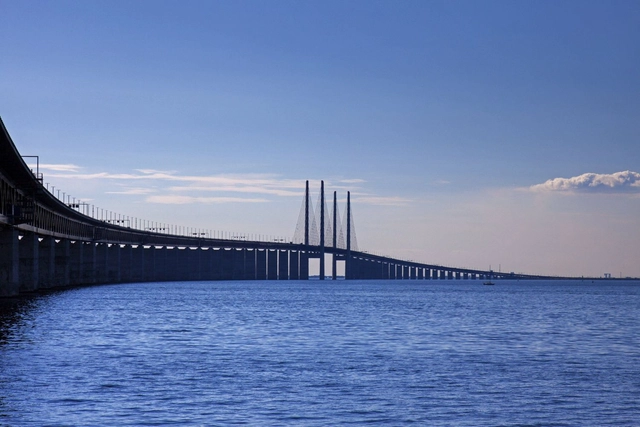
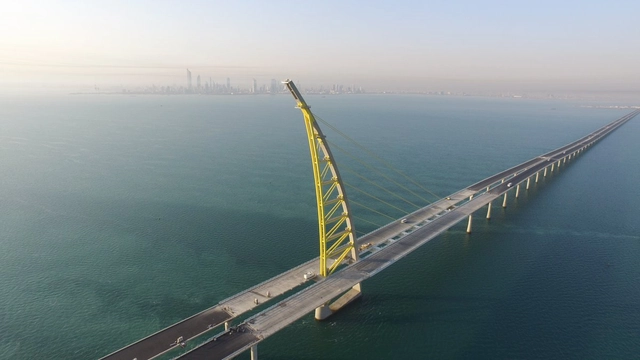
Sheikh Jaber Al-Ahmad Al-Sabah Causeway. Image Courtesy of Hyundai E&C
The world's longest bridge by Hyundai E&C and Combined Group Contracting is nearing completion in Kuwait. Called the Sheikh Jaber Al-Ahmed Al-Sabah causeway, the $3 billion project is one of the largest infrastructure projects in the world. Running a total length of over 30 miles, the bridge will connect Kuwait City on the south of the bay with Subiya New Town to the north. The causeway joins a larger development plan for the revival of the ancient Silk Road trade route.
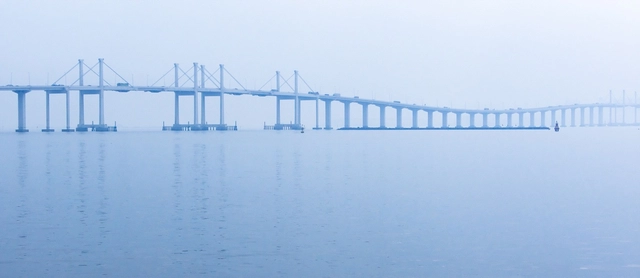
The world’s longest sea bridge has officially opened to traffic, connecting Hong Kong and Macau to the Chinese mainland. The 34-mile (55-kilometer) “Hong Kong-Zhuhai-Macau Bridge” features a range of unusual features, with The Guardian reporting “cameras to detect yawning, drivers forced to wear heart monitors and access restricted to the political elite and charity donors.”
Opened by Chinese president Xi Jinping, the $20billion bridge was constructed of 400,000 tonnes of steel, the equivalent of 60 Eiffel Towers. The bridge has been designed to withstand earthquakes and typhoons of up to 340 kilometers per hour.
https://www.archdaily.com/904728/the-worlds-longest-sea-bridge-opens-in-chinaNiall Patrick Walsh
This article was originally published on May 9, 2016. To read the stories behind other celebrated architecture projects, visit our AD Classics section.
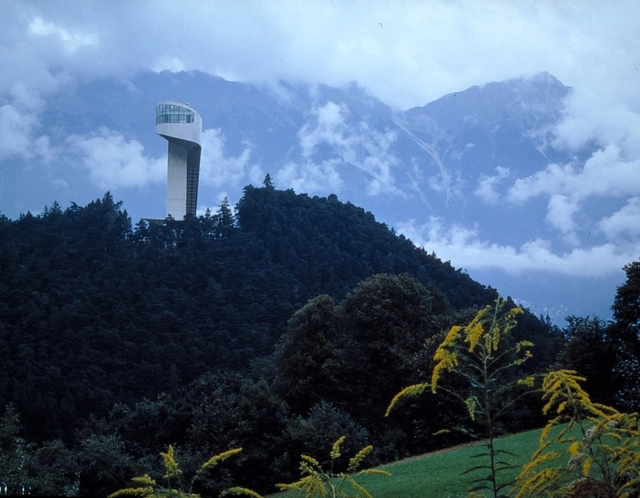
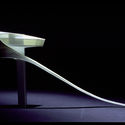
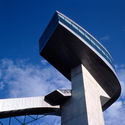
Situated on the peak of Bergisel Mountain above the picturesque alpine city of Innsbruck, Austria, the Bergisel Ski Jump represents the contemporary incarnation of a historic landmark. Designed by Zaha Hadid between 1999 and 2002, the Ski Jump is a study in formal expression: its sweeping lines and minimalist aesthetic create a sense of graceful, high-speed motion, reflecting the dynamic sensation of a ski jump in a monumental structure that stands above the historic center of Innsbruck and the mountain slopes around.
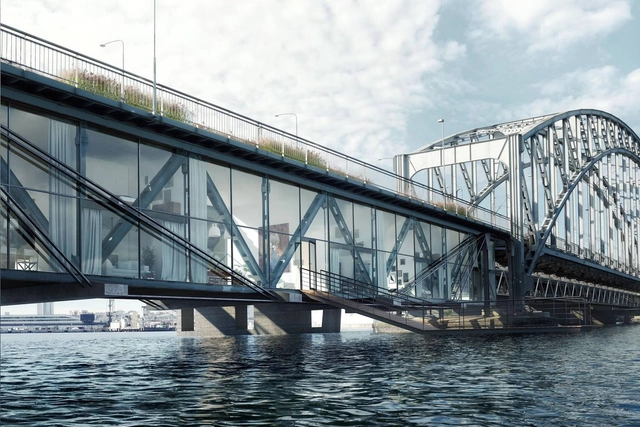
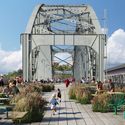
Lidingö Bridge Village. Image Courtesy of Urban Nouveau
Swedish studio Urban Nouveau has created a plan to save Stockholm's Gamla Lidingöbron bridge by transforming it into a linear park and housing. Built in the 1920s, the rail and pedestrian bridge features a lattice structure and arched steel trusses that would frame 50 new apartments and a pedestrian park above. While the local council has made plans to demolish the Lidingö bridge, Urban Nouveau launched a petition with the aim of saving the bridge and re-purposing it for the city.
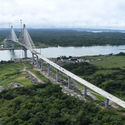
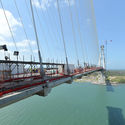
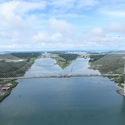
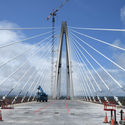
The Panama Canal is to soon celebrate another milestone in its long history, with the imminent completion of the what will be the longest concrete four-lane cable-stayed structure in the world. With a 1750-foot (530-meter) central span, the Atlantic Bridge will connect the banks of the canal’s Atlantic Ocean entrance when it opens in early 2019.
Construction of the bridge began in 2013, in an effort to connect the seaport of Colon to communities west of the Canal. The bride was designed by the China Communication Construction Company consisting of HPDI and Louis Berger Group.
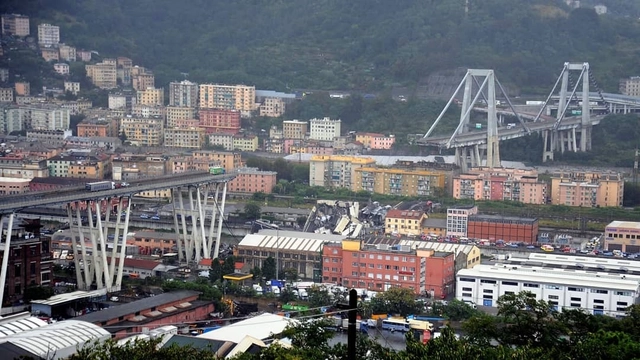
39 people are now reported to have died following the collapse of the Morandi motorway bridge in Genoa, Italy. The incident happened on Tuesday 14th August, when one of the bridge’s structural components, comprising of pre-stressed concrete stays and trestles, collapsed onto a railway line and warehouse 150 feet (45 meters) below.
The cause of the collapse is not yet known, however, attention is now turning to the bridge’s maintenance record, concerns of its integrity stretching back decades, and how the collapse sits within the broader context of aging Italian infrastructure.
https://www.archdaily.com/900260/the-deadly-genoa-bridge-collapse-was-predicted-and-avoidableNiall Patrick Walsh
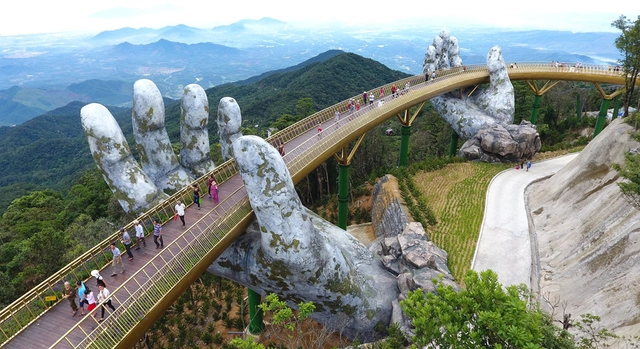
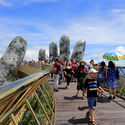
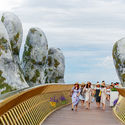
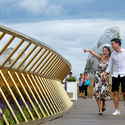
In the mountains above Da Nang, Vietnam sits a unique piece of bridge design. Winding its way around a 150-meter course lined with flowers, a golden bridge shimmers against the Ba Na Hills, supported by a pair of giant hands.
The Golden Bridge opened to visitors in early June, in the tourist retreat of Thien Thai Garden. The bridge sits 1,400 meters above sea level, an altitude which creates the illusion of a silk strip hiding in the clouds above Da Nang.
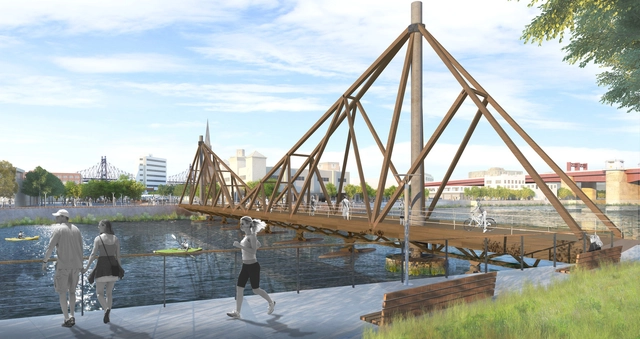
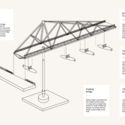
If you stand in Manhattan Avenue Park in Brooklyn’sGreenpoint neighborhood, you’ll see the Long Island City skyline across a small creek. On the Greenpoint side of the creek, a historic neighborhood of row houses and industrial sites is rapidly growing. On the Long Island City side, high-rise apartments and hundreds of art galleries and studios line the East River. Just a stone’s throw away, Long Island City can feel like a world apart from Greenpoint. That’s in large part due to the fact that only one bridge connects the neighborhoods—and it’s meant more for cars than pedestrians or cyclists. Isn’t there a better way? Architect Jun Aizaki thinks so. For the past few years, he and his team at CRÈME Architecture and Design have been working on the so-called “Timber Bridge at Longpoint Corridor."
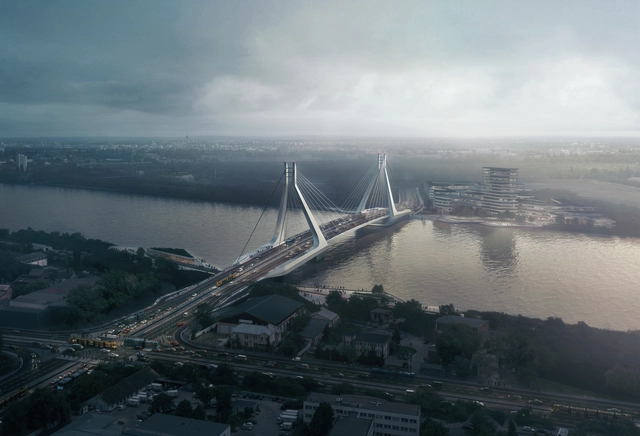
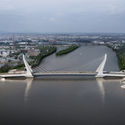
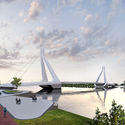
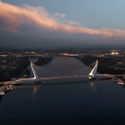
UNStudio, in collaboration with Buro Happold Engineering, has won an international competition for the design of a new bridge spanning the River Danube in the Hungarian capital of Budapest. Their scheme will serve as a blueprint for the "Galvani Bridge" connecting South Buda and Csepel, balancing graceful aesthetics with strong performance.
The competition for the bridge was conceived with the goal of decreasing the 600,000-strong daily traffic load on existing bridges across the Danube by 40,000. As well as easing traffic congestion, the bridge is intended to embody a liveable, loveable, healthy image of 21st-century Budapest.
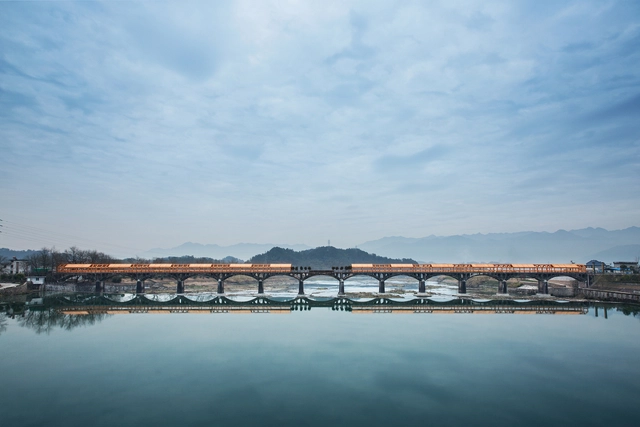
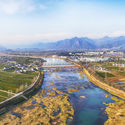
Travel seven hours by car in a Southwest direction from Shanghai and you will arrive in Songyang County. The name is unfamiliar to many Chinese people, and even more foreign to those living abroad. The county consists of about 400 villages, from Shicang to Damushan.
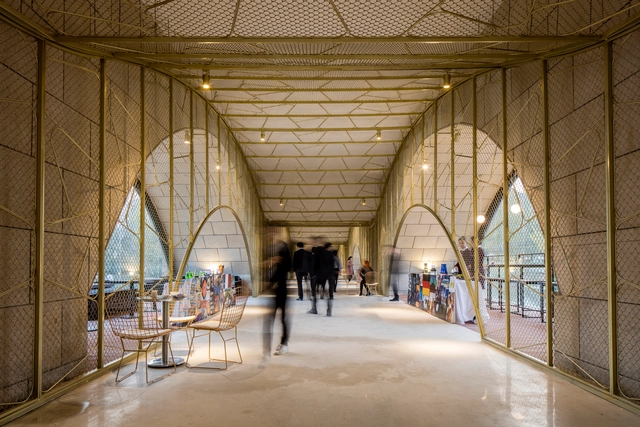
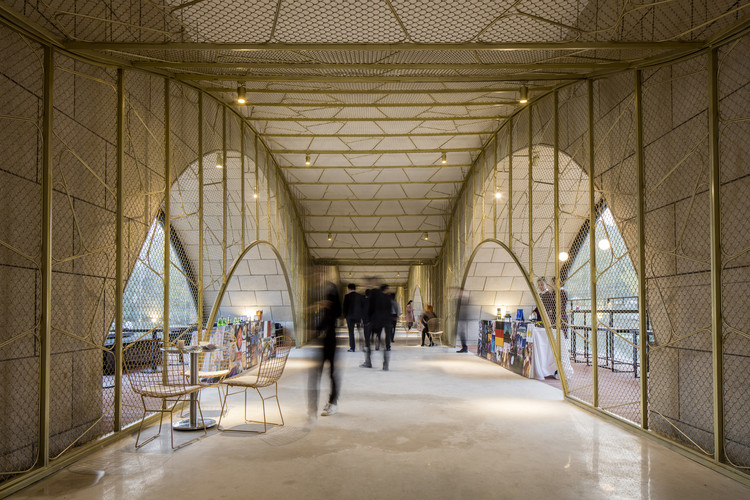
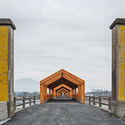
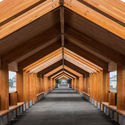
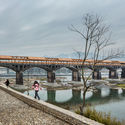
Here, undulating lush green terraces hug the sides of Songyin river valley, itself the one serpentine movement uniting the lands. Follow the river and you will see: here, a Brown Sugar Factory; there, a Bamboo Theatre; and on the other side, a stone Hakka Museum built recently but laid by methods so old, even the town masons had to learn these ways for the first time, as if they were modern methods, as if they were revolutionary.
And maybe they are. Songyang County, otherwise known as the “Last Hidden Land in Jiangnan,” may look like a traditional Chinese painting with craggy rock faces, rice fields and tea plantations, but it has also become a model example of rural renaissance. Beijing architect Xu Tiantian, of the firm DnA_Design and Architecture, has spent years surveying the villages of Songyang, talking to local County officials and residents, and coming up with what she calls “architectural acupunctures.”
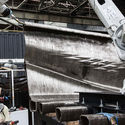
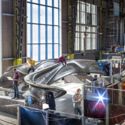
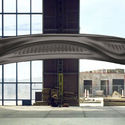
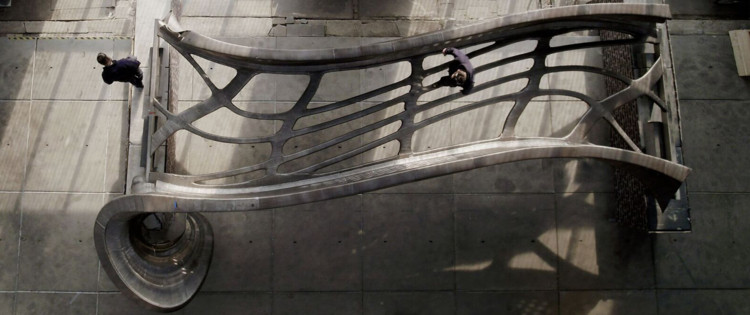
Late last year, we reported on the progress of world’s first 3D printed steel bridge designed by Netherlands-based MX3D. With the design now finalized, the start-up company has announced that the span of the bridge is now complete.
The final round of structural tests is expected to take place this summer, just three years after the project was first announced. After the structural integrity has been tested, the final design will be modified and the completion of the bridge will follow only a few months after. MX3D hopes to showcase the potential of their multi-axis 3D printer during the Dutch Design Week, and the first of its kind bridge is planned to be installed into its final location in a canal in Amsterdam sometime next year.
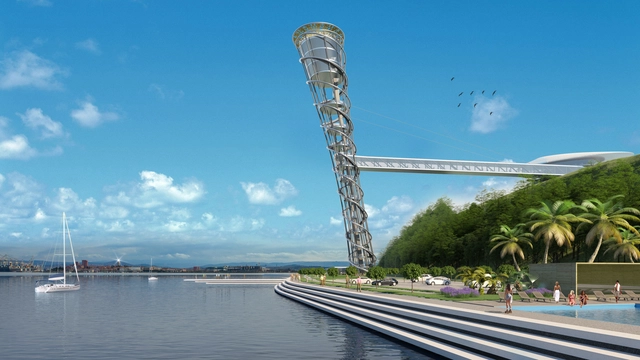
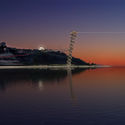
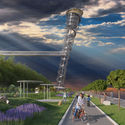
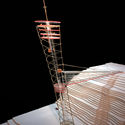
Massimiliano and Doriana Fuksas have released images of their competition-winning “Capo Grande Tower,” a tower and bridge situated on the Slovenian coastline linking Giusterna Beach to Monte San Marco. Designed in collaboration with Slovenian architect Sandi Pirš, the scheme consists of a 365-foot-high (111-meter-high) double-ellipse structure inclined slightly towards the sea, seeking to “immediately become a new symbolic element of the city.”
A Bridge Over Troubled Water An Architectural Competition
As part of our 2017/18 research theme discussing the infrastructural implications of the United Kingdom's withdrawal from the European Union, the school has launched an international architecture competition for a fixed link connecting France with the UK.
The office of Santiago Calatrava, known for their incredible feats of architecture and engineering, has come under scrutiny for the failures of three cable connectors on their Margaret McDermott Bridge in Dallas, Texas, which has been delayed in opening due to the failures that occurred in Spring of 2016. However, while the office has taken heat for the malfunction, as the Dallas Observer reported, a newly released set of documents show that Calatrava’s team tried to insist on testing the strength of the cables, even going so far as offering to loan money for these tests, but these offers were declined by the city.
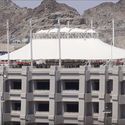
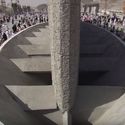
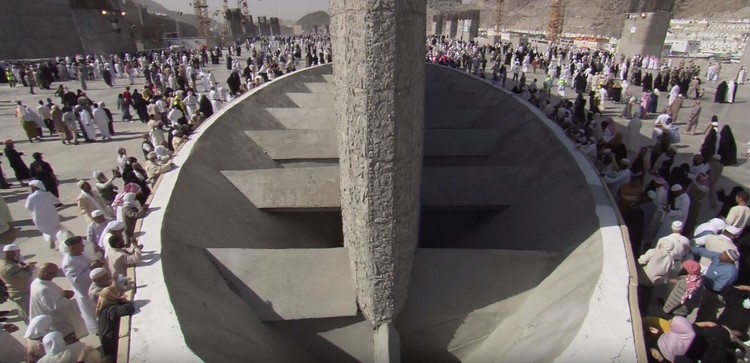
Every year, 3 million Muslim pilgrims from over 120 different countries travel to Makkah (commonly transliterated as Mecca), Saudi Arabia, to perform Hajj (pilgrimage) in the Islamic month of Zilhaj. Due to the ever-increasing number of visitors each year, overcrowding has led to deadly accidents and stampedes in the past; to ensure crowd safety and better circulation, the Makkah Development Authority (MDA) engaged Otis, one of the world’s leading manufacturers of people-moving products, and successfully oversaw the redesigning of the Jamarat Bridge.
Watch the video above for a summary of the architectural design of the Jamarat Bridge, or read on to see a 7-minute mini-documentary about the structure's development.










.jpg?1535539469&format=webp&width=640&height=580)




.jpg?1528243827 "Courtesy of CRÈME Architecture and Design")



.jpg?1524158077)
.jpg?1524158077&format=webp&width=640&height=580)
.jpg?1524158612 "Brown Sugar Factory. Image © Wang Ziling")
.jpg?1524163466 "Teahouse, Damushan Tea Valley. Image © Hao Chen")
.jpg?1524164629 "Teahouse, Damushan Tea Valley. Image © Jiang Xiaodong")
.jpg?1524158127 "Bamboo Pavilion. Image © Zhou Ruogo")
.jpg?1524158212 "Bamboo Pavilion. Image © Zhou Ruogo")
.jpg?1524163398 "Bridge at Shimen Village. Image © Han Dan")
.jpg?1524163448 "Bridge at Shimen Village. Image © Wang Ziling")
.jpg?1524163483 "Bridge at Shimen Village. Image © Wang Ziling")
.jpg?1524163637 "Wang Jing Memorial Hall. Image © Wang Ziling")
.jpg?1524158077)