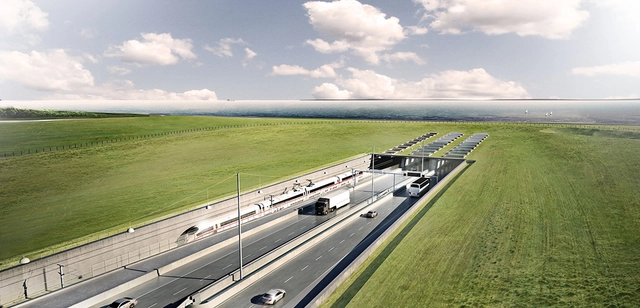
The world’s longest immersed road and rail tunnel design, the Fehmarnbelt link gets a go-ahead. The 18 km infrastructure, the longest of its kind, connecting Denmark’s Lolland Falster region with Germany’s Schleswig Holstein region across the Baltic Sea will shorten the journey between both countries to just 10 minutes by car and seven minutes by train.
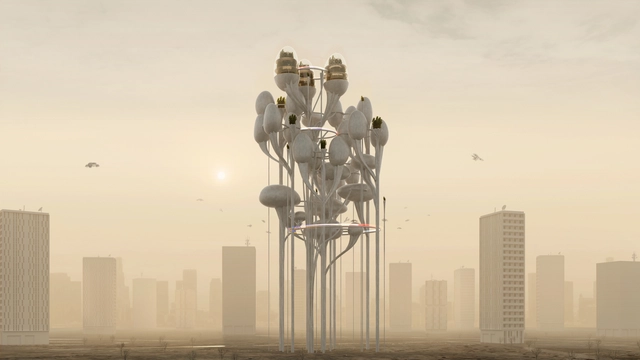
Force Majeure - Futura. Image Courtesy of Jeanne Schultz Design Studio
Putting together competition entries from all around the world, this week’s curated feature for Best Unbuilt Architecture showcases inspiring approaches and concepts. Submitted by our readers, the selection highlights uncommon proposals, part of international contests. While some are winning projects, others received honorable mentions.
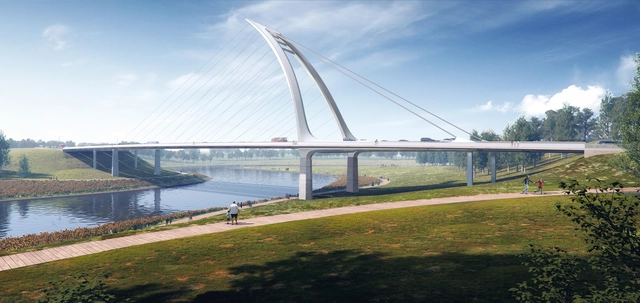
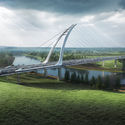
Serie imagines stacked timber pavilion-like offices, Schlaich Bergermann Partner, LAVA, and Latz + Partner design new pedestrian and cycle bridge over the Neckar River in Heidelberg, Germany and Aidia Studio create an Oculus in the Emirati desert. Other competition entries include a landscaped avenue by ZXD Architects in Hangzhou, a community school in Egypt by Hand Over, a winning pavilion for the Singapore’s Archifest 2020 by ADDP Architects and OWIU Design Studio; and a Baha’i House of Worship by SpaceMatters in India.
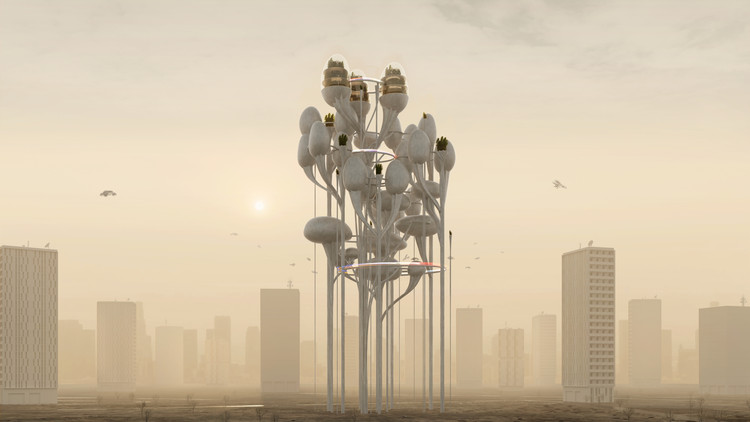
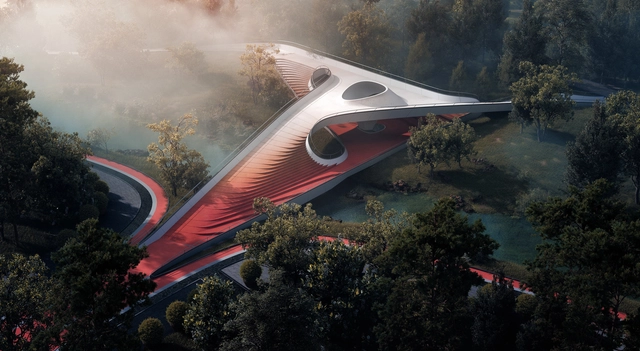
This week’s curated selection of Best Unbuilt Architecture encompasses conceptual proposals submitted by our readers. It features diverse functions and tackles different scales, from a spiraling bridge in China to a transportation hub dedicated primarily to space travel in Japan.
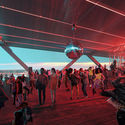
Comprising uncommon design approaches, this article introduces a humanitarian architectural response to the needs of the residents in an informal Egyptian settlement. In the master plan category, a Green city proposal highlights how we should develop our cities and neighborhoods in the future, and the first net-zero energy airport in Mexico reinterprets holistic design approaches. Moreover, the roundup presents different cultural interventions, from a museum in Botswana, an installation at the Burning Man festival by AI Studio, and an observatory in Vietnam.
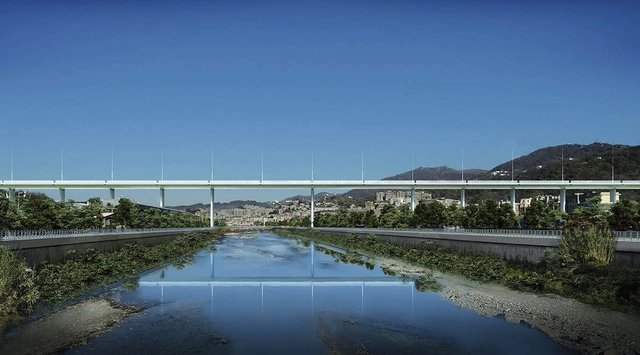
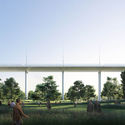
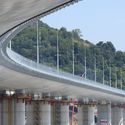
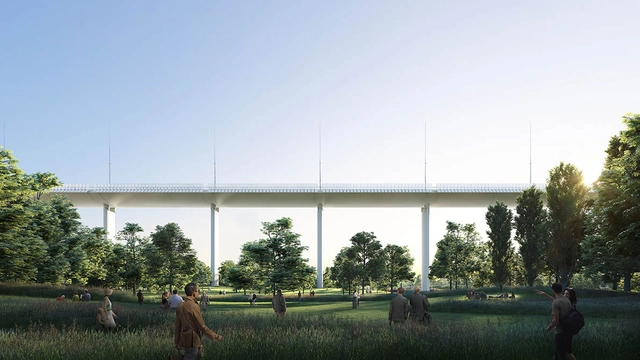
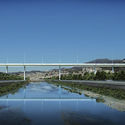
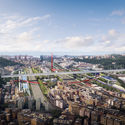
Designed by Renzo Piano, Genova San Giorgio, the new viaduct over the Polcevera has been inaugurated. Created after the tragic collapse of the Morandi Bridge in 2018, the new bridge in place will be open to traffic starting August 5, 2020.
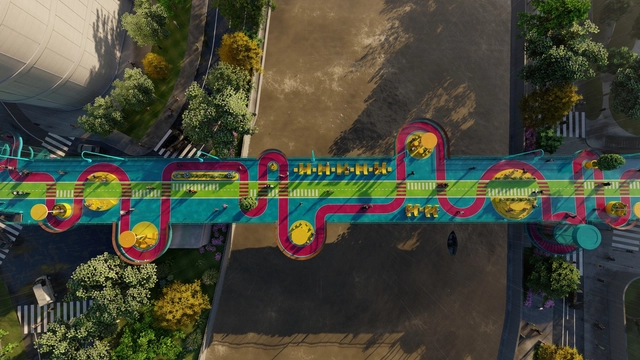
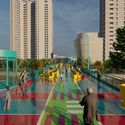
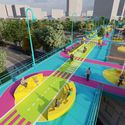
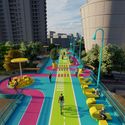
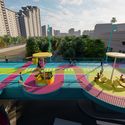
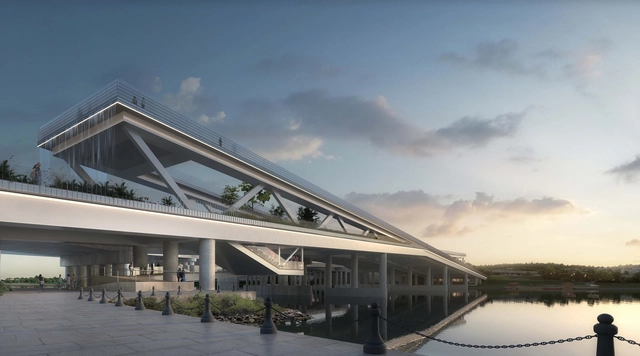
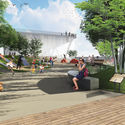
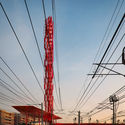
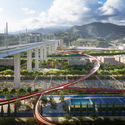
100architects has designed a proposal that regenerates the Puji Road pedestrian bridge in Shanghai, China. Entitled High Loop, the proposal reimagines the 1-kilometer elevated platform, adding playfulness and color to the city, without transforming the structure.
North Design Union Headquarters. Image Courtesy of SPIM Studio
Highlighting proposals presented in international competitions, this week’s selection of Best Unbuilt Architecture combines various functions, diverse conceptual approaches, and innovative ideas. Submitted by our readers, these projects include an awarded pavilion in Vietnam, a cantilevered-bridge proposal in New York, and a sustainable botanical center in Poland, amongst others from all over the globe.
With a lot of projects coming in from China, we have compiled in this roundup, a design for a children’s hospital and education building, as well as a national science center encompassing research buildings, laboratories, exhibition spaces, commercial use, and public facilities. On another hand, for the first time, a virtual project is featured, celebrating the LGBTQ community with a vessel of a layered and labyrinthine system of baths, showers, and pools.
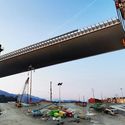
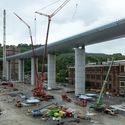
The final piece of the new Morandi Bridge decking in Genoa, Italy has been put in place. Designed by Renzo Piano, the structure is being built to address the tragic collapse of the original bridge that claimed 43 lives. In the aftermath of the disaster, Piano offered to donate the design of a bridge to replace the old one, having been deeply affected by the tragedy. The latest announcement comes from PERGENOVA, the company established to design and build the new bridge.
OMA / Jason Long’s 11th Street BridgePark was granted approval by the National Capital Planning Commission (NCPC) at the beginning of April. Designed by OMA, with landscape architects OLIN, and structural engineers WRA, the project is the winning entry of the design competition held back in 2014.
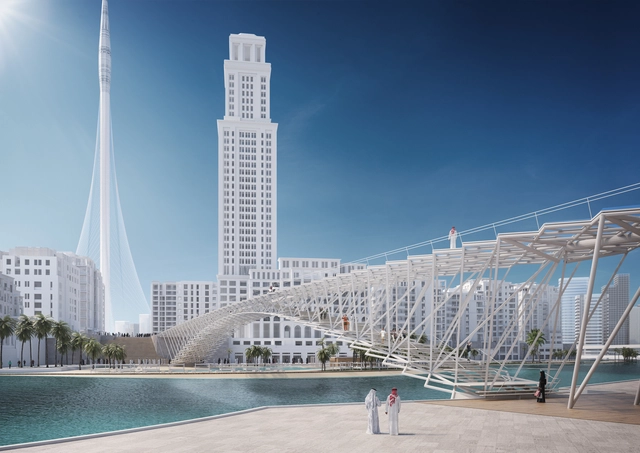
IJP Architects and structural engineers AKT II unveil their concept design for a new 230m Dubai Creek Harbour Central Footbridge, after a 2019 competition. Commissioned by Emaar, the project will connect the soon to be world’s tallest tower, the Dubai Creek Tower and Dubai Creek Harbour.
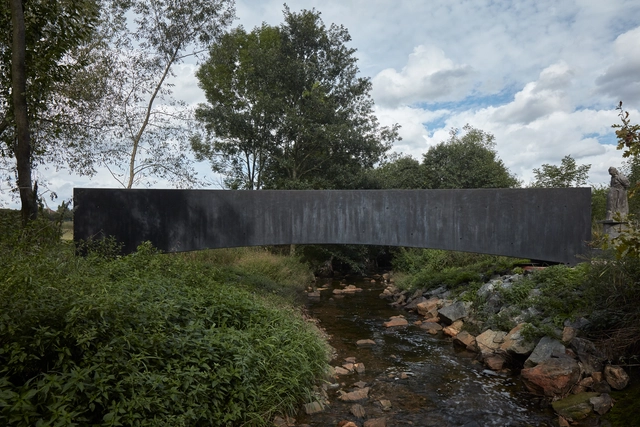
Ondřej Císler from Aoc architects and Petr Tej from the Klokner Institute at CTU in Prague have designed a bridge over the Dřetovice stream in Vrapice, near the city of Kladno in the Czech Republic.
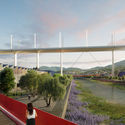
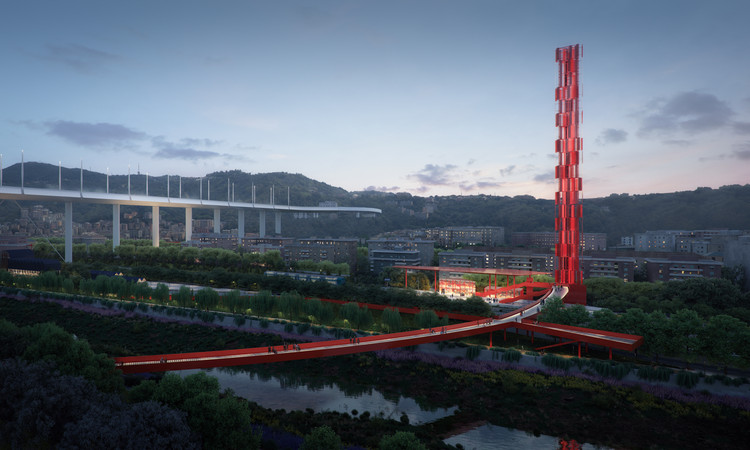
Stefano Boeri Architetti, Metrogramma Milano and Inside Outside have won the competition for the Parco del Ponte in Genoa, Italy. The urban project is located under the new bridge, designed by Renzo Piano to replace the Morandi Bridge that collapsed in August 2018.
The Shanghai team of Schlaich Bergermann Partner has created two winning bridge designs as part of the Jiangxi River Bridge competition. The bridges are made for Tianfu Airport City, a high-tech industrial development zone in the south of Chengdu, China. Featuring elegant and futuristic forms, the bridges are made to be beacons for the city as they rise above the Jiangxi River.
Courtesy of the Massachusetts Institute of Technology and the Amsterdam Institute for Advanced Metropolitan Solutions
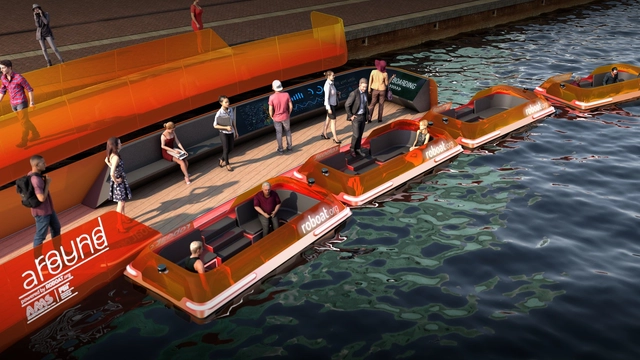
The roundAround project, developed by researchers at MIT Senseable City Lab, in collaboration with the Amsterdam Institute for Advanced Metropolitan Solutions, is basically a bridge made of autonomous boats called Roboats. The least traditional solution, roundAround, but the most versatile and modular answer, connects the waterway between Marineterrein and the City Center in Amsterdam, allowing the transportation of people and goods.
In east London, on the bank of the Lea River, Thomas Randall-Page imagines a project that reboots an under-used and forgotten area through the construction of a rotating bridge. The manually rolling system will allow boats to pass, and will also act as a pedestrian bridge and grant full public access to the Lea River Park.
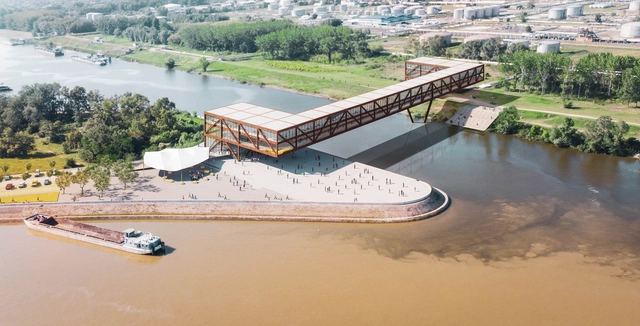
ARCVS has released details of their first place entry for a competition to design a multifunctional bridge in Novi Sad, Serbia. Spanning the River Danube, the “Elbow Shadow” bridge contains a hotel and office building alongside the pedestrian walkway. The scheme combines European influences such as the Ponte Vecchio and Rialto Bridge with vernacular responses to the river channels.
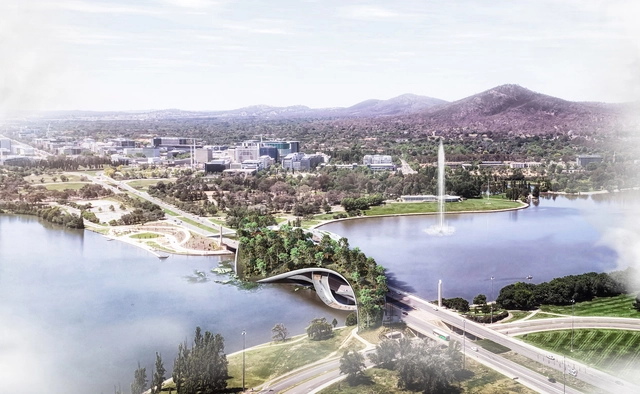
CX Landscape has released details of their proposal for the “Ribbons of Life,” a living bridge for Canberra, Australia. Submitted as part of the Remaking Lost Connections design competition organized by the Australian Institute of Landscape Architects (AILA), the scheme sought to create a water axis based on the existing road bridge above Lake Griffin in Canberra city center.
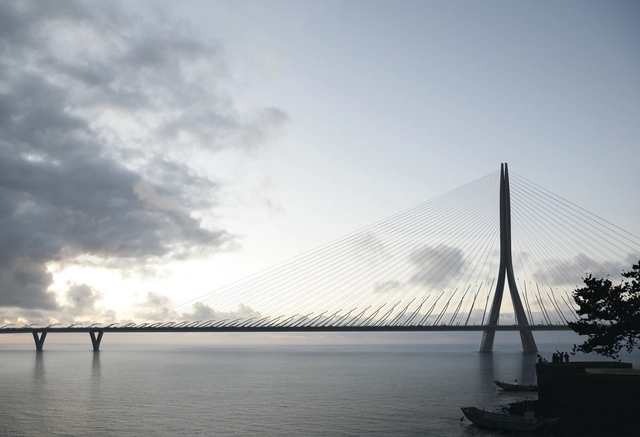
Construction has begun on Zaha Hadid Architects’ Danjiang Bridge in Taiwan, the world’s longest single-mast, asymmetric cable-stayed bridge. At 920 meters in length, the bridge spans the mouth of the Tamsui River and is integral to the infrastructural upgrading program of northern Taiwan.
The bridge seeks to minimize its visual impact by using a single concrete mast to support its main 450-meter span with dedicated road, cycle, and pedestrian lanes. The scheme also accommodates future expansion of the Danhai Light Rail network across the Tamsui River.
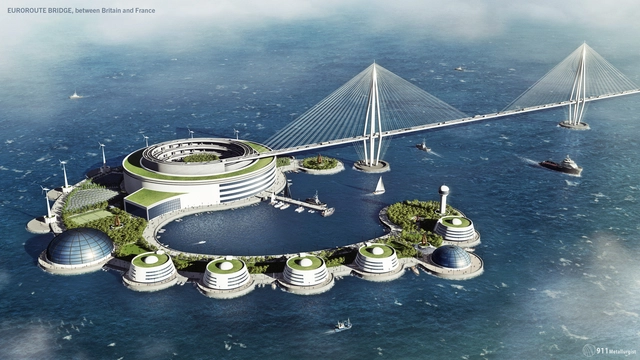
Whether stopped in their tracks by finance, planning, or engineering difficulties, the four bridge designs listed below embody a marriage of art and engineering too advanced for their time. From a proposal for a EuroRoute Bridge between Britain and France, to a 12-rail, 24-lane bridge across the Huston River in New York, all four designs share a common, ambitious, yet doomed vision of crossing the great divide from pen and paper to bricks and mortar.
https://www.archdaily.com/910227/4-mega-bridges-that-were-never-builtNiall Patrick Walsh




2020_canaria__dentsu__noiz__Space_Port_Japan_Association.jpg?1597222708 "SPACEPORT CITY. Image Courtesy of Noiz Architects")