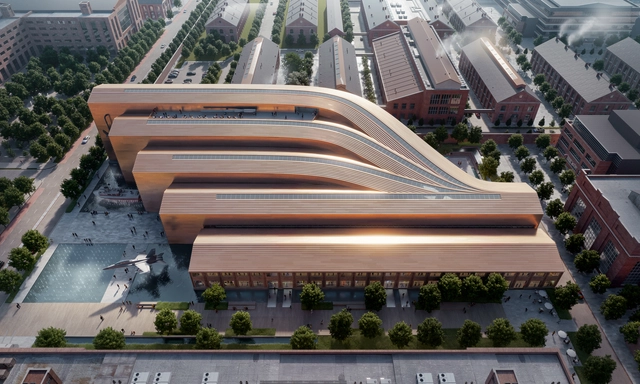
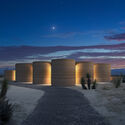
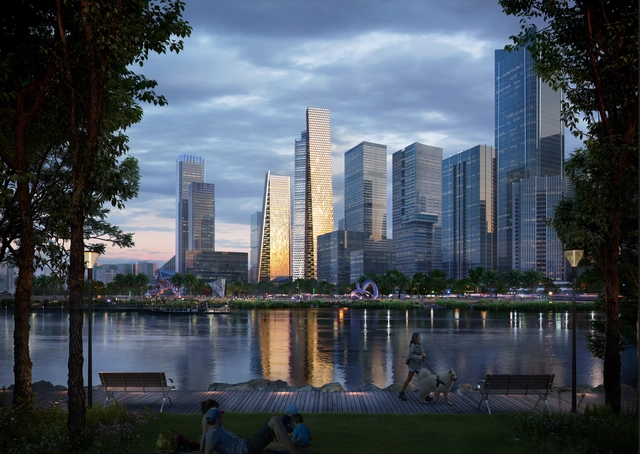
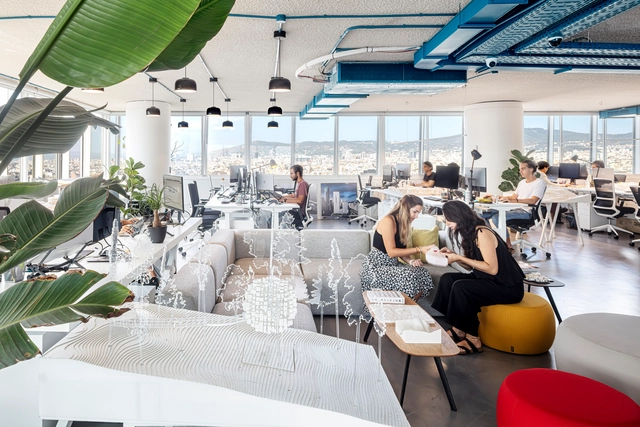
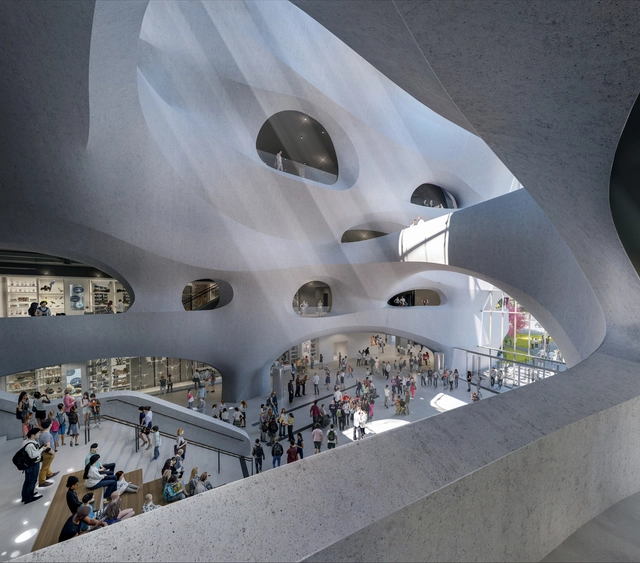
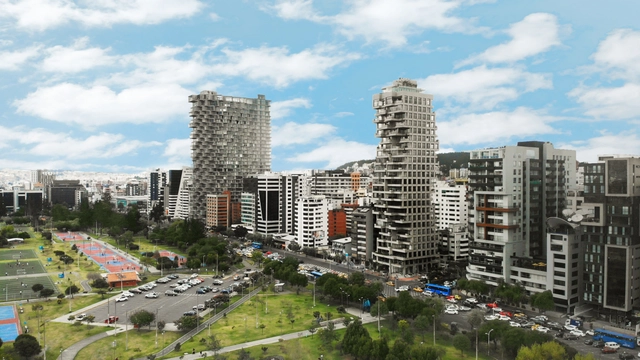
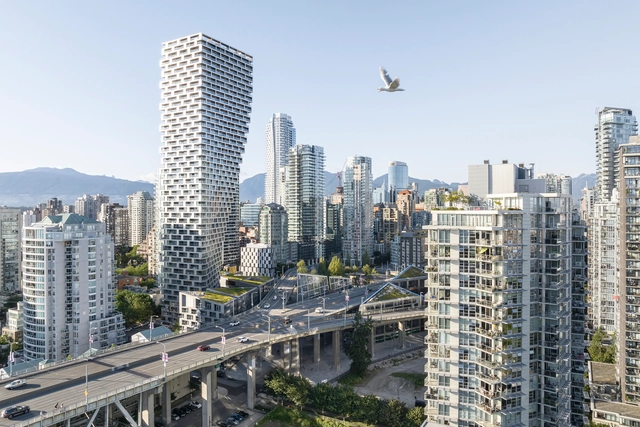
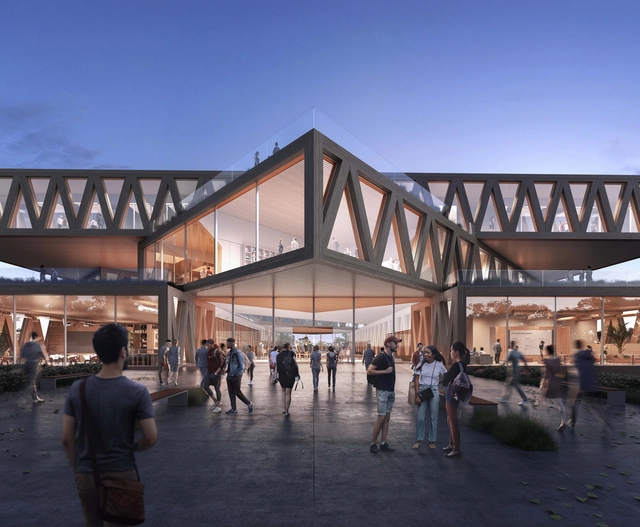
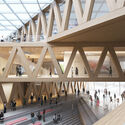
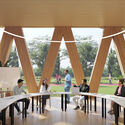
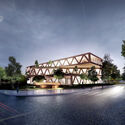
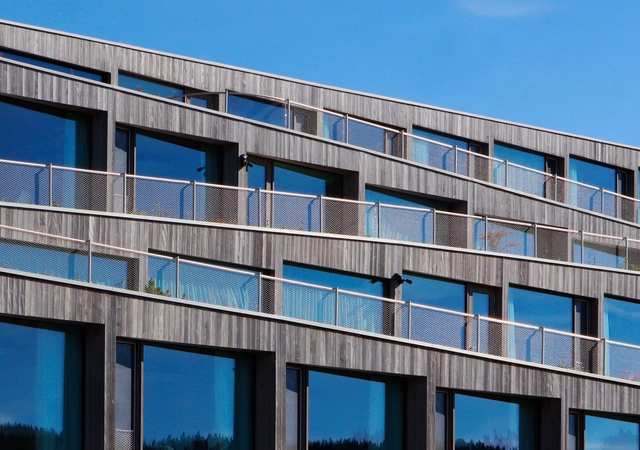
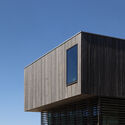
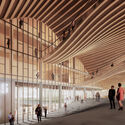
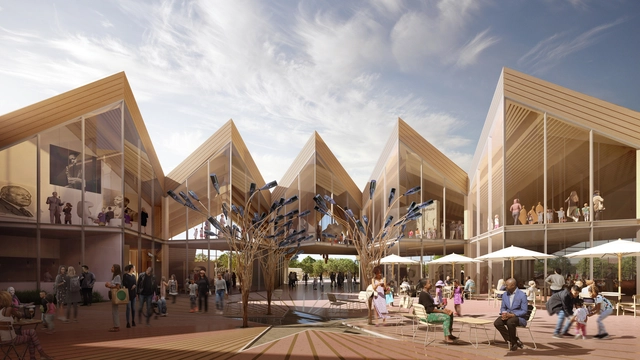
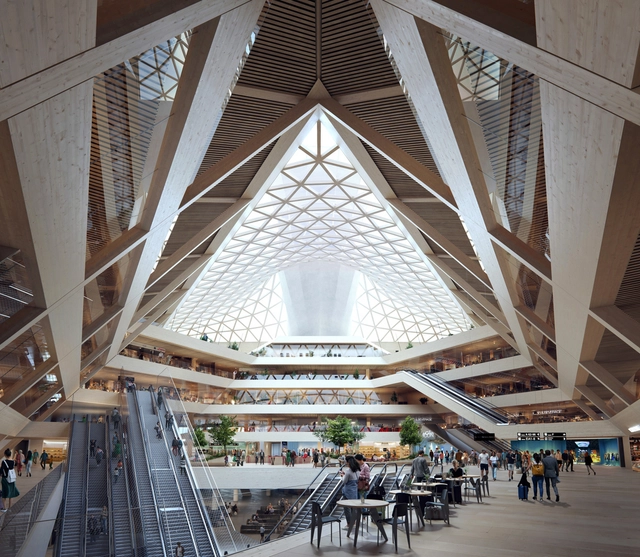
Selected among five invited architects including OMA, Snøhetta, 3XN, and Toyo Ito & Associates., the BIG-designed building for the Basque Culinary Center, is a new food tech hub located in San Sebastian, Spain. TheGastronomy Open Ecosystem (GOe) is in fact a 9,000 m2 project that seeks to push forward the art and science of gastronomic innovation, bringing together food start-ups, researchers, and chefs. Currently in progress, the building will focus on the development of alternative proteins, agricultural robotics, the prevention of food waste, and much more.
BIG (1st place) - Exterior view. Image Courtesy of Mozses
The City of Prague announced the international competition results for the design of the Vltava Philharmonic Hall. The winning project is designed by Danish studio Bjarke Ingels Group – BIG. The new concert hall aims to become a focal point for the city and reinforce Prague's reputation as a European cultural capital. The proposed volume of the new Philharmonic Hall presents a recognizable image while also being well integrated into the complex topography of the Vltava riverbank. Visitors are invited to follow the meandering series of plazas connected by sloping roofs that take them from the riverbank to the rooftop, promising views of the historic city center of Prague. Spanish architecture practice Barozzi Veiga collaborated with local office Atelier M1 and won second place. Bevk Perović Arhitekti and Petr Hájek Architekti won third and fourth place, respectively, while Snøhetta's proposal was declared the fifth winner.
Google’s first ground-up campus, designed by BIG - Bjarke Ingels Group and Heatherwick Studios in collaboration with Google’s design and engineering teams, opened in Silicon Valley. The campus’ mission is to create a human-centric design for the future of Google’s workplace and set new global sustainability standards for construction and office design. The site aims to operate entirely on carbon-free energy by 2030; it integrates the most extensive geothermal pile system in North America and is net-water positive. The campus also includes 17 acres of high-value natural areas, including wet meadows, woodlands, and marsh.
UN-Habitat and blue tech firm OCEANIX unveiled the design of the world’s first prototype for a sustainable floating city, to be hosted by Busan. The project is intended to provide a scalable framework of development for coastal cities facing land shortages and rising sea levels. With a population of 3.4 million people, Busan is the second-largest city in the Republic of Korea and, at the same time, one of the most important maritime cities, making it a suitable environment for deploying the floating city prototype.
For the past couple of years, the metaverse has been gaining prominence, prompting architects to consider its implications for our relationship with the physical environment and how can architecture contribute to this new virtual space. Architecture in the metaverse is no longer a fringe subject, having been embraced by established firms. "The metaverse is where much of the architectural action and innovation will be happening in the coming period,"says Patrick Schumacher. Unbound from restraints such as physics, material properties and construction costs, the metaverse unlocked a new realm of architectural expression. The following looks at some of the various ways the profession engages with the expanding field of digital environments.
Bjarke Ingels Group, along with Argenia Ingeniería y Arquitectura, Buro Happold, and HCP Arquitectos y Urbanistas, have received the first prize in an international multidisciplinary competition for the design of the new Joint Research Center Site Headquarters in Seville, Spain. A "cloud of pergolas" inspired by the shaded plazas and streets of Sevilla will shelter the entire JRC site, plaza, garden, and the building underneath, supported by a series of columns covered with photovoltaics that contribute positively to the building’s operational footprint.
It is nearly impossible nowadays not to present accompanying renders when proposing a new project. No matter the method, software or style that is used, it is a valuable reference that bares more practical weight than one might think. Not only can it be one of the closest possible representations of the architect's vision, if approved, it can also become a promise to clients, investors, and the general public.
When it comes to works from renowned architects, the render becomes a critical reference to the project participants and to the expectant community. A lot of details can be developed and considered when creating the images. In most cases, special attention is brought to the lighting, materials, and context in order to make the most accurate representation possible.
Bjarke Ingels Group has unveiled the design of a new Neuroscience Center building that will bring together psychiatry and neuroscience under one roof, combining research and treatment of physical and mental brain diseases, spinal cord, and nervous systems. The 20,000 sqm facility, which will be a part of the Aarhus University Hospital in Denmark, translates the "gyrification of the human brain" in a spatially-efficient structure that creates synergies between the different disciplines within the hospital.
BIG revealed the design for a treetop hotel room wrapped in 350 bird houses created for the Treehotel in Lapland, Sweden. Designed in collaboration with ornithologist Ulf Ohman, the 34 square-metre Biosphere room seeks to enhance the surrounding biosphere by providing a habitat for local birds while allowing guests to be immersed in the surrounding forest. The project is the latest addition to the hotel's series of individually designed rooms created by some of Scandinavia's most renowned architects, such as Snøhetta, Rintala Eggerstsson, and Tham & Videgard.
Kiev, Ukraine / Statue of Berehynia on the top of Independence Monument on the Maidan Nezalezhnosti. Image via Shutterstock
On the 24th of February 2022, Russia launched a large-scale invasion of Ukraine. Set to become Europe’s largest refugee crisis and armed conflict in this century, so far, this war has mobilized people across the world in order to exert pressure on authorities and put a stop to the armed hostilities. Individuals, as well as institutions in the architectural field, have taken part in these acts of solidarity, issuing statements, condemning actions, and even halting their work in Russia. From the UIA to MVRDV to Russian Institutions such as Strelka, the architecture world is denouncing the acts of violence and supporting an immediate cease of fire.
Last year, the Basque Culinary Center announced the creation of the GOe: Gastronomy Open Ecosystem. A project that seeks to generate a gastronomic ecosystem focused on research, innovation and entrepreneurship. It will have its own building in San Sebastian, Spain, becoming the new headquarters complementary to the previous BCC building designed by VAUMM in 2011.
With the aim of selecting the best proposals for the construction of the GOe building, an international architectural competition was launched in December 2021. After receiving and analysing different proposals, five finalists were selected to move on to the next phase of the award process: 3xn (Denmark), BIG - Bjarke Ingels Group (Denmark), OMA - Office of Metropolitan Architecture (Netherlands), Snøhetta (Norway) and Toyo Ito & Associates, Architects (Japan).
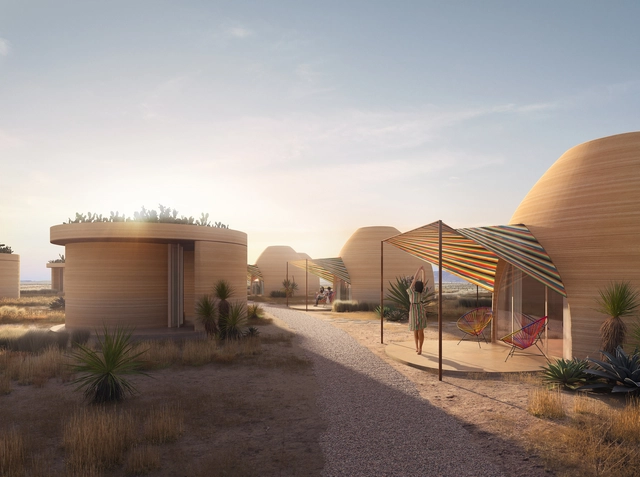
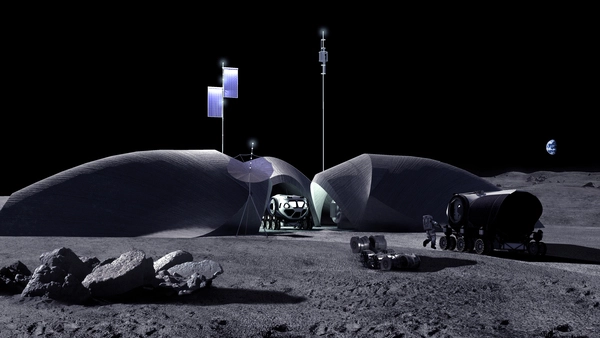
Founded in late 2017, named one of the "Most Innovative Companies in the World" in 2020, and selected as ArchDaily's Best New Practices of 2021, ICON is a construction company that pushed the boundaries of technology, developing tools to advance humanity including robotics, software, and building materials. Relatively young, the Texas-based start-up has been delivering 3D-printed homes across the US and Mexico, trying to address global housing challenges while also developing construction systems to support future exploration of the Moon, with partners BIG and NASA.
Featured on Times' Next 100, as one of the 100 emerging leaders who are shaping the future, Jason Ballard, CEO and Co-Founder of ICON spoke to ArchDaily about the inception of the company, worldwide housing challenges, his ever-evolving 3D printing technology, and process, his partnership with BIG, and the future of the construction field on earth and in space.
Landscape architects and urban planning team LandLAB was selected as the winner of the international competition for the seafront promenade development in Sirius federal territory. The New Zealand-based team was chosen among 68 practices and 48 countries for offering the most "efficient use of the limited space available and respecting the distinctive features of the area". The winning proposal blends the Olympic heritage with the landscape, and transforms the area into a dynamic interface that provides a stimulating environment for residents and visitors.
BIG's Wildflower Production Studio has received its building permit from the Department of Buildings (DOB), indicating that the project’s construction will now commence. In late 2019, American actor, producer, and director Robert De Niro’s Wildflower Development Group and BIG revealed the first images of their 650,000 square foot (approx. 60,400 sqm) production studio design proposal, located in the Astoria neighborhood of northwest Queens, New York. Once complete, the project is set to become the first vertical commercial film, television, and creative studio in the world.
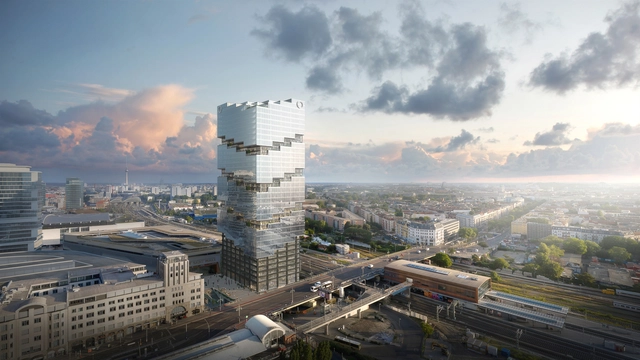
The new design for Foster + Partners’ Two World Trade Center tower builds in the footprint of its original design, but has scrapped a fractal diamond crown for staggered volumes and green roofs. The tallest roof will reach about 1,350 feet. . Image Courtesy of Visualhouse
Is the third time truly the charm for Two World Trade Center? New renderings spotted by New York YIMBY on February 1 seem to reveal the long-delayed tower’s new look, a marked departure from what was first unveiled by Foster + Partners back in 2005.
That’s not too much of a surprise. Although Foster + Partners was awarded the project 17 years ago and the foundation was laid in 2013, work has been proceeding at a slow clip and the original team was replaced by BIG in 2015 after developer Silverstein Properties decided to take a more contemporary approach and position the tower as the future home of Rupert Murdoch’s News Corporation and 21st Century Fox.
The Barbican Centre is up for a substantial renovation, and the City of London Corporation revealed the five shortlisted teams for the refurbishment of the Brutalist icon, among which are practices like BIG, Diller Scofidio + Renfro, Adjaye Associates or Asif Khan Studio. The cultural venue at the heart of the eponymous post-war housing estate in central London was the subject of an international competition aiming to preserve its heritage while upgrading the ageing structure to contemporary requirements and artistic aspirations.
Around the world, zoos draw in hundreds of millions of visitors each year. For some cities, they’re major tourist attractions and economic hubs that generate taxpayer dollars and create long-term employment for thousands of people. But beyond these statistics, people have been criticizing the role that zoos play in our society and the way in which we design them that holds the potential a more positive and natural environment for animals.
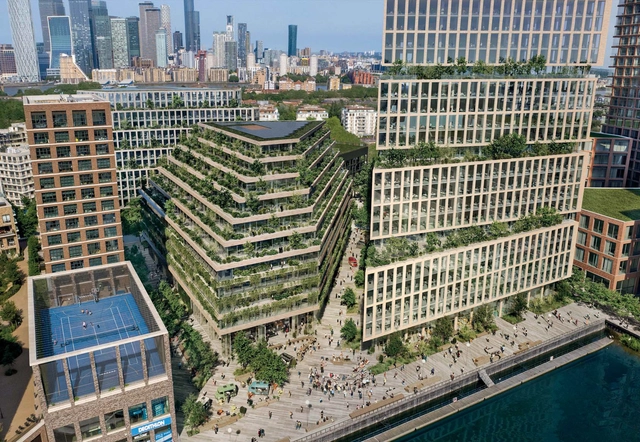
Courtesy of Bjarke Ingels Group and James Corner Field Operations
After more than two years of ongoing conversations with residents, stakeholders, and entrepreneurs, the New York City Council has finally approved the River Ring master plan of the Williamsburg waterfront project. The revised proposal, developed by Two Trees Management with designs by Bjarke Ingels Group and James Corner Field Operations, includes more than 150 additional units of affordable senior housing, an environmental benefits fund, and dedicated YMCA community space "to enhance the connectivity of the public waterfront, reinstate natural habitats, elevate the standard for urban waterfront resiliency, and transform the way New Yorkers interact with the East River".