1. ArchDaily
  2. Awards

Awards: The Latest Architecture and News

Buildner Launches Unbuilt 2026 and Reveals Unbuilt 2025 Winners

 | Sponsored Content
Audio available

Buildner has launched Buildner's Unbuilt Award 2026, the third edition of its annual competition, offering a 100,000 EUR prize fund.

Buildner has also announced the results of Buildner's Unbuilt Award 2025, the second competition in a series celebrating architectural design that has yet to be realized. With a generous 100,000 EUR prize fund, this initiative provides a global platform for architects and designers to showcase their most compelling unbuilt projects, whether conceptual, published, unpublished, or fully developed.

Escuelita Lochiel: An ArchDaily Student Project Awards Winner Reframing Education Through Adobe

Subscriber Access | 
Audio available

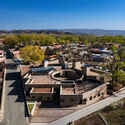
In the high desert of the San Rafael Valley, a few miles from the United States-Mexico border in Lochiel, Arizona, an adobe schoolhouse has stood for more than a century. Built before 1905, before Arizona was an incorporated state, the schoolhouse served generations of Mexican American students from Arizona and Sonora, cultivating shared cultural experiences, stories, and relationships that transcend physical and political boundaries. Over decades of education and shared histories, it became a place where language and narrative moved freely, even as geopolitical tensions continued to rise along the border. Today, it is one of the last remaining one-room adobe schoolhouses in the United States.

Adobe is among the oldest building technologies in the American Southwest, and among the most demanding to steward. In desert climates, earthen walls face intense weathering from temperature extremes, cracking due to seasonal shifts, and accelerated decay after storm events. These vulnerabilities require sustained and skilled maintenance over many seasons and compounding decades. After years of encroaching abandonment and structural threats, a twelve-year restoration effort by local community members who understood this building as critical cultural infrastructure brought the schoolhouse back from the edge of demolition. That the community chose to undertake this effort, given everything Adobe construction demands of those who care for it, is a statement about what the loss of this building would have cost. The result is a structure that now stands as a monument to Mexican American heritage and a living archive of rural border education.

Escuelita Lochiel: An ArchDaily Student Project Awards Winner Reframing Education Through Adobe - Image 1 of 4Escuelita Lochiel: An ArchDaily Student Project Awards Winner Reframing Education Through Adobe - Image 2 of 4Escuelita Lochiel: An ArchDaily Student Project Awards Winner Reframing Education Through Adobe - Image 3 of 4Escuelita Lochiel: An ArchDaily Student Project Awards Winner Reframing Education Through Adobe - Image 4 of 4Escuelita Lochiel: An ArchDaily Student Project Awards Winner Reframing Education Through Adobe - More Images+ 5

Buildner Launches Unbuilt Award 2026 With €100K in Awards and Announces 2nd Edition Winners

 | Sponsored Content
Audio available

Buildner has launched the Unbuilt Award 2026, the third edition of its annual competition, offering a €100,000 prize fund. At the same time, the results of the Unbuilt Award 2025 have been announced, marking the second competition in a series that celebrates architectural designs that have yet to be realized. The initiative provides a global platform for architects and designers to showcase their most compelling unbuilt projects—whether conceptual, published, unpublished, or fully developed.

Designing Coexistence: Meet the Winners of the First Edition of ArchDaily Student Project Awards

Audio available

In November 2025, ArchDaily launched its first edition of the Student Project Awards. The decision to introduce this new award came from a place of hope; hope in the next generations of architects, their talent and vision, and the importance of giving them visibility and recognition. After all, the future of architecture is being shaped right now, in classrooms, studios, and workshops around the world, and it is vital to support those shaping it. The response was remarkable, with projects from students in every continent, showcasing a wealth and breadth of viewpoints, solutions and visions.

Five months after the launch of the open call, and following the announcements of a longlist of 104 projects and a shortlist of 20, our external jury of architects and practitioners carefully reviewed the proposals to select the three winners and four honorable mentions of the ArchDaily Student Project Awards. Approaching each project with care, the jury looked beyond final outputs, focusing on the ideas, questions, and positions driving the work. The result is a selection of winning projects that reflect both the spirit of the awards and the shifting priorities shaping architecture today.

The 20 Shortlisted Projects of the ArchDaily Student Project Awards

Audio available

Every architecture student knows what it's like to spend sleepless nights working away, rushing to finalize a project as a deadline looms ahead. Revising every detail, putting the finishing touches and hoping for the best. The pay-off? Seeing the finished project, talking about it with your classmates, and getting to dream about your perfect idea of what a space should look and feel like.

While making the shortlist selection throughout the past two weeks, the ArchDaily jury panel was well-aware of what it feels like to be an architecture student. Comprised of architects, the panel carefully studied, considered and debated each individual project, with an understanding of what goes into each and every submission. The result is a shortlist that exemplifies the spirit of the Student Project Awards and its mission to recognize the creativity and vision of students who are redefining architectural practice and discourse.

Lesley Lokko Receives African Cultural Icon Award for Her Contributions to Architectural Education and Discourse

Audio available

Lesley Lokko OBE has been recognized with the African Cultural Icon Award, honoring "leaders in the creative arts who promote African culture and heritage on a global stage." The accolade is one of nine awards presented annually to publicly nominated and industry-recommended figures by a panel of judges from across Africa. Nominees are evaluated based on "impact, innovation, sustainability, and contribution to Africa's growth." Lokko is the Founder and Chair of the African Futures Institute (AFI), headquartered in Accra, Ghana, and Director of the Nomadic African Studio, an annual month-long itinerant teaching program working across the African continent. She has been acknowledged for her transformative contributions to architecture, education, and cultural discourse within and beyond Africa, consistently challenging conventional narratives around African identity, space, and creativity.

Lesley Lokko Receives African Cultural Icon Award for Her Contributions to Architectural Education and Discourse - Image 1 of 4Lesley Lokko Receives African Cultural Icon Award for Her Contributions to Architectural Education and Discourse - Image 2 of 4Lesley Lokko Receives African Cultural Icon Award for Her Contributions to Architectural Education and Discourse - Image 3 of 4Lesley Lokko Receives African Cultural Icon Award for Her Contributions to Architectural Education and Discourse - Image 4 of 4Lesley Lokko Receives African Cultural Icon Award for Her Contributions to Architectural Education and Discourse - More Images+ 6

Smiljan Radić Clarke Receives the 2026 Pritzker Prize, The Artist of Unspoken Architecture

Audio available

Chilean architect Smiljan Radić Clarke has been announced as the laureate of the 2026 Pritzker Architecture Prize, regarded as one of the highest honors in the field of architecture. The award recognizes Radić for a body of work that explores architecture through material experimentation, spatial perception, and a careful engagement with landscape and context. Born in Santiago, Chile, where he continues to live and work, Radić leads the practice Smiljan Radić Clarke, established in 1995. As the second Chilean to receive the prize, after Alejandro Aravena in 2016, he joins a distinguished list of previous laureates, including Liu Jiakun in 2025, Riken Yamamoto in 2024, David Chipperfield in 2023, and Diébédo Francis Kéré in 2022.

Radić's architecture operates within a territory where the phenomenological experience of space precedes explanation. His buildings often appear quiet, elemental, and resistant to easy verbal interpretation, encouraging visitors to experience them through movement, atmosphere, and perception rather than through formal expression. 

Smiljan Radić Clarke Receives the 2026 Pritzker Prize, The Artist of Unspoken Architecture - Image 32 of 4Smiljan Radić Clarke Receives the 2026 Pritzker Prize, The Artist of Unspoken Architecture - Image 3 of 4Smiljan Radić Clarke Receives the 2026 Pritzker Prize, The Artist of Unspoken Architecture - Image 33 of 4Smiljan Radić Clarke Receives the 2026 Pritzker Prize, The Artist of Unspoken Architecture - Image 5 of 4Smiljan Radić Clarke Receives the 2026 Pritzker Prize, The Artist of Unspoken Architecture - More Images+ 32

Who Is Smiljan Radić Clarke? 10 Things to Know About the 2026 Pritzker Architecture Laureate

Audio available

Smiljan Radić Clarke, the 2026 Pritzker Prize winner, is a contemporary Chilean architect known for his experimental approach to design, with a practice that balances the elemental with the intimate, the monumental with the fragile. Over the course of more than three decades, Radić has developed an architecture that resists repetition and conventional stylistic categorization, favoring instead deeply site-specific, materially attuned, and culturally reflective interventions.

His work negotiates between permanence and impermanence, memory and imagination, creating buildings that are as much about human experience and emotion as they are about structure and form. Across residences, cultural institutions, and temporary installations, Radić's architecture foregrounds the interplay between context, materials, and the subtle gestures that shape how spaces are inhabited and perceived.

Who Is Smiljan Radić Clarke? 10 Things to Know About the 2026 Pritzker Architecture Laureate - Image 1 of 4Who Is Smiljan Radić Clarke? 10 Things to Know About the 2026 Pritzker Architecture Laureate - Image 2 of 4Who Is Smiljan Radić Clarke? 10 Things to Know About the 2026 Pritzker Architecture Laureate - Image 3 of 4Who Is Smiljan Radić Clarke? 10 Things to Know About the 2026 Pritzker Architecture Laureate - Image 4 of 4Who Is Smiljan Radić Clarke? 10 Things to Know About the 2026 Pritzker Architecture Laureate - More Images+ 11

Smiljan Radić Clarke: Get to Know the 2026 Pritzker Winner's Work

Audio available

The 2026 Pritzker Price Award has been awarded this year to the Chilean architect of Croatian descent, Smiljan Radić Clarke. Born in Santiago, Chile, in 1965, his practice evokes a geography of extremes, shaped by the tectonic tension between the staggering weight of the Andes and the seismic instability of the territory. After graduating from the Pontifical Catholic University of Chile and pursuing further studies in aesthetics in Venice, Smiljan Radić Clarke established his base in Santiago. From there, he has developed one of the most singular visions in contemporary architecture. His work privileges the intensity of the moment through a fragile architecture. Within it, the building operates as a temporary and tactile refuge that places the spectator in a state of aesthetic uncertainty, oscillating between ancestral ruin and avant-garde artefact.

Smiljan Radić Clarke: Get to Know the 2026 Pritzker Winner's Work - Image 1 of 4Smiljan Radić Clarke: Get to Know the 2026 Pritzker Winner's Work - Image 2 of 4Smiljan Radić Clarke: Get to Know the 2026 Pritzker Winner's Work - Image 3 of 4Smiljan Radić Clarke: Get to Know the 2026 Pritzker Winner's Work - Image 4 of 4Smiljan Radić Clarke: Get to Know the 2026 Pritzker Winner's Work - More Images+ 59

Meet the 15 Winning Projects of the 2026 ArchDaily Building of the Year Awards

Audio available

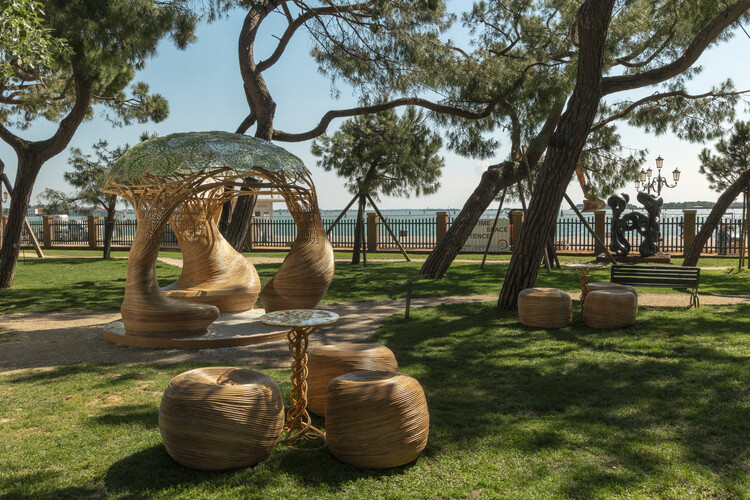
A revitalized canning factory in a coastal Portuguese city, a memorial park in Ethiopia, a small-town Brazilian home, a wooden pavilion evoking Bahrain's heritage, and 11 other visionary projects comprise the winners of the 2026 ArchDaily Building of the Year Awards. Chosen over three weeks of public voting, the winners are representative of the current architectural landscape, reflecting a diversity of approaches, materialities and aesthetics, while also showcasing common threads across cultures.

In its 17th edition, this year's Building of the Year Awards received more than 120,000 votes from over 100 countries, marking a record-breaking year for the world's largest community-driven architecture award. The winners represent 14 different countries, cultures and perspectives, coming from Brazil, Canada, Chile, Colombia, Denmark, Ethiopia, Germany, India, Indonesia, Japan, Portugal, South Korea, United States and Vietnam.

Last Days to Vote for the 2026 ArchDaily Building of the Year Awards

Audio available

With only two days left to vote, this is your last chance to pick your favorite projects of 2025 and help showcase the most influential architecture of the moment. There are 75 finalists to choose from in 15 different categories, with voting ending on February 18, 2026 at 18:00 EST.

Introducing the 75 Finalists of the 2026 ArchDaily Building of the Year Awards

Audio available

Two weeks and over 85,000 nominations later, the finalists of this year's Building of the Year Awards are in. The selection is much like the ArchDaily audience that chose it: diverse in geography, generous in ideas, and precise in intent. With projects from 46 countries, in a variety of typologies and scales, they present a beautiful snapshot of the current architectural moment.

We invite you to sit back, browse, and vote for your ultimate favorites. Below, you will find all of the 75 finalists in their respective categories. Voting is open until February 18th at 18:00 EST. Thank you—your participation is key to making this the world's largest community-driven architecture award.

Seeding the Future and Reframing Architectural Impact

 | In Collaboration
Audio available

What matters more: looking to the past or to the future? Recognizing established trajectories or fostering paths still under construction? Perhaps this is not a question with a single answer. Traditionally, architecture awards have operated as devices of consecration, recognizing completed works, established careers, and already tested solutions, most often through a retrospective lens. But what would happen if recognition ceased to be an end in itself and instead began to operate as a catalytic agent, investing less in what has already been done and more in what is still yet to unfold?

Seven Finalists Announced for the 2026 EU Mies Awards for Contemporary European Architecture

Audio available

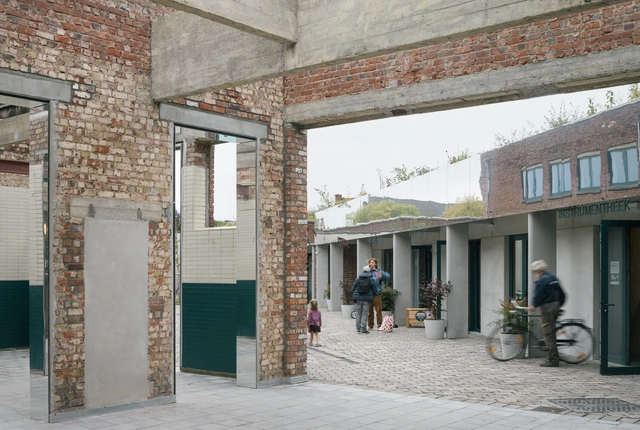
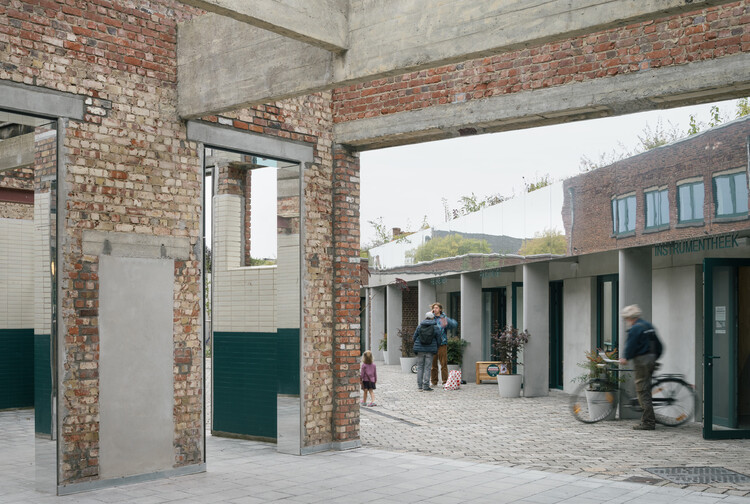
The European Commission and the Fundació Mies van der Rohe have announced the seven finalist projects for the 2026 European Union Prize for Contemporary Architecture - Mies van der Rohe Awards, supported by the European Union's Creative Europe programme. The selection follows the announcement of 410 nominated works in November and a shortlist of 40 projects revealed in early January. Of the seven finalists, five have been selected in the Architecture category and two in the Emerging category. According to the jury chaired by Smiljan Radić, the finalist projects are exemplary contributions to the future of European architecture, demonstrating how the discipline can respond simultaneously to specific local conditions and broader social, cultural, and environmental challenges. The selected works range from interventions in former industrial sites, small villages, and peripheral urban areas to carefully calibrated projects within larger cities. Across these varied contexts, the projects show how architecture can transform overlooked or ordinary settings into inclusive, high-quality spaces for living, learning, and social exchange.

Seven Finalists Announced for the 2026 EU Mies Awards for Contemporary European Architecture - Image 1 of 4Seven Finalists Announced for the 2026 EU Mies Awards for Contemporary European Architecture - Image 2 of 4Seven Finalists Announced for the 2026 EU Mies Awards for Contemporary European Architecture - Image 3 of 4Seven Finalists Announced for the 2026 EU Mies Awards for Contemporary European Architecture - Image 4 of 4Seven Finalists Announced for the 2026 EU Mies Awards for Contemporary European Architecture - More Images+ 113

Systems’ Hack and RAMSA’s Palmer Memorial Institute Plan: This Week’s Review

Audio available

This week's architecture news brings together a series of announcements that reflect how the discipline is engaging with larger structural and institutional frameworks. The OBEL Foundation's introduction of Systems' Hack as the theme for its 2026 cycle foregrounds architecture's relationship to the systems that organize contemporary life, from infrastructure to resource flows. At the scale of the design industry, Salone del Mobile.Milano's outline of its 2026 framework, including OMA's involvement in the Salone Contract master plan, signals an evolving understanding of major fairs as long-term cultural and economic infrastructures rather than standalone events. Running alongside these agenda-setting developments, the final days of nominations for the 2026 ArchDaily Building of the Year Awards underscore the role of collective evaluation and public participation in shaping contemporary architectural discourse.

Systems’ Hack and RAMSA’s Palmer Memorial Institute Plan: This Week’s Review - Imagem 1 de 4Systems’ Hack and RAMSA’s Palmer Memorial Institute Plan: This Week’s Review - Imagem 2 de 4Systems’ Hack and RAMSA’s Palmer Memorial Institute Plan: This Week’s Review - Imagem 3 de 4Systems’ Hack and RAMSA’s Palmer Memorial Institute Plan: This Week’s Review - Imagem 4 de 4Systems’ Hack and RAMSA’s Palmer Memorial Institute Plan: This Week’s Review - More Images+ 6

Last Days to Nominate for the 2026 ArchDaily Building of the Year Awards

Audio available

There's only one week left to nominate your favorite projects for the 2026 Building of the Year Awards! This is your chance to recognize the best architecture from around the world in 15 categories, from housing to educational projects, offices, interiors and more.

DAM Preis 2026 Awarded to Peter Grundmann Architekten for the ZK/U Center for Art and Urbanistics in Berlin

Audio available

The 20th edition of the DAM Preis 2026 has been awarded to Peter Grundmann Architekten for the ZK/U Center for Art and Urbanistics, an adaptive reuse project in Berlin, Germany. The project transforms a former single-story warehouse at a freight station in Berlin-Moabit into a cultural meeting place. The jury recognized the practice's transformative approach, highlighting the use of an above-average amount of manual labor and a modest budget to encase the existing hall in a lightweight steel-and-glass structure and add an additional floor. Developed in close collaboration with the non-profit association KUNSTrePUBLIK e. V., the project supports a wide-ranging public program established at the former freight station since 2012, including exhibitions, performances, artist residencies, repair workshops, neighborhood markets, and public viewings. Peter Grundmann Architekten was selected through a Europe-wide tender process and commissioned to build the acclaimed extension in 2019.

DAM Preis 2026 Awarded to Peter Grundmann Architekten for the ZK/U Center for Art and Urbanistics in Berlin - Image 1 of 4DAM Preis 2026 Awarded to Peter Grundmann Architekten for the ZK/U Center for Art and Urbanistics in Berlin - Image 2 of 4DAM Preis 2026 Awarded to Peter Grundmann Architekten for the ZK/U Center for Art and Urbanistics in Berlin - Image 3 of 4DAM Preis 2026 Awarded to Peter Grundmann Architekten for the ZK/U Center for Art and Urbanistics in Berlin - Image 4 of 4DAM Preis 2026 Awarded to Peter Grundmann Architekten for the ZK/U Center for Art and Urbanistics in Berlin - More Images+ 6

The OBEL Award Reveals "Systems’ Hack" as the Theme for Its 2026 Edition

Audio available

©OBEL Foundation

The OBEL Foundation has announced "Systems' Hack" as the focus of its 2026 cycle, setting the conceptual framework that will guide the foundation's activities and the selection of the next OBEL Award. Founded in 2019, OBEL recognises architecture's potential to act as a tangible agent of positive social and ecological change, supporting approaches that expand how the built environment is defined and shaped. The 2026 theme calls on architecture to critically engage with the systems that underpin contemporary society, including infrastructure, energy, food, water, education, and information, and to examine how these interconnected networks might be reconfigured in response to accelerating global challenges.

The OBEL Award Reveals "Systems’ Hack" as the Theme for Its 2026 Edition - Imagem 1 de 4The OBEL Award Reveals "Systems’ Hack" as the Theme for Its 2026 Edition - Imagem 2 de 4The OBEL Award Reveals "Systems’ Hack" as the Theme for Its 2026 Edition - Imagem 3 de 4The OBEL Award Reveals "Systems’ Hack" as the Theme for Its 2026 Edition - Imagem 4 de 4The OBEL Award Reveals Systems’ Hack as the Theme for Its 2026 Edition - More Images+ 3