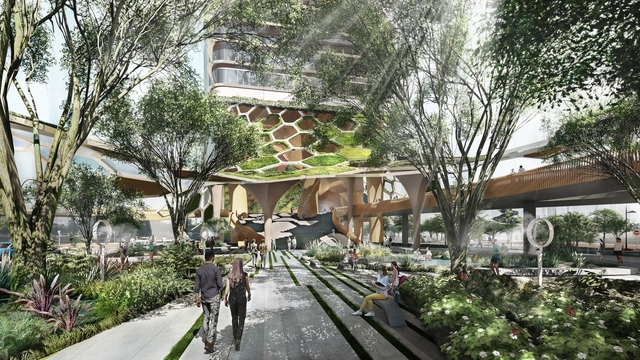
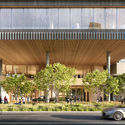
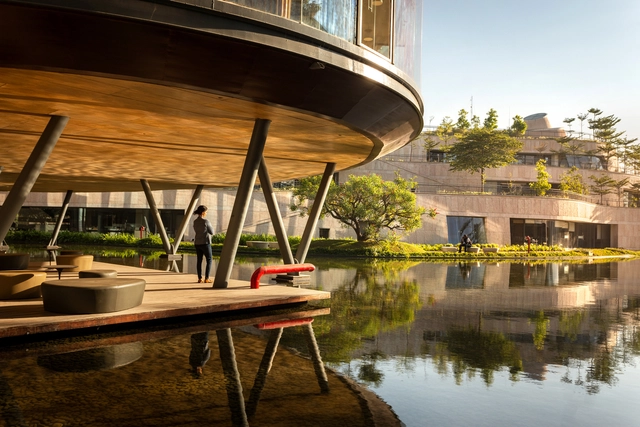
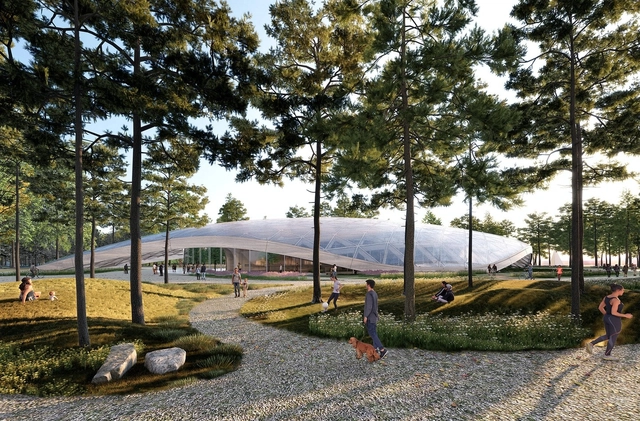
Ronald Lu &Partners revealed their new workplace concept, "Treehouse", an "eco-conscious integrated system" featuring biophilic elements, which capitalizes on wellness and aims to reconnect users with nature. The project is a response to contemporary workplace needs, as well as to current climate challenges, promoting carbon-positivity and net-zero operations through a blend of design, technology and smart management.
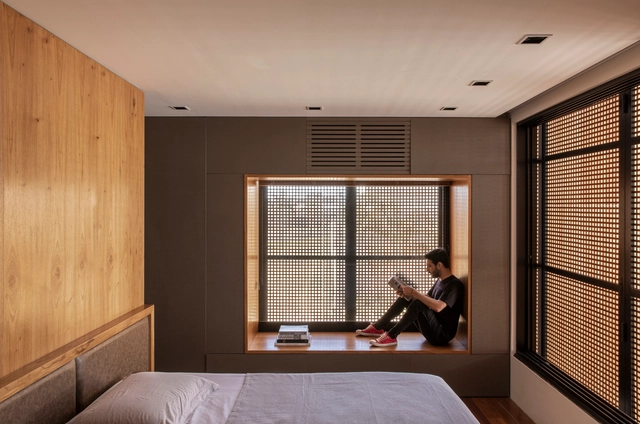
As one of the most intimate spaces of a residence, dormitories have had their use adapted over the years, especially after the Covid-19 pandemic. A space for relaxation that also needs to fit furniture, decorations and harmonize with the architecture. Here's a selection of ideas to get inspired and redesign your bedroom.
Aiming to provide inspiration, knowledge and tools, and always seeking to "empower all who make architecture happen to create a better quality of life" we summarise this year's topics by presenting the publications that most impacted our readers. Goodbye 2021, Hello 2022!
The security and dignity of a good-quality home is one of the most important and liberating qualities in society. For people experiencing financial or social pressures, many countries offer some form of public or social housing system. While there is no fixed definition for social housing, it often involves the design, construction, and allocation of housing by government authorities, or non-profit organizations.
Just as social housing systems differ throughout the world, so too does the architecture of social housing. A government’s outlook or priorities for social housing provision, which can differ between capacity, cost, sustainability, or urban regeneration, all contribute to unique responses by architects and designers. Below, we identify six systems from countries around the world, complete with architectural examples.
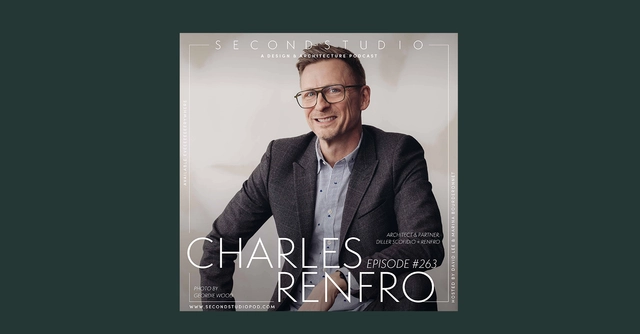
The Second Studio (formerly The Midnight Charette) is an explicit podcast about design, architecture, and the everyday. Hosted by Architects David Lee and Marina Bourderonnet, it features different creative professionals in unscripted conversations that allow for thoughtful takes and personal discussions.
A variety of subjects are covered with honesty and humor: some episodes are interviews, while others are tips for fellow designers, reviews of buildings and other projects, or casual explorations of everyday life and design. The Second Studio is also available on iTunes, Spotify, and YouTube.
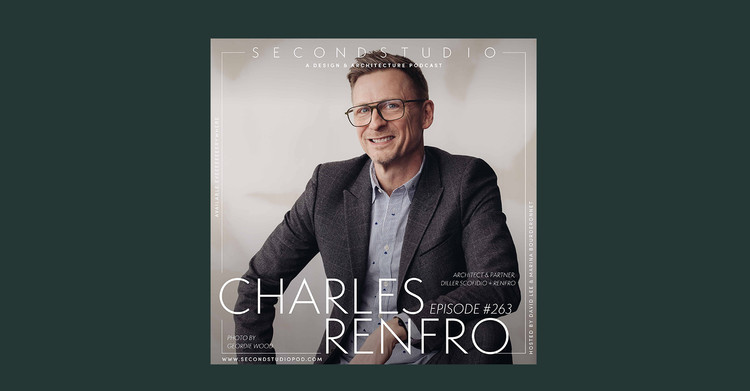
This week David and Marina are joined by Charles Renfro, Partner at Diller Scofidio + Renfro, to discuss Charles’ childhood and early interests in architecture, his education and linking ideas of sexual freedom with architecture, joining Elizabeth Diller and Ricardo Scofidio, becoming a partner at his office, his design philosophy, how New York has changed, and more.
Biodiversity has become ubiquitous in project descriptions as yet another mark of the design's environmental accomplishments. The increasing focus on sustainability, the standard inspired by the UN Sustainable Development Goals, prompts a deeper understanding of what biodiversity in urban environments means and how can architecture and urban design actively contribute to it. With species extinction rates soaring and urbanization over natural land continuing, cities become an essential factor in sustaining biodiversity, and the following explores how the built environment can foster multi-species habitats.
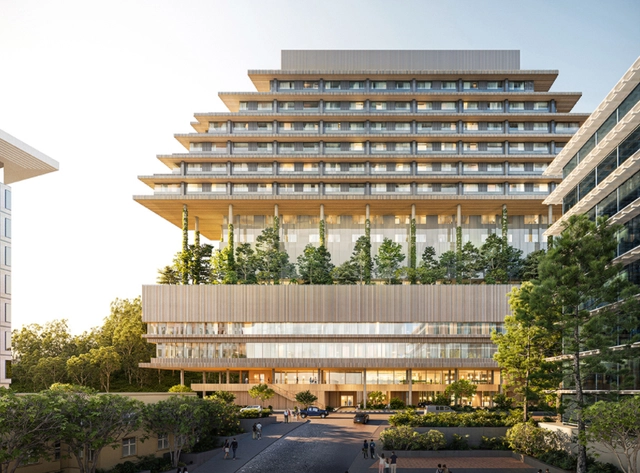
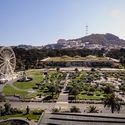
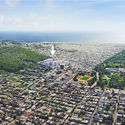
After being selected by the University of California San Francisco (UCSF) to design the new hospital of its Helen Diller Medical Center at Parnassus Heights in 2020, Herzog & de Meuron and HDR revealed new images of their design, featuring a 15-storey structure clad with terracotta across a 84,000 sqm plot. The proposed design aims to change the traditional concept of hospitals and provide members of the community with a healing space that puts in place “a holistic healthcare environment that fosters wellness and recovery by combining efficient facilities with human experiences, connected to nature and the community”.
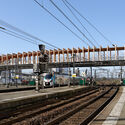
In December, the European Commission adopted several proposals that put the transport sector on track for a 90% reduction in carbon emissions, moving a step further in implementing the European Green Deal. The initiatives seek to increase rail transport, encouraging long-distance and cross-border rail travel, support the roll-out of charging points for electric vehicles and alternative refuelling infrastructure and further develop multimodality.
With a production inspired by the legacy of Sérgio and Claudio Bernardes, from Rio, Bernardes Arquitetura is “fruit of a history that spans three generations with more than a thousand projects”. Created in 2012 by Thiago Bernardes, the office has over 7 partners and branches in Rio de Janeiro, São Paulo and Lisbon.
In this episode of “Behind the Scenes”, where we showcase the work of visionary photographers and ask about their experiences beyond what is seen by the public, we present Pablo Casals Aguirre, an architect, professor, photographer, and filmmaker based in Santiago, Chile. Here, he shares his methodology, which he developed with references to cinema, and highlights his intentions of translating the best architectural works into imagery - be it still or in movement.
The problem with being a deliberative writer is that pretty much everything has already been penned by the time you’re ready to write about something. Such is the case with the 2021 ChicagoArchitecture Biennial (CAB): The Available City. There have been several well-written, insightful essays about the CAB by Zach Mortice, Anjulie Rao,Marianela D’Aprile, and others, so it would be foolish to travel the landscape they have so expertly traversed. Instead, I’m offering a trip through this edition of the CAB, which concluded a successful and significant run on Saturday, down a road less traveled.
https://www.archdaily.com/974746/breaking-the-dead-paradigm-for-design-exhibitionsCraig L. Wilkins
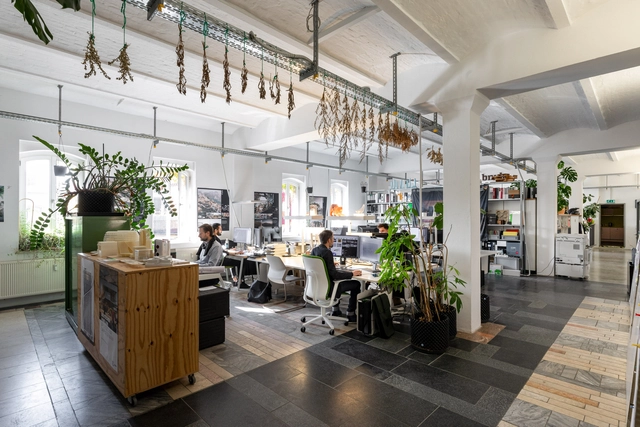
Documenting diverse architecture and design studios, Goodwin captured 13 different office spaces in Berlin, including Hesse, LAVA, JWA, Tchoban Voss, Richter Musikowski, Barkow Leibinger, FAR frohn&rojas, studio Karhard, Jasper, Kleihues + Kleihues, Graft, Bundschuh Architekten and Sauerbruch Hutton.
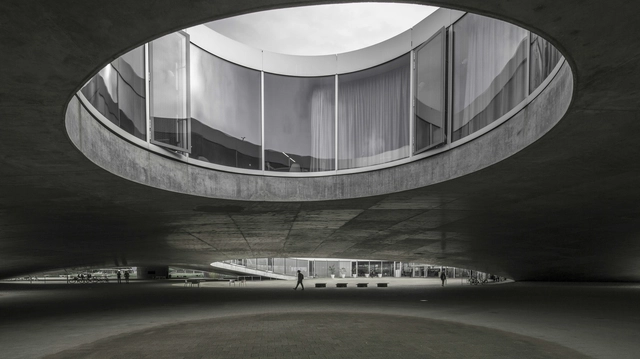
Architecture grows from context. In campus planning, an institution or organization outlines a strategy for longer term land use and the immediate context. As SCUP outlines, campus design can be nurturing, inviting and stimulating. "It can be the physical manifestation of an institution’s mission, a reminder of the promise and potential waiting to be unleashed." Today, campus design encompasses integrated approaches bringing open space, buildings, circulation and utility together.
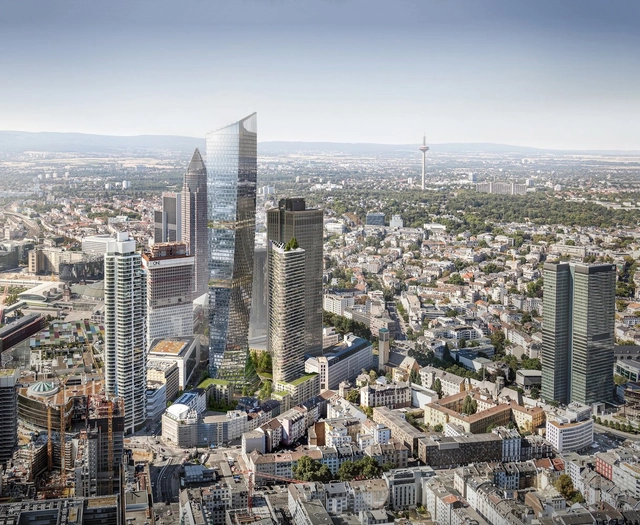
Ferdinand Heide Architekt have been selected to develop a high-rise complex in Frankfurt, Germany, following an international design competition. Titled “Millennium Areal”, the winning proposal features two twisted glass towers with a large public space at the ground level, responding to the particularities of the dense site, which include maximization of green areas and unobstructed views for apartments and offices. The project is expected to be complete in 2030 and upon completion, will be Frankfurt's tallest structure.
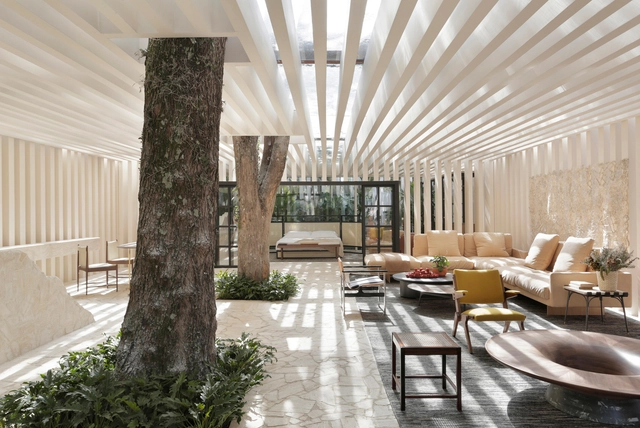
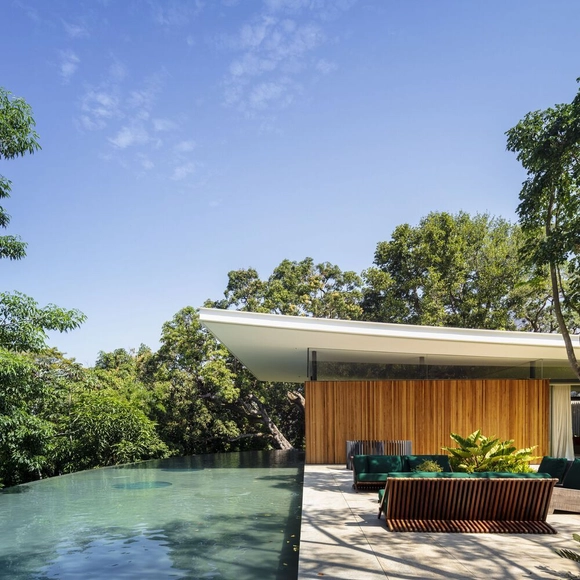
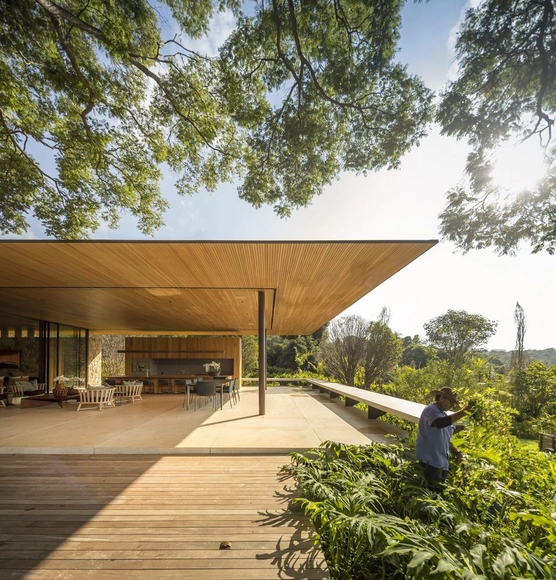
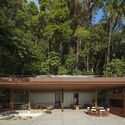
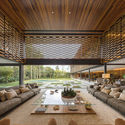
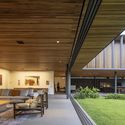
Intense integration between the built environment and its natural context: this is the premise that surrounds the projects of Jacobsen Arquitetura, from Rio de Janeiro. Founded 45 years ago, the office emerged from the union between architects Paulo Jacobsen and Cláudio Bernardes, who worked together until Bernardes' death in 2001. After that, Paulo joined forces with Thiago, Cláudio's son, starting a new office. The partnership with Thiago Bernardes fell apart in 2012, giving rise to the formation of Jacobsen Arquitetura, whose partners are Paulo and Bernardo Jacobsen (Paulo’s son) and Edgar Murata.
Cavatina Concert Hall by Cavatina. Image Courtesy of Cavatina
The diversity of civic spaces in cities and rural areas have continuously showcased how strongly they explore human connections regardless of program, construction technique, scale, and geography. Ranging from educational facilities and museums, to art centers, libraries, religious halls, and memorials, these projects have enriched urban fabrics with cultural programs that have provided members of the community with places to learn, entertain, create, and unwind.
This week’s curated selection of Best Unbuilt Architecture highlights cultural projects submitted by the ArchDaily community from across the world. From a water management system that targets the natural crises in Egypt to a structurally intertwined memorial in the United States, this round up of unbuilt projects showcases how architects responded to the contextual and spatial needs of their projects through innovative and local solutions. The article also includes projects from Italy, China, Uruguay, Poland, Iran, Hungary, Russia, and the United Kingdom.
The Çanakkale Antenna Tower designed by IND [Inter.National.Design] and Powerhouse Company is nearing completion. Located on a forested hill in the aforementioned city, the weathering steel structure envelops the landscape before growing into a 100-meter tall tower that offers a panoramic view of the historic Turkish city. The single design gesture simultaneously crafts an intimate experience of nature through the creation of an inner garden, immersing visitors into the surrounding forest while creating a new visual identity for the city.
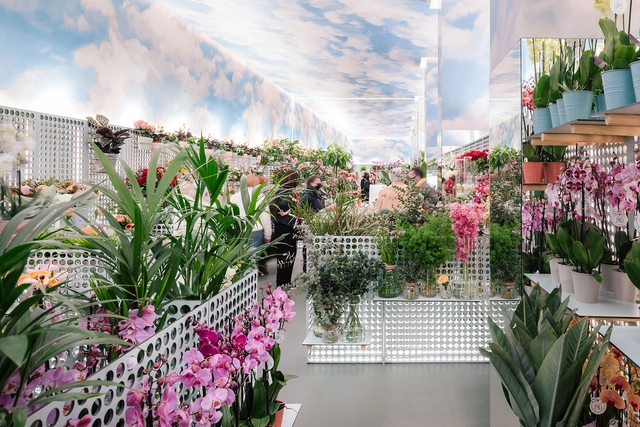
Retail stores are places that need to transport us to another universe. We need to have our senses stimulated and our instincts fired for a truly convincing experience.
Architecture is a fundamental part of this seduction, being able to use artifacts such as colors, materials, lighting and volumes to awaken the most varied feelings in customers. Commercial architecture, in addition to all the technical elements, needs to reach the public from the facade to its interior, always remaining faithful to the brand's concepts and identities. In this article we have selected some examples of commerce facilities that stimulate customers in different ways.


.jpg?1579214206&format=webp&width=640&height=580)
.jpg?1579212615 "St-Agatha-Berchem Sustainable Social Housing / Buro II & Archi+I. Image © Filip Dujardin")


.jpg?1579214206)
























_-_West_Elevation.jpg?1641304390 "So Close , So Far Cultural Center by Shahab Shariat. Image Courtesy of Shahab Shariat")

![The Çanakkale Antenna Tower Designed by IND [Inter.National.Design] and Powerhouse Company Nears Completion - Featured Image](https://images.adsttc.com/media/images/61d4/69c5/336e/280f/fdcd/5382/medium_jpg/powerhouse-company-ind-04-sebastian-van-damme-canakkale-antenna-tower.jpg?1641310693)
![The Çanakkale Antenna Tower Designed by IND [Inter.National.Design] and Powerhouse Company Nears Completion - Image 1 of 4](https://images.adsttc.com/media/images/61d4/69c5/336e/280f/fdcd/5381/thumb_jpg/powerhouse-company-ind-00-sebastian-van-damme-canakkale-antenna-tower.jpg?1641310698 "© Sebastian van Damme")
![The Çanakkale Antenna Tower Designed by IND [Inter.National.Design] and Powerhouse Company Nears Completion - Image 2 of 4](https://images.adsttc.com/media/images/61d4/69c3/336e/280f/fdcd/5380/thumb_jpg/powerhouse-company-ind-01-sebastian-van-damme-canakkale-antenna-tower.jpg?1641310688 "© Sebastian van Damme")
![The Çanakkale Antenna Tower Designed by IND [Inter.National.Design] and Powerhouse Company Nears Completion - Image 3 of 4](https://images.adsttc.com/media/images/61d4/69c6/336e/280f/fdcd/5384/thumb_jpg/powerhouse-company-ind-06-sebastian-van-damme-canakkale-antenna-tower.jpg?1641310698 "© Sebastian van Damme")
![The Çanakkale Antenna Tower Designed by IND [Inter.National.Design] and Powerhouse Company Nears Completion - Image 4 of 4](https://images.adsttc.com/media/images/61d4/69c7/23d7/e810/451d/36f3/thumb_jpg/powerhouse-company-ind-03-sebastian-van-damme-canakkale-antenna-tower.jpg?1641310701 "© Sebastian van Damme")
![The Çanakkale Antenna Tower Designed by IND [Inter.National.Design] and Powerhouse Company Nears Completion - More Images](https://images.adsttc.com/media/images/61d4/69c5/336e/280f/fdcd/5382/newsletter/powerhouse-company-ind-04-sebastian-van-damme-canakkale-antenna-tower.jpg?1641310693)