1. ArchDaily
  2. News

News

99 Dom-Ino: How Le Corbusier Redefined Domestic Italian Architecture

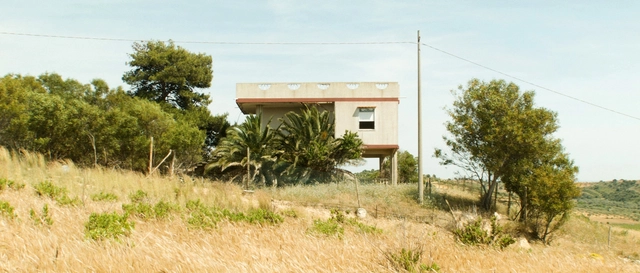
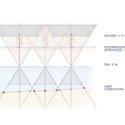
Last year, for the centennial of the publication of Le Corbusier's design for the Maison Dom-Ino, Space Caviar traveled the length of the Italian peninsular in pursuit of ninety-nine reinforced concrete houses. Along the way they created ninety-nine short films. Their research, a survey of Italian domesticity and its relationship to the surrounding landscape over the past century, demonstrated that "few inventions have been as transformative of Italy as the concrete frame": simultaneously a symbol of wealth "generated by a building industry that rebuilt Italy from the rubble of the Second World War" and "the primary instrument of abusivismo," or the unregulated construction on the landscape. It is, as the team describe it, "the ultimate symbol of the architect’s extraordinary power — and enduring helplessness."

99 Dom-Ino: How Le Corbusier Redefined Domestic Italian Architecture - Image 1 of 499 Dom-Ino: How Le Corbusier Redefined Domestic Italian Architecture - Image 2 of 499 Dom-Ino: How Le Corbusier Redefined Domestic Italian Architecture - Image 3 of 499 Dom-Ino: How Le Corbusier Redefined Domestic Italian Architecture - Image 4 of 499 Dom-Ino: How Le Corbusier Redefined Domestic Italian Architecture - More Images+ 9

Welcome to Your Upgraded ArchDaily!

Dear Readers,

Over the last 7 years we have built and maintained a huge database of thousands of buildings to provide you with the inspiration and knowledge that you need for your next project - an important part of our mission.

However this tremendous database lacked the structure that would allow you to use it with that purpose. Sure, you could navigate by building type or by country, you could use the My ArchDaily section to bookmark your favorite projects for reference, or you could browse an endless photo gallery. But this lack of a proper structure prevented us from delivering what you needed, and what you were constantly asking us for via emails or our contact form: a way to easily find the projects that inspire you.

But because ArchDaily started out by using an open-source CMS, we were confined to its features, and all of our ideas to deliver a better ArchDaily to you had to deal with that. So a few years ago we started working on our own platform, designed with the architect in mind. Buildings became objects, typologies became facets, and our database started to take shape. These features have been available at ArchDaily México and ArchDaily Brasil for a while now, but we had to overcome several other issues before migrating ArchDaily.com to our platform. As you can understand, dealing with hundreds of thousands of visitors who view millions of pages every day is no easy task, especially when you move them to a new platform with many new features.

But that day has finally come, and it will enable us to deliver new features and tools as we continue to develop them, without having to worry about legacy platforms. We are now in full control of our database, and we will continue to work to make it useful and accessible to you. At first, you won't see many differences, but under the hood is a completely new system.

What you will see over the coming days is a new faceted search that will allow you to quickly browse our buildings database, and a new version of My ArchDaily.

So in the next few hours some things won't work as expected, or might not work at all. But our development and editorial teams will be working around the clock to make sure that everything gets fixed quickly, and for that we need your help. Any errors that you find, missing images or drawings, messy text, missing videos, etc, please use the form below.

Thank you for trusting ArchDaily as your source of inspiration and knowledge, and rest assured that we will work as hard as we can to continue bringing you new features and tools to help you in the important duty of designing our built environment.

- David Basulto, Founder & Editor in Chief of ArchDaily

Nieto Sobejano Wins Competition to Design New Guangzhou Science Museum

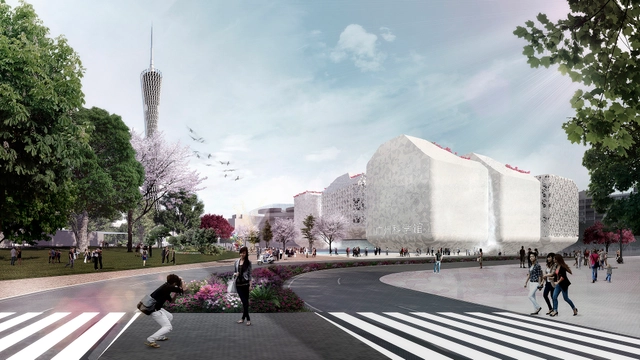
Nieto Sobejano Arquitectos has been selected over MAD Architects, Steven Holl, Grimshaw and many others to design the Guangzhou Science Museum.

Planned for the sprawling port city of Guangzhou (Canton), the new science museum will be realized on the south bank of the Pearl River, close to the Guangzhou Tower. It will form part of a new cultural hub, known as "Three Museums - One Square," which will include the future Guangzhou Museum, also won through a private-competition by gmp Architects von Gerkan, Marg and Partners.

Read on for a video and more information detailing the winning proposal.

BBC Profiles Zhang Yue: The Man Who Plans to Build the World’s Tallest Building in 7 Months

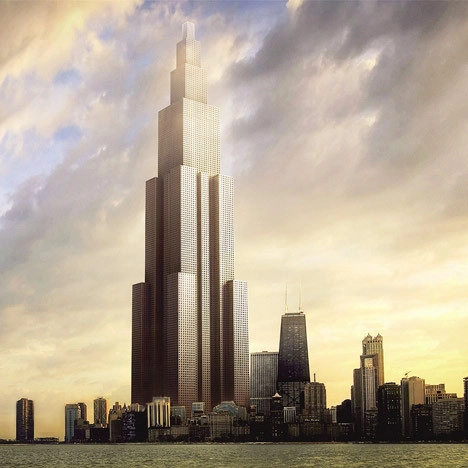
BBC News has published a profile on the new projects and ambitions of Broad Sustainable Building’s Zhang Yue. A few months ago, Yue became known as the man behind Mini Sky City, a 57-story building that went up in 19 days. Now, Yue wants to further his idea of modular construction to build Sky City, which will be the world’s tallest skyscraper, stretching ten meters taller than the 828 meter-tall Burj Khalifa in Dubai, and take only seven months to complete. In addition to being constructed from prefabricated parts, Sky City will be sustainable and built from steel to help prevent earthquake damage. Construction is expected to begin on the skyscraper in early 2016. Read more about Yue, his company, and their projects in the BBC News article.

An Interview with Xu Tian Tian, DnA Design and Architecture

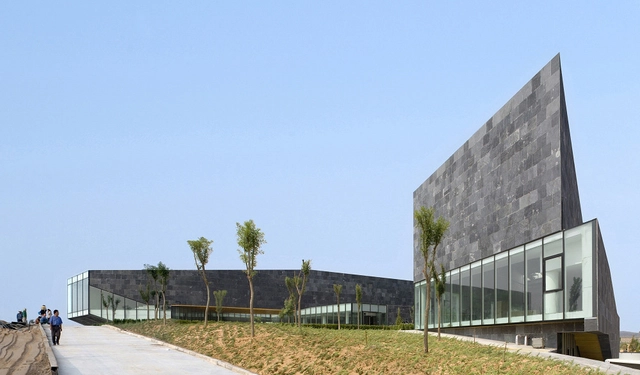
"In China there’s history but there’s no existing context. All the contexts are made for the future. Most of the designs, most of the buildings are only designed for a planning scenario lasting five or ten years. And in that case, first of all, you need to accommodate functions for the future, for the planned purpose. I’d say even though the current project is in a very rural area, it could soon, let’s say in just one or two years, become a populated area. So that’s a different challenge here when you are designing in China."
- Xu Tian Tian, Beijing 2013

Spontaneous Artist Community

Xu Tian Tian: What condition is Songzhuang in, in general? I haven’t been there for quite a while.

Pier Alessio Rizzardi: Songzhuang is developing very rapidly, everything was under construction, and especially in the areas around your three projects the residential buildings were growing fast… I must say that all the projects you designed [Songzhuang Artists’ Residence, Museum and Cultural Centre] were extremely damaged.

Xu Tian Tian: That’s quite disappointing...

An Interview with Xu Tian Tian, DnA Design and Architecture - Image 1 of 4An Interview with Xu Tian Tian, DnA Design and Architecture - Image 2 of 4An Interview with Xu Tian Tian, DnA Design and Architecture - Image 3 of 4An Interview with Xu Tian Tian, DnA Design and Architecture - Image 4 of 4An Interview with Xu Tian Tian, DnA Design and Architecture - More Images+ 10

Could the Empire State Building Have Been Built with Wood?

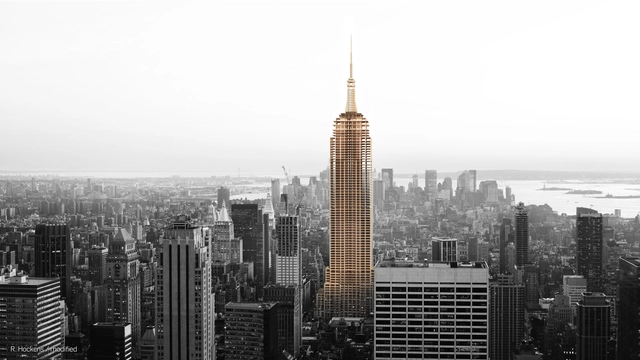
Michael Green has teamed up with Finnish forestry company Metsä Wood and Equilibrium Consulting to redesign the Empire State Building with wood as the main material. The project is part of Metsä Wood’s “Plan B” program, which explores what it would be like for iconic buildings to be made of timber. Their work shows that not only can wood be used to produce enormous structures in a dense urban context, but also that timber towers can fit into an urban setting and even mimic recognizable buildings despite differences in material.

MX3D to 3D Print a Bridge in Mid-Air over Amsterdam Canal

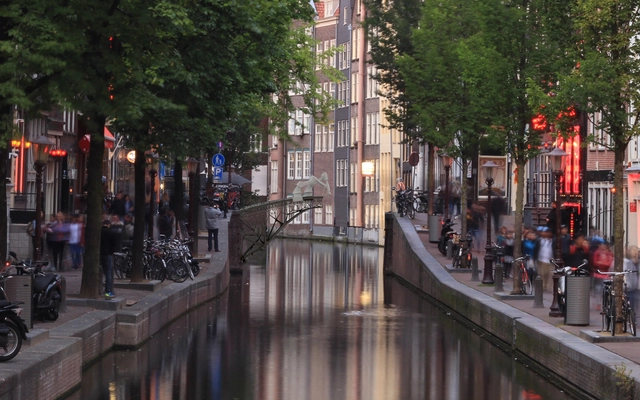
Amsterdam already has over 1,200 bridges throughout its canals, with some dating as far back as the 17th century, but the city is about to add one more in correspondence with its growing 3D printing industry. Dutch start-up MX3D has partnered with Joris Laarman Lab, Heijmans, Autodesk, and several other supporters, in a collaboration that will create an intricate steel pedestrian bridge made by 3D printers.

The Architectural Monograph is Here to Stay

Subscriber Access | 

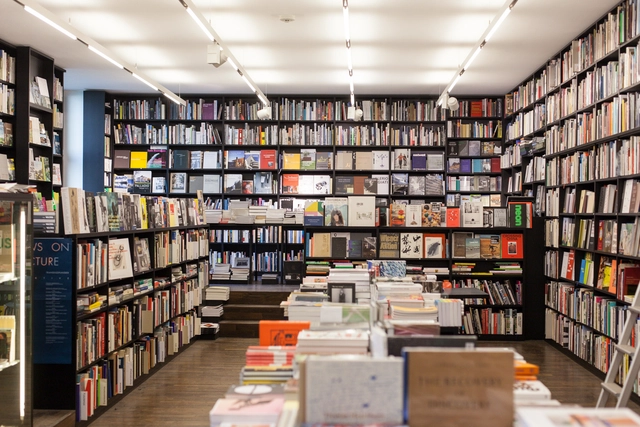
The monograph is a popular platform for dissemination and debate in the art and design world, yet architectural monographs are often treated with suspicion – viewed more as a self-serving PR exercise. But do monographs actually have a more substantive role within the practice of architecture? This was the backdrop for a discussion entitled ‘Why a Monograph?’ held at Waterstones Piccadilly as part of this year’s London Festival of Architecture. The participants included Jay Merrick, architecture correspondent of The Independent; Simon Henley of Henley Halebrown Rorrison (HHbR); David Grandorge, architectural photographer and Senior Lecturer at London’s CASS; and Ros Diamond of Diamond Architects. The session was chaired by ArchDaily Editor James Taylor-Foster.

Longlist Revealed for Restaurant & Bar Design Awards 2015

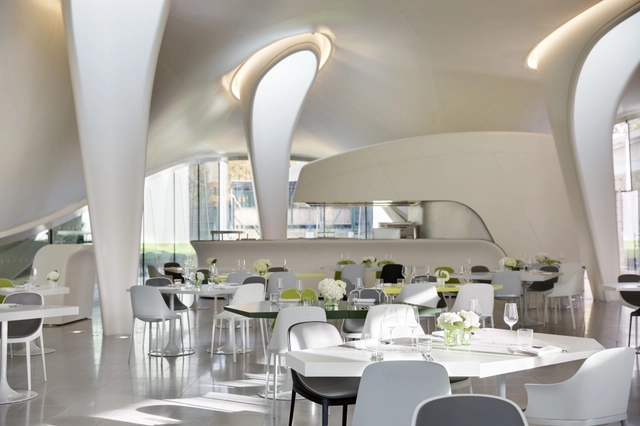
Thomas Heatherwick, Alberto Alessi and a number of other famed jury members have shortlisted 214 projects from 70 countries for the 2015 Restaurant & Bar Design Awards. Now in its seventh year, the awards are the only of its kind dedicated to the design of food and beverage spaces. The winners will be announced in October. From burger vans to airports, you can see all the shortlisted projects here.

Gallery: David Chipperfield's "Sticks and Stones" Installation in The Neue Nationalgalerie

Romanian photographer Laurian Ghinitoiu has shared images from last year's "Sticks and Stones" exhibition at the Neue Nationalgalerie in Berlin. Designed by David Chipperfield, the intervention brought 144 8-meter-tall trees to the interior of the Neue Nationalgalerie, Mies van der Rohe's 1968 masterpiece. See our previous coverage of the installation and enjoy a full gallery of Ghinitoiu's images after the break.

Zaha Hadid Designs Two "Sculptural" Towers for Australia's Gold Coast

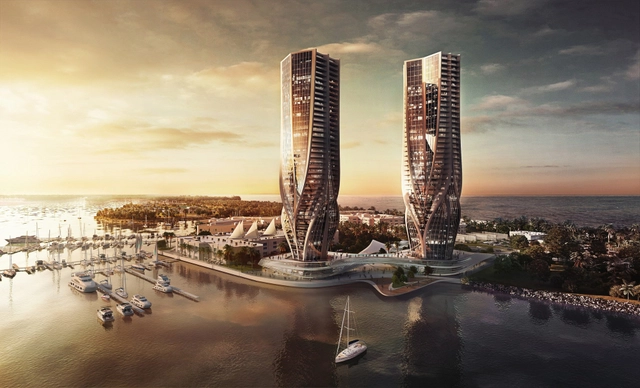
Zaha Hadid has unveiled plans for two "sculptural" towers and a new privately-owned cultural precinct at Mariner's Cove on Australia's Gold Coast. Commissioned by Sunland Group, the $600 million mixed-use project will include two 44-story residential towers, ground floor retail, a 69-suite boutique hotel and underground aquarium, along with an art gallery, museum and outdoor sculptural gardens.

Huge Fire Damages Basilica of Saint-Donatien in Nantes

The Basilica of Saint-Donatien in Nantes has been significantly damaged by a huge fire. As reported by the BBC, the fire started at around 10:30 am local time, and is believed to have broken out on the roof of the building in connection with waterproofing work.

Bjarke Ingels Talks About Two World Trade Center

Subscriber Access | 

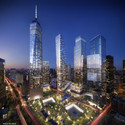
Last week, after a month of speculation, BIG unveiled their plans for New York's Two World Trade Center, replacing Foster + Partners' design which although started on site, was stalled due to the financial crash of 2008. With the building's high profile, in just one week BIG's design has been the subject of intense scrutiny. In this interview, originally published by New York YIMBY as "Interview: Bjarke Ingels On New Design For 200 Greenwich Street, Aka Two World Trade Center," Nikolai Fedak talks to Bjarke Ingels about the design of the tower and why it was necessary to replace the scheme by Foster + Partners.

YIMBY sat down with Bjarke Ingels to talk about his firm’s design for 200 Greenwich Street, aka Two World Trade Center. Despite public outcry following the change from the Norman Foster version of the tower, BIG’s innovative and forward-thinking building will truly respond to the human needs of its tenants, while also punctuating the Downtown skyline with a 1,340-foot take on a classic ziggurat. We’ve also obtained a few additional renderings of the soon-to-be icon’s impact on the cityscape.

Bjarke Ingels Talks About Two World Trade Center - Image 1 of 4Bjarke Ingels Talks About Two World Trade Center - Image 2 of 4Bjarke Ingels Talks About Two World Trade Center - Image 3 of 4Bjarke Ingels Talks About Two World Trade Center - Image 4 of 4Bjarke Ingels Talks About Two World Trade Center - More Images+ 4

Nevena Katalina Remembers Yugoslav Memorials Through Posters

Subscriber Access | 

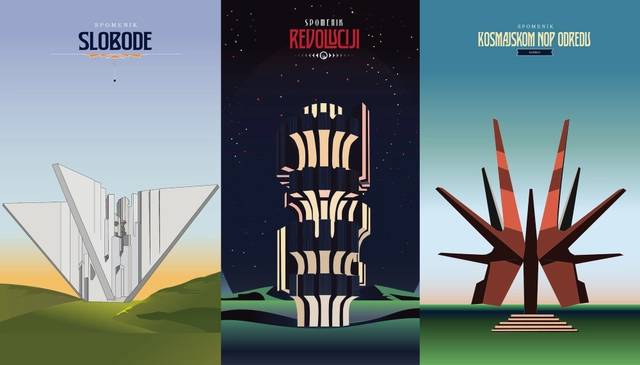
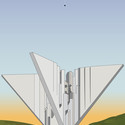
The act of remembering looms large in national cultures. Shared national memories act as a foundation for national identity, a unifying collective interpretation of history that can define what it means to belong in a certain place. Monuments loom even larger - define a national memory in concrete and stone, and you can help define your vision of the nation. That's why Nevena Katalina, a graphic design masters student at the University of Novi Sad in Serbia, has taken the famous abstract war memorials in the former Yugoslavia and translated them into posters, attempting to reconcile the imposing concrete forms with the impact they've had on culture and memory in countries around the former Yugoslavia.

Nevena Katalina Remembers Yugoslav Memorials Through Posters - Imagen 1 de 4Nevena Katalina Remembers Yugoslav Memorials Through Posters - Imagen 2 de 4Nevena Katalina Remembers Yugoslav Memorials Through Posters - Imagen 3 de 4Nevena Katalina Remembers Yugoslav Memorials Through Posters - Imagen 4 de 4Nevena Katalina Remembers Yugoslav Memorials Through Posters - More Images+ 5

How EPM Group Is Reclaiming Medellín's Infrastructure as Public Space

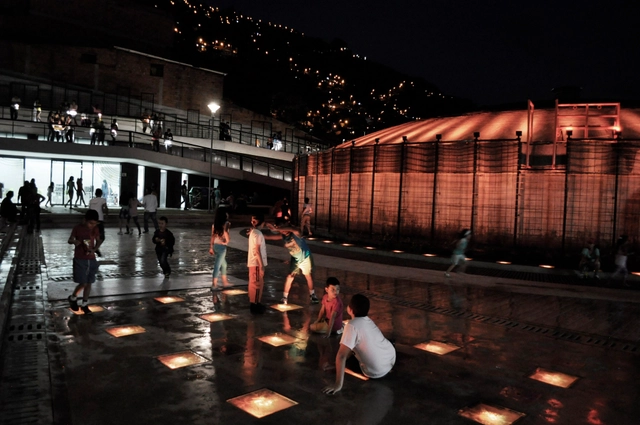
With a high-density population and a history of internal armed conflict, the city of Medellín in Colombia lacked substantial public space, but had an overwhelming amount of industrial infrastructure in place. But as profiled by The Architectural Review, recently architects and urban planners of the EPM group saw this imbalance as an opportunity, and so in the uninhabited patches of land surrounding over one hundred fenced industrial lots, the UVA or Unidades de Vida Articulada (Units of Articulated Life) program was born. Including initiatives to build public classrooms, launderettes and cafés, the UVA projects were conceived together with the local population through a series of workshops, where every resident was invited to express their vision for the new public square through writing and drawing. Medellín, existing at the convergence of several hills, provides a wide variety of unique landscapes for architects to experiment on - and through the UVA projects, EPM Group demonstrates how architecture can empower a community from the first day of design. Read more about how this project will continue to instigate positive change at The Architectural Review.

How EPM Group Is Reclaiming Medellín's Infrastructure as Public Space - Image 1 of 4

Thomas Heatherwick on People, Plants, Buses and Buildings

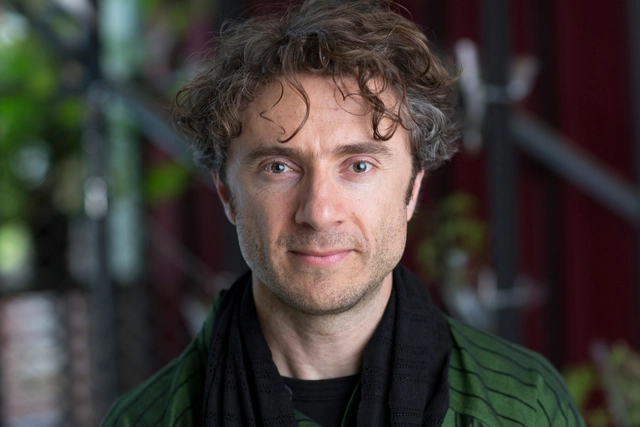
In an exclusive hour-long interview with British designer Thomas Heatherwick, Monocle's Andrew Tuck discusses building a business in the world of design and architecture, the process behind revamping the iconic red London bus, and the inspiration behind placing people – and plants – at the heart of the River Thames. Heatherwick leads London-based Heatherwick Studio, a multidisciplinary design practice who have recently completed a distillery in England and a learning hub in central Singapore, They are currently collaborating with BIG on the new Google Campus in San Francisco having been recently labelled as among the top ten most innovative architectural practices of 2015 by FastCompany.

Listen to the interview in full below:

Toronto’s Design Exchange Unveils Its Latest Exhibition: “3DXL”

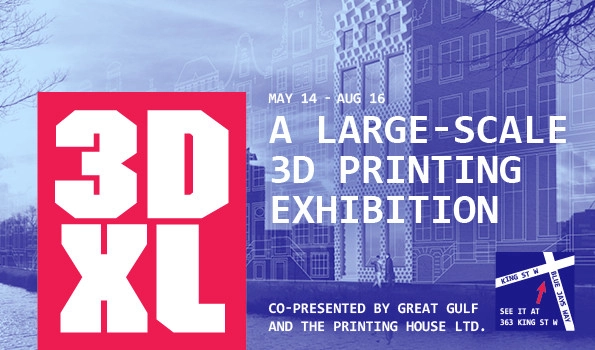
Despite being at the forefront of digital fabrication technology, 3D printing is still shrouded in mystery, something which the Design Exchange (DX) hopes to change with its most recent exhibition, “3DXL” in Toronto. Curated by the director of DX, Sara Nickleson, 3DXL brings together 3D printing projects from across fields, including work from medicine, design and architecture. As the name suggests, the exhibit presents 3D printing on a scale not normally observed by the public. In particular, the exhibit addresses the role 3D printing will play in the future of architecture, and how it may begin to replace more traditional architectural construction.

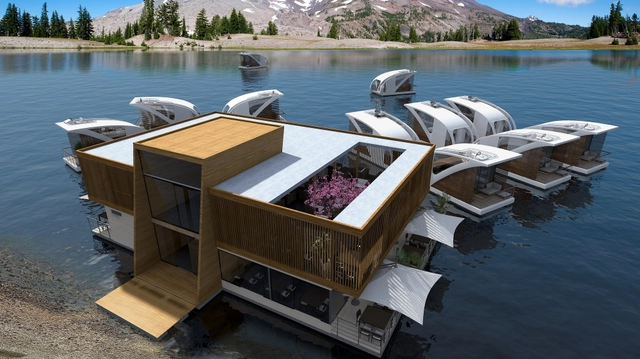
Salt & Water Design Floating Hotel with Catamaran-Apartments

A winner of the Millennium Yacht Design Awards, Salt & Water's concept for a Floating Hotel aims to introduce tourism onto inland waters without disrupting the natural harmony of its surroundings. Their design consists of two parts: a central floating body and separate catamaran apartment units.

Learn more about the Floating Hotel after the break.

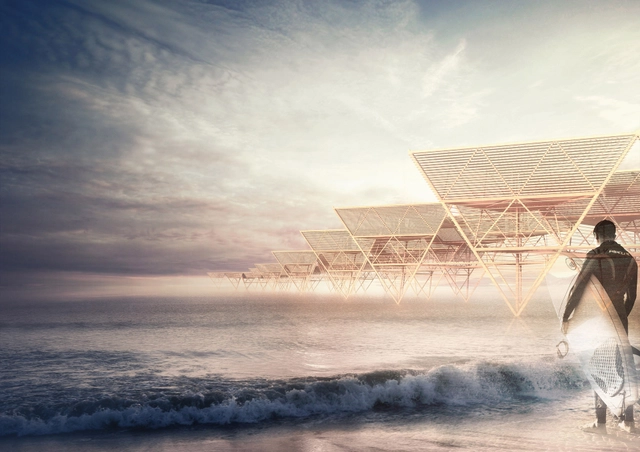
Barberio Colella ARC's Lanterns Sea Village Proposes Non-Invasive Ocean Dwellings for Surfers

Too often, architects and designers treat nature as separate from humans or human creations. Nature is fought, or protected, or considered as something to accommodate for through a retroactive checklist. In contrast, Barberio Colella ARC's Lanterns Sea Village is a conceptual plan to create short-stay housing that integrates natural systems with people and buildings. The team behind the project, Micaela Colella and Maurizio Barberio, designed the small residences to approach housing from a more adaptive perspective.

Barberio Colella ARC's Lanterns Sea Village Proposes Non-Invasive Ocean Dwellings for Surfers - Image 1 of 4Barberio Colella ARC's Lanterns Sea Village Proposes Non-Invasive Ocean Dwellings for Surfers - Image 2 of 4Barberio Colella ARC's Lanterns Sea Village Proposes Non-Invasive Ocean Dwellings for Surfers - Image 3 of 4Barberio Colella ARC's Lanterns Sea Village Proposes Non-Invasive Ocean Dwellings for Surfers - Image 4 of 4Barberio Colella ARC's Lanterns Sea Village Proposes Non-Invasive Ocean Dwellings for Surfers - More Images+ 2

Archibeans Comic Grants a Light-Hearted Glimpse into Life as an Architecture Student

Subscriber Access | 
Archibeans Comic Grants a Light-Hearted Glimpse into Life as an Architecture Student - Featured Image
Courtesy of The Angry Architect

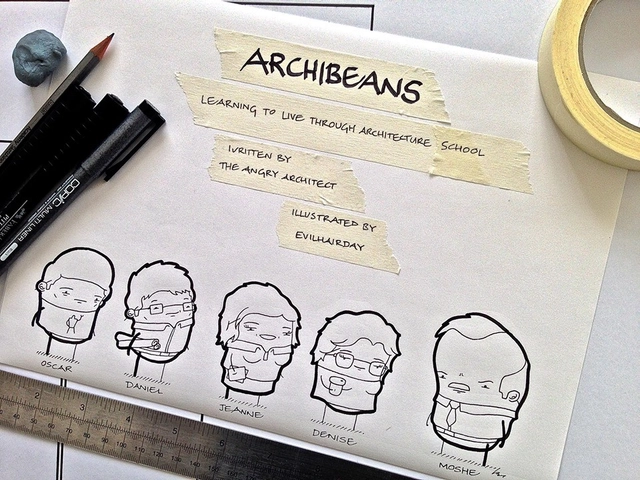
Born from the collaboration of illustrator EvilHairDay and blogger The Angry Architect, Archibeans is a look into the daily trials of architecture students with a touch of humor. Whether it's all-nighters, overdoses of caffeine, random bursts of inspiration or crushing final reviews, Archibeans shows that we’ve all been there and offers a laugh at our own expense.

Unified Architectural Theory, Chapter 14

Subscriber Access | 

We have been publishing Nikos Salingaros’ book, Unified Architectural Theory, in a series of installments, making it digitally, freely available for students and architects around the world. In Chapter 14, the final chapter of the online version of the book, Salingaros concludes by recounting the effect that the teachings included in his book had on students in a class he taught at the University of Texas at San Antonio, during the Fall Semester of 2012. If you missed them, make sure to read the previous installments here.

Conclusion

At the conclusion of this course, the students told me that they had learned a great many things that are crucial to an understanding of architecture, but which are hardly ever taught in other architecture courses. To be precise, students had previously been told about the importance of various factors to the success of a design—site, surrounding architecture, regional adaptation, ornament (or rather excluding it), the relationship among distinct structural scales, proportions, trees and green areas—but were never taught exactly how to manage them. Now, those factors were taken into account by learning why they arise out of our own biology and natural processes.

Richard Meier Tops Out on Florida Beach "Surf Club"

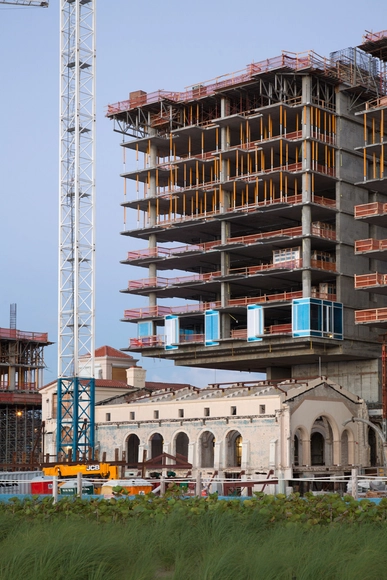
Richard Meier & Partners has topped out on their Four Season’s expansion to the historic Russell Pancoast-designed “Surf Club” in Florida. Scheduled to complete next year, the luxury hospitality and residential project is comprised of two, 12-story towers, offering 150 private units, alongside an 80-room hotel on 9-acres of Surfside oceanfront property. Read on for more in-progress images. You can learn more about the project, here.

Margot Krasojevic on Experimental Architecture and the Challenges of Being Branded a "Parametric Futurist Crap Architect"

Subscriber Access | 

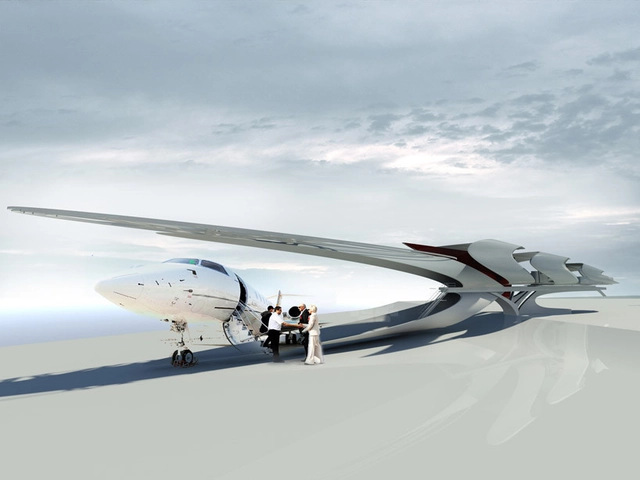
Experimental architect and psychologist Margot Krasojevic has been designing literally in-credible structures for her entire career. Starting with more conceptual designs, her parametric and outlandish forms are becoming increasingly buildable, and several, including her Jetway Hotel, are under construction. Following on from her latest project, an artificial snow cave which functions as an emergency shelter, ArchDaily was able to talk to Krasojevic about what goes into her work, how she designs and how she feels about the current architectural media - us included.

Büro Ole Scheeren Unveils the "Future of Vertical Housing" in Vancouver

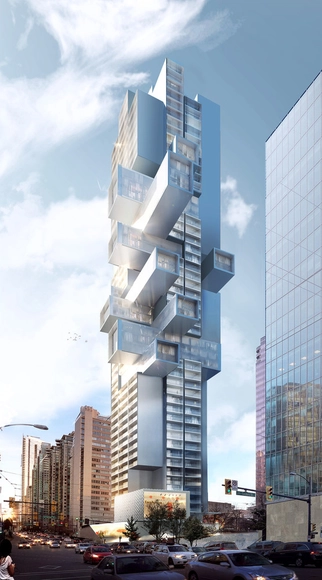
Büro Ole Scheeren has envisioned a "future vision for vertical living." Designed to serve as an "urban pivot" on one of Vancouver's main avenues, 1500 West Georgia Street, the multifaceted tower features a system of vertically shifted apartment modules and outdoor terraces that branch out horizontally to "engage the space of the city and activate Vancouver's waterfront skyline."

“Vancouver possesses a unique balance of urban conditions surrounded by spectacular nature that provides fertile ground for envisioning new possibilities for future living in a cosmopolitan and environmentally-friendly city” says Ole Scheeren. “The design for this building exemplifies our ambition to reconnect architecture with the natural and civic environment and go beyond the hermetic confines of towers that increasingly inscribe our lives.”

Oops! We don't have this page.

But you can browse the last one: 417

You've started following your first account!

Did you know?

You'll now receive updates based on what you follow! Personalize your stream and start following your favorite authors, offices and users.