We’ve all seen them: cringeworthy designs and abysmal construction fails. For architects and designers, it's difficult not to hone in on the details of every space we encounter. And, it’s even harder not to laugh at doors incapable of opening, plaster jobs that could have been completed by a 4-year old, and an overly liberal use of caulking to solve any construction mishap.
Inspired by this guilty pleasure, the Instagram account of “Certified Caulk Installer” Trevor Lahey aka greaseball1987 has collected the best of the worst home improvement disasters for your viewing pleasure. See more of Lahey's plethora of hilarious tragedies below.
Building and growing are two actions that should be considered more often than not at the same time. This is how the 2017 "Build to Grow" social housing competition, looked to establish bases that sustain a flexible way of living. The event took place in the Belén district in the city of Iquitos, on 3.7 hectares plot of land. The project that received first place proposed to locate 120 incremental homes, that alternatively allowed users to modify and expand it according to their needs and economic means. In short, a home with a solid nucleus formed by a structure that supports changing activities.
The Harvard Graduate School of Design has announced the appointment of Mark Lee as Chair of the university’s Department of Architecture. Having taught at Harvard GSD since 2013, Lee is also a principal and founding partner at Johnston Marklee Architects. He will succeed K. Michael Hays, who has taught at Harvard GSD since 1998.
Lee has previously held the position of Frank Gehry Chair at the Daniels Faculty of Architecture, Landscape, and Design at the University of Toronto, as well as Cullinan Guest Professor at Rice University School of Architecture. He has also been a design critic at Harvard GSD since 2013, where he himself earned a Masters in Architecture in 1995.
https://www.archdaily.com/891227/harvard-gsd-appoints-mark-lee-as-chair-of-department-of-architectureNiall Patrick Walsh
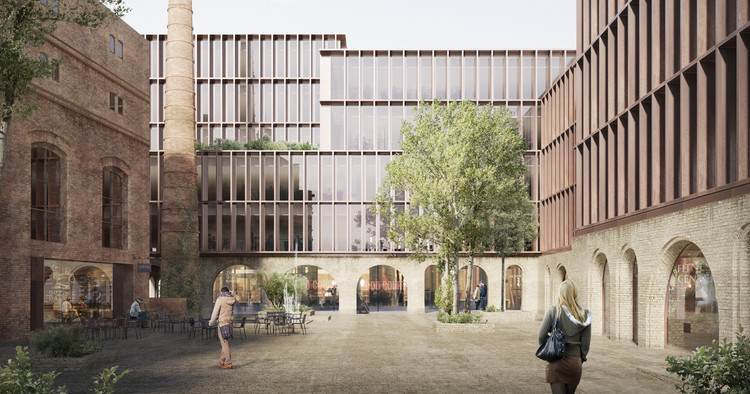
The proposal for the 120,000-square-foot (11,500-square-meter) district manifests as a vibrant, public-orientated program, including a gym, child care center, café, food court, and spa. A series of courtyards and plazas are laced throughout the scheme, connecting old and new in a “timeless, classic appearance that is also uniquely contemporary.” The design took 2nd place in a competition in which no first place winner was selected, as the jury felt that no entry fully met the competition criteria. As the highest-placing entry, the competition organizers have committed to begin negotiations with Schmidt Hammer Lassen to refine the design.
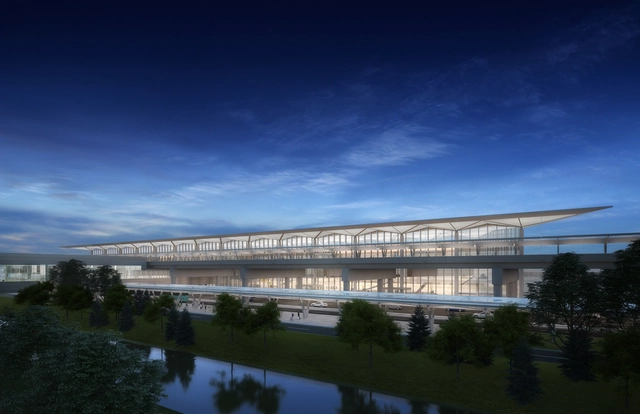
London-based Grimshaw Architects has been selected to serve as Lead Architect for the design of Newark Liberty International Airport’s new Terminal One building in New Jersey. Grimshaw will work in partnership with STV to design the $1.41 billion terminal, featuring 1 million square feet (93,000 square meters) of space and 33 gates spread across a two-level T-shaped building. The scheme represents the largest transportationinfrastructure design-build project in New Jersey’s state history.
https://www.archdaily.com/891218/grimshaw-to-lead-design-of-newark-liberty-international-airport-terminalNiall Patrick Walsh
3D printing – also known as additive manufacturing – turns digital 3D models into solid objects by building them up in layers. The technology was first invented in the 1980s and has since found its way into our everyday life – and in architecture and interior design. Architecture firm DUS has a vast expertise in architectural 3D printing and is now applying its expertise to interiors and retail spaces.
“3D printing is an ideal technique to tailor-produce to a space or a brand,” says Inara Nevskaya, head designer at DUS. “We can link a furniture’s functionality with unique form features to create statement pieces, special focal points that frame new experiences for the consumer in the retail landscape.”
https://www.archdaily.com/890494/interior-design-and-3d-printing-giving-unique-forms-to-functional-spacesLidija Grozdanic for Archipreneur.com
March 22 is World Water Day, an annual international celebration launched and organized by the United Nations. The goal of the day is to raise awareness about a wide range of water-based issues from around the world. This year’s theme is “Nature From Water”, which invites everyone to think about how nature can provide solutions to the water challenges we face today.
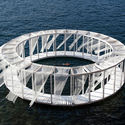
To celebrate World Water Day this year, we’ve rounded up 20 of our favorite projects that utilize water as a central design feature. Whether it be Zumthor'sThermal Vals or Chritso and Jeanne-Claude'sFloating Piers, water has been playing an important role in architectural design and in demarcating the boundaries of nature against our built environment.
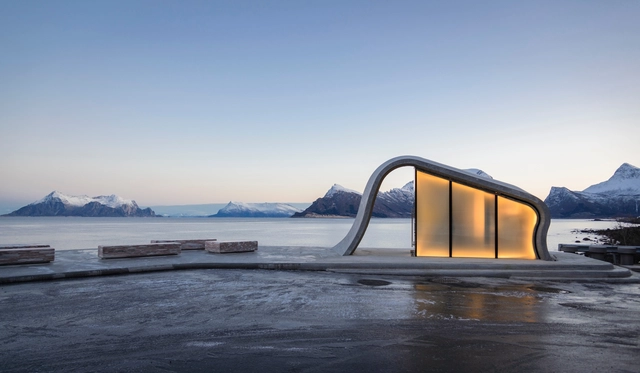
The Norwegian Public Roads Administration is opening a new landmark, Ureddplassen, along the Norwegian Scenic Route Helgelandskysten. Consisting of seating benches, a toilet facility and viewing terrace facing the open sea, Ureddplassen evokes a sense of poetic solitude as it complements the natural landscape of Norway.
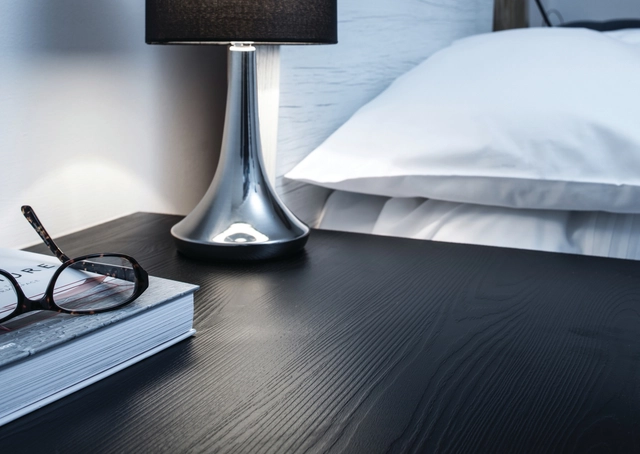
One thing is key when it comes to wood-based materials: Authenticity. In addition to how it looks, the feel of a surface is also important. The right texture gives a decor character and depth, as well as a natural appeal, brings it even closer to the real thing.
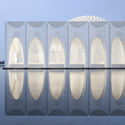
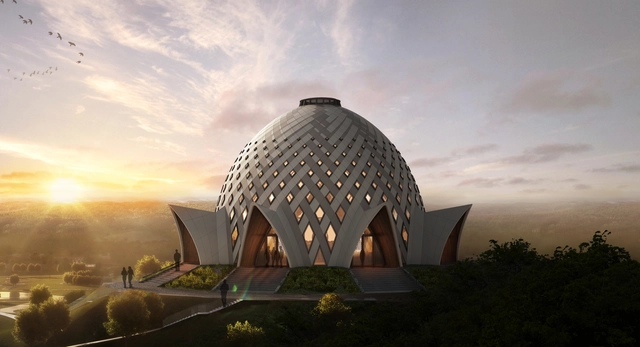
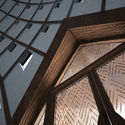
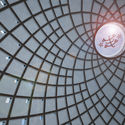
The Bahá'í International Community has unveiled a proposal for the national Bahá'í House of Worship of Papua New Guinea. In the capital city of Port Moresby, a celebration was held at the temple’s future site to showcase the scheme, coinciding with the Bahá'í New Year. Inspired by the art of weaving, the architects’ vision was for a temple where the people of Papa New Guinea could unite to worship and find inspiration.
Willow Village will form part of Facebook's OMA-designed Willow Campus. Image Courtesy of OMA
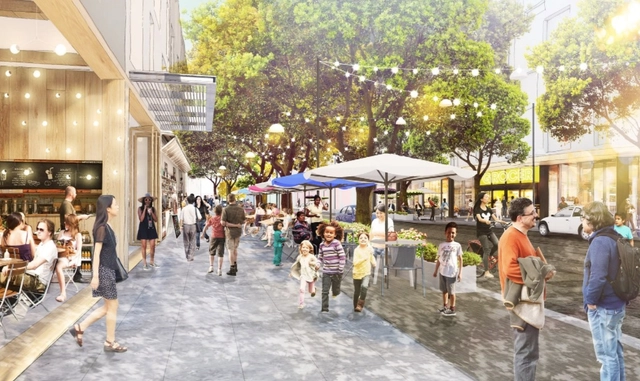
“Do people love tech companies so much that they would live inside them?” This is the question posed by The New York Times in an article reflecting on Facebook’s plans for Willow Village, a 59-acre urban district located at the company’s Menlo Park headquarters in San Francisco, California.
https://www.archdaily.com/891145/zucktown-usa-will-facebook-design-your-future-cityNiall Patrick Walsh
Public spaces are having a moment. People from outside the field of urban planning are beginning to notice the vital contributions that they make to our quality of life: inserting nature and cultural memory into the everyday, reminding us of our collective responsibilities, supporting democratic expression. People are also beginning to notice the subtle ways in which those contributions are being eroded by threats of privatization, corporate appropriation, and apathy.
Most acutely, this moment is brought to us by Apple, which has begun an aggressive retail rebranding effort to re-conceptualize its stores as “town squares,” and wrought a wave of well-founded concern. Technology continues to beckon us away from the need to leave our homes or interact face-to-face with other humans. If for every action there is an equal and opposite reaction, it would follow that opportunities for such interpersonal interaction become a luxury we begin to seek, a call to remember our origin as social beings.
Videos
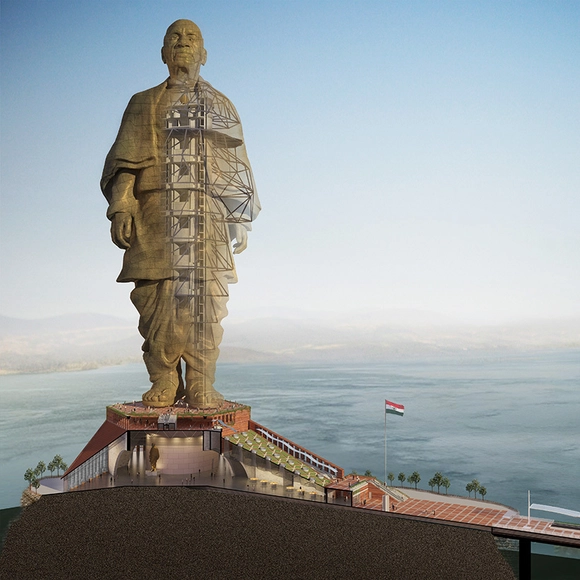
Section of the Statue and Surrounds. Courtesy of Michael Graves Architecture & Design
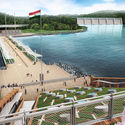
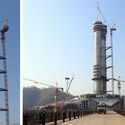
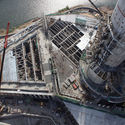
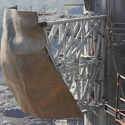
The Statue of Unity, to be the world’s tallest statue when completed, has made significant headway with its construction. Designed by Michael Graves Architecture & Design, the Statue of Unity will be 182-meters tall and depict Vallabhbhai “Sardar” Patel, the first deputy Prime Minister of India. Standing at almost twice the height of the Statue of Liberty, the Statue of Unity project will also consist of a hotel, memorial garden, visitor’s center and miles of roadways and bridges to connect the statue to the town of Kevadia, India.
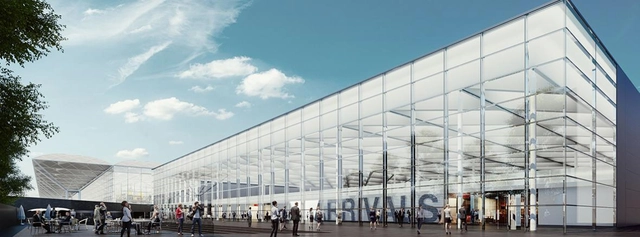
After Pascall+Watson’s success with their concept design for the £130m Arrivals Terminal at Stansted Airport, the firm have been selected for the £600m transformation programme by MAG (Manchester Airports Group owners of Stansted Airport). As demand for air travel continues to increase, Pascall+Watson’s plans aim to provide a greater choice of airlines and destinations by making use of the airport’s spare runway capacity and supporting the future growth.
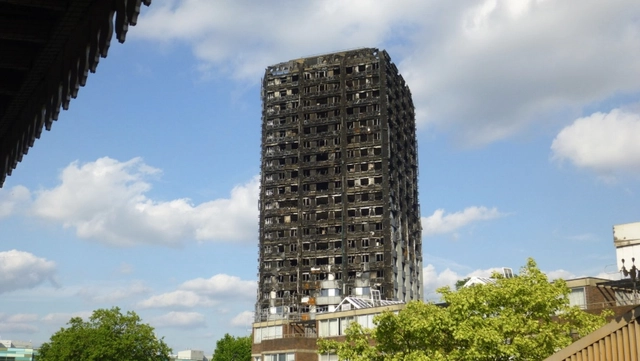
Adjaye Associates is among a team of high-profile architects tasked with generating ideas for the overhaul of Lancaster West Estate, an area of London containing the ruined Grenfell Tower, tragically destroyed by fire in 2017.
Before airplanes, it took mail carriers on horseback months to transport letters across the country. Before washing machines, it took a full day of physical exercise to wash and dry a family’s laundry. And before cranes, it took decades—sometimes centuries—to build large structures such as castles and cathedrals.
The point being: Whatever you do, technology probably gives you a better way to do it.
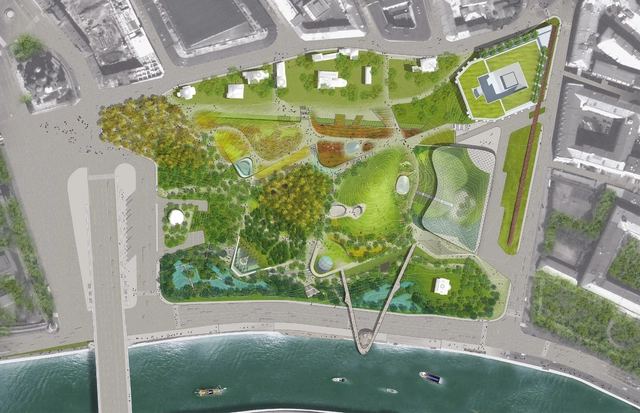
Parque Zaryadye Plan / Diller Scofidio + Renfro. Image via Diller Scofidio + Renfro
Frequently imperceptible to the inhabitant, the architectural plans of landscape designs are unquestionably the best tool for understanding certain relationships between elements and the strategic organization of the work. They are therefore an essential part of any good architecture project.
The distribution and type of vegetation, topography levels, the relationships between the preexisting urban or natural context, the possible routes and incorporated activities, and the materiality and the dimensional precision required for its construction are some of the considerations that are usually reiterated in this type of representation.
The result permits the communication of intentions in an organized way, while clearly exposing the concerns of the authors; for this reason, we invite you to review a series of different examples of architectural plans of public spaces that enables a comprehensive approach to the role of each project.
Harvard University Graduate School of Design (Harvard GSD) has announced the four finalists for the 2018 Wheelwright Prize, a $100,000 travel research-based grant available to early-career architects worldwide.
Selected from over 125 applications from nearly 40 countries worldwide, the four finalists are from Belgium, Mexico, Brazil, and the United States. This year’s jury includes 2014 Wheelwright Prize Winner Jose Ahedo, Edward Eigen, Frida Escobedo, K. Michael Hays, Mark Lee, Mohsen Mostafavi, and Michelle Wilkinson. A winner will be named in April.
Since the concept of driverless cars first became a serious prospect, a lot of attention has been given to the possibility of their malfunction—if an autonomous vehicle damages property or even harms a human, who is at fault? And, given a worst-case scenario, how should a vehicle's software choose between whose lives it prioritizes, the passenger or the pedestrian? This last question even became the basis for the Moral Machine, an online platform created by the MIT Media Lab that essentially crowdsources public opinion on different variations of the classic trolley problem thought experiment.
However, all of these questions had been considered largely theoretical until last night when, as The New York Times reports, a woman was struck and killed by an autonomous vehicle in Tempe, Arizona. As a major component of many predictions of futuristic "smart cities," the development and testing of autonomous vehicles hold huge implications for urbanism (ArchDaily has previously covered predictions of major change by car manufacturers and researchers) meaning that this fatal event could have a ripple effect on the development of cities.
Riken Yamamoto & Field Shop has released images of the proposed TaoyuanMuseum of Art in Taiwan, having won an international competition for the scheme’s design in 2018. Acting as a symbolic gateway to the heart of the city, the architect’s vision was for a hub where every visit leads to new discoveries and experiences.
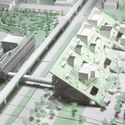
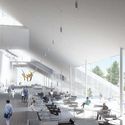
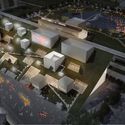
Named “The Hill,” the competition-winning scheme is defined by a sloping green roof, hosting artwork, pavilions, trees, and an outdoor theater. Beneath the roof, a structure named “The Cube” contains permanent exhibitions and collections, and establishes a link between the museum and Blue Pond Park beyond.
Beginning a multi-division examination with pass rates in the 50-60% range is a seriously daunting task. That’s without even mentioning the overwhelming amount of study materials and opinions floating around in cyberspace. Never fear, ArchDaily is here to help you navigate the tools and techniques available to you when cracking open the books and (hopefully) passing your first exam.
For some practitioners of architecture, the insatiable desire to draw everything, from the largest to the smallest to take full control of the project, echoes the famous phrase uttered by Mies Van Der Rohe: "God is in the details." Similarly, designing furniture provides another creative outlet for in-depth exploration of human-scale works of architecture.
Throughout the history of the Brazilian Architecture, and especially since the modernist movement, architects not only became known for their building designs, but also for their detailed chairs and tables. Several of these pieces of furniture were initially designed for a specific project and then went into mass production due to their popularity.
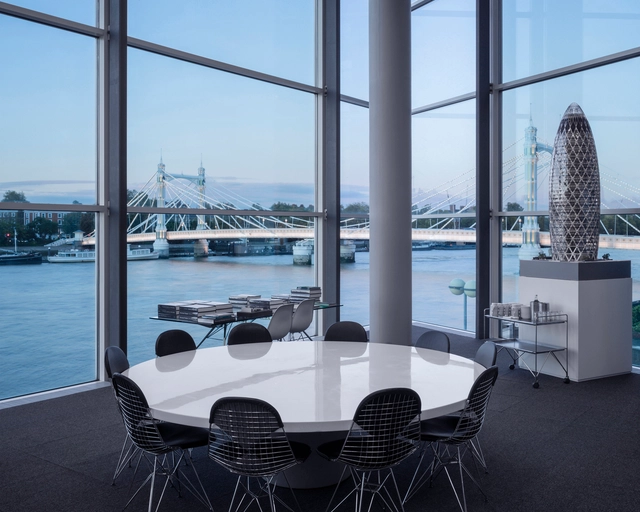
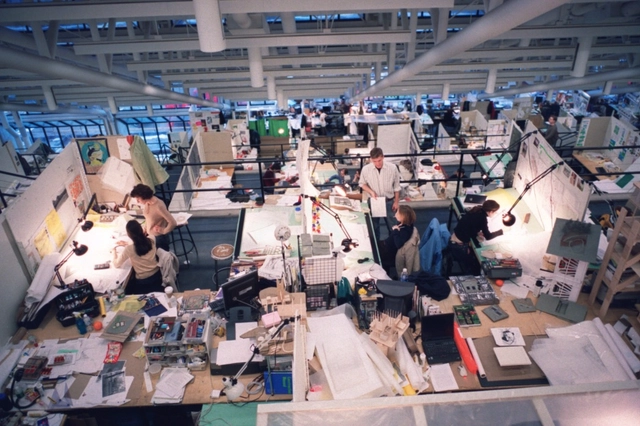
Last week, ArchDaily covered a story about the gender pay gap at Foster + Partners. We thought such a story was "unsurprising" given that the gender pay gap is something that is widely reported on, and present in almost every industry, and we wanted to share a case of it happening in an architectural firm many of us are familiar with. What we did not expect was that readers would think it is a non-issue, or that such reporting was sensational. Is it possible for us to talk about gender in the workplace without being up in arms? Why does the gender pay gap issue make people uncomfortable?
Some of our editors discussed how gender plays into their workplace experiences as well as some hopeful recent signs that we are on a path to change.










.jpg?1521650494 "Courtesy of Bahá'í International Community")

.jpg?1521632435&format=webp&width=640&height=580)









_(1).jpg?1521456027)