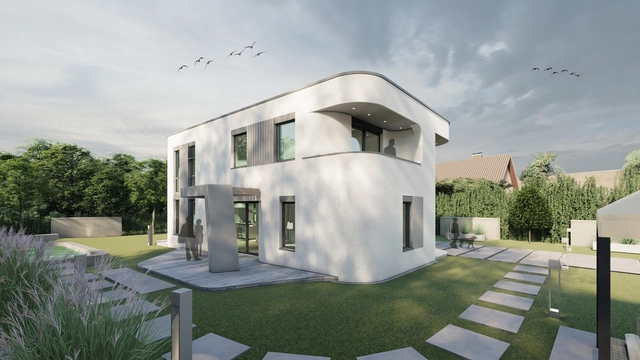
The first 3D printed residential building in Germany, built by PERI GmbH, and designed by MENSE-KORTE ingenieure+architekten is undergoing construction in Beckum, North Rhine-Westphalia. The two-story printed detached house with approx. 80 sqm of living space per floor is using a system put into practice in Germany for the first time. In fact, the construction technique has come through all of the regulatory approval processes over the last few weeks and months.
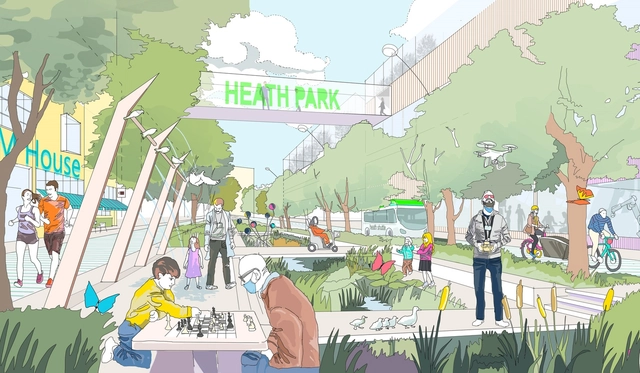
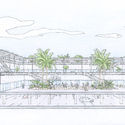
Multi-disciplinary design practice EcoResponsive Environments has won the RIBA competition for the ‘Vision of Future Living’ in Runcorn, England. Designed for SOG’s Heath Business and Technical Park, the proposal aims to help attract interest from global investors and reimagine what the site's future might hold. The competition for the redevelopment of The Heath asked architects to consider how we will live, work and play in the future.
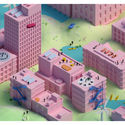
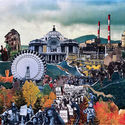
Surface Ex-Tension by Jonathan Craig, Luis Arjona, Marco Nieto & Philip Elmore. Image Courtesy of Arch Out Loud
Since its installation in the late 1990s, a large clock in New York City’s Union Square has been counting up to 24 hours in each day with the number of hours, minutes, seconds, and milliseconds on display. However, the digital screen was recently repurposed as a Climate Clock and now projects the amount of time the world has left to take large-scale action on climate change- and the alarming truth, based on an IPCC Special Report on Global Warming counts down to only a little over seven years left until we reach the point of no return.
In 1755, Francesco Algarotti, disgusted with what opera had become, wrote An Essay On The Opera in which he called for its simplification. For Algarotti, opera had degenerated into a vehicle for soloists to grandstand with endless improvisations overshadowing the music and ignoring the drama. Even the drama had lost the plot with mythological characters in extraordinary and complex situations. Algarotti saw drama as being the essence of opera and wanted the emphasis restored to it, with everything else secondary. Christoph Willibald Gluck and his librettist, Ranieri de’ Calzabigi, were the first to make it work with their 1762 opera Orfeo ed Euridice. It had characters and drama people could relate to, music that could be remembered and lyrics and a plot that could be understood. It’s regarded as the first truly modern opera.
A recent study conducted by the Royal Institute of British Architects (RIBA) examined how architecture students have been affected by the pandemic. Examining 398 architecture students, the COVID-19 survey found that these young adults are under significant stress and are concerned about their future career. In fact, the results highlight that 58% of students are struggling with mental health and almost half are concerned about job prospects.
Reflecting on the current global situation, Chicago Architecture Biennial (CAB) has reinvented its 2021 edition, in order to generate conversations about the “intersection of architecture and design and such critical issues as health, sustainability, equity, and racial justice”. The Biennial has also announced the appointment of David Brown, designer, researcher, and educator, based at the School of Architecture at the University of Illinois at Chicago, as the Artistic Director of the fourth edition, entitled The Available City.
Being in confinement has produced unconventional means of exploring architectural spaces and installations. Instead of putting everything on hold until life goes back to normal, designers and curators found inspiration from practices like performance arts and theatre, breaking down the walls between the subject and viewers but from a distance.
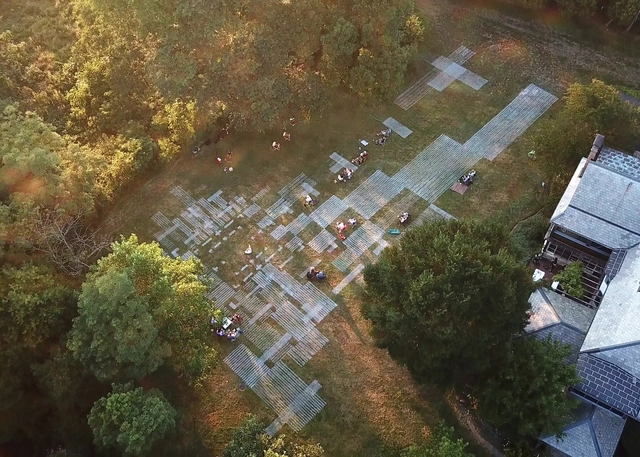
Ashley Bigham and Erik Herrmann of Outpost Office reimagined the theme of "mobility" by creating 1:1 scale drawings on the Ragdale campus using GPS-controlled field marking robots. Their unique urban installation, which addressed modern-day concerns such as public spaces, how we are engaging with them, and physicality, won first place in the 2020 Ragdale Ring competition.
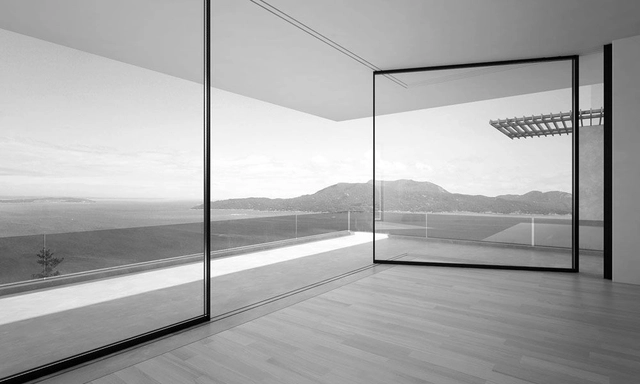
The window is the architectural element that satisfies our innate need to relate to the outside space, providing us with ventilation and light. The more extensive and clean the window is, the greater the sensation of "being outside". Consequently, opening up spaces to the outside has become a common requirement for people who want and need to inhabit flexible, adaptable spaces, in contact with the air and nature. There are many ways to do this, but not all of them allow an airtight enclosure to become fully open and continuous, clearing the boundaries between both spaces.
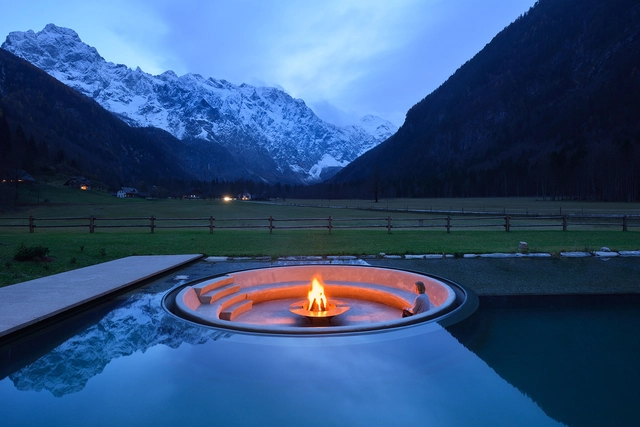
Yuval Noah Harari points out that, around 300 thousand years ago, Homo erectus, Neanderthals, and ancestors of Homo sapiens already used fire daily. According to the author of the international bestseller “Sapiens,” fire created the first significant gap between man and other animals. "By domesticating fire, humans gained control of an obedient and potentially limitless force." Some scholars even believe that there is a direct relationship between the advent of the habit of cooking food (possibly due to the domestication of fire) and the shortening of the intestinal tract and growth of the human brain, which allowed human beings to develop and create everything we now have.
Over the last ten years, the podcast 99% Invisible has been captivating listeners throughout the world by exposing the overlooked and seemingly mundane aspects of architecture and design. While the show had modest beginnings in creator Roman Mars’s bedroom, it has now grown to more than 400 episodes generating over 400 million downloads.
This week, fans can also hold the show’s stories in their hands in the form of a new book titled The 99% Invisible City: A Field Guide to the Hidden World of Everyday Design, which Mars co-wrote with digital director and producer Kurt Kohlstedt. Composed of research and reporting from the podcast as well as brand new stories, the book (illustrated by Patrick Vale) highlights design considerations that often go unnoticed.
https://www.archdaily.com/950050/from-podcast-to-print-roman-mars-discusses-the-99-percent-invisible-cityLeilah Stone
Scale is a very important referential element in built environments. Once manipulated, however, it becomes a key tool that completely changes the way we experience architecture. One of the most prominent projects that put scale at the forefront was the Svizzera 240: House Tour, the Swiss pavilion at the 2018 Venice Biennale, a project that triggered people's behaviors and perception of space, and left them feeling as though they were experiencing an "Alice in Wonderland". The project was awarded with the Golden Lion award for best National Pavilion, described by the Biennale organization as "a compelling architectural installation that is at once enjoyable while tackling the critical issues of domestic space".
Sir David Adjaye Studio. Image Courtesy of Design Miami/Architects for Beirut
Design Miami’s latest initiative in partnership with Architects for Beirut, has gathered a collection of 100+ original architectural drawings and artworks donated by 90+ renowned architects from around the world. With proceeds going to aid on-the-ground restoration efforts in Beirut, works offered include exclusive pieces from Zaha Hadid, David Chipperfield, Toyo Ito, Steven Holl, Tatiana Bilbao, Adjaye Associates, and Renzo Piano, to name a few.
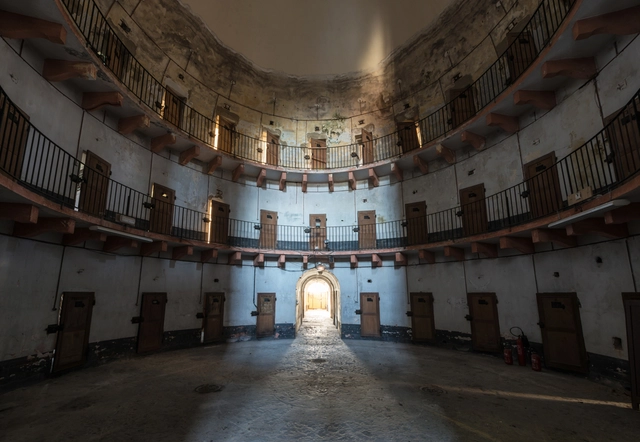
The Board of Directors of AIA New York has recently released a statement discouraging the design of criminal justice facilities that uphold the current system. Taking a stand against designing unjust, cruel, and harmful spaces of incarceration, AIA NY solicited architects to reflect on the broader social implications of their work.
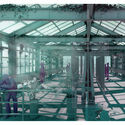
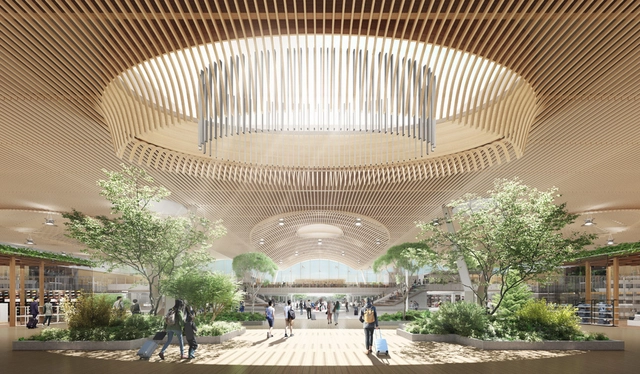
ZGF Architects has shared a new look at the main terminal of the Portland International Airport (PDX) in Oregon. Scheduled for completion in 2025, the $1.5 billion terminal will be the largest of five capital improvement projects by the Port of Portland. The structure features a series of skylights and an expansive timber roof made from sustainably sourced regional wood. The design draws inspiration from nature and the "signature greenery" of Oregon.
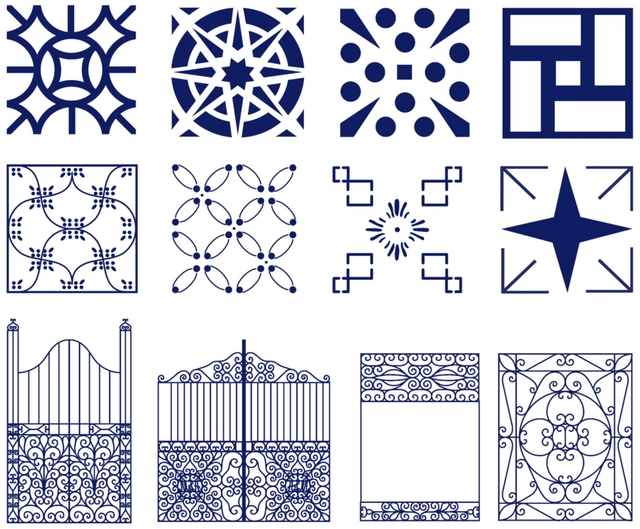
In the Historic Center of Olinda, a Brazilian municipality in the state of Pernambuco, architecture borrows shapes and colors from nature; cobogós perforations on the balconies look like round leaves and fruits, while the railings spiral with a hint of twisted flowers. The colors of the earth and sky also reappear in the floors, backyards, kitchens, and rooms of colonial houses, coating them in shades of brown and blue.
Over two days, approximately 500 online participants together set the agenda, formed and dissolved discussion groups, and shared knowledge and resources. With the assistance of an “open space” facilitator, this is how Cut|Fill, a virtual "unconference” on landscape architecture, unfolded.
Organized by the Urban Studio and Ink Landscape Architects, Cut|Fill was meant to “raise questions we all want to discuss,” explained Andrew Sargeant, ASLA, a founder of Urban Studio. One of those important questions: “how can landscape architects design with empathy and end dismissive behavior towards people of color?”
https://www.archdaily.com/949104/landscape-architects-of-color-on-how-to-combat-erasureJared Green
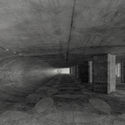
A city's industrial past can leave unsettling imprints on the present. Large abandoned structures and forgotten facilities are very appealing not only to the voracious real estate market but also to the imagination of those who daydream about an unpromising past. Take the Ruhr valley, Germany's most populated urban area, and Europe's largest industrial region.
Stefano Boeri Interiors has unveiled images of his latest circular wooden installation, in an open-air setting of contemporary art. Entitled TREE-ROOM, the project in which “humans and living nature come together, between meditation and contemplation”, is designed for Arte Sella and is located in the garden of Villa Strobele in Val di Sella, in Northern Italy.
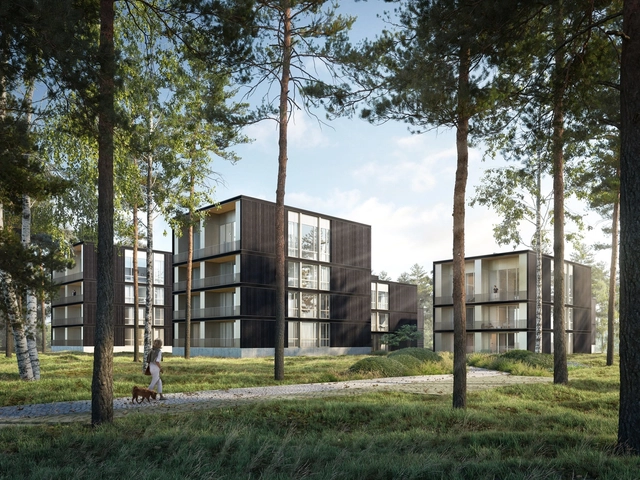
David Chipperfield Architects and landscape architect Enzo Enea have designed a luxury residential retreat on the shores of Lake Scharmützelsee in Germany. Dubbed the Marina Apartments, the project was created for Artprojekt Group as an exclusive development in Bad Saarow. Opening up to nearby forests and the waterfront, the project was designed to be in harmony with nature.
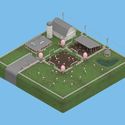
Architectural visualizations are only as good as the scene they’re placed into. No matter how fantastic your building model, if it's placed in an environment constructed of low-quality, low-poly assets, it’s not going to shine. That’s one of the reasons architects and designers have long turned to Quixel Megascans to give context to their archviz scenes.
The architecture of golf is directly tied to the landscape. As one of the few sports with no standardized playing area, its clubhouses and structures are usually unique to each course. Prioritizing views and access, golf architecture tends to be exclusive, especially when many courses are not open to the public. Clubhouses make room for players and spectators to gather and socialize while they overlook the course from multiple angles.
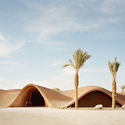
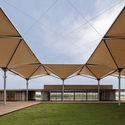
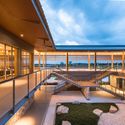
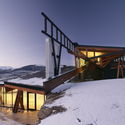
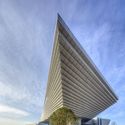
Vladimir Belogolovsky speaks with architects Yingfan Zhang and Xiaojun Bu, co-founders of Atelier Alter, about architecture in motion, their faith in tabula rasa, and the widespread rapid urbanization process in China.
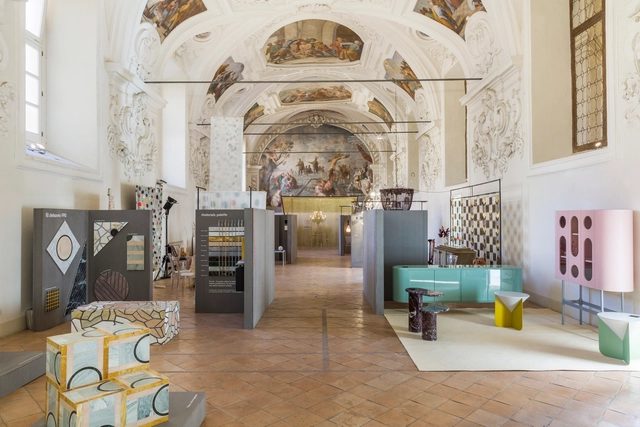
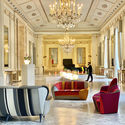
The second edition of EDIT Napoli, dedicated to independent designers, ran from 16 to 18 October 2020, in Naples, Italy. The first onsite fair of the country during this pandemic era was created by curators Domitilla Dardi, design curator of the MAXXI museum in Rome, Architecture sector, and Emilia Petruccelli, buyer and entrepreneur, in collaboration with the Assessorato alla Cultura e al Turismo del Comune di Napoli.
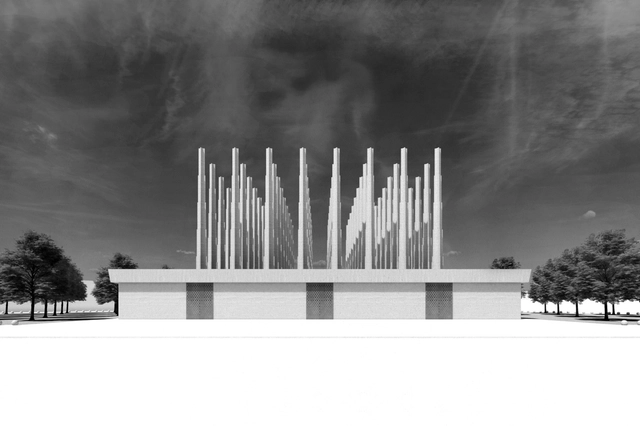
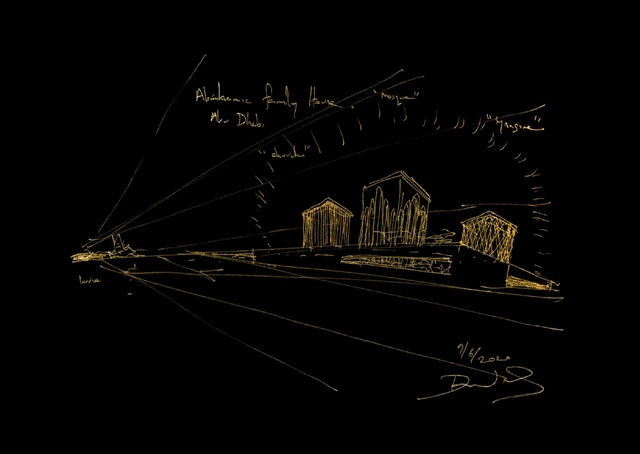
Adjaye Associates has recently designed a project in Niamey, Niger to honor all those that lost their lives in the fight against terrorism on the country’s southern and western borders. The Martyrs Memorial is in fact “tangible documentation of the continuous fight against extremist entities and the soldiers who have fallen in the process”.


.jpg?1603161566&format=webp&width=640&height=580)
.jpg?1603161566)





.jpg?1603324117&format=webp&width=640&height=580)





.jpg?1602706135&format=webp&width=640&height=580)
.jpg?1602705046 "Zollverein Coal Mine Industrial Complex in Essen. Photography & Concept © Erieta Attali")
.jpg?1602705111 "Zollverein Coal Mine Industrial Complex in Essen. Photography & Concept © Erieta Attali")
.jpg?1602705591 "Duisburg-Nord public park. Photography & Concept © Erieta Attali")
.jpg?1602705763 "Duisburg-Nord public park. Photography & Concept © Erieta Attali")
.jpg?1602706135)
.jpg?1603183617&format=webp&width=640&height=580)
.jpg?1603183812 "© Giacomo Bianchi")

.jpg?1603182934 "© Giacomo Bianchi")
.jpg?1603183917 "© Giacomo Bianchi")
.jpg?1603183617)




_highlite_Images_01.jpg?1603138047&format=webp&width=640&height=580)
_Weiqi_Jin_01.jpg?1603138177 "BIT Sports Center / Atelier Alter Architects. Image © Weiqi Jin")
_Atelier_Alter_Architects_04.jpg?1603139827 "Yingliang Stone Archive / Atelier Alter Architects. Image © Atelier Alter")
)Highlite_Images_01.jpg?1603139213 "WuliEpoch Culture Center / Atelier Alter Architects. Image © Highlite Images")
_highlite_Images_01.jpg?1603138047)