2022 brought with it what is now known as the triple ‘C’ crises – COVID, Climate, and Conflict, with new environmental challenges, boiling disputes, and an ongoing health emergency, fueling a growing inequality, creating wider gaps, and contributing to more poverty. However, 2022 wasn’t only a year of difficulties, it actually opened up a closed-off world, allowing people to come together through traveling, events, and lesser health restrictions, to reflect on how to build “more resilient, sustainable, and healthy societies” that can survive current and future threats.
Always true to our vision of "empowering everyone who makes architecture happen to create a better quality of life", the 2022 ArchDaily's Best Articles selection highlights a huge spectrum of topics. Tackling past, present, and future, the themes explored ranged from the architecture of the metaverse and AI to history and theory 101, retracing stories, adjusting common misconceptions, and projecting a future that is already here. Moreover, this year, editorials offered more tips and ideas for everyone’s living spaces while also investigating the multidisciplinary aspects of the field, in order to broaden perspectives and present new notions. The very diverse ArchDaily team delved into territories, not commonly portrayed in the media, to tell the architectural story of every typology, community, and movement. Believing in contextuality and locality, inclusiveness, and leaving no one behind, our articles reflected our vision for a better world.
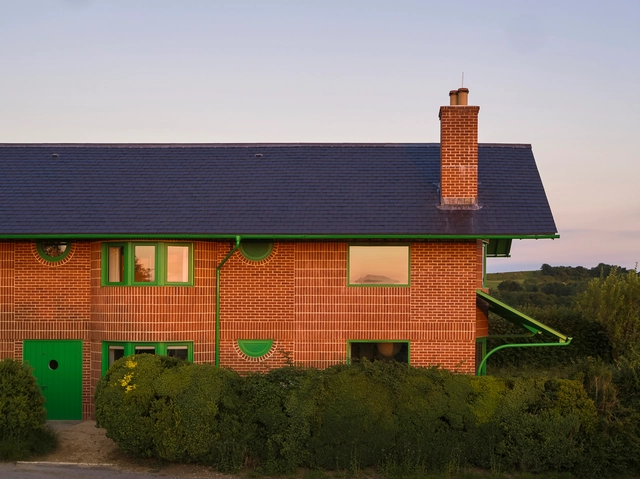
The Royal Institute of British Architects has awarded RIBA House of the Year 2022, to a "contemporary new family house in rural Dorset," the Red House by David Kohn Architects. Inspired by the Arts and Crafts movement, the structure "reinterprets the style in an intentionally provocative way [...] [with] playful eccentricity, including oversized eaves, patterned red brickwork, and contrasting bold green details".
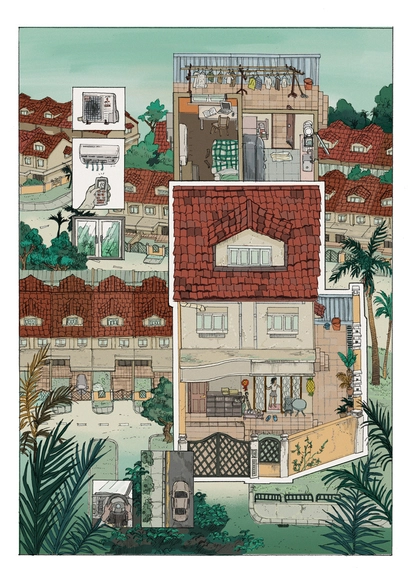
Annabelle Tan (Bartlett School of Architecture, UCL) for Past, Present and Post-Tropicality: Viewing Singapore through an ‘Infra(-)structural’ Field. . Image Courtesy of RIBA 2022 President’s Medals
The Royal Institute of British Architects has just announced the winners of the 2022 President’s Medals, highlighting the world’s best student architecture projects. In its 186th edition, RIBA’s oldest awards have gathered the highest-ever number of entries, receiving 347 entries nominated by 100 schools of architecture located in 27 countries.
For the 2022 cycle, the RIBA Silver Medal for the best design project produced at RIBA Part 2 or equivalent, was awarded to Annabelle Tan at The Bartlett School of Architecture, UCL, for A Journey through Past, Present, and Post-Tropicality, who was also granted the RIBA Dissertation Medal. The RIBA Bronze Medal (for the best design project produced at RIBA Part 1 or equivalent) went to Mary Holmes at the University of Cambridge for Out of the Closet, Into the Garden.
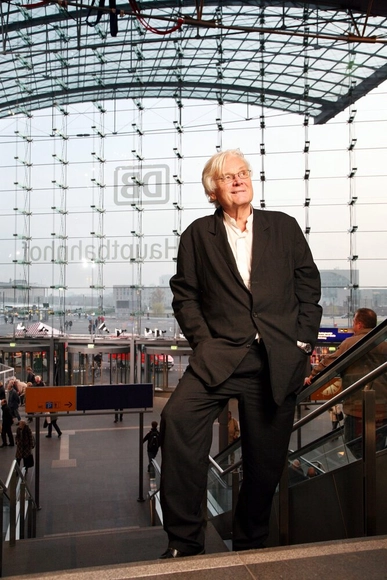
Meinhard von Gerkan, founder of von Gerkan, Marg and Partners Architects (gmp), and one of the most influential German architects, passed away in Hamburg at the age of 87, on November 30, 2022. With a worldwide contribution to the field of architecture, in his 50 years of career, von Gerkan has created one of the largest practices in Germany, with 600 employees in seven locations. University professor and critic, the architect together with gmp, has completed more than 500 projects all over the world.
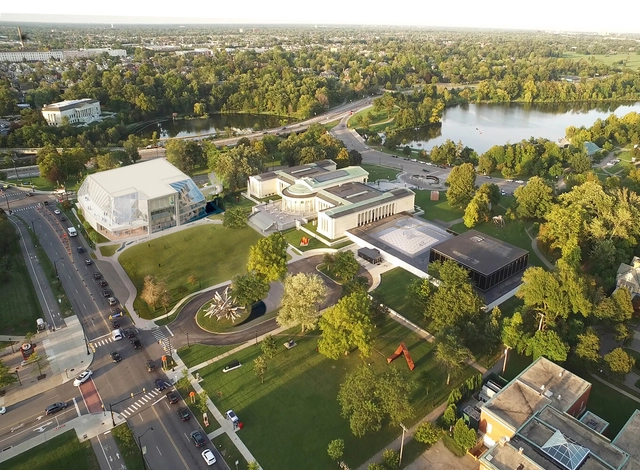
The Buffalo AKG Art Museum (formerly known as the Albright-Knox Art Gallery) has announced that it will welcome its first visitors on the 25th of May, 2023. Revamped and expanded, the new campus designed by OMA/Shohei Shigematsu in collaboration with Cooper Robertson features “new work of signature architecture, the Jeffrey E. Gundlach building, and extensive renovation to existing buildings”.
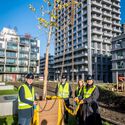
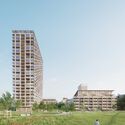
Shigeru Ban has just launched the office’s most recent project in Nieuw Zuid in Antwerp, Belgium. Named Ban, after its creator, and in collaboration with Bureau Bouwtechniek, the complex puts in place a 25-story residential tower and a separate building, creating a total of 295 residential units. During the breaking ground ceremony, the architect also inaugurated an exhibition of images highlighting his humanitarian work in conflict and disaster areas, in near proximity to the construction site.
From ending up by accident in architectural studies, to eventually falling in love with the complexity of the field and the multitude of its layers, Johanna Meyer-Grohbrügge was amazed by the dual nature of architecture; its intellectual aspect, and physical outcome. Founder of Meyer-Grohbrügge in Berlin, the architect, and her studio seek to spatialize content, create relationships, and find solutions for living together.
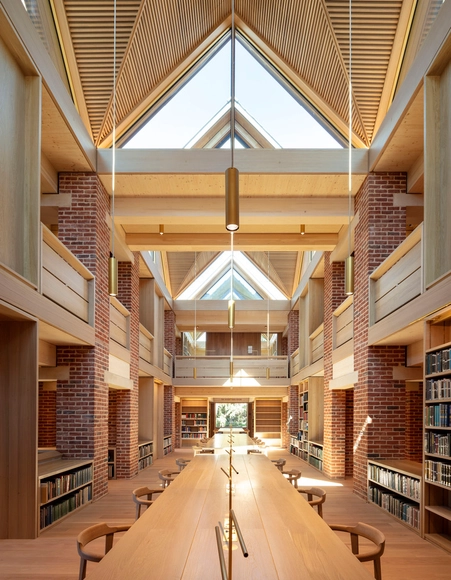
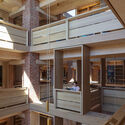
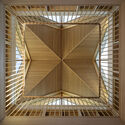
Designed by Níall McLaughlin Architects, the Magdalene College Library was just selected as the winner of the 26th edition of the RIBAStirling Prize. Selected from a pool of shortlisted projects, the outstanding new building replaces a library gifted to Magdalene by Samuel Pepys 300 years ago and provides the students of the University of Cambridge with a new space that includes an archive and an art gallery.
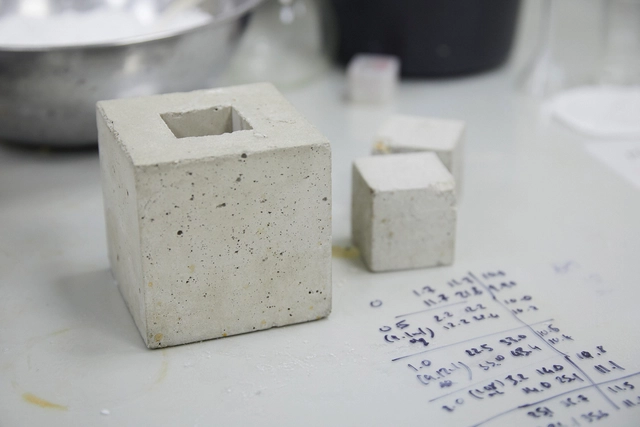
Material researchers and Ph.D. students at Imperial College London, Sam Draper and Barney Shanks have won the 2022 OBEL AWARD for Seratech, a solution for carbon-neutral concrete. With a special focus this year on “embodied emissions”, the OBEL AWARD jury selected scientists to obtain the architecture award to “encourage innovative cross-disciplinary solutions to the challenges of climate change”.
While the United Nations has been continuously urging architects, engineers, and city shapers to put the 2030 agenda and the SDGs into action, and the IPCC report revealed intensifying climate change, sparking widespread discussion over insufficient action, the 83rd ongoing session of The United Nations Economic Commission for Europe - UNECE Committee on Urban Development, Housing and Land Management taking place in San Marino, has just issued a special declaration on “how to build better, safer, more inclusive, and resilient" cities, ahead of COP27. This set of “Principles for Sustainable and Inclusive Urban Design and Architecture”, or the San Marino declaration has gathered the signatures of Norman Foster and Stefano Boeri.
The first Monday of October of every year marks World Architecture Day and World Habitat Day. Celebrated simultaneously, they both seek to shed light on the built environment and its challenges, taking on a different theme with each new edition. This year, through its World Architecture Day, the UIA is focusing on “Architecture for well-being”, in line with the designation of 2022 as the UIA Year of Design for Health in buildings and cities. In parallel, the UN’s World Habitat Day, is centered on “Mind the Gap. Leave No One and Place Behind”, looking at the problem of growing inequality and challenges in cities and human settlements, due to the triple ‘C’ crises – COVID-19, climate and conflict.
Introducing Urban October, 31 days to promote a better urban future, World Architecture Day and World Habitat Day push forward the debates on urban sustainability. Joining the conversation every year, ArchDaily takes part in this occasion by promoting content that tackles the main objectives of this day, raising awareness, presenting solutions, engaging the international community, and “empowering everyone who makes architecture happen to create a better quality of life”.
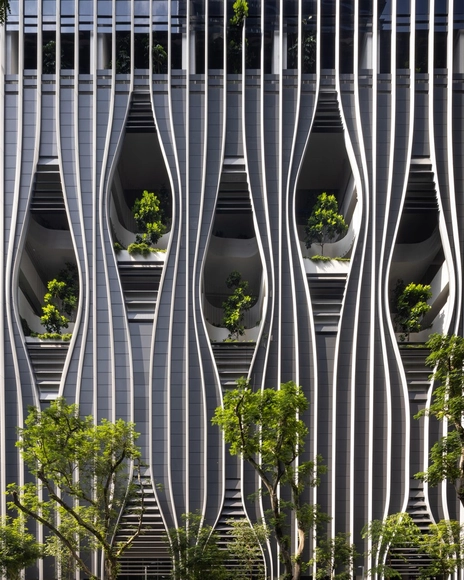
Designed by BIG-Bjarke Ingels Group and CRA-Carlo Ratti Associati, CapitaSpring is Singapore’s latest addition to its skyline. Recently completed after four years of construction, the 280-meter-tall high-rise oasis, considered among the city’s tallest structures, is a mixed-use high-rise with abundant sky gardens and rooftop park, office space, a serviced residence, a hawker center, restaurants, and public spaces.
The biophilic skyscraper, aligned with “the city’s pioneering vertical urbanism” and Singapore’s reputation as a garden city, is located at the heart of the financial district on the site of a former public car park and a hawker center. Comprising 80,000 plants, translating to a total landscaped area of more than 140% of its site area, the tower puts in place a “new green breathing space in the high-density CBD for the neighboring tenants and passersby”.
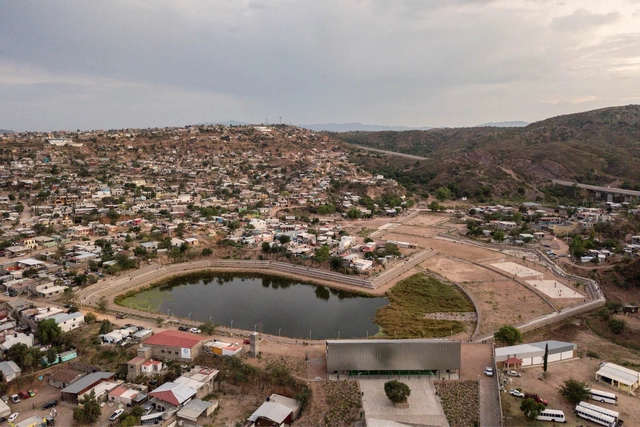
The Mies Crown Hall Americas Prize (MCHAP) has selected Containing the Flood: Colosio Embankment Dam by Loreta Castro Reguera and José Pablo Ambrosi of Taller Capital as the winners of the 2022 MCHAP.emerge award. Acknowledging the best-built work in the Americas authored by a practice in its first ten years of operation, the 2022 MCHAP Prize for Emerging Practice (MCHAP.emerge) considered built works completed in the Americas between January 2018 to December 2021. Past MCHAP.emerge Laureates include Pezo von Ellrichshausen (2014), PRODUCTORA (2016), and Rozana Montiel Estudio de Arquitectura (2018).
After two years of disrupted cycles of architecture events, due to the pandemic, 2022 has been witnessing a resurgence: biennials, triennials, design weeks, and festivals are back in the picture, with bigger interrogations and larger thematic approaches, aligned with the challenges of the world.
Relevant today more than ever, these happenings scattered around the globe are tackling climate-related issues, urban problems, as well as concerns engendered by covid-19 such as resilience, models of living, future of design, and the unknown.
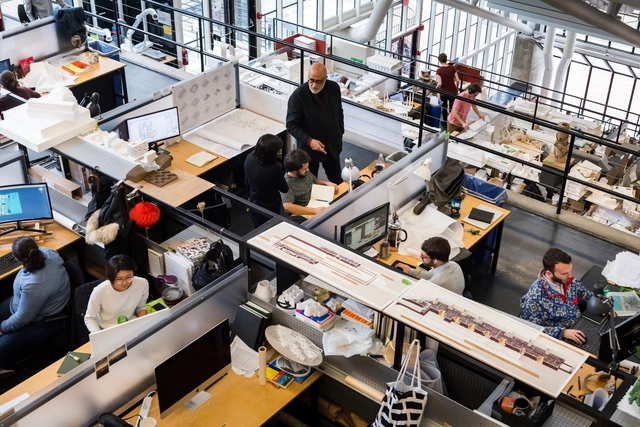
In a letter published on MIT's School of Architecture and Planning’s website, 16 deans from prominent architecture schools in the U.S, explain their position to stop participating in the annual survey that ranks universities. "Design education is not a popularity contest. Although generally our schools have been highly ranked in past DesignIntelligence reports and benefitted from the attention, we believe that it is time to stop participating", declares the statement signed by scholars, deans, and department chairs of MIT, Harvard, Columbia, Princeton, Yale, Rice, and UCLA, to name a few.
Stating clearly their position to boycott future ranking, the decision came after two years of informal discussions where the methodologies used behind these academic surveys were questioned, as well as their consequences. In fact, the letter adds that "however well-intentioned they may be, we believe that the DI rankings have the potential to create a disservice to the public".
.jpg?1607936801&format=webp&width=640&height=580)
.jpg?1607936823 "© Paul Clemence")
.jpg?1607936894 "© Paul Clemence")
.jpg?1607936835 "© Paul Clemence")
.jpg?1607937090 "© Paul Clemence")
.jpg?1607936801)