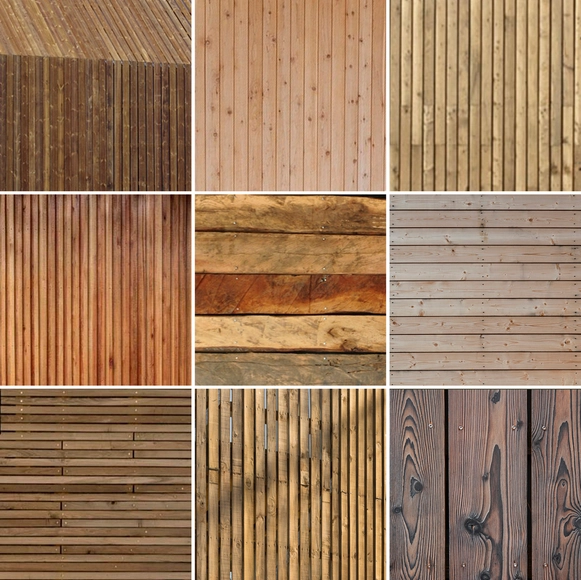
Over the course of history the unique characteristics of wood, which are dependent upon the species of the tree and the location in which it has grown, have enabled humanity to flourish in all parts of the globe. The architectural details of wooden construction therefore show a great diversity of meetings and joints, showing not only a project's constructive and structural logic, but also embodying the value and complexity of each project.
Take a look at these 50 construction details of projects that stand out for their clever use of wood.
One of the most significant contributions of modern architecture to global practice was the five points proposed by the Swiss-French architect Le Corbusier. This set of guidelines represented the formal expression of the ideals and principles of contemporary architectural thought, finding its paradigmatic application in the Villa Savoye, the iconic residence designed by the modern master in Poissy, France.
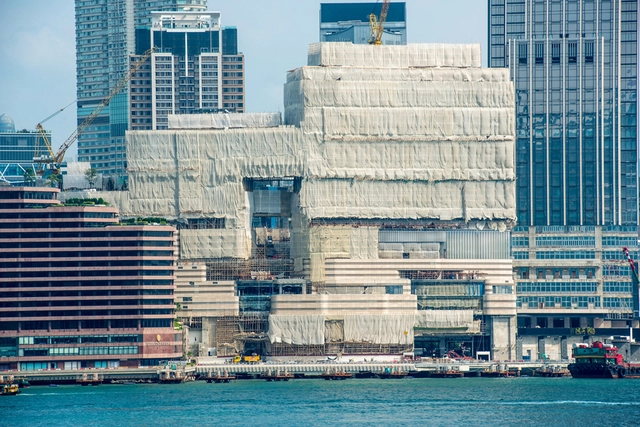
CTF Museum under construction within the existing KPF development. Image Courtesy of SO-IL
As a firm which has already won major awards, worked on culturally significant projects on a large scale, and generally achieved substantial success and recognition in just over 10 years, SO-IL seem to straddle a line between being an “emerging” and an “established” practice. Florian Idenburg and Jing Liu founded SO-IL (Solid Objectives-Idenburg Liu) in 2008 and have since gained a reputation for modern, clean-lined designs, but often with a unique material twist.
YACademy launches the first edition of Architecture for Workplaces, a high-level training course offering 8 scholarships and internships in internationally-renowned architectural firms.
102 hours of lessons, a 30-hour workshop, lectures and placement opportunities in internationally-renowned architectural firms like UNStudio, Alfonso Femia, L22, Morphosis, 3XN, and Amdl Michele De Lucchi.
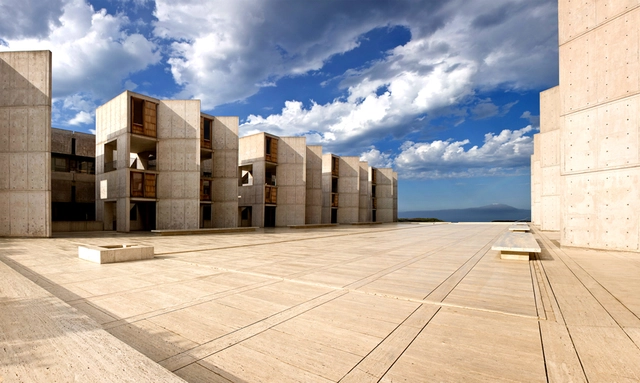
Courtesy Joe Belcovson for the Salk Institute for Biological Studies. ImageIn 2012, the Getty Conservation Institute founded its Conserving Modern Architecture Initiative (CMAI), with the Getty Foundation’s Keeping It Modern grant following two years later. Working synergistically, the two programs are dedicated to supporting new methods and technologies for the conservation of Modernist buildings. Louis Kahn’s Salk Institute for Biological Studies (1965) in La Jolla, California, has been the beneficiary of both CMAI and Keeping It Modern.
The Conserving Modern Architecture Initiative (CMAI) and Keeping It Modern grant are dedicated to supporting new methods and technologies for the conservation of Modernist buildings.
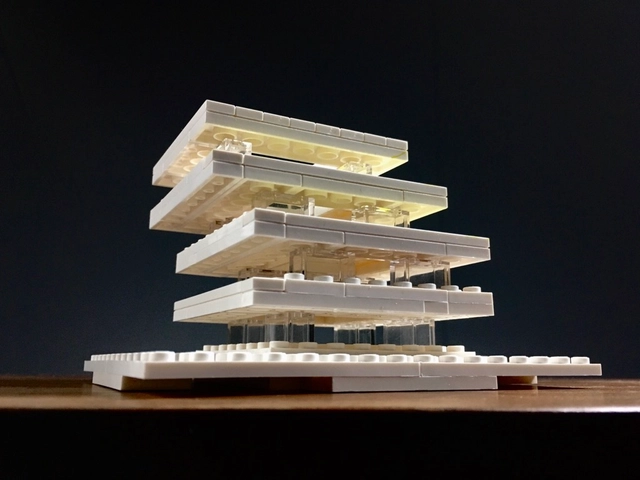
Architects always find themselves searching for the most innovative ways of presenting their projects, going for elaborate models or Virtual Reality technologies driven by a passion for design, building, and creation. Perhaps this passion of architecture was triggered at an age earlier than expected, playing around with LEGO’s.
Now that LEGO has created an architecture-themed collection, the brand gave architecture lovers the opportunity to explore famous landmarks and recreate their structures with basic geometric blocks. Innovative architecture firm WAY Studio discovered the possibilities of model-making with LEGO’s and used its blocks as a design tool for a series of their projects.
One of the most enigmatic and underappreciated architects of the 20th century, Carlo Scarpa (June 2, 1906 – November 28, 1978) is best known for his instinctive approach to materials, combining time-honored crafts with modern manufacturing processes. In a 1996 documentary directed by Murray Grigor, Egle Trincanato, the President of the Fondazione Querini Stampalia for whom Scarpa renovated a Venetian palace in 1963, described how "above all, he was exceptionally skillful in knowing how to combine a base material with a precious one."
No physical barrier separates Veracruz and Boca del Río; yet, despite being adjacent municipalities, they remain deeply distinct. On one hand lies the historic city of Veracruz, the gateway to the Americas for the Old World; on the other lies Boca del Río, a young city with greater economic influence. The Port of Veracruz serves as a tangible landmark that weaves this contrasting urban tapestry together, extending from north to south with sweeping views of the Gulf of Mexico to connect these two urban centers.
This article was made in partnership with Design Indaba, a website and annual festival that uncovers innovation for good. Click here to learn more about the annual event.
It took a few years and multiple failed career attempts for renowned minimalist designer John Pawson to truly enter the world of architecture. Though he’d cultivated an interest in design from a young age, he’d initially shied away due to his beliefs that he needed to be good at math and that design was an innate skill rather than something that could be taught.
Past, Present, Future is an interview project by Itinerant Office, asking acclaimed architects to share their perspectives on the constantly evolving world of architecture. Each interview is split into three video segments: Past, Present, and Future, in which interviewees discuss their thoughts and experiences of architecture through each of those lenses. The first episode of the project featured 11 architects from Italy and the Netherlands and Episode II is comprised of interviews with 13 architects from Spain, Portugal, France, and Belgium.
Vienna, Austria has been ranked as the city with the best quality of life in the world for ten consecutive years. The ranking made by multinational consultancy Mercer is dominated by Western European cities in the highest positions, while Vancouver, Canada reached third place, becoming the highest-ranking city in North America for the last 10 years.
Ciudad Juárez is an industrial city located on the northern border with the United States, specifically bordering the city of El Paso, Texas. Over the years, Juárez's economy has been dominated by the ‘maquiladora’ assembly industry, and the city was once considered one of the most violent in the world due to a wave of crime between 2008 and 2012. In response to these conditions, in 2014, a group of friends from Ciudad Juárez, Chihuahua, eager to contribute to their city's resilience and recovery, came together to discuss and pitch ideas for reclaiming streets, plazas, and parks through sociocultural projects and public space interventions, ultimately giving rise to Nómada Laboratorio Urbano.
jeffsmallwood on Visual hunt / CC BY-NC-SA. Image via Visual Hunt
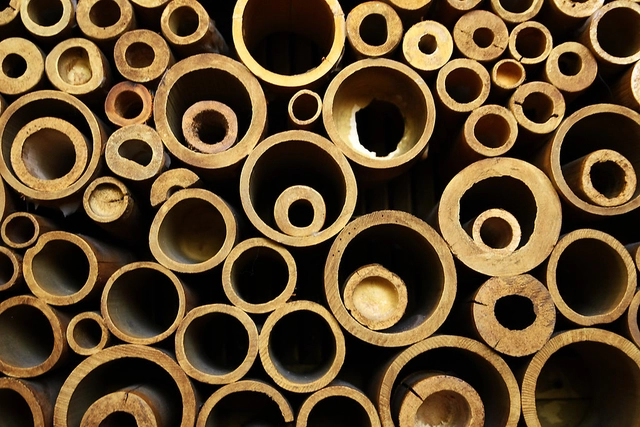
The Bamboo Experimentation Laboratory at UNESP - Bauru has shared with us the work developed by architect Roberval Bráz Padovan, who researched bamboo construction joints. In addition to analyzing various connection possibilities, Padovan concludes by proposing a joint component for space trusses. The thesis was presented in 2010 at the School of Architecture, Arts, and Communication of UNESP - Bauru, advised by Prof. Dr. Marco Antônio dos Reis Pereira and co-advised by Prof. Dr. Paula da Cruz Landim. Read the author's abstract below.
https://www.archdaily.com/1122961/bamboo-in-architecture-structural-connection-designPedro Vada
What happens when the sensor-imbued city acquires the ability to see – almost as if it had eyes? Ahead of the 2019 Shenzhen Biennale of Urbanism\Architecture (UABB), titled "Urban Interactions," ArchDaily is working with the curators of the "Eyes of the City" section at the Biennial to stimulate a discussion on how new technologies – and Artificial Intelligence in particular – might impact architecture and urban life. Hereyou can read the “Eyes of the City” curatorial statement by Carlo Ratti, the Politecnico di Torino and SCUT. If you are interested in taking part in the exhibition at UABB 2019, submit your proposal to the “Eyes of the City” Open Call by May 31st, 2019: www.eyesofthecity.net
https://www.archdaily.com/918077/why-robotic-construction-philip-f-yuan-for-the-shenzhen-biennale-uabb-2019Philip F. Yuan
Large openings are a popular inclusion in the modern home, but loading and structural movements that cause few problems with regular sized door openings can have very significant consequences in a bigger opening. Your structural engineer will generally be able to ensure your building complies with all statutory regulations and does not fall down, but the movement of and around large openings can often cause unnecessary problems for the builder or the homeowner.
Here, Centor explores three of the most common problems that can arise with large openings and shows how all of them are avoidable if planned for in advance.
Italian architects Massimiliano and Doriana Fuksas were both born and grew up in Rome. Both graduated from La Sapienza University – he in 1969, she a decade later. He started his studies as a painter, she initially persued the history of art. In the early 60s, Massimiliano assisted Giorgio De Chirico and after graduation worked for Archigram in London and then for Henning Larsen and Jørn Utzon in Copenhagen. He started his first practice, the GRANMA in 1967. Doriana joined him in 1985 and became an equal partner in 1997. Subsequent offices were opened in Paris (1989) and in Shenzhen (2004). In 2000, Massimiliano Fuksas served as the Director of the 7th Venice Architecture Biennale under the theme "Less Aesthetics, More Ethics." The duo’s most recognized built works include Museum of Graffiti in Ariege, France; Shenzen Bao'an International Airport; EUR Convention Centre in Rome; New Milan Trade Fair, Rho-Pero; Zenith Music Hall in Strasbourg; and Peres Peace House in Jaffa, Tel Aviv. I met with the architects during their recent visit to New York where so far, they completed only one project, Armani 5th Avenue Flagship Store. We discussed how they start again with every project, their preoccupation with the future, and why buildings should try to become something else.
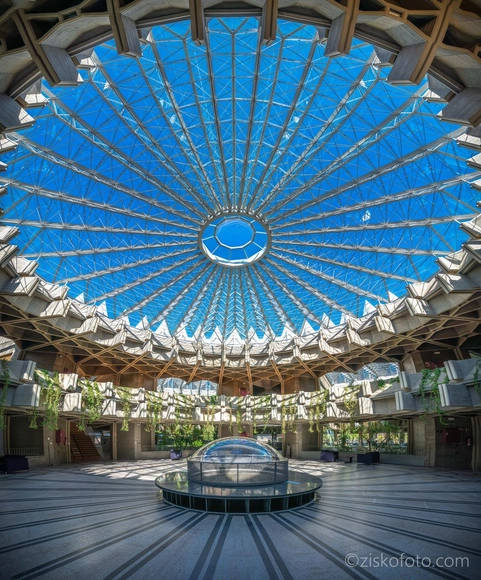
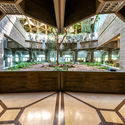
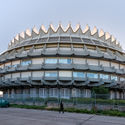
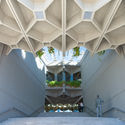
Madrid-based architectural photographer Zisko Gómez captures the recently-growing interest in Spanish architect Fernando Higueras with his photo series of Higueras’ “La Corona de Espinas,” or “The Crown of Thorns.” The building is currently headquarters to the Spanish Cultural Heritage Institute and contemporary art foundation ICO recently organized an exhibition in Madrid of Higueras’ work.
YACademy launches the first edition of Architecture for Food, a high-level training course offering 8 scholarships and internships in internationally-renowned architectural firms.
102 hours of lessons, a 30-hour workshop, lectures and placement opportunities in internationally-renowned architectural firms like L22, MVRDV, Snøhetta, and Barozzi Veiga.
https://www.archdaily.com/917925/yacademys-course-in-architecture-for-foodSponsored Post

















Aki_Furudate_Niaux_03.jpg?1558971632&format=webp&width=640&height=580)
_Archivio_Fuksas_2013._DSC0197.jpg?1558972211 "© Archivio Fuksas. ImageShenzhen Airport")
_Nikolay_Kaloshin_iPad_18.jpg?1558972304 "© Archivio Fuksas. ImageRhike Park in Tbilisi")
_Leonardo_Finotti_70502_20X30_161025-065D.jpg?1558971768 "New Rome EUR. Image")
_Studio_Fuksas_New_Milan_Trade_Fair_(18).jpg?1558971850 "© Studio Fuksas. ImageNew Milan Trade Fair")
Aki_Furudate_Niaux_03.jpg?1558971632)