1. ArchDaily
  2. Editor's Choice

Editor's Choice

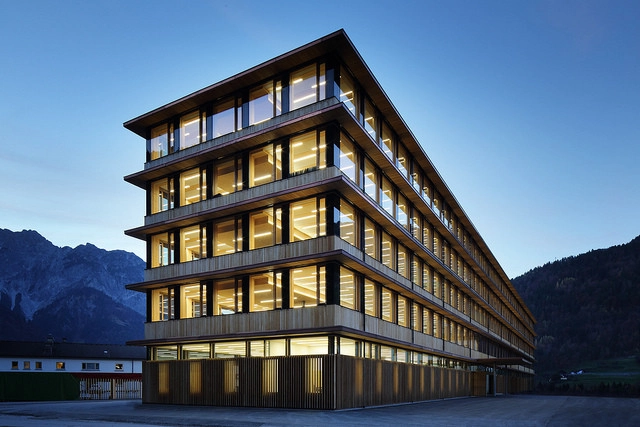
Why Tall Wooden Buildings are On the Rise: An Interview with Perkins+Will's Wood Expert

Subscriber Access | 

Material Minds, presented by ArchDaily Materials, is our new series of short interviews with architects, designers, scientists, and others who use architectural materials in innovative ways. Enjoy!

Wood. The United States is the largest producer of the natural resource in the world. But yet we rarely see it in commercial, high-rise construction. So we asked a wood expert -- Rebecca Holt at Perkins+Will, an analyst for reThink Wood's recent Tall Wood Survey -- to tell us about its potential benefits.

AD: Why is wood a material architects should use in taller buildings?

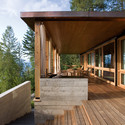
There are lots of reasons to consider wood – first it has a lower environmental impact than other traditional choices like concrete and steel. Wood is the only major building material that is made the by sun and is completely renewable.
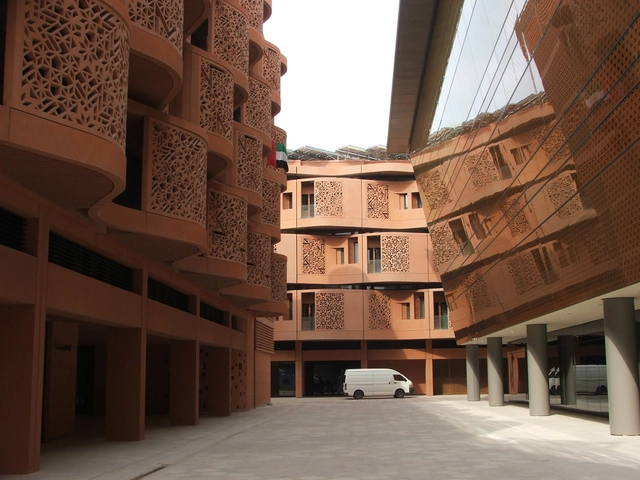
Inside Masdar City

Subscriber Access | 

The Middle East has historically been known for many things — sustainability not being one of them. The clash of Western values with the harshness of the local climate can often wedge sustainability between a lot of sand and a hard place. Though there is a broad critique of the unsustainable attributes of the region’s development path, for years there has been a shining exception: Masdar City in the United Arab Emirates, seventeen kilometers east-south-east from the city of Abu Dhabi. 

Masdar City exists as an urban development project run by the renewable energy company Masdar, who has committed $15 billion to making Masdar City the planet’s most sustainable new city. Unlike Abu Dhabi, a city which unthinkingly follows antiquated models and Western building principles, Masdar City has a wealth of potential to offer the world of green urban planning - something the world sorely needs.

But Masdar City is certainly not without its share of critics. On first approach, the concentrated development, located in the center of six square kilometers of empty space, does little to awe, especially in comparison to the sprawling wave that is Abu Dhabi. Thanks largely to the global financial recession, buildings currently comprise less than 10% of the area committed to the urban experiment. Even today there is a group of onlookers that suggest Masdar City may just be a mirage after all.

However, this broader view is not necessarily synonymous with the bigger picture.

Inside Masdar City - Image 1 of 4Inside Masdar City - Image 5 of 4Inside Masdar City - Image 6 of 4Inside Masdar City - Image 2 of 4Inside Masdar City - More Images+ 6

The World Cup Stadiums of Brazil, In Awesome Illustrations

Subscriber Access | 

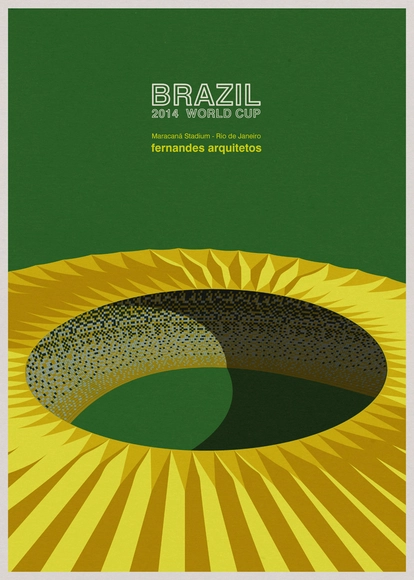
In celebration of the Brazil World Cup, architect and illustrator André Chiote has created a series of illustrations featuring the tournament's most iconic stadiums. Comparing the social importance of these stadiums to cathedrals, Chiote believes that "the new architectural objects are landmarks in the cities that will perpetuate in the future as a cultural and social legacy," and there are few better ways to envision this legacy than to treat the structures with his abstracted, colorful aesthetic - in Brazilian green and yellow, of course. Check out the full illustration set after the break.

What Can Be Learnt From The Smithsons' "New Brutalism" In 2014?

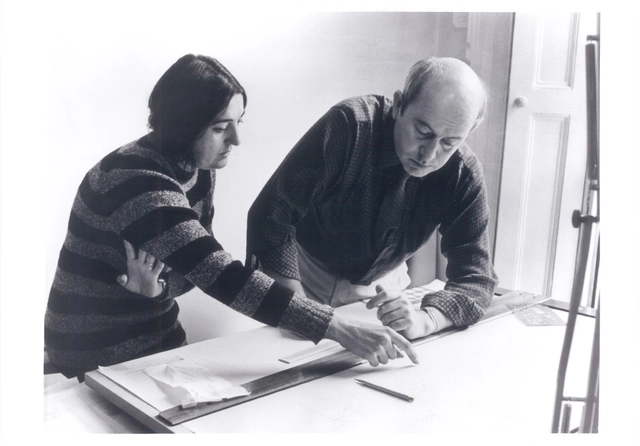
Sheffield born Alison Gill, later to be known as Alison Smithson, was one half of one of the most influential Brutalist architectural partnerships in history. On the day that she would be celebrating her 86th birthday we take a look at how the impact of her and Peter Smithson's architecture still resonates well into the 21st century, most notably in the British Pavilion at this year's Venice Biennale. With London's Robin Hood Gardens, one of their most well known and large scale social housing projects, facing imminent demolition how might their style, hailed by Reyner Banham in 1955 as the "new brutalism", hold the key for future housing projects?

What Can Be Learnt From The Smithsons' "New Brutalism" In 2014? - Image 1 of 4What Can Be Learnt From The Smithsons' "New Brutalism" In 2014? - Image 2 of 4What Can Be Learnt From The Smithsons' "New Brutalism" In 2014? - Image 3 of 4What Can Be Learnt From The Smithsons' "New Brutalism" In 2014? - Image 4 of 4What Can Be Learnt From The Smithsons' New Brutalism In 2014? - More Images+ 3

The EU Mies van der Rohe Architecture Award and The Future of European Architecture

ArchDaily is pleased to announce our partnership with the European Union Prize for Contemporary Architecture - Mies van der Rohe Award. The following is an essay from Constructing Europe by Pedro Gadanho, member of the 2013 Prize jury.

When one wants to consider the future of any form of activity, one is tempted to extrapolate trends from current conditions. One translates signs from the present onto the shape of things to come. The conditions of a given moment, however, may be too circumstantial, and one should be particularly aware of their transient nature. This is the dilemma one obviously faces when considering ‘the future of European architecture’.
At the time the European Union Prize for Contemporary Architecture - Mies van der Rohe Award commemorates its 25th anniversary, the European project from which this Prize emanates – and to which it owes its symbolic meaning and promoting purpose – is itself at a crossroads.

In between austerity measures, the South and North divide, growing unemployment, a feeling of impoverishment and insecurity, and the apparent unsustainability of the Welfare State model, which had given the region prosperity after World War II, Europe itself seems to be facing a pivotal, if transient moment.

Arthur Andersson on Timeless Materials & Building "Ruins"

Subscriber Access | 
Arthur Andersson on Timeless Materials & Building "Ruins" - Featured Image
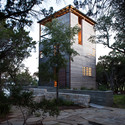
Tower House . Image © Art Gray

Material Minds, presented by ArchDaily Materials, is our new series of short interviews with architects, designers, scientists, and others who use architectural in innovative ways. Enjoy!

Arthur Andersson of Andersson-Wise Architects wants to build ruins. He wants things to be timeless - to look good now and 2000 years from now. He wants buildings to fit within a place and time. To do that he has a various set of philosophies, processes and some great influences. Read our full in-depth interview with Mr. Andersson, another revolutionary "Material Mind," after the break.

Arthur Andersson on Timeless Materials & Building "Ruins" - Image 1 of 4Arthur Andersson on Timeless Materials & Building "Ruins" - Image 2 of 4Arthur Andersson on Timeless Materials & Building "Ruins" - Image 3 of 4Arthur Andersson on Timeless Materials & Building "Ruins" - Image 4 of 4Arthur Andersson on Timeless Materials & Building Ruins - More Images+ 10

Sam Jacob & Wouter Vanstiphout on Curating "A Clockwork Jerusalem"

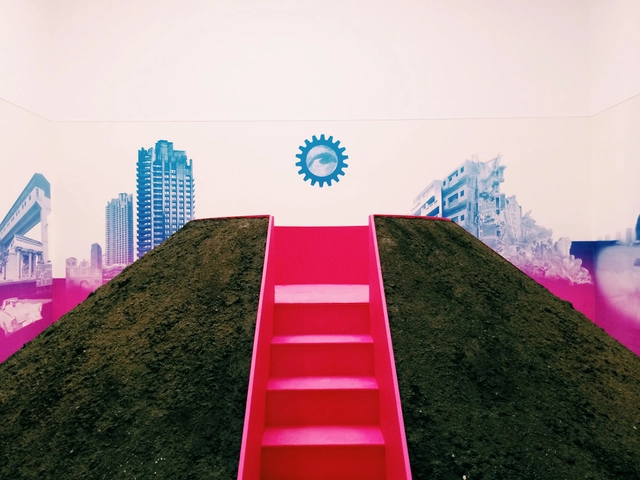
The British Pavilion at the 2014 Venice Biennale takes the large scale projects of the 1950’s, 60’s and 70’s and explores the "mature flowering of British Modernism at the moment it was at its most socially, politically and architecturally ambitious but also the moment that witnessed its collapse." The exhibition tells the story of how British modernity emerged out of an unlikely combination of interests and how "these modern visions continue to create our physical and imaginative landscapes." To those who know the UK's architectural heritage, this cultural and social history is delivered in a way which feels strangely familiar, whilst uncovering fascinating hidden histories of British modernity that continue to resonate in the 21st century.

We caught up with Sam Jacob, co-founder of FAT Architecture (of which this exhibition is their final project), and Wouter Vanstiphout, partner at Rotterdam-based Crimson Architectural Historians, outside the British Pavilion to discuss the ideas behind, and significance of, A Clockwork Jerusalem.

Sam Jacob & Wouter Vanstiphout on Curating "A Clockwork Jerusalem" - Cultural Architecture
© James Taylor-Foster

ARCHIMUSIC: Illustrations Turn Music Into Architecture

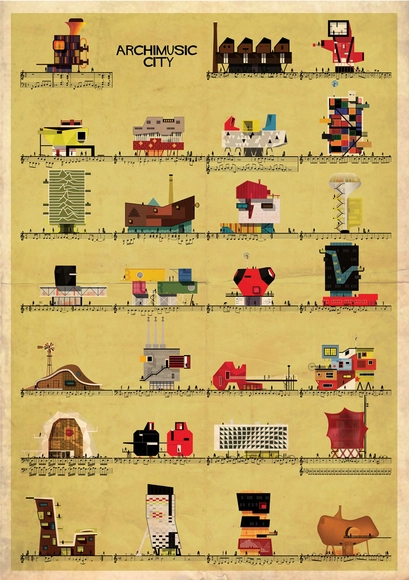
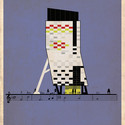
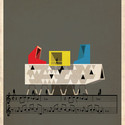
Federico Babina's released his latest series of illustrations: Archimusic, architectural representations of 27 songs, from Miles Davis to Michael Jackson to Amy Winehouse. See all 27 after the break!

ARCHIMUSIC: Illustrations Turn Music Into Architecture - Image 1 of 4ARCHIMUSIC: Illustrations Turn Music Into Architecture - Image 2 of 4ARCHIMUSIC: Illustrations Turn Music Into Architecture - Image 3 of 4ARCHIMUSIC: Illustrations Turn Music Into Architecture - Image 4 of 4ARCHIMUSIC: Illustrations Turn Music Into Architecture - More Images+ 23

Four Ways to Learn About Architecture for Free

Subscriber Access | 

Learning doesn't necessarily need to be formal – or expensive for that matter. Thanks to the Internet and some generous benefactors, you can further your education for free from the comfort of your own home. Top schools such as MIT and Harvard University are affiliated with free online learning resources, allowing people from all over the globe to connect and audit courses at their own pace. In some cases, these services even provide self-educators with proof for having completed courses. Keep reading after the break to check out our round-up of four free online learning resources.

The Pre-Fabricated Skyscraper & The Clean-Tech Utopia: Two Game-Changing, Sustainable Proposals in China

Subscriber Access | 

How can the city be reinvented to save the world? Chinese business magnate Zhang Yue and Finnish professor Eero Paloheimo are two men with very contrasting answers to this loaded question. Zhang Yue's answer puts trust in pre-fabricated, high-density vertical development, whereas Paloheimo envisions a built-from-scratch, clean-tech sprawling utopia. Their grand ideas, met with both skepticism and excitement, are documented in a new film by Anna-Karin Grönroos. To watch the trailer and learn more about the bold proposals, continue after the break.

7 Ways to Transform Studio Culture & Bring It into the 21st Century

Subscriber Access | 

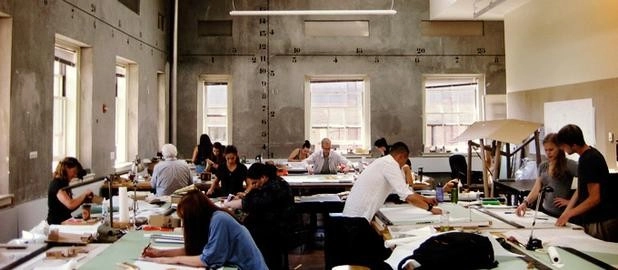
In a posthumous 1990 essay “A Black Box: The Secret Profession of Architecture”, Reyner Banham warned of architecture’s corrosive trend toward insulating itself from discussions outside of the discipline. Decades later, architecture finds itself in an even more dire state of affairs. Despite a transformed global context, the same paternalistic model of studio culture that has existed since the Beaux Arts remains in place. “Studio culture”, as currently practiced, promotes an outdated and parochial understanding of how design knowledge is produced, valuing expertise over synthesis and image over process and practice.

It also affects the health and wellness of students. Over ten years ago, the AIAS (American Institute of Architecture Students) and NAAB (National Architectural Accrediting Board) created a new requirement for accreditation, requiring all schools to address these precise concerns through a written policy on studio and learning culture. However, many schools of architecture across the country still do not educate students about this policy nor seem to follow it.

While there are certainly creative strengths and a generalized camaraderie fostered by traditional studio models, they do not adequately prepare students for navigating the global present. We believe there is an urgent need to reconfigure the institution of studio in order to address the pressing academic and professional issues of our time. We are putting forth what we feel are the guiding principles which must inform a progressive studio culture: agency, balance, flexibility, diversity, interactivity, interdisciplinarity, and sustainability. It is our hope these principles spur debate and much needed action for fundamentally transforming studio culture.

Architectural Photographers: Timothy Soar

Subscriber Access | 

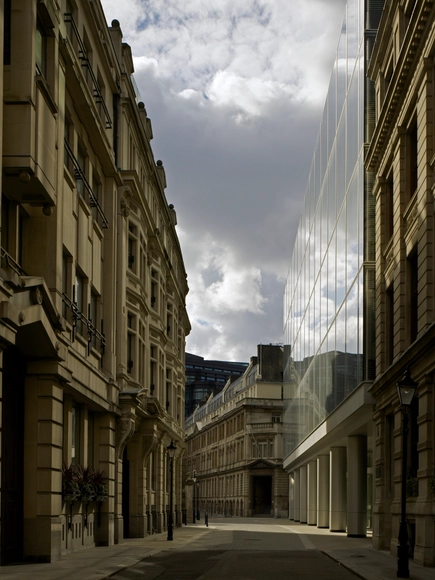
It's clear that architecture inspires and impassions Timothy Soar - not only has the UK photographer spent most of his life visiting and capturing great architectural works, but - unlike most photographers, or architects for that matter - he also speaks eloquently about the architecture that inspires him. Describing his favorite building, AHMM's Yellow Building, he tells us it "delivers exquisite simplicity out of a complex lattice. The building has a lyrical poetry in the way it wraps and folds itself around the occupants – deft, confident and generous. It is one of London’s great spaces."

Moreover, Soar believes deeply that his architectural photography does more than merely idealize built forms; not only do his images enable the architects he works with to "refine and amplify" the ideas within their built works, and thus aid them in defining their next work, but it also seeks to advocate architecture for all: "My work as a photographer is predicated on a desire to [...] to be an advocate for design that elevates, to help construct an argument where good design isn’t an occasional, rare and special thing but an everyday, routine and expected event." Read the whole interview and see more of Soar's fantastic images, after the break

Architectural Photographers: Timothy Soar - Image 1 of 4Architectural Photographers: Timothy Soar - Image 2 of 4Architectural Photographers: Timothy Soar - Image 3 of 4Architectural Photographers: Timothy Soar - Image 4 of 4Architectural Photographers: Timothy Soar - More Images+ 24

A Biennale of Knowledge: Rem Koolhaas on The Importance of the Archive

Curated by Rem Koolhaas, this year’s Biennale set high expectations in the architecture world, a fact reflected in the massive attendance during the preview. As Koolhaas stated at the awards ceremony, he took on the hard task of reinventing the Biennale, recognizing its influence in how architecture is exhibited around the world.

Under the title “Fundamentals,” Rem rallied this year’s curators to assemble a vast amount of knowledge, bringing to light research that had been hidden, forgotten, scattered, and/or previously unexamined, and making it available to the larger architectural community. This was achieved not only in the form and content of the Biennale, but also in the numerous publications produced by the curators (a practice which closely follows OMA/AMO traditions).

Yet this is actually a double-edged sword; in many pavilions, the density and depth of the content made it hard to understand at first glance. Architecture festivals and exhibitions tend to lean on experiential one-liners, but since “Fundamentals” was so focused on conveying ideas about architecture’s relationship to modernity over the past 100 years, it was a significant challenge to the curators. Many pavilions produced impressive publications, so that all the rich knowledge they unearthed may continue to influence architectural thought long after the Biennale ends in November.

Three Projects That Transform Low-Tech Materials Into Innovative Design

Subscriber Access | 

The following article is presented by Materials, ArchDaily's new US product catalog.

How many times in the last year have you heard 3d printing mentioned? What about double-skinned curtain walls or “smart” buildings? High-tech materials almost always seem to dominate the conversation - at least in architectural circles. But using the latest invention in material technology usually does not make a building “innovative.” More often than not, it just makes it expensive and flashy.

Low-tech materials like lumber, stone and brick, on the other hand, are often overlooked, even though the use of local and locally produced materials offers the lowest possible carbon footprint. And while these common materials may seem boring, with a bit of imagination and technical skill, an architect can transform these materials into something fresh. With that in mind, check out three truly innovative projects which use low-tech materials in different and exciting ways.

Chasing Rem: One Journalist's Journey to Pin Down Koolhaas

Subscriber Access | 

The following article was originally published on Medium.

On a perfect autumn morning Rem Koolhaas parks his black 1998 BMW along an Amsterdam canal. It’s not really a sports car, but rather the racing model that a child would draw. Moments later, he is placed behind an impressive desk. This is to be a normal working day. Not in his Rotterdam offices though. Today he deals with his appointments in an Amsterdam hotel. Does that sometimes, more efficient. But this morning, a journalist has been in front of him for more than half an hour. And the guy is saying what?

‘Just about everyone responds the same when I mention your name: He’s a very unpleasant man, right?
Halfway this remark Koolhaas leans back and moves away from the desktop.
He rocks back and forth.
And he nods.
Stuttering he says something like: ‘Yeah, that happens, yes. With people, yes.’
He seems embarrassed, even a little ashamed.
Outside assistants, clients, projects, calls about million dollar projects on different continents are waiting, but here, his head is so nude… those little ears that stick out to the sides… Can you describe a man of six feet tall as resembling a little injured bird?
Not much more comes out of him. The conversation is over.

Critical Round-Up: Venice Biennale 2014

With the first weekend of the Venice Biennale in the books, over the past few days reviews from critics have been flooding in. Each is eager to dispense their opinions on what has been one of the most highly anticipated Biennales in recent memory, and it seems that the event has not disappointed. From reviews of the festival as a whole to individual takes on the National Pavilions, read on after the break as we take a look at some of the most intriguing reviews so far.

INTERIORS: Stanley Kubrick

Subscriber Access | 
INTERIORS: Stanley Kubrick - Image 2 of 4
Courtesy of Mehruss Jon Ahi and Armen Karaoghlanian

Interiors is an online film and architecture journal, published by Mehruss Jon Ahi and Armen Karaoghlanian. Interiors runs an exclusive ArchDaily column analyzing and diagraming films in terms of space.

Stanley Kubrick has been called many things: pretentious, unpretentious, alienated, ambiguous, audacious, empty, disturbing, outrageous, devilish, soulless, patient, unflinching, impersonal, arrogant, calculated, paranoid, aloof, visionary, genius, tyrant, misogynist, cineaste, original, and in the immortal words of Kirk Douglas, a “talented shit.”

It’s interesting to note then, when asked about his film, 2001: A Space Odyssey (1968), Stanley Kubrick himself said, “It's not a message that I ever intend to convey in words.” The film itself is a “nonverbal experience.” There are no words – or dialogue – for more than two-thirds of the film. Stanley Kubrick is a visual storyteller; in his films, words are secondary.

Venice Biennale 2014 Winners: Korea, Chile, Russia, France, Canada

The awards ceremony for the 14th  International Architecture Exhibition have just wrapped and the results are in! 

Rem Koolhaas, the director of the Biennale, Paolo Baratta, president of the Biennale, and the jury presented the awards for Lifetime Achievement and International Participations. The jury recognized that the Biennale was a tremendous opportunity to produce and share knowledge about modernity -- especially praising its role in uncovering and dissecting new areas of influence in the architecture world. 

Venice Biennale 2014 Winners: Korea, Chile, Russia, France, Canada - Image 1 of 4
Crow's Eye View: The Korean Peninsula © Andrea Avezzù, Courtesy la Biennale di Venezia. Image

The Golden Lion for Best National Participation went to Korea for "Crow's Eye View: The Korean Peninsula" The jury cited Korea's "extraordinary achievement of presenting a new and rich body of knowledge of architecture and urbanism in a highly charged political situation."

Chile received the Silver Lion for a National Participation for "Monolith Controversies". The jury said, "Focusing on one essential element of modern architecture - a prefabricated concrete wall- it critically highlights the role of elements of architecture in different ideological and political contexts." 

The Silver Lion for best research project in the Monditalia section went to Andrés Jaque/Office for Political Innovation for "Sales Oddity. Milano 2 and the Politics of Direct-to-home TV Urbanism."

You've started following your first account!

Did you know?

You'll now receive updates based on what you follow! Personalize your stream and start following your favorite authors, offices and users.