Architect, researcher, and editor based in Istanbul with a master’s degree in Alternative Architectural Practices. Pursuing a second bachelor’s degree in Sociology to further explore the evolving relationship between cities and their inhabitants.
On October 31, World Cities Day 2026 will be observed under the theme "Regenerating the City: Adequate Housing for All." Hosted in Fuzhou, China, this year's global observance focuses on how urban regeneration can advance access to adequate housing by improving existing neighborhoods, infrastructure, and public spaces. According to the United Nations, up to 3.4 billion people worldwide lack access to adequate housing, secure tenure, basic services, or affordable living conditions. This challenge points to the need for approaches that consider housing alongside the wider conditions of urban life, including environmental resilience, connectivity, and access to essential services.
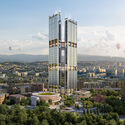
Loco Park masterplan project in Tbilisi, Georgia, 2026. Image Courtesy of Stefano Boeri Architetti
This week's architecture news covers a range of projects addressing the changing needs of cities, from the adaptation of existing sites to the development of new cultural and public spaces. As Antalya prepares to host COP31, projects in Rotterdam and Pittsburgh focus on the renovation of established cultural institutions, while developments in Copenhagen, Chicago, and Tbilisi explore new approaches to recreation, public access, and urban regeneration. Elsewhere, Foster + Partners has revealed plans for a mixed-use development in Yerevan, VG13 Architects has won the competition for a new stadium and sports district in Zagreb, and Aria Property Group has unveiled a residential and public precinct in Brisbane ahead of the 2032 Olympic and Paralympic Games.
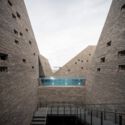
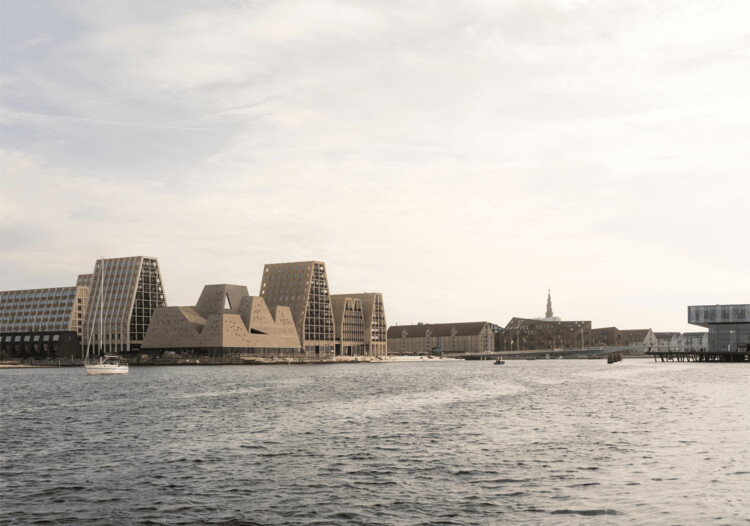
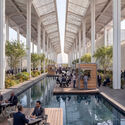
Designed by Kengo Kuma & Associates in collaboration with Cornelius Vöge Atelier for Architecture and Vilhelm Lauritzen Architects, KAI Water Culture House is set to open on December 5, 2026, on Papirøen (Paper Island) in Copenhagen, Denmark. The 5,800 m² public facility combines ten indoor and outdoor pools, wellness facilities, cultural spaces, and access to Copenhagen Harbour. Comprising five brick towers above a glazed base, the project brings together swimming, recreation, and cultural programming as part of the ongoing transformation of the city's waterfront.
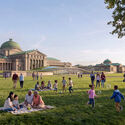
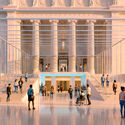
New Welcome Hall at the Griffin Museum of Science and Industry. Image Courtesy of RAMSA
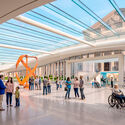
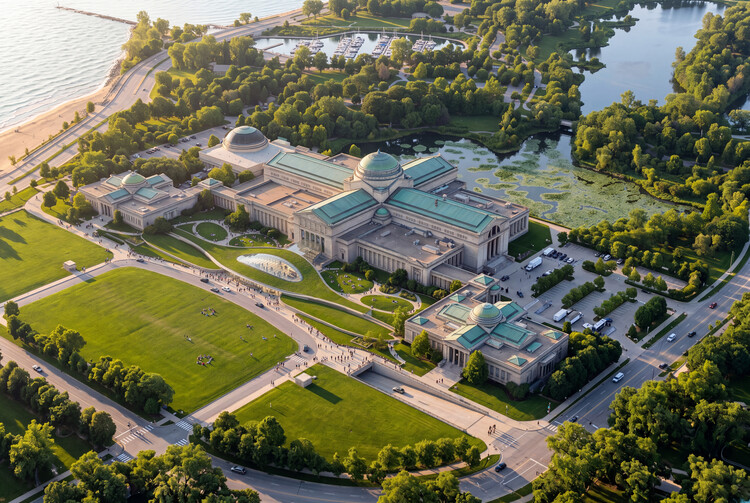
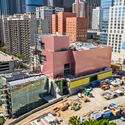
RAMSA (Robert A.M. Stern Architects) has unveiled the design for a new Welcome Hall at the Kenneth C. Griffin Museum of Science and Industry (Griffin MSI) in Chicago, Illinois. The project involves reopening the building's historic North Portico as a year-round entrance and introducing a new glazed volume connecting the portico to the museum's exhibition spaces. The proposal is part of a master plan completed by RAMSA in 2024 that examines the use of the museum's existing exhibition and public areas.
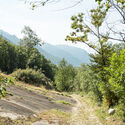
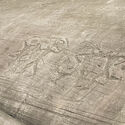
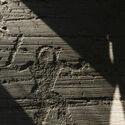
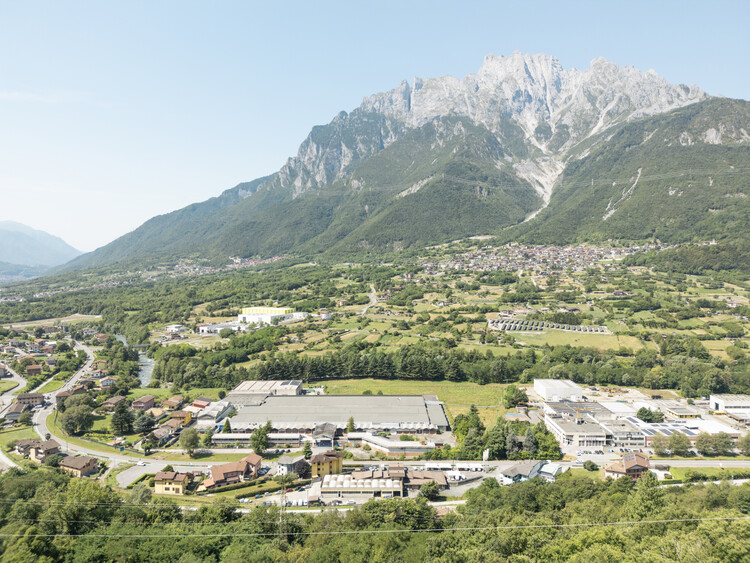
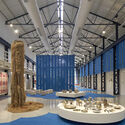
A team led by Politecnica Building for Humans, with Park Associati and AMDL CIRCLE as architectural co-leads and Studio Mattioli responsible for geology and archaeology, has won the competition for a new cultural hub in Ceto, Italy. The project will transform the former Società Filati Niggeler & Kupfer textile mill into a facility comprising exhibition spaces, research facilities, an auditorium, and visitor services. Located in Valle Camonica, an area known for its prehistoric rock engravings, the proposal approaches the site through the relationship between industrial heritage, archaeology, and the surrounding landscape.
CHYBÍK + KRIŠTOF has opened Building the Existing City, an exhibition at Aedes Architecture Forum in Berlin that transforms the gallery into a working architecture studio. Running from October 23 to December 3, 2026, the exhibition centres on four architectural and urban design proposals for sites or urban situations in Berlin, selected through an open call. Over six weeks, visitors can follow the practice's research, discussions, and design work as the proposals develop, gaining insight into the processes through which architectural interventions are conceived in response to local conditions.
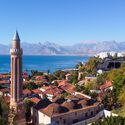
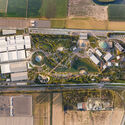
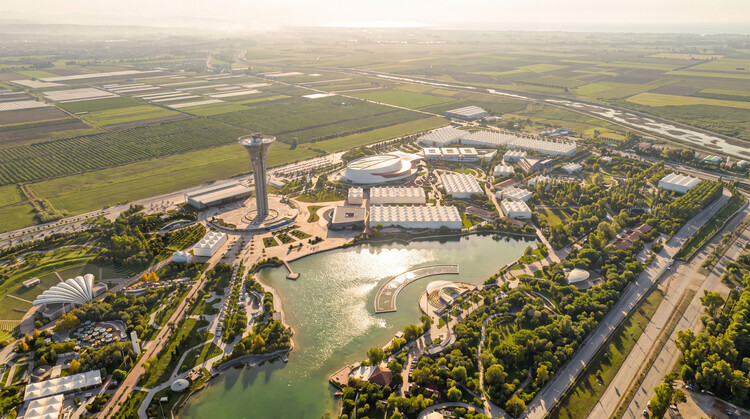
The 31st Conference of the Parties to the United Nations Framework Convention on Climate Change (COP31) will take place in Antalya, Türkiye, from November 9 to 20, under a joint governance model where Türkiye hosts the summit and presidency, while Australia leads the formal negotiations. The conference will bring together national delegations, government representatives, scientists, businesses, and civil society to discuss international climate action, including emissions reduction, adaptation to climate impacts, and climate finance. As countries continue to face the challenges of extreme weather, resource consumption, and the transition to lower-carbon economies, this year's programme includes dedicated discussions on zero waste, energy and transport, and resilient cities. In preparation for the event, SP Architects is adapting the former EXPO 2016 grounds in Antalya to accommodate the conference, with plans for the site to remain in use after it concludes.
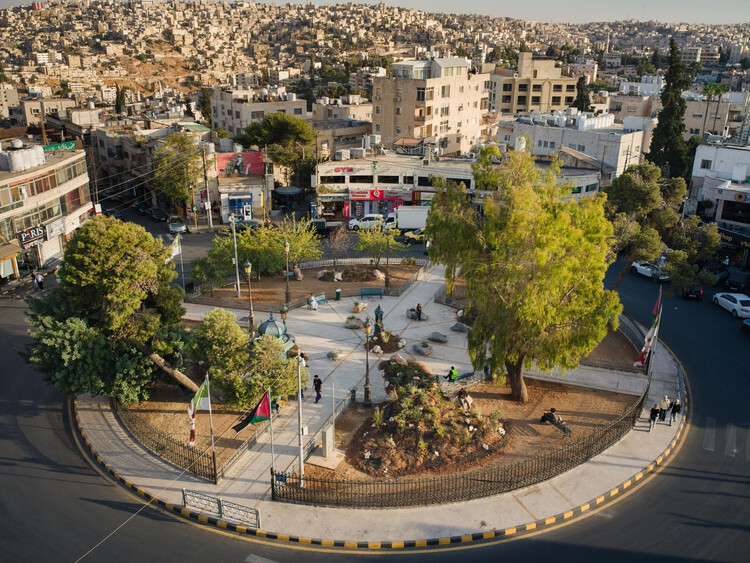
After a seven-year pause, Amman Design Week returned to Jordan with a premise that feels closely tied to the city itself: that nothing is ever entirely new. Under the theme "Accumulations," the fourth edition of the biennial event brought together more than 220 designers, makers, architects, and collectives across exhibitions, public interventions, talks, workshops, and performances from October 2 to 17. The premise was particularly relevant to Amman, a city whose architecture has been shaped by waves of construction, migration, adaptation, and reuse, where accumulation is not simply a metaphor.
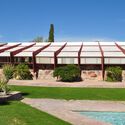
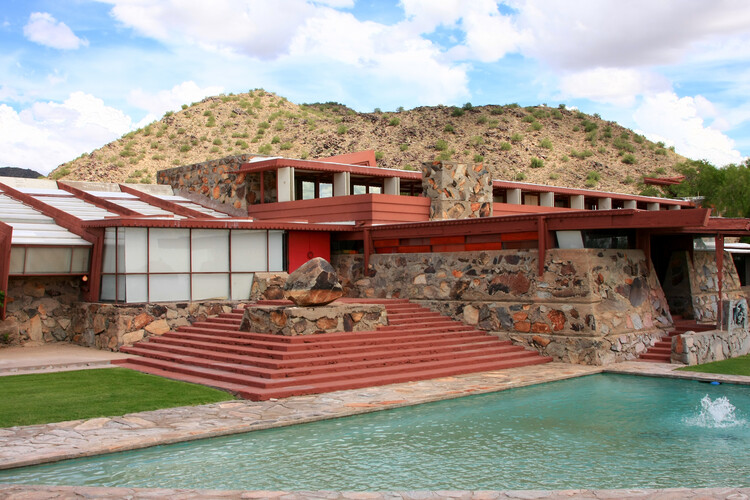
Taliesin West, Frank Lloyd Wright's former winter residence and architectural studio in Scottsdale, Arizona, is closed to the public until further notice after a visitor died from roofing debris on October 16, 2026. According to the Scottsdale Fire Department, strong winds dislodged material from the roof during a walking tour, striking Rogério Renato Mateucci, 55, rector of the Pontifical Catholic University of Paraná in Brazil. Wind warnings were also issued across parts of the Southwest that day, and authorities are investigating the incident as weather-related. The Frank Lloyd Wright Foundation, which manages the property, confirmed the closure and said it would share no further details while officials complete their investigation.
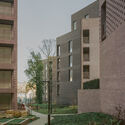
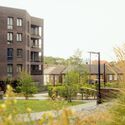
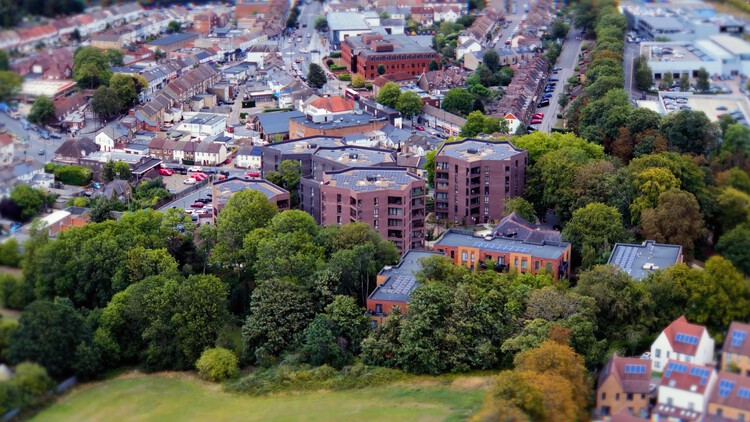
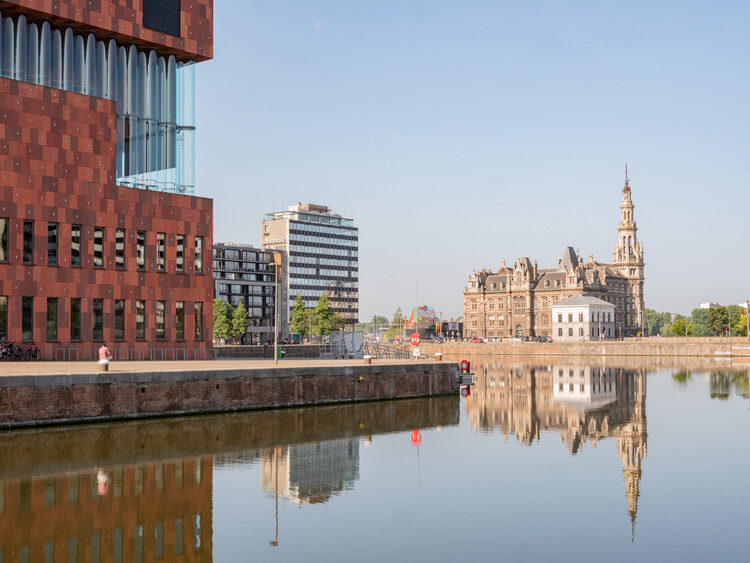
The RIBA Stirling Prize 2026 has been awarded to Lion Green Road, a housing development in Coulsdon, South London, designed by Mary Duggan Architects with RUFFARCHITECTS for Croydon Council. Comprising 157 homes across five residential blocks, the project combines privately owned and socially rented housing on a former car park. Presented annually by the Royal Institute of British Architects (RIBA), the Stirling Prize recognizes a building considered to make a significant contribution to the evolution of architecture and the built environment. The 2026 winner was announced at a ceremony at Old Billingsgate in London on October 15, marking the prize's 30th anniversary.
This week, questions about housing, safety, and the future of cities came into focus, from the impact of natural hazards to architecture's role in shaping more inclusive urban environments. The International Day for Disaster Risk Reduction, observed on October 13 under the theme "Resilience Starts at Home," highlighted these questions just days after a magnitude 7.7 earthquake struck Panama, damaging buildings and prompting evacuations nationwide. Beyond disaster preparedness, the week's developments also reflect broader efforts to address housing needs, give existing buildings new purposes, and create spaces that support education, culture, and public life.
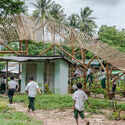
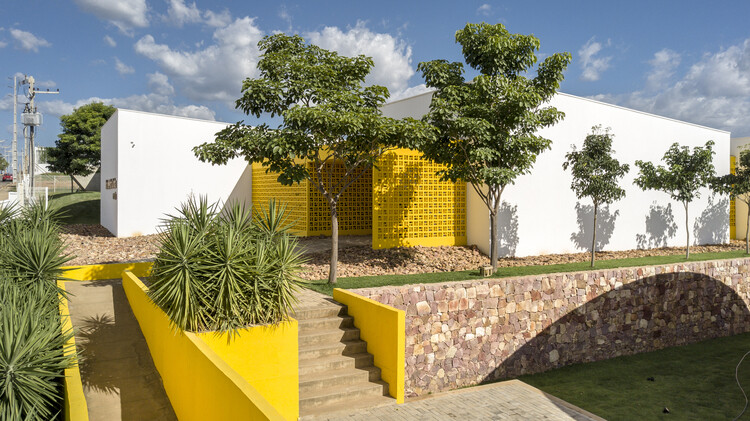
This month's Brazil in Focus looks at how architecture and urban development intersect with questions of housing, education, public space, and mobility across the country. This month's selection includes an indigenous settlement in Maricá recognized by UN-Habitat for its approach to adequate housing, editorials examining university campuses and planned cities as frameworks for collective life, and projects ranging from a timber-structured airport expansion to a commercial building that engages São Paulo's public realm and a residence shaped by its landscape. Also on the radar are the winning proposal for Itaú Cultural's new headquarters on Avenida Paulista, international recognition for two Brazilian landscape architecture projects, and a national diagnosis highlighting persistent gaps in pedestrian infrastructure and road safety.
Every year on October 13, the International Day for Disaster Risk Reduction (IDDRR) draws attention to the ways communities can reduce exposure and vulnerability to hazards. Established by the United Nations in 1989, the day provides an opportunity to consider how governments, communities, and professionals can strengthen preparedness and resilience before disasters occur. For its 2026 edition, the United Nations Office for Disaster Risk Reduction (UNDRR) has selected "Resilience Starts at Home" as its theme, placing housing at the center of this year's campaign.
Tsuyoshi Tane is a Japanese architect born in 1979 in Tokyo and based in Paris, where he founded ATTA – Atelier Tsuyoshi Tane Architects in 2006. Working across cultural, institutional, and landscape-related projects, Tane has developed an architectural approach that positions memory as a fundamental design driver. In his interview with Louisiana Channel, filmed in his Paris studio, Tane reflects on architecture as a discipline of observation and thought, arguing that meaningful design emerges from carefully reading the traces embedded within a site. For him, architecture is not produced on a blank slate but begins with an inquiry into what already exists, physically, culturally, and emotionally, beneath the surface of a place.
UN-Habitat has announced the five recipients of the 2026 Scroll of Honour Award, recognizing contributions to adequate housing and sustainable urban development in Brazil, Myanmar, Pakistan, Tunisia, and the United Kingdom. This year's winners include a housing organization working with communities affected by conflict and displacement, a researcher developing building materials from local and mining residues, an Indigenous village in Brazil, a public housing agency in Pakistan, and London Mayor Sadiq Khan. Selected from 101 nominations submitted across Africa, Asia, Europe, and the Americas, the recipients represent a range of approaches to addressing housing and urban development challenges.
In addition to photographing the studios, Goodwin asked each practice the same question: "What makes for a good office space and office culture for you?" Their responses accompany the images, offering insight into how architects define the atmosphere of their workplaces. Studio Okami describes its workplace as a "home office away from home," while Brut highlights the role of shared meals and greenery in softening their penthouse space.