Agustina Iñiguez

English: Architect from the Faculty of Architecture, Design and Urban Planning of the University of Buenos Aires (FADU-UBA). Collaborator at ArchDaily. Her interests involve projecting and thinking about urban planning and architecture from people. Born and raised in Buenos Aires, Argentina. Instagram: @agustinainiguez_

BROWSE ALL FROM THIS AUTHOR HERE

Adaptive Reuse: How Many Lives Can a Building Have?

 | In Collaboration

Le Corbusier's Unité d'Habitation imagined a "vertical neighborhood," a building able to integrate housing, commerce, leisure, and collective spaces within a single structural organism. Around the same time, Jane Jacobs argued that diversity of use is what produces safety, identity, and social life at the street level. Later, Rem Koolhaas, in Delirious New York, described the skyscraper as an early experiment in "vertical urbanism," capable of stacking incompatible programs under one roof. In cities like Tokyo and Hong Kong, this ambition matured into complex hybrid buildings where different uses, such as transit hubs, retail, offices, hotels, and housing, coexist and interact continuously.

Effortless Design? Exploring Architecture Tools That Enhance the Creative Design Process

 | In Collaboration

Finding the right tools to represent a project idea or carry out a construction job remains an ongoing challenge for architecture and design professionals. While software for drafting, 3D modeling, and calculations has increased precision and efficiency, many architects continue using legacy tools learned in academia or practice—tools that feel familiar, but don't necessarily offer the best design experience. From overloaded interfaces and clunky workflows to endless plug-ins and constant back-and-forth between disconnected software, traditional design tools often reveal their complexity and fragmentation.

Beyond the Exhibition: Architecture, Interior, and Landscape as a Single Narrative

 | Sponsored Content

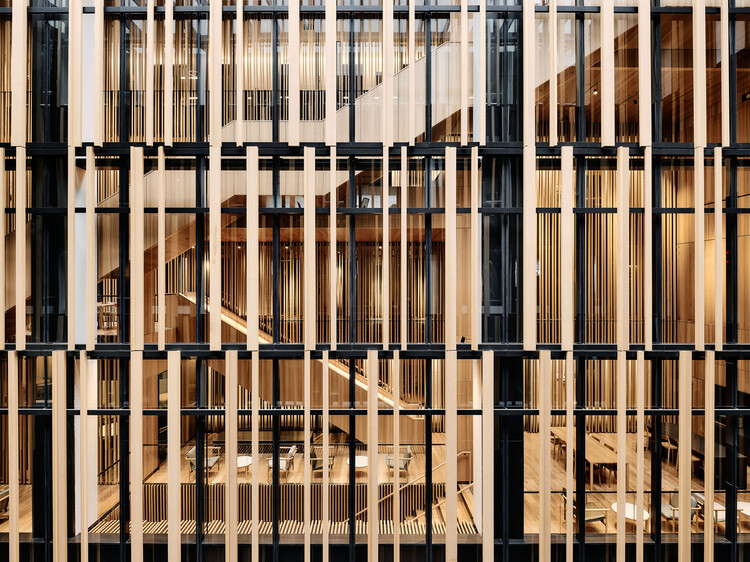
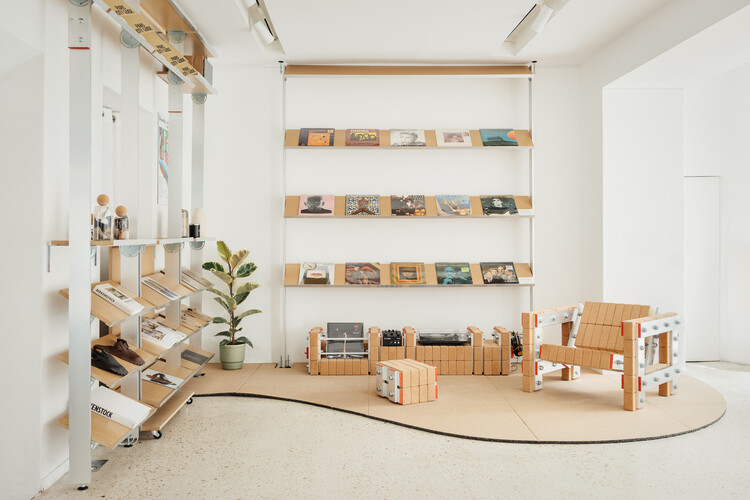
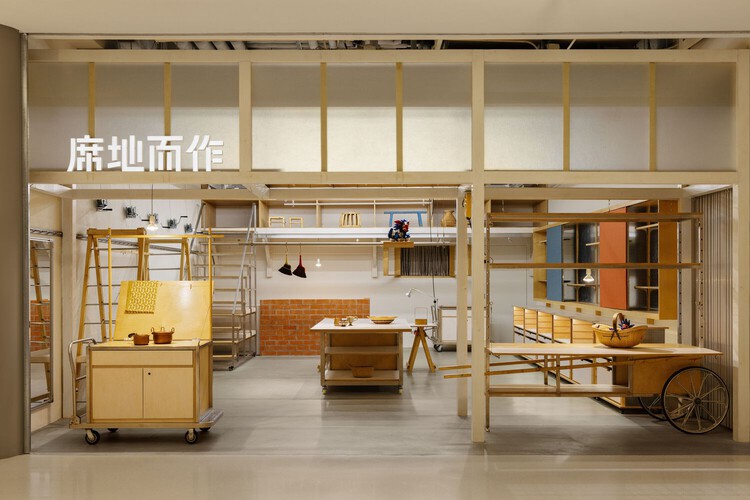
As part of the experiential context, the concept of exhibition in architecture is closely tied to perception. Understanding the user's journey, recognizing the properties and characteristics of each element, and revealing the methodology behind their operation are all vital aspects of the design and development process for these spaces. From equipment, furniture, and artworks to construction materials and technologies, architecture and interior design demonstrate an increasingly significant creative potential to develop solutions that merge historical, landscape, and social perspectives.

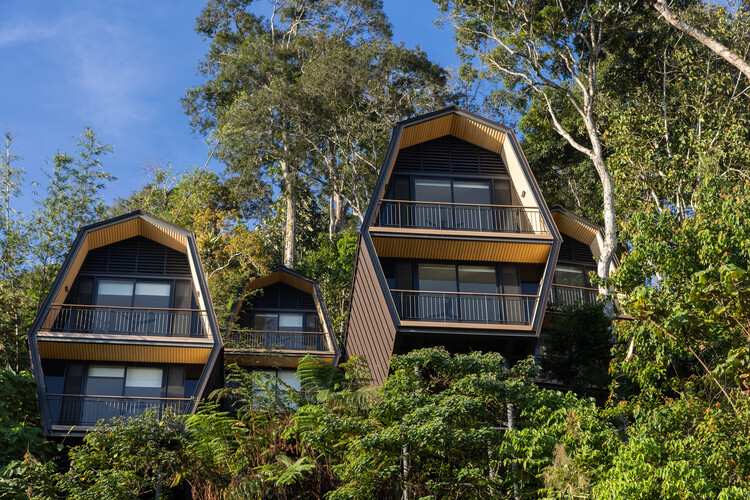
Beyond the Exhibition: Architecture, Interior, and Landscape as a Single Narrative - Image 1 of 4Beyond the Exhibition: Architecture, Interior, and Landscape as a Single Narrative - Image 2 of 4Beyond the Exhibition: Architecture, Interior, and Landscape as a Single Narrative - Image 3 of 4Beyond the Exhibition: Architecture, Interior, and Landscape as a Single Narrative - Image 4 of 4Beyond the Exhibition: Architecture, Interior, and Landscape as a Single Narrative - More Images+ 16

"Architecture Is Cooperation": Collective Projects that Build with Communities and Professionals

Working with the site instead of against it, the exhibition "Architecture is Cooperation," curated by Josep Ferrando, emphasizes the value of cooperation at the essence of architecture. Showcasing the work of professionals, organizations, and communities in cooperation projects driven from Spain, the installation takes shape through an exhibition design in earth and wood. The choice of these materials is understood not only from their aesthetic or symbolic qualities but also from their functionality and commitment to the principles of the circular economy. Until September 30, 2025, the exhibition will be on view at the Casa de la Arquitectura in Madrid, highlighting the necessary attention of architecture to the demands of the most vulnerable societies and communities by aligning the constructive language with the content of the exhibition.

"Architecture Is Cooperation": Collective Projects that Build with Communities and Professionals - Imagen 1 de 4"Architecture Is Cooperation": Collective Projects that Build with Communities and Professionals - Imagen 2 de 4"Architecture Is Cooperation": Collective Projects that Build with Communities and Professionals - Imagen 3 de 4"Architecture Is Cooperation": Collective Projects that Build with Communities and Professionals - Imagen 4 de 4Architecture Is Cooperation: Collective Projects that Build with Communities and Professionals - More Images+ 27

Reflecting on Territory, Topography, and Landscape: Discover WHALE!’s Projects in Chile

Subscriber Access | 

What logics and dynamics are involved in conceiving an architecture in dialogue with the territory and the landscape? How does topography determine the design and development process of architectural projects? Founded in Santiago, Chile, around 2012, the architecture firm WHALE! works with the concepts of territory and landscape as key axes of study and reflection in the pursuit of understanding how architecture is not only capable of designing spaces, but also of shaping the way human beings live, feel, and relate to the world.

Reflecting on Territory, Topography, and Landscape: Discover WHALE!’s Projects in Chile - More Images+ 56

Clorindo Testa's Artistic and Architectural Experimentation: Colors and Asymmetrical Plays in Spaces of Worship

Subscriber Access | 

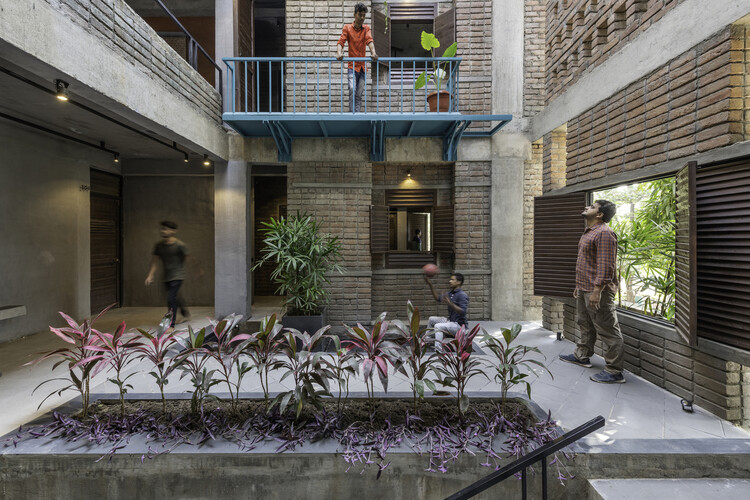
Amid questions, reflections, and debates, the work of Clorindo Testa embodies an innate connection between artistic and architectural experimentation, reflected in many of his built projects, sketches, models, and plans. From the Mariano Moreno National Library to the former Bank of London building in Buenos Aires, his production is of such scope, diversity, and complexity that it constitutes a major source of study, one that also includes unbuilt projects that deserve visibility and recognition on a global scale. In his final years of professional activity, two unbuilt projects of religious architecture highlight Testa’s work not only as an architect but also as a visual artist.

The use of primary colors, pure forms, and concrete represent some of the most distinctive characteristics of Clorindo Testa’s architecture, which is inseparable from his visual art. Reflecting on themes such as living in large cities or the conditions of life in urban spaces, the powerful expressiveness and plasticity of his works, together with the character of the line, his typical color palette, and the frequent presence of the human figure, reveal the importance and meaning he attributed to scales, uses, and perceptions as an architect who never settled for the first idea.
Clorindo Testa's  Artistic and Architectural Experimentation: Colors and Asymmetrical Plays in Spaces of Worship - Imagem 1 de 4Clorindo Testa's  Artistic and Architectural Experimentation: Colors and Asymmetrical Plays in Spaces of Worship - Imagem 2 de 4Clorindo Testa's  Artistic and Architectural Experimentation: Colors and Asymmetrical Plays in Spaces of Worship - Imagem 3 de 4Clorindo Testa's  Artistic and Architectural Experimentation: Colors and Asymmetrical Plays in Spaces of Worship - Imagem 4 de 4Clorindo Testa's  Artistic and Architectural Experimentation: Colors and Asymmetrical Plays in Spaces of Worship - More Images+ 34

'All Architecture is Water Architecture': Eva Franch i Gilabert, Mireia Luzárraga and Alejandro Muiño on Catalonia's Pavilion in Venice

As part of the collateral events of the 2025 Venice Architecture Biennale, the Institut Ramon Llull presents the project "Water Parliaments: Projective Ecosocial Architectures", bringing together the waters of Lleida, Girona, Tarragona, Barcelona, Valencia, the Balearic Islands, and beyond to address the water crisis as an interconnected ecosocial, cultural, and political issue. Framing architecture as a tool for critical speculation and collective action, the project advocates for the imagining of future scenarios grounded in coexistence—interweaving the human and non-human, the natural and artificial, the technological and vernacular, the global and the local.

'All Architecture is Water Architecture': Eva Franch i Gilabert, Mireia Luzárraga and Alejandro Muiño on Catalonia's Pavilion in Venice - Image 1 of 4'All Architecture is Water Architecture': Eva Franch i Gilabert, Mireia Luzárraga and Alejandro Muiño on Catalonia's Pavilion in Venice - Image 2 of 4'All Architecture is Water Architecture': Eva Franch i Gilabert, Mireia Luzárraga and Alejandro Muiño on Catalonia's Pavilion in Venice - Image 3 of 4'All Architecture is Water Architecture': Eva Franch i Gilabert, Mireia Luzárraga and Alejandro Muiño on Catalonia's Pavilion in Venice - Image 4 of 4'All Architecture is Water Architecture': Eva Franch i Gilabert, Mireia Luzárraga and Alejandro Muiño on Catalonia's Pavilion in Venice - More Images+ 27