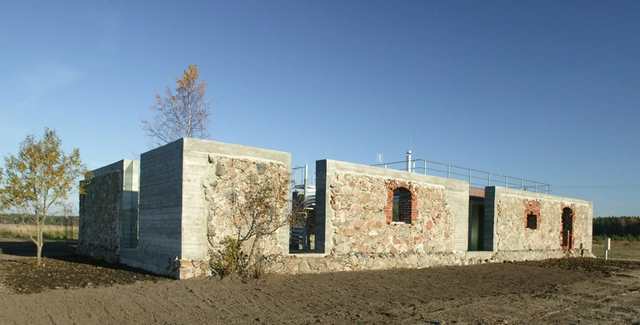
Walls cannot talk. At least, not yet. This is not to say they can’t lie. As ArchDaily recently reported, a growing urban trend is emerging where the entirety of a historic building is demolished apart from the exterior façade, and a new building constructed behind it. This procedure has a name; Facadism. While the act of building a new structure behind a historic façade may seem altruistic at best, or trivial at worst, Facadism offers an insight into the money-centric political and market forces shaping our cities.
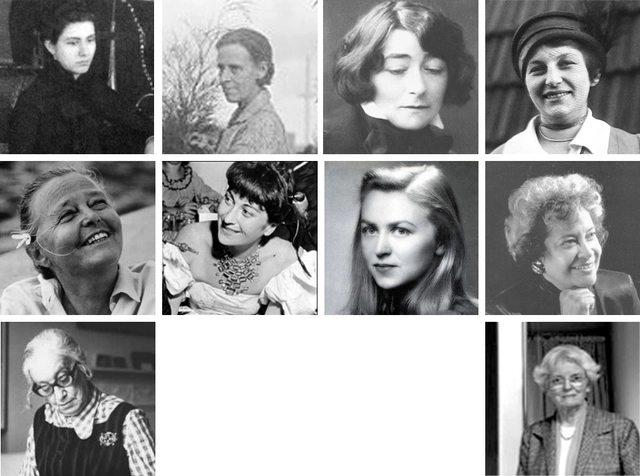
Looking back on architectural history, you could be forgiven for thinking that women were an invention of the 1950s, alongside spandex and power steering - but this couldn’t be further from the truth. Big names like Le Corbusier, Mies, Wright, and Kahn often had equally inspired female peers, but the rigid structure of society meant that their contributions tended to be overlooked.
The leaves are still sprinkled with delicate drops of morning dew. Outside, in Hamburg, the bustling metropolis in northern Germany, the streets are already a hive of activity as another working day begins.
Time to savour a long, leisurely gaze over the Alster. To watch the seagulls glide silently across the sky. As you take in the great, boundless expanse, from a room flooded with natural light, the borders between indoors and outdoors begin to blur, as though the laws of physics no longer applied.
You feel the first rays of warm sunlight on your face. Aren’t these precisely the kind of moments which give you the energy you need for yet another hectic day? – A view, not a window.
The Midnight Charette is an explicit podcast about design, architecture, and the everyday. Hosted by architectural designers David Lee and Marina Bourderonnet, it features a variety of creative professionals in unscripted conversations that allow for thoughtful takes and personal discussions. A wide array of subjects are covered with honesty and humor: some episodes provide useful tips for designers, while others are project reviews, interviews, or explorations of everyday life and design. The Midnight Charette is also available on iTunes, Spotify, and YouTube.
https://www.archdaily.com/929454/david-godshall-of-terremoto-landscape-on-working-with-architectsThe Second Studio Podcast
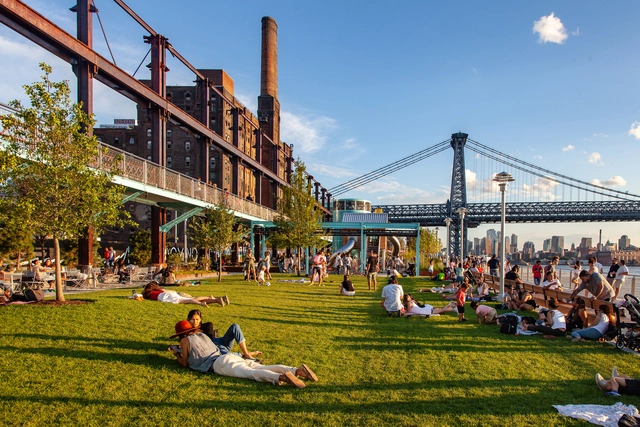
Public Spaces are an issue all over the world — approaches to designing them differentiate across countries, while successful examples always involve heavy research and working closely with communities. At ArchDaily, we always try to explore different opinions on common issues, hoping that our input will add to the clarity of architecture debates. Read on for our best articles on the topic.
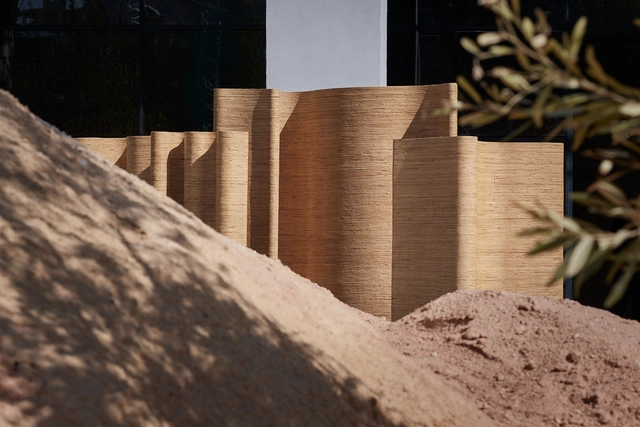
The third edition of the Hangar Exhibition was held this past October in the Jordanian capital, Amman, as part of the city's Design Week. Among the projects exhibited, one installation was able to momentarily teleport visitors into one of the country's most historic sites.
Designed by architect Rasem Kamal, Canyon Walls, a series of freestanding curvilinear partitions, served as a sanctuary for people to disconnect and remain in solitude for a period.
Regardless of where you live or work or who you’re friends with, you usually move around the same neighbourhoods and streets of your city. It may be London, Santiago, Shanghai, or Moscow, but in any of these places, there are always districts you have never set a foot in. Have you ever considered how many ‘cities’ are within your own city?
A research article published in The Royal Society Open Science and signed by Chilean researchers utilizes big data to analyze and visualize urban segregation, delivering spatial tools that allow us to develop strategies in a city of many cities. "We know there are [social] bubbles in Santiago, Chile, and that therefore, there is segregation," says Teodoro Dannemann, co-author of the research paper The time geography of segregation during working hours, in a conversation with ArchDaily. “We know that each person explores only a small fraction of the city, which is basically the home-work trajectory. This implies that we only engage with a small group of citizens," he adds.
Minoru Yamasaki (December 1, 1912 – February 7, 1986) has the uncommon distinction of being most well known for how his buildings were destroyed. His twin towers at the World Trade Center in New York collapsed in the terrorist attacks of September 11th, 2001, and his Pruitt-Igoe complex in St. Louis, Missouri, demolished less than 20 years after its completion, came to symbolize the failure of public housing and urban renewal in the United States. But beyond those infamous cases, Yamasaki enjoyed a long and prolific career, and was considered one of the masters of “New Formalism,” infusing modern buildings with classical proportions and sumptuous materials.
The variety of sustainable building rating systems promoting health and wellbeing can be confusing. With so many standards, how do you determine which are suitable for your project? How do you take advantage of the synergies between these rating systems to pick the right building materials? By increasing your knowledge of all the available options, you can make a more informed decision and achieve the best possible results for your building. In AEC Daily’s online course you can explore health and wellbeing credits across sustainable building rating systems and study the many options for creating optimal conditions for building occupants.
Design:ED Podcast is an inside look into the field of architecture told from the perspective of individuals that are leading the industry. This motivational series grants unique insight into the making of a successful design career, from humble beginnings to worldwide recognition. Every week, featured guests share their personal highs and lows on their journey to success, that is sure to inspire audiences at all levels of the industry. Listening to their stories will provide a rare blueprint for anyone seeking to advance their career, and elevate their work to the next level.
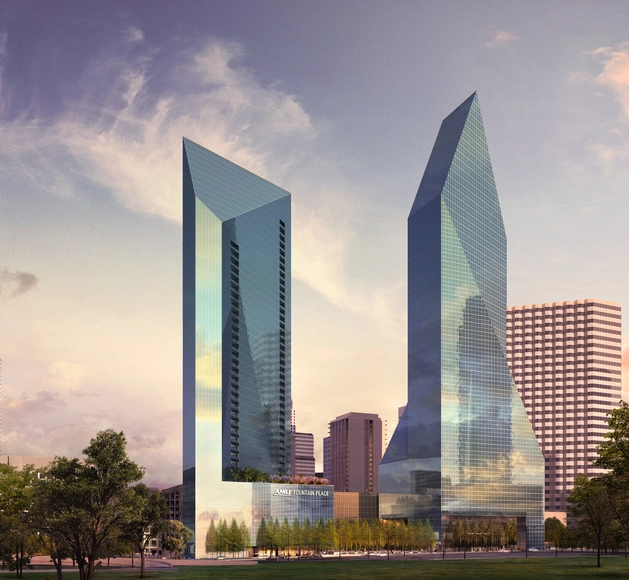
In this episode, host Aaron Prinz speaks with Talmadge Smith, Principal of Page, and discusses the process of designing the new Fountain Place tower in downtown Dallas adjacent to the iconic building originally designed by Pei Cobb Freed & Partners. He provides a detailed look into their design decisions regarding form, color, and how they paid tribute to the existing Fountain Place.
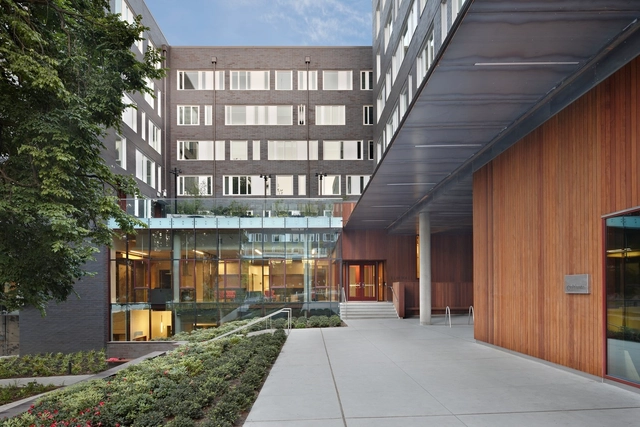
Podium construction – alternately known as platform or pedestal construction – is a building typology characterized by a horizontal division between a lower ‘podium’ and an upper tower. The podium, which is typically made of concrete or steel, is crowned by multiple light wood-frame stories. Often, the lighter upper structure contains four to five stories of residential units, while the podium houses retail, commercial, or office spaces and above- or below-grade parking. An alternative configuration sports six to seven residential stories (including the podium) and subterranean parking. Some visible examples of this podium construction style include the amenity-rich Stella residences designed by DesignArc; an attractive yet cost-effective student housing project for the University of Washington by Mahlum Architects; and the warm, modern University House Arena District also designed by Mahlum Architects in Eugene, Oregon.
https://www.archdaily.com/927592/putting-wood-on-a-pedestal-the-rise-of-mid-rise-podium-designLilly Cao
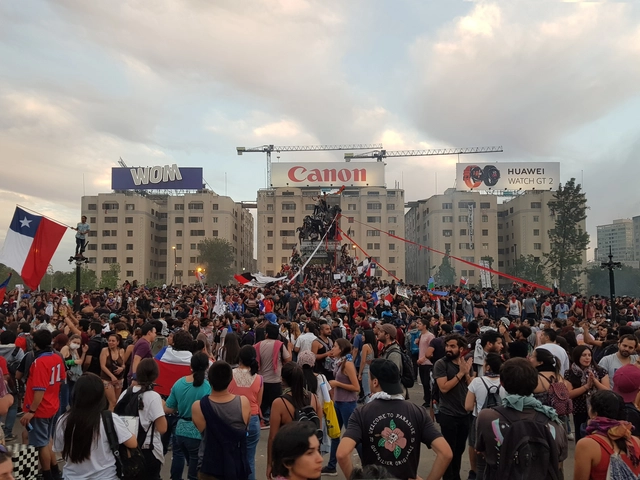
This article was originally published in ArchDaily en Español last October 30, twelve days after the social crisis in Chile escalated. Some ideas of the analysis may feel outdated since some structural reforms were recently announced, but the author decided to keep the original spirit of the piece.
A 4 cent fair increase for the Metro in Santiago sparked mass fare-dodging protests in Chile starting on October 6. Alongside spontaneous street demonstrations, the protests spilled into widespread violence across Santiago during the following days until October 18. That day, the Metro network collapsed, the riots multiplied across the city, and looting and fires were out of control. That night, President Sebastian Piñera declared a state of emergency.
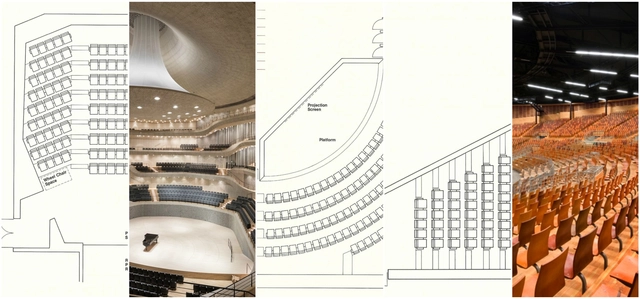
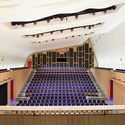
Audience sightlines, accessibility and acoustics all make theater seating a hugely precise art. As part of their set of online resources for architects and designers, the team at Theatre Solutions Inc (TSI) have put together a catalog of 21 examples of theater seating layouts. Each layout is well detailed, with information on the number of seats, the floor seating area and row spacing. These layouts fall under three general forms; to supplement this information, alongside TSI's diagrams we've included the pros and cons of each type, as well as examples of projects which use each format. Read on for more.
Have you ever been stuck for hours obsessing over a font that matched your work? Before starting a project, do you already think about which font you will use? Do you get annoyed when you read an important message written in Comic Sans? Or do you feel offended when a mundane sentence is written in all caps? Rest assured, you are not alone.
Architects and designers constantly use graphic elements as expressive means in the schematization of their works. Among them, the most common are the drawings, in a constant variety of techniques, styles, and patterns. But among the elements that make up the boards, panels and drawings, techniques and models, there is a particular fragment that helps them in composition and identity: the font.
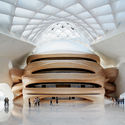
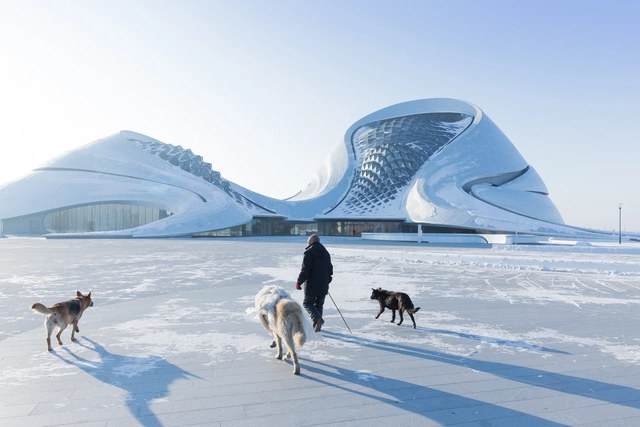
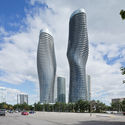
Founder of the innovative architecture firm MAD Architects, Ma Yansong (born 26 November 1975) has helped to give China a name in the international architecture scene. The first Chinese architect to receive a RIBA fellowship, Ma explores contemporary architecture in relation to traditional eastern values of nature, resulting in buildings that are complex and contextually aware, but sometimes even surreal.
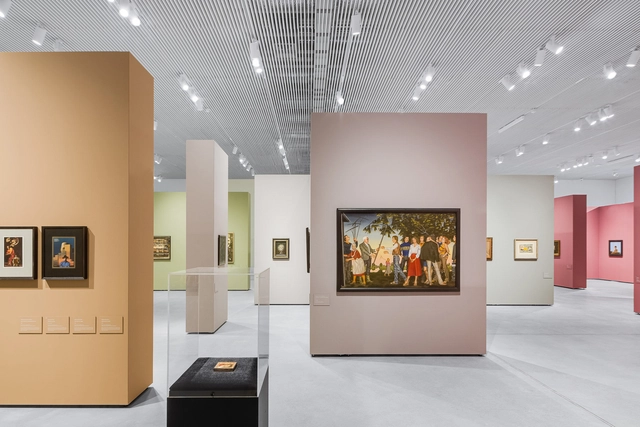
Choosing the right lighting for any space can be a complex decision. Considerations need to be made with respect to the purpose, form and function of the lighting application. Design and aesthetics also play a role in the equation. With so many options for lighting on the market, it takes specialized knowledge and understanding to determine the best fit for your space. Even more challenging than finding lighting for a generic space, an art gallery or museum application can be difficult and even overwhelming to light properly. LED lighting has simplified a large chunk of lighting for art display.
https://www.archdaily.com/927023/the-art-of-lighting-artDavid Hakimi
Up until now, space architecture has been mainly focused on engineering, centered on projects like orbital space stations or Martian exploration convoys, commissioned by world space agencies such as ESA (Europe) or NASA (USA). But in recent years, an increasingly broader spectrum of professionals (e.g. architects, sociologists) as well as entrepreneurs and investors (not all well intentioned) have joined the challenge of designing extraterrestrial built environments, the new space race of the 21st century.
The fast development of technology, the increase of world population and the climate change crisis create the perfect setting to think about life outside of our planet, and as these trends continue to evolve and converge, new opportunities to explore options beyond our traditional limits appear (NEOM), as well as new organizations which support this research (like SATC, SICSA). Even though no one is currently on Mars, many ongoing projects and simulations (MARS-ONE, Mars City Science) are already exploring how we will design, build and inhabit the new realms of humanity in outer space.
In some theoretical books, architecture and the human body are more or less the same, each depending on one another. Oftentimes, however, it is the body that undergoes detrimental adjustments to adapt to the architecture, not the other way around.
In the newly released book X-Ray Architecture, architectural historian Beatriz Colomina argues that health facilities inspired modern architecture's most dominant formal signatures.
















_MAD_Architects.jpg?1479857306 "Courtesy of MAD Architects")