Every field has its heroes. In architecture, heroic designers have often been celebrated both for their skills and as public personalities. Frank Lloyd Wright and Louis Kahn were icons in the 20th century. In the 21st, Zaha Hadid was as bold and evocative as her buildings, and she became a “starchitect” (to use the industry-specific parlance), her untimely death further elevating her to what-might-have-been status. But heroes are only human, and their deaths do not automatically convey a permanent place in the pantheon. They do, however, allow for a fresh perspective on the living.
What happens when the sensor-imbued city acquires the ability to see – almost as if it had eyes? Ahead of the 2019 Shenzhen Biennale of Urbanism\Architecture (UABB), titled "Urban Interactions," ArchDaily is working with the curators of the "Eyes of the City" section at the Biennial to stimulate a discussion on how new technologies – and Artificial Intelligence in particular – might impact architecture and urban life. Hereyou can read the “Eyes of the City” curatorial statement by Carlo Ratti, the Politecnico di Torino and SCUT.
Media Architecture is a merging of new technologies and the built form in order to explore narrative and to imbue character, to engage people and create new dialogues through a layer of meaningful experience.
It isn’t a new concept - telling a story about a building through its form, particularly the facade of a building, has been around throughout history;- just think of York Minster’s stained glass windows, St Mark’s Basilica in Venice, and the Meenakshi Temple in Tamil Nadu. What is exciting now is the opportunities brought about by technology to create new narratives and new forms of human interaction.
In late October, the Guardian’s architecture critic Oliver Wainwright reported that the United Kingdom’s first architecture union had been formed. The Section of Architecture Workers (UVW-SAW) is a section of the United Voices of the World, a new model of grassroots trade union that supports the expansion of union ideals to professions and sectors which traditionally did not have such representation. The launch of the union, and the reasons behind it, serve as the latest episode in long-running concern over the working conditions faced by architects in the UK and across the world.
https://www.archdaily.com/928339/is-it-time-for-architects-to-unionize-the-uk-says-yesNiall Patrick Walsh
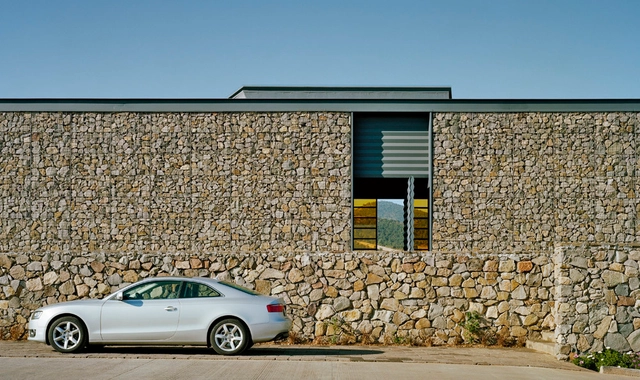
Widely used in infrastructure, gabion walls are structures made of mesh metal cages filled with stones. These permeable walls use galvanized steel wire to withstand outdoor conditions.
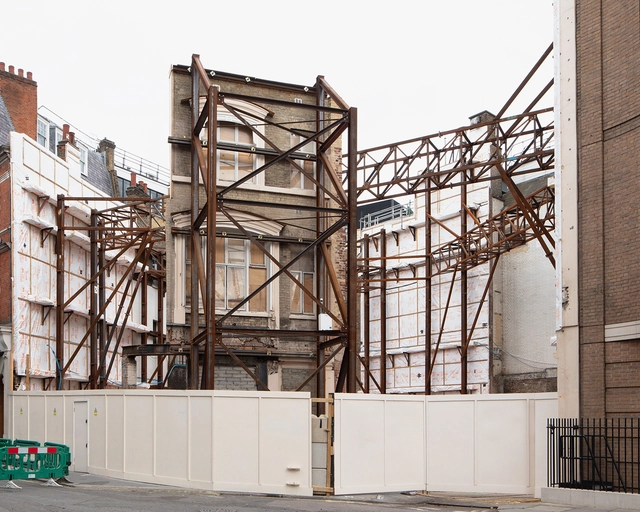
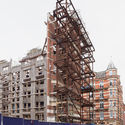
A lot can change in a city within one year; from demolitions, to reconstructions and project completions, a city's urban fabric is constantly being altered. During the past 4 years, Chilean architect and photographer Francisco Ibáñez Hantke of Estudio Ibanez has put together a photo-series titled Non-Structures, which focuses on London's urban regeneration and transformation and captures its various moments of ruins, planning, process, and eventually, complete architecture.
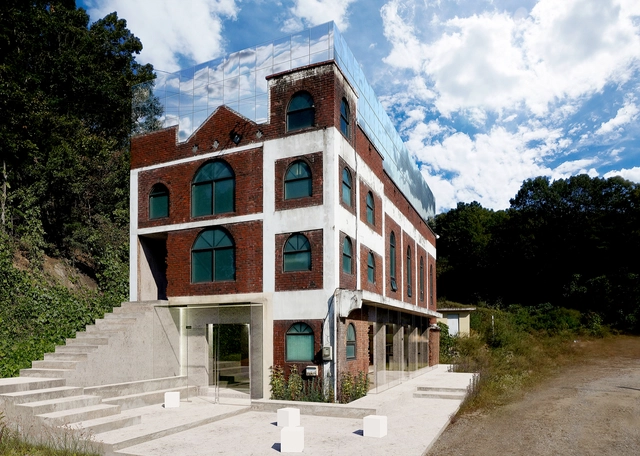
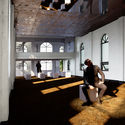
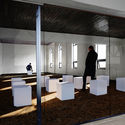
Changtteul Church, is an old place of worship in Gyeonggi-do, South Korea, that gets its name from the term "changtteul", meaning "a frame containing a window", in Korean. As its name suggests, the building's character lies in its series of windows, giving the visitors both outside and inside a unique experience of light and scenery.
Designers Hanyoung Jang and Hanjin Jang of studio minorormajor utilized the windows of Changtteul as a metaphorical motif for their design concept: the first being the 'window between man and God', and the second being ‘the window between man and nature’, immersing the abandoned religious facility with dramatic experiences.
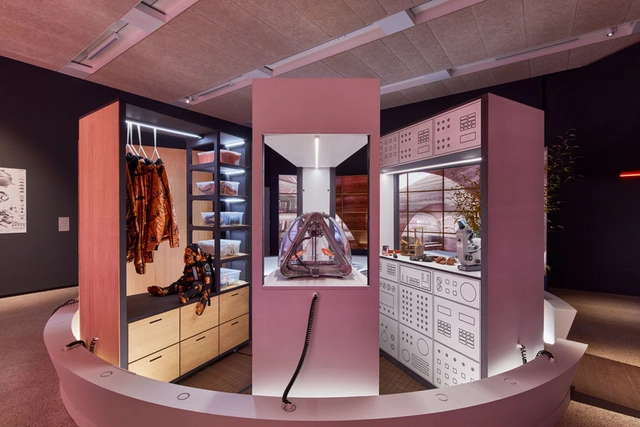
Mars has been notable for capturing humans' interest, intriguing business moguls such as Elon Musk and Jeff Bezos to go on a "billionaire space race" and settle on the planet. But does humanity have the right to colonize another planet? If so, who does this sky-high ambition serve?
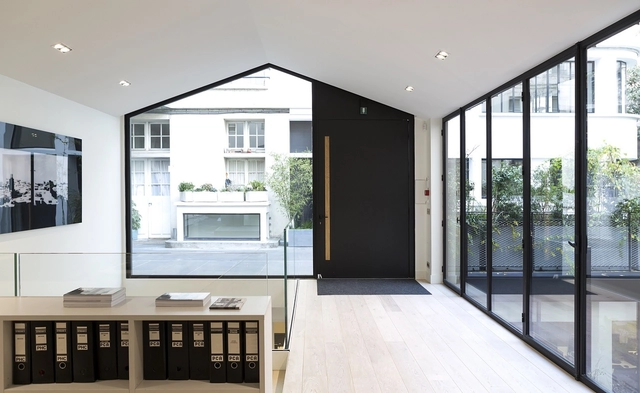
After centuries of using wood for the development of window and door carpentry, the Rationalism of the 20th century began to adopt a new material for these purposes: steel. Driven by industrial production, and promoted by architects such as Adolf Loos, Mies van der Rohe, and Le Corbusier, steel was evolving to generate increasingly thin and resistant frames. However, efficient and low-cost materials, such as aluminum and PVC, gradually began to replace its widespread use, increasing the size of the frames and losing steel's "clean" aesthetic when applied to a growing architecture of large glass paneled facades.
At present, new technologies have refined their production processes, developing minimal profiles of high rigidity and precision, which take full advantage of the transparency of the glass and deliver new comfort and safety features. We talked with Jansen's experts to deepen our understanding of their application in contemporary architecture.
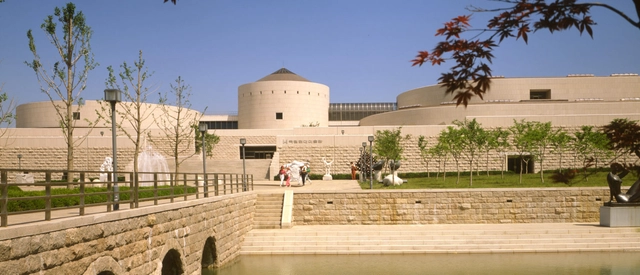
Text provided by MasilWIDE. The Seoul Biennale of Architecture and Urbanism was held for about two months, came to an end in great success on November 10. First carried out in 2017 under the theme of 'Imminent Commons', the Seoul Biennale of Architecture and Urbanism (hereinafter Seoul Biennale) gathered 450,000 people in the first year and marked the beginning of the Seoul Biennale. This year, the much-expanded scale and interest of people were able to be seen as the attendance numbers of the first year was already exceeded in October, at the height of the Biennale.
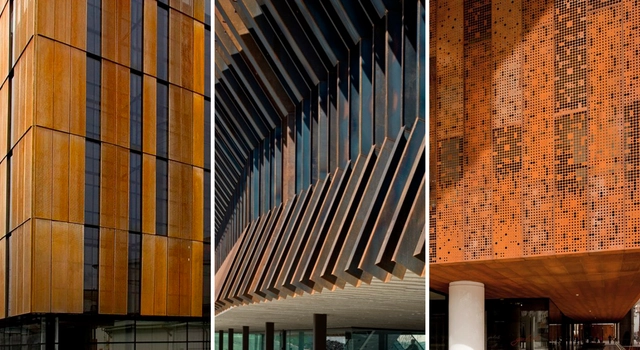
The characteristics of Corten steel has been respected by all architects, both for its strength and for its particular color. It corresponds to a type of steel manufactured with a chemical composition that provides an oxidation that protects the piece, practically without altering its mechanical characteristics. The architectural details of Corten steel present a diversity of situations and connections, not only the obvious constructive factor but it also gives an aesthetic value to any architectural project.
We have compiled this list of 6 eye-catching Corten steel construction details that stand out the most.
Countries that are part of the so-called “global south” have undergone many transformations in their cities and urban contexts in recent years due to the economic and social challenges they face. Urban growth, sustainable development, quality of life and health in emerging cities, and the development of their own cultural identity have been some of the issues that local architecture had to incorporate.
Young architects have understood the importance of making an architecture that is deeply rooted in their own territory while giving this architecture a clear local identity. By generating new typologies and using their own resources and materials, they have presented innovative, site-specific, and, above all, solutions with a new fresh focus towards what represents them as creators of this architecture.
Open More Doors is a section by ArchDaily and the MINI Clubman that takes you behind the scenes of the world’s most innovative offices through exciting video interviews and an exclusive photo gallery featuring each studio’s workspace.
This month, we talked with London-based design firm Heatherwick Studio to talk about their multidisciplinary firm, offices, and how their "collaborative" design approach is translated from their own space to their employees and projects.
Materials, products, and construction systems are constantly evolving and following new technologies, discoveries, and market trends. Today, within the framework of our Monthly Topic “Innovation” we wonder: what products or materials could we use so that our projects make relevant contributions to the way we are inhabiting our planet?
Cape Town, South Africa. Image Courtesy of Shutterstock
In a discourse about the future of cities, one could be forgiven for limiting their geographical scope to innovations in Europe, the United States, and increasingly, China and Southeast Asia. After all, Shenzhen is about to once again host the world’s only Biennale dedicated exclusively to urbanization, while smart, responsive architecture manifests in visions for cities such as Toronto and London, and tech giants such as Microsoft and Siemens. However, despite our preoccupation with the problems and opportunities of urbanization in the ‘Global North’, and the architectural innovations they herald, there is merit in expanding our horizons – and not just towards Mars. By the end of the century, none of the world’s largest 20 cities will be in China, Europe, or the Americas. Africa, meanwhile, will host 13 out of 20, including the top 3.
https://www.archdaily.com/927842/why-africa-is-the-future-of-megacitiesNiall Patrick Walsh
Architectural design of a space and the furniture chosen to fill it can work together to define a room's function, set a certain vibe, and make a statement. While an architect or designer may want specific furniture to create a certain look at the time of design completion, versatility is also important over the course of a building's life. Not only do the needs of building programs and inhabitants shift over time, but owners of commercial and public spaces often want the ability to react to both aesthetic and social trends to keep up-to-date.
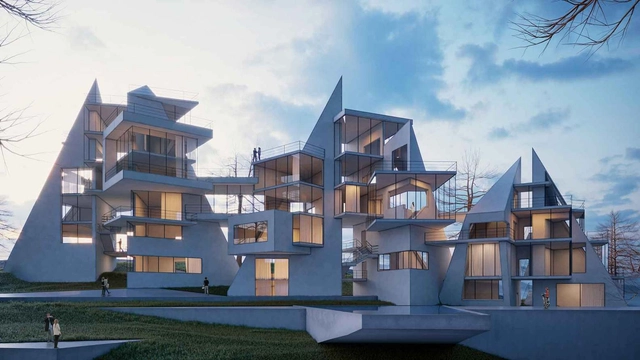
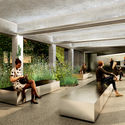
Planned to be built in one of the most exquisite spots of Alanya, Turkey, the Vertical Villa Project is a complex geometric composition of glass, concrete, and landscape, with a great scenery of the green mountain range and distant coastline.
The architecture team developed the project based on an analysis of the social interaction and atmosphere found in the city of Alanya. The team combined different individual units, and applied the sloped roof system found in the city's typical residential architecture.
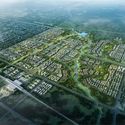
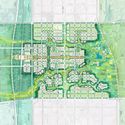
The Second Hebei International Urban Planning and Design Competition – Xingdong New Area Urban Design International Master Competition organized by Urban Environment Design (UED) Magazine has announced its list of winners for this year's edition, with “City of the Future” as its theme.
Award-winning architecture firms took part of the competition, reflecting on Xingtai's transformative urbanism, and interpreting its ongoing development based on social, economic, demographic, ecological, and cultural factors.
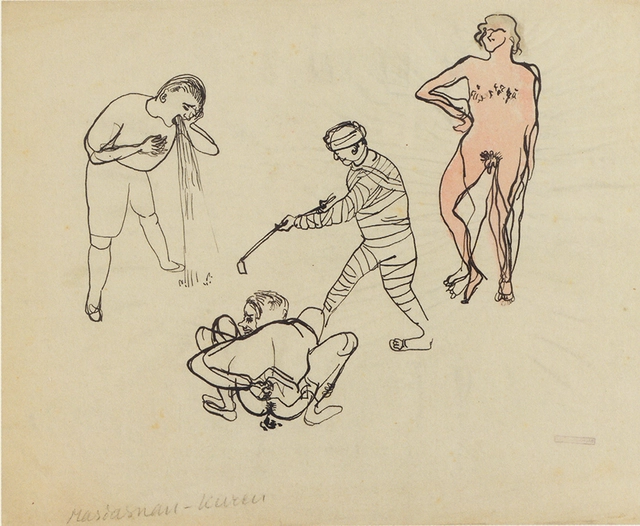
Bauhaus, among many other design movements and disciplines, has had great influence on contemporary architecture. Many claim that the school is in fact a pillar in modern-day architecture and design with its rationality, simplicity, and efficiency. However, behind Bauhaus’ smooth surfaces, a life of violence, occultism, sexuality, and pharmacology was taking place.
In a recent article on Metropolis Magazine, Princeton University School of Architecture professor and architectural historian Beatriz Colomina explains how Bauhaus was a “cauldron of perversions”, suppressing transgressive ideas and pedagogies.








.jpg?1573215586&format=webp&width=640&height=580)



_3161.jpg?1572863335&format=webp&width=640&height=580)
_3161.jpg?1572863335 "© Laurian Ghinitoiu")
_3150.jpg?1572863322 "© Laurian Ghinitoiu")
_3021.jpg?1572863389 "© Laurian Ghinitoiu")
_3066.jpg?1572863162 "© Laurian Ghinitoiu")
_3161.jpg?1572863335)