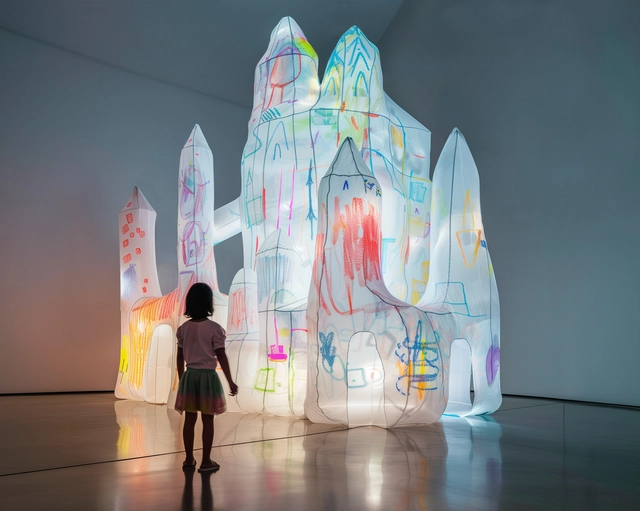
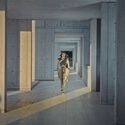
Leah Wulfman Poster Image. Image Courtesy of Architectural League Prize for Young Architects + Designers
The Architectural League Prize for Young Architects + Designers is an annual portfolio competition for early-career practitioners in North America. Established in 1981, the competition is entered around a yearly theme. This year, the 2024 Young Architects + Designers Committee proposed the theme “Dirty,” prompting designers to “look beyond their presentations of professionalism, respectability, and expertise” and reject the sanitized ways of working.
The original work of the six winners of the 2024 League Prize for Young Architects + Designers is now on view in an online exhibition. The installations created for this occasion showcase the wide variety of responses and interpretations of the overarching theme. The projects presented online and in some instances also locally on-site, challenge traditional architectural practices and offer an immersive introduction to the works of the winners. In addition to the installations, a diverse program of lectures has been scheduled to develop the theme further.
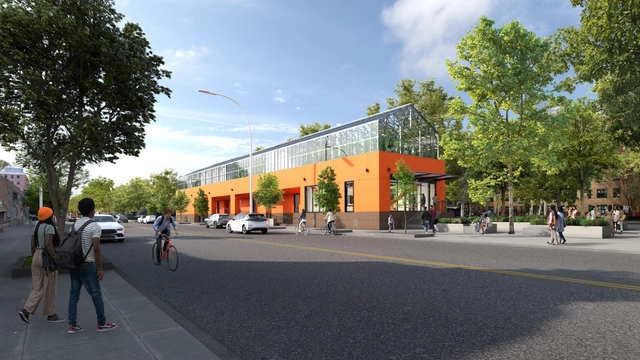
Courtesy of Studio Gang | Marlboro Agricultural Education Center in Gravesend, Brooklyn
Studio Gang has just released the design for the new Marlboro Agricultural Education Center in Brooklyn, New York. Reimagining a more equitable and inclusive food system, the design transforms a New York City Housing Authority (NYCHA) campus into a hub for multigenerational education, job training, and community leadership in urban agriculture. Operated by the nonprofit organization The Campaign Against Hunger (TCAH), the Center seeks to leverage longstanding efforts across the city to enhance food autonomy and security in underserved neighborhoods.
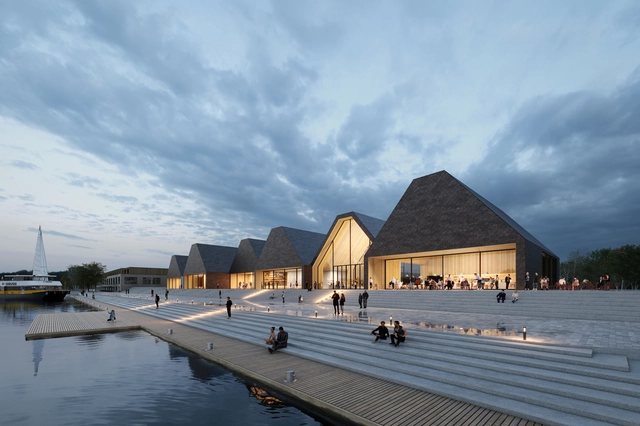
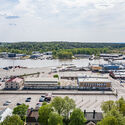
Squama Museum building from the Aura river. Image Courtesy of Sigge Architects
Finnish office Sigge Architects has been announced as the winner of the international competition for the design of the Museum of History and the Future in Finland's oldest city, Turku. The proposal, selected out of over 400 entries, creates a permeable structure along the waterfront, acting as a catalyst for the regeneration of the area. The museum aims to showcase the most innovative scientific research through a wide variety of exhibitions, audio-visual installations, and educational spaces. Construction is expected to start in 2027 and be completed by 2029, with a public opening scheduled for 2030.
The 7th Tallinn Architecture Biennale (TAB 2024) will commence on October 9th, 2024, at various venues around the city. Organized by the Estonian Centre for Architecture, this edition of the global architecture exhibition explores “Resources For a Future,” hoping to encourage dialogue, interdisciplinary work, and innovation within architecture. The event targets both architects and the general public and includes a comprehensive program featuring workshops, panels, seminars, and Open House Tallinn.
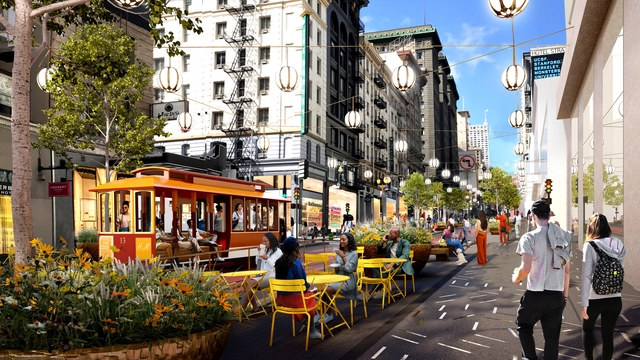
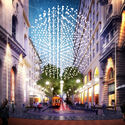
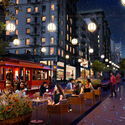
Courtesy of SITELAB urban studio and Field Operations
SITELAB urban studio and Field Operations have revealed a design proposal to reimagine San Francisco’s iconic Powell Street. The street used to be one of the busiest pedestrian corridors in its district and a popular tourist attraction, with cable cars running up and down the street and connecting Union Square and Hallidie Plaza. Across the most popular three-block stretch, the storefronts have become mostly vacant. According to the San Francisco Chronicle, one of the reasons was the Covid pandemic, which led to a further decrease in tourism and in commercial activities. Now a new project led by designers SITELAB urban studio and Field Operations aims to revive the now underutilized transit corridor and to catalyze a renewed interest in the area.
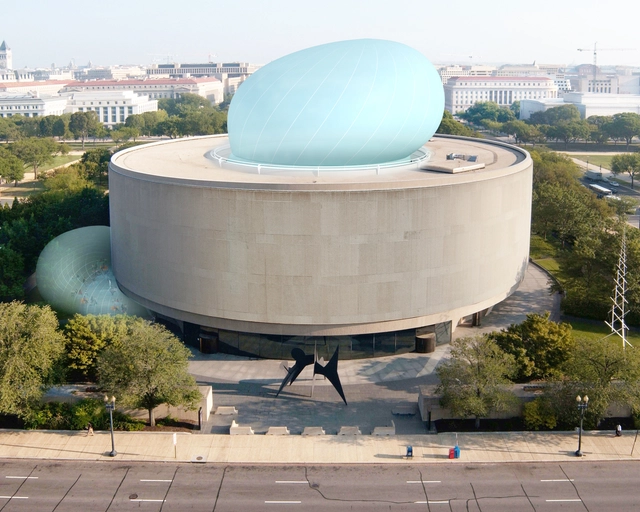
Brutalist buildings are a significant component of Washington, D.C.’s architectural identity. In the National Building Museum’s new exhibition, Capital Brutalism, this identity is explored further. Co-organized with the Southern Utah Museum of Art (SUMA), Capital Brutalism is a comprehensive exhibition of Brutalist architecture in Washington, D.C., to date, running until February 17th, 2025.
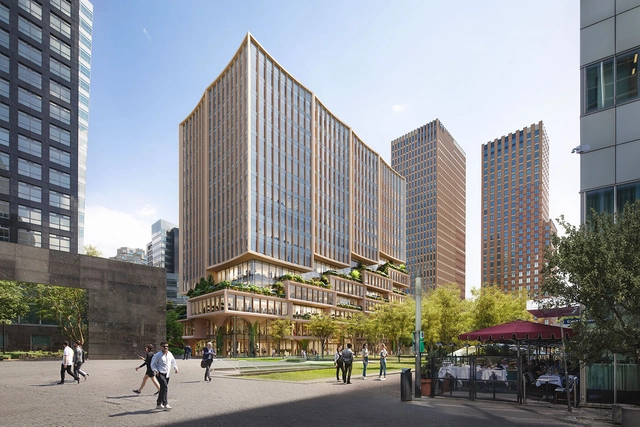
3XN GXN has revealed its design for Mahler 1, a 15-storey mixed-use office building. The structure, developed in collaboration with Victory Group, Icon Real Estate, and Erik Dhont Landscape Architects, features a hybrid-timber construction system that creates a stepped volume, breaking down the building’s mass. At the street level, the development offers a wide variety of public amenities, striving to become an active hub for both residents and office workers. The project is expected to begin construction in the first half of 2025 and conclude in late 2027.
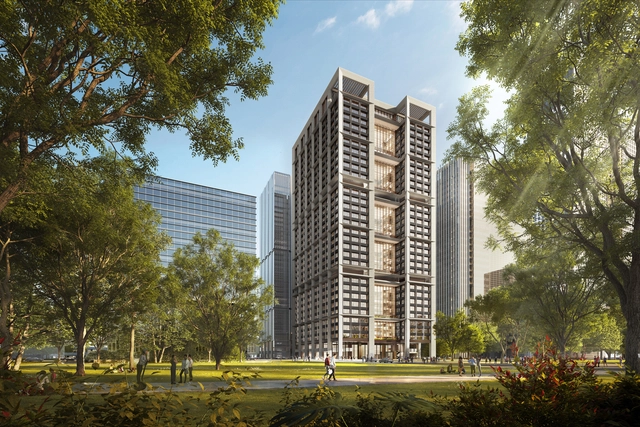
Located in the heart of Beijing’s Central Business District, the Z6 tower, designed by Foster + Partners, has become China's first high-rise office building to achieve “Net Zero Carbon Outstanding” certification. The project received this recognition by passing the “Net Zero Carbon Building Evaluation System,” which was developed by the British Research Establishment (BRE) and TÜV Rheinland Greater China, based on BREEAM standards.
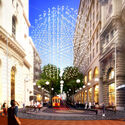
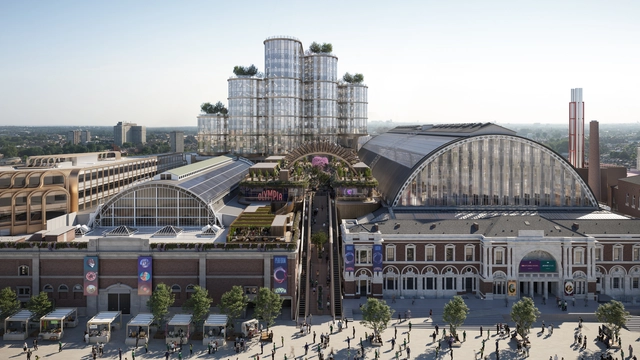
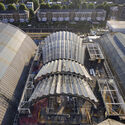
Heatherwick Studio has unveiled the design of a new large-scale glass canopy to become one of the main attractions of Olympia, an ambitious regeneration project aimed at transforming the 138-year-old exhibition halls in London into a global culture and entertainment destination. Originally designed by Sir Henry Edward Coe, Olympia is set to offer visitors a wide range of venues and activities, including two hotels, over 30 restaurants, bars and eateries, a 4,400-capacity live music hall, a theater, and spaces for the Wetherby Performing Arts School, in addition to over 2.5 acres of accessible public spaces. The revival project is co-designed by Heatherwick Studio and SPPARC.
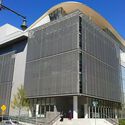
via Flickr user jeanbaptisteparis licensed under CC BY-SA 2.0 | Fumihiko Maki at MIT Media Lab, 2010.
Esteemed Japanese architect and Pritzker Prize laureateFumihiko Maki passed away at his Tokyo home last Thursday at the age of 95. Celebrated for his modernist approach, Maki was responsible for significant works, including the 4 World Trade Center, a skyscraper at the site of the former World Trade Center in New York. Maki was recognized in the architecture industry various times, including receiving the Pritzker Prize and becoming the 67th AIA Gold Medalist. His influence in inventing a unique modernist style of Japanese origin cannot be underscored.
Beyond serving as mere backdrops for fashion shows, architecture often influences fashion collections, contributing spatially to their storytelling, offering material inspiration, and showcasing the connection between structure and shape. As both disciplines revolve around form, structure, and the human experience, architecture, and fashion share a strong connection, one often explored by creators in both fields. From meticulous tailoring and structural designs that mimic architectural lines, contours, and volumes, to architecture taking cues from how fashion works with the human shape, this interplay can create multidimensional experiences for the enthusiasts of both high fashion and architecture.
This is your final call to showcase your talents in the Enscape 4 All Real-Time Rendering Awards! students and professionals are invited to submit their work for free until June 15th. Don't miss this opportunity to gain recognition and celebrate your creative achievements. Submit your entries today and join a global community of innovative minds pushing the boundaries of real-time rendering.
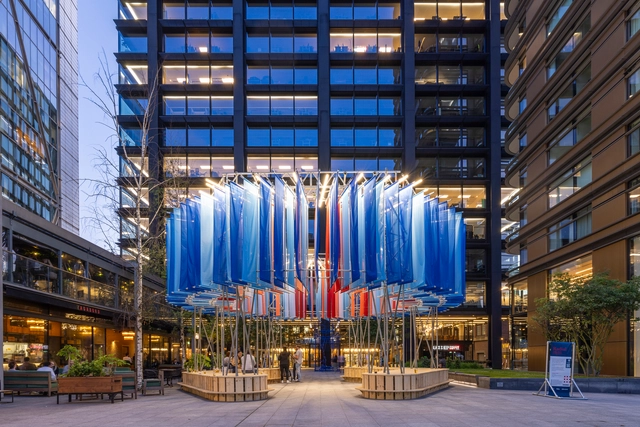
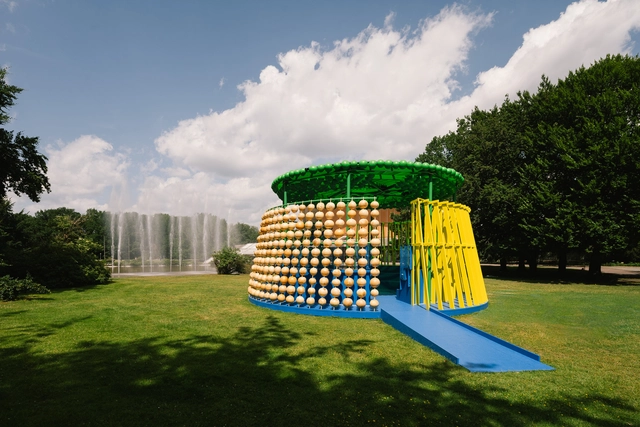
British-Nigerian multi-disciplinary artist and designer Yinka Ilori MBE has designed a pavilion as part of Haus der Kulturen der Welt’s (HKW) festival in Berlin. The festival, titled Ballet of the Masses - On Football and Catharsis, initiated an annual pavilion in 2023, and this year’s pavilion dresses intricate questions of coexistence through its materiality and form. Part of the Shaped to the Measure of the People’s Songs architectural series, Yinka Illori’s pavilion crafts a spatial proposition that explores complex themes of racism in sports and personal accountability.
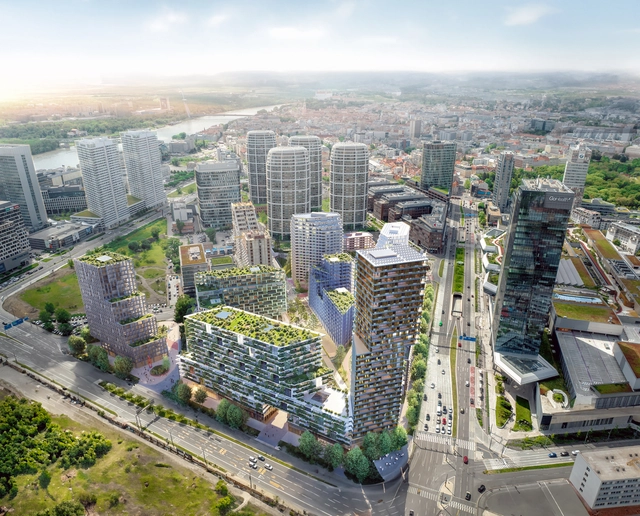
Stefano Boeri Architetti has been declared the winner of the international competition for the redevelopment of a former industrial site in downtown Bratislava. The project includes the transformation of one of the largest abandoned areas in the Slovak capital, with the aim of creating an active new central hub for the city, complete with parks and public spaces, residential units, and a variety of amenities. Stefano Boeri Architetti’s master plan proposal, titled “Urban Oasis,” has been appreciated by the jury for integrating familiar typologies, creating a “European matrix” of medium-density developments organized around accessible public spaces.
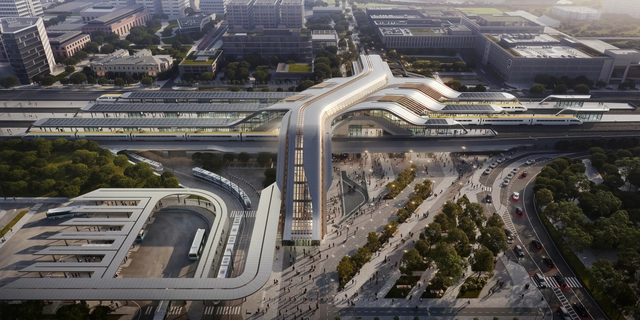
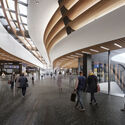
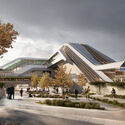
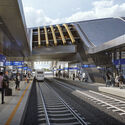
Today, the first cornerstone has been laid at Zaha Hadid Architects' new terminal, marking the start of construction works for the Ülemiste Passenger Terminal in Tallinn, Estonia. Zaha Hadid Architects won the competition in 2019 to design this transport hub, serving as a multi-modal transport hub for city commuters, international rail passengers, and air travelers using the adjacent Tallinn Airport. Set to open in 2028, the hub has been designed to unite various districts of the city, currently divided by railway tracks, and will act as a connecting bridge for the city.
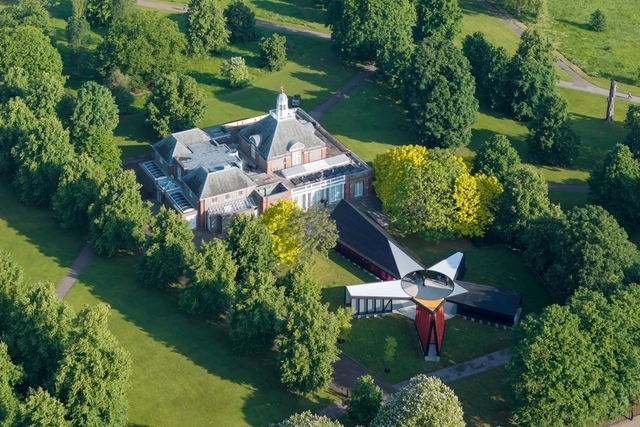
Since its launch in 2000, the Serpentine Pavilion has been providing renowned and emerging architects with a platform for design experimentation, becoming an important display of contemporary architecture. Each year, the commissioned architects and designers envision a temporary structure that speaks not only to their roots as creators, but also brings into focus what they consider to be important themes in the architectural world, from the need to redefine spaces for contemplation or conviviality, to explorations into the potential of natural materials or vernacular building techniques. On the day of the public opening of the 2024 Serpentine Pavilion, the "Archipelagic Void" designed by Korean architect Minsuk Cho and his firm Mass Studies, we look back at the last eight editions of the famous annual structure.
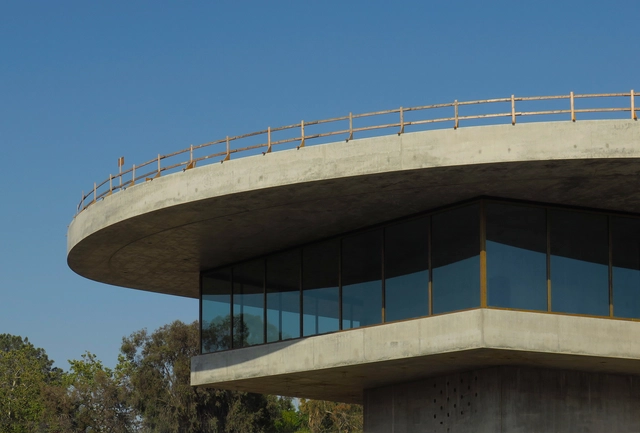
Paul Clemence has released a new series of images showcasing the ongoing construction works in The Los Angeles County Museum of Art (LACMA). Undergoing massive transformations, including a new building by Swiss architect Peter Zumthor, the LACMA is the largest art museum in the western United States. Approved in 2019, Zumthor’s design, known as the David Geffen Galleries, aims to modernize the museum’s campus.