Tadao Ando has joined forces with Cauny to design the newest watch in The Architects of TimeSeries. This is a collection of watches designed by some of the greatest architects of our time—an initiative that the nearly century-old brand launched in 2019 with none other than Álvaro Siza. From then until today, the collection has proven to be a Pritzker Prize–based tour de force: Siza, Rafael Moneo, Eduardo Souto Moura, and, this year, Tadao Ando.
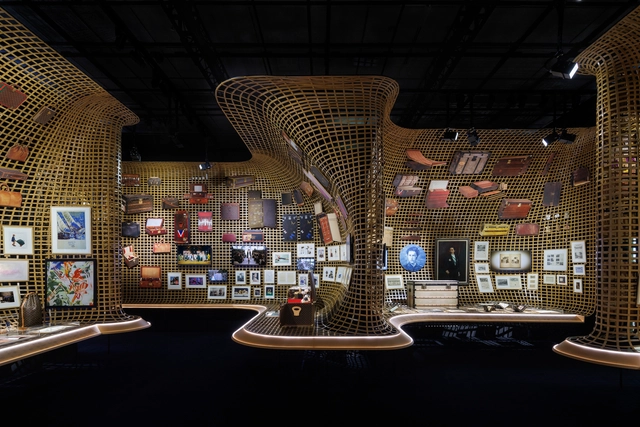
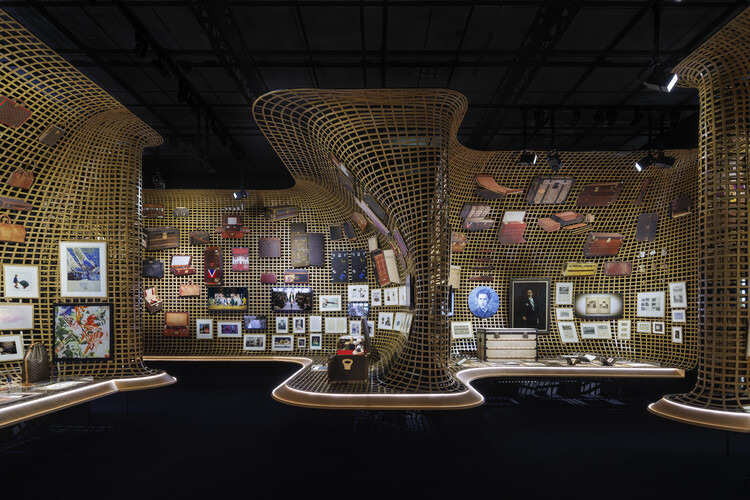
Louis Vuitton’s “Visionary Journeys” at the Nakanoshima Museum of Art. Image Courtesy of Louis Vuitton
Louis Vuitton: Visionary Journeys has opened to the public at the Nakanoshima Museum of Art in Osaka and will be open to visitors until September 17, 2025. Designed by OMA's New York office under the direction of Partner Shohei Shigematsu, the exhibition marks the first time the Visionary Journeys series has been staged in a cultural institution. Spanning 2,200 square meters across eleven thematic galleries, the project offers a comprehensive spatial narrative of the Maison's 170-year creative legacy, articulated through zones dedicated to history, craftsmanship, iconic design codes, and cultural exchange.
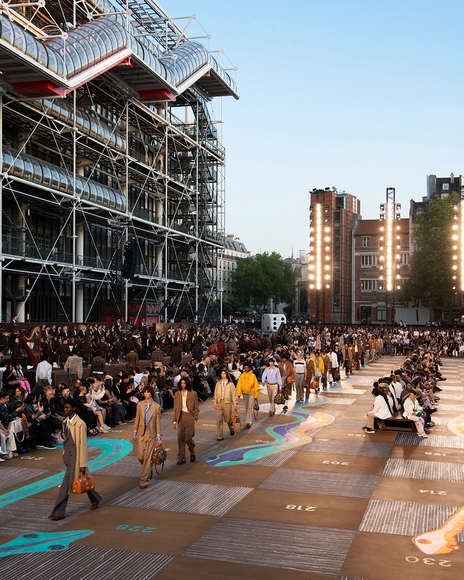
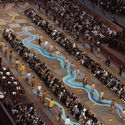
Bijoy Jain Designs the Louis Vuitton Set Inspired by Snakes and Ladders. Image Courtesy of Louis Vuitton
Paris Fashion Week Men's Spring/Summer 2026 has just concluded, featuring a series of shows that highlight the relationship between architecture and fashion as creative disciplines. Through carefully curated architectural environments, these shows engage viewers on multiple sensory levels, weaving together visual impact with spatial and material stories that echo the themes and philosophies behind each collection. This intersection between fashion and architecture opens up new possibilities for storytelling, inviting audiences to explore how fashion design and spaces can resonate together to create immersive experiences.
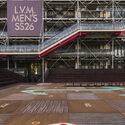
Saint Laurent presented its menswear collection at Tadao Ando's Bourse de Commerce, where the building's cylindrical concrete form and filtered natural light provided a minimal and contemplative backdrop. Louis Vuitton, by contrast, staged its show in the plaza of the Centre Pompidou, where Studio Mumbai's intervention introduced a large-scale, hand-painted installation inspired by Snakes and Ladders. These site-specific choices reflected distinct approaches to engage with architectural context, illustrating how contemporary fashion presentations can extend beyond the runway to enter into dialogue with their surroundings.
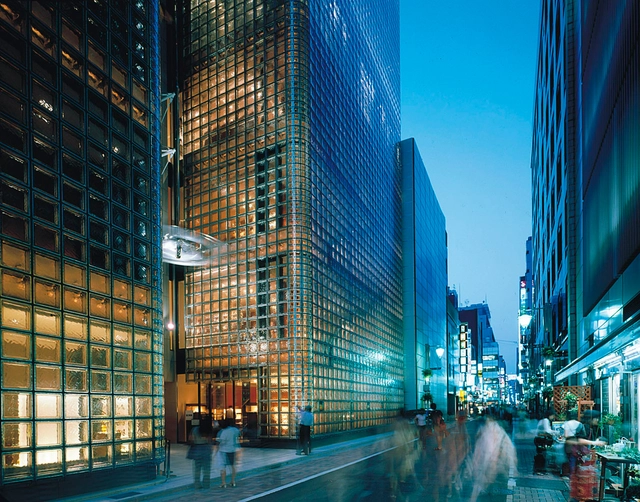
In Tokyo's bustling Ginza district, where tradition and modernity converge, the Maison Hermès emerges as a luminous architectural icon. Designed by Renzo Piano Building Workshop and completed in 2001, the 15-story structure serves as the Japanese headquarters of Hermès, the renowned French luxury brand celebrated for its craftsmanship and timeless elegance. Beyond its function as a commercial hub, the building encapsulates Hermès' ethos, transforming its urban site into a dialogue between light, materiality, and context.
ane Drew and Maxwell Fry with a model of one of their many buildings for the Gold Coast, 1945. / Tropical Modernism - Architecture and Independence at the V&A South Kensington . Image Courtesy of RIBA
Reflecting on 2024, numerous architectural exhibitions have opened worldwide, addressing various themes, exhibition formats, and featured architects. Architectural design and architecture practice influence our daily lives in subtle and often unnoticed ways, where the end-users embrace built environments as they are. This reaction may arise from a combination of factors, such as a sense of powerlessness to enact significant change after a building is constructed or the experience of growing up in environments over which individuals had little or no agency in shaping. For these reasons, architectural exhibitions serve an essential purpose, offering society a chance to pause, reflect, and critically examine the myriad issues that surface during designing and building. These issues are often overlooked or need to be acknowledged, as practitioners may prioritize delivering projects within strict timelines over exploring more profound reflections.
In 2024, museums, galleries, and curators responded to the evolving challenges within the built environment with various approaches. Some exhibitions questioned the ethics of building materials and the practices behind supply chains, drawing attention to the broader implications of material choices. Others focused on documenting architectural movements worldwide, emphasizing their cultural and historical significance and the urgent need to preserve and adapt rather than replace them with entirely new builds. These efforts highlight the role of exhibitions in raising awareness about pressing issues while fostering a more critical dialogue about the architectural discipline.
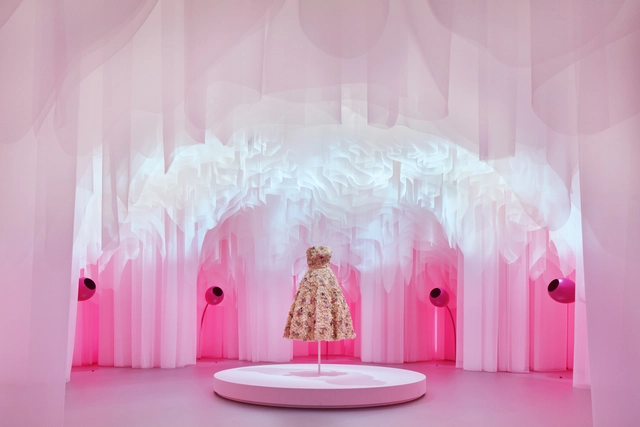
This June, the Roppongi Museum in Tokyo is hosting an exhibition titled "Miss Dior: Stories of a Miss." Designed by OMA/Shohei Shigematsu, the display presents the 78-year legacy of the renowned Miss Dior perfume, which was launched alongside Dior's revolutionary "The New Look" in 1946. Organized as a journey through seven rooms, the exhibition design features not only the perfume and related memorabilia but also explores the various inspirations and collaborations that have shaped its cultural significance.
Beyond serving as mere backdrops for fashion shows, architecture often influences fashion collections, contributing spatially to their storytelling, offering material inspiration, and showcasing the connection between structure and shape. As both disciplines revolve around form, structure, and the human experience, architecture, and fashion share a strong connection, one often explored by creators in both fields. From meticulous tailoring and structural designs that mimic architectural lines, contours, and volumes, to architecture taking cues from how fashion works with the human shape, this interplay can create multidimensional experiences for the enthusiasts of both high fashion and architecture.
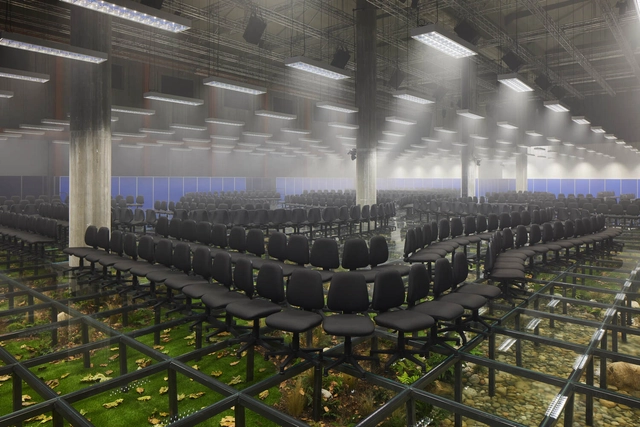
For the Fall/Winter Prada 2024 menswear show, AMO has designed a space that draws inspiration from two contrasting elements of modern life: office interiors and the natural landscape. Transforming yet again the space of the Deposito Hall at Foundation Prada in Milano, the designers have chosen to create a contrasting image of seemingly opposite elements: rows of office chairs illuminated by the white glow of LED lights, standing over a pastoral landscape with meandering creaks and ample foliage. The design aims to highlight this separation between natural instincts and the typical environment of modern life.
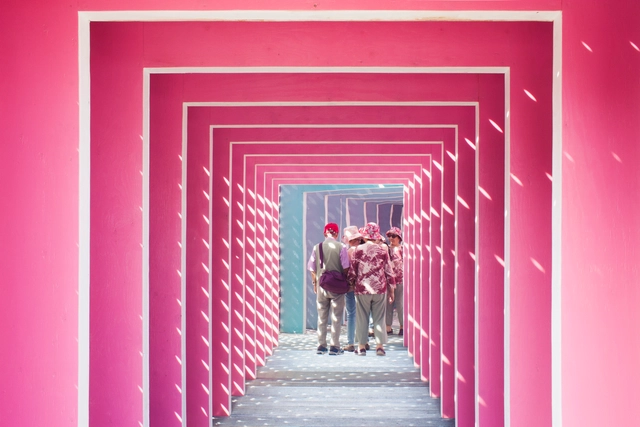
Pantone 219C, or Barbie Pink, is a vibrant and bright magenta pink shade synonymous with the Barbie brand. Since the inception of the Barbie doll in 1959 by a company named Mattel, the doll has slowly trademarked this specific shade of pink. As Barbie’s popularity grew, the global association with the color pink did, too. From pink accessories, pink houses, pink haircuts, and pink packaging, there is no Barbie without pink. Moreover, as the doll became a popular cultural icon, her iconic shade of pink started to influence various industries beyond just toy manufacturing, including fashion, beauty, and interior design.
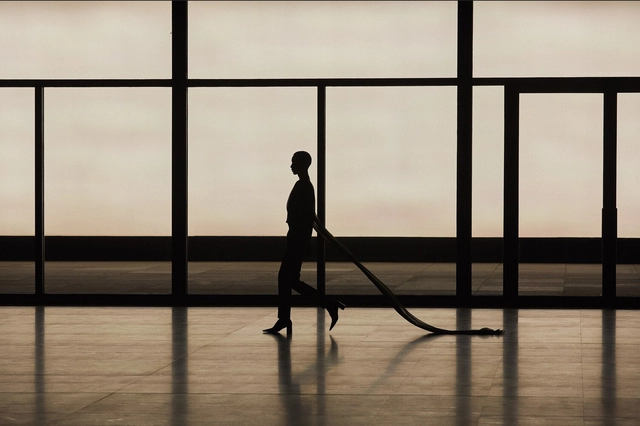
Saint Laurent Men’s Summer 24 at Mies van der Rohe’s Neue Nationalgalerie. Image Courtesy of Saint Laurent
Architecture and fashion share an interesting interplay in the formation of cultural expressions and identities. Both disciplines can become vehicles for creativity at different levels. Architecture is often described as the “third skin” of humans, while clothes represent the second skin, highlighting somewhat similar functionality of protecting the body while also allowing for self-expression and individuality.
The relationship between architecture and fashion can also be seen in the shared design principles, such as form, proportion, human scale, and materiality. More than a simple background for runway shows, architecture can contribute to setting the atmosphere, becoming a source of inspiration, and orienting the movement through space. Collaborations between architects and fashion houses, such as the renowned partnership between OMA/AMO and Prada, further blur the boundaries between the two disciplines, demonstrating the myriad of interconnections between the two creative fields.
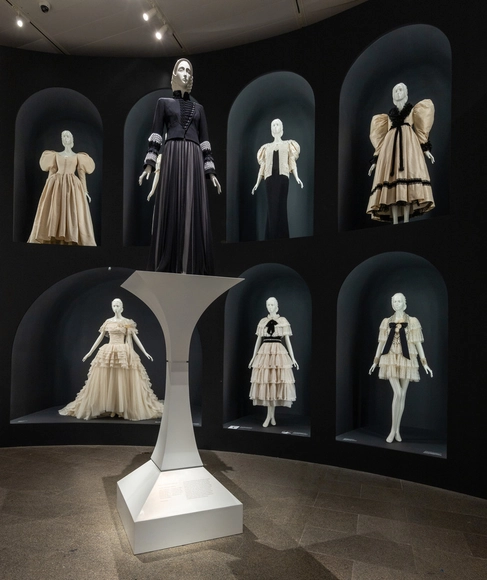
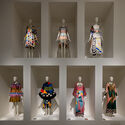
Architect Tadao Ando has been commissioned to design this year’s Costume Institute exhibition highlighting the work of Karl Lagerfeld. The opening of the exhibition titled “Karl Lagerfeld: A Line of Beauty” was marked by the world-renown Met Gala, a fundraising event attended by celebrities and personalities perceived to be culturally relevant in the fashion scene. Perceived as a thematic and conceptual essay on Lagerfeld’s work, rather than a traditional retrospective, the exhibition aims to illustrate the designer’s method of creative expression and its significance in the industry.
The term ‘Architect’ can be open to interpretation much like the reverence of an Artist. However, the universally recognized definition of the role is regarded as one who designs and plans buildings, a key member in terms of building construction. Architecture as a profession presents itself as a very diverse occupation. As an Art and Science in every sense, it offers insight into a vast range of subjects that can be applied to a range of different ventures.
Often Architecture students are offered with such a rigid path, constrained with these short-sighted ideas that an Architect must follow a particular direction to flourish in the field. When in fact it is interesting to note the vast opportunities that arise when given opportunity to diversify. Here are the Architects that have branched out and become successful fashion designers …
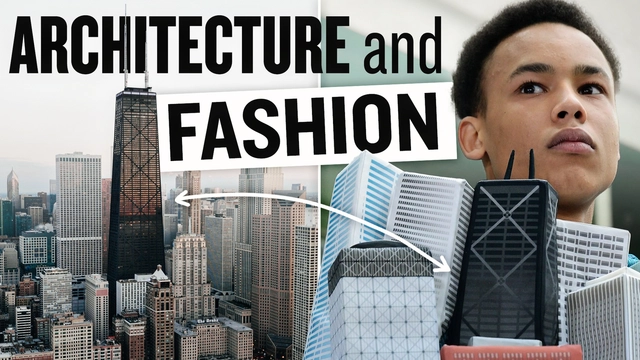
Architecture and fashion seem like unlikely bedfellows. However, in more ways than one, they are cut from the same cloth. Ancient nomadic tribes lived in shelters made of cloth and animal furs, the very same materials used for clothes. So, clothes and buildings were made from the same craftspeople. Over time, as our constructions filled the basic needs for protecting the human body, these pursuits were elevated into distinct artforms. Today, designers like Virgil Abloh, formally trained as an architect, stitch the two pursuits back together with shows that reference designs by Mies van der Rohe, or jackets filled with puffy 3D buildings. Fashion retail environments also bring space and clothes together, often in thoughtful and interesting ways. This video looks at the history of architecture and fashion and visits a fashion retail store in Chicago called Notre, designed by Norman Kelley.
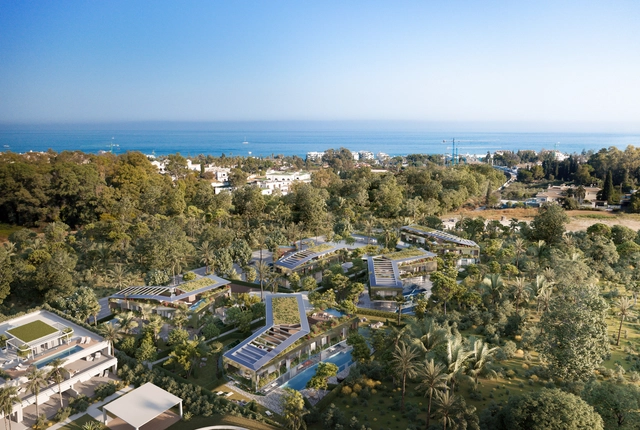
Courtesy of KARL LAGERFELD, Sierra Blanca Estates and One Atelier
During the past couple of years, luxury and fashion brands began venturing into architecture. Some built museums, foundations, and cultural organizations while others shaped residential structures that translated their identity into space. Following this same concept, KARL LAGERFELD, along with Spanish Developer Sierra Blanca Estates and the Design and Branding Firm The One Atelier, have developed the fashion house’s first “luxury architectural project”, the Karl Lagerfeld Villas in Marbella, Spain. Designed by The One Atelier, of which Andrea Boschetti is Head of Design, the project has low carbon impact, aligned with the brand’s commitment to the Fashion Pact - a global sustainability initiative that seeks to transform the fashion industry through objectives in climate, biodiversity, and ocean protection.
Asking what is “luxury architecture” and questioning why fashion brands are expanding into architecture, ArchDaily met with Andrea Boschetti to further understand the architect and urban planner’s take on the subject.
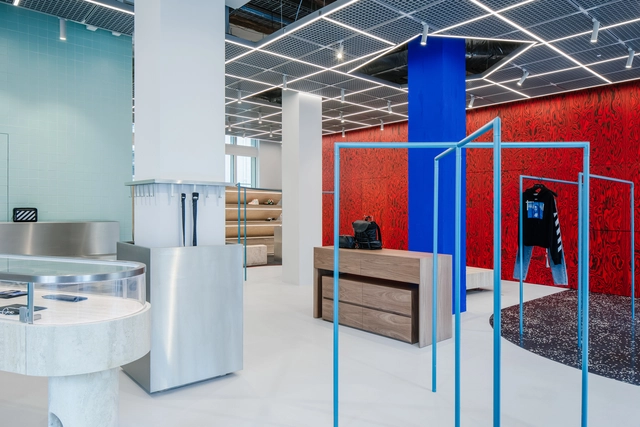
Virgil Abloh, a great American influential figure in the fashion, art, culture, design, and architecture scene, passed away at 41, after a silent battle with cancer. Known for his collaboration with AMO, especially for the Off-White Flagship Store in Miami, a brand he founded back in 2012, the trained architect was the first African-American to become the artistic director of a French luxury brand.
The news was announced on Sunday on Abloh’s official Instagram Account. The Creative Director of Louis Vuitton menswear battled a “rare, aggressive form of cancer, cardiac angiosarcoma […] privately since his diagnosis in 2019”, according to the post.
Chilean architect Smiljan Radic has designed and installed a perfectly transparent dome for Alexander McQueen's Spring / Summer 2022 fashion show earlier this week in London.