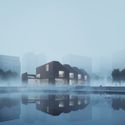
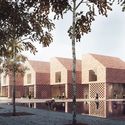
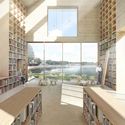
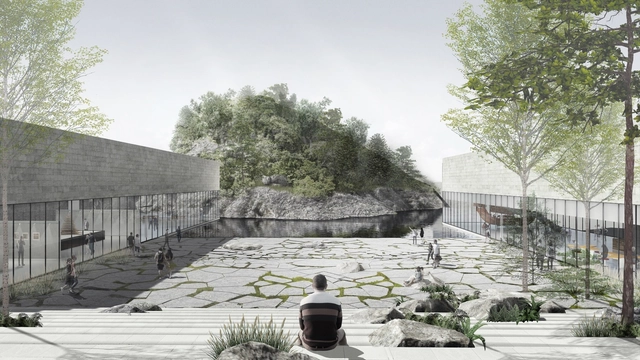
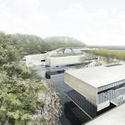
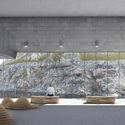
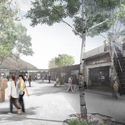
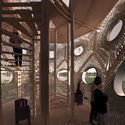
Reiulf Ramstad Arkitekter’s proposal embraces the waterfront nature of the site by introducing a stepped, sawtoothed building that interacts with the water in a way similar to the old brick factories of East London and the palaces of the upper Thames. Reflections from the water could pass through the high-transparency glass walls of the library, connecting visitors with the Southmere Lake even when indoors
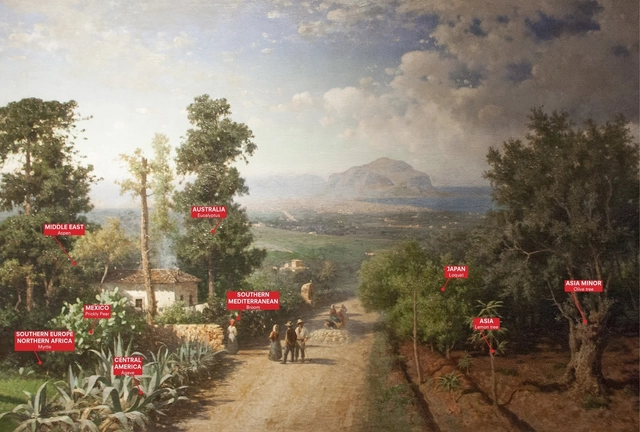
Veduta di Palermo, Francesco Lojacono, 1875; Palermo Atlas. Image Courtesy of OMA
The creative mediators of Manifesta 12 have revealed the concept for next year’s Manifesta 12 biennial in Palermo.
Entitled The Planetary Garden. Cultivating Coexistence, the concept will explore “coexistence in a world moved by invisible networks, transnational private interests, algorithmic intelligence and ever-increasing inequalities through the unique lens of Palermo – a crossroads of three continents in the heart of the Mediterranean.”
The concept was derived from an earlier analysis conducted by OMA named the Palermo Atlas, which investigated the “social, cultural and geographical textures of the city.” The event will allow visitors to visualize contemporary global transformations through the lens of Palermo.
The team of Simplex Architecture, Dongsimwon and studio201 has been selected as the winners of the Yisabu Dokdo Memorial Park International Competition. The international competition asked designers to create a new memorial and monumental park in the city of Samcheok, South Korea, that would tell the story of the voyage undertaken by legendary general Yisabu to the islands of Usanguk and Dokdo in 512 A.D. Located on a 24,600-square-meter site overlooking the Sea of Japan, the project will serve as center of education, experience and tourism while engaging the essential elements of earth and water as well as the five senses.
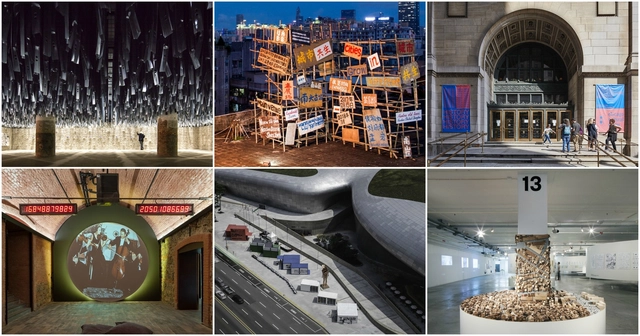
Venice? Chicago? Lisbon? Seoul? Architecture biennials, biennales, triennials, and triennales have become a vital part of the culture of modern architecture. Every two or three years, they debut new ideas, discuss popular topics, and showcase the best of what is happening in the field for both today and tomorrow. But, with the proliferation of these events in countries around the world, they can be tough to keep track of. How many are there, and when are they? ArchDaily has you covered. Below we have compiled what we believe is a comprehensive list showing the what, where, and when of the world's architecture and design biennials, triennials, and a handful of the larger yearly events. We've also included some more in-depth descriptions of a handful that have (in recent years at least) proven themselves to be big names.
New renderings released by developer Palisades have revealed the interiors of MAD Architects’ upcoming Beverly Hills residential village, the Gardenhouse.
With construction on the project well underway, the images show how the interior spaces, designed by Rottet Studio, will interact with the architecture created by MAD. Inspired by close-knit hilltop villages, the development at 8600 Wilshire Boulevard will feature 18 individual villas that look in onto a shared courtyard.
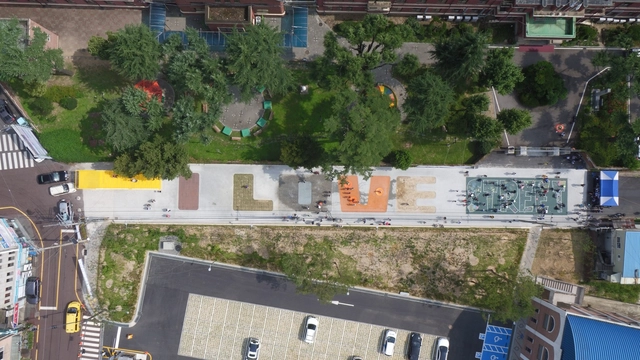
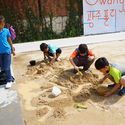
MVRDV has collaborated with Korean school children to complete a new permanent urban installation tor the third edition of the Gwangju Biennale Foundation’s Gwangju Folly Festival.
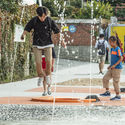
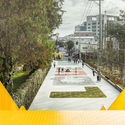
Aimed at exploring how architecture contributes to urban regeneration through both decorative and functional means, the I LOVE STREET was developed through a participatory process that asked students from Seosuk Elementary School to contribute drawings expressing their desires for the street. The end result was a graphic, sensory-stimulating design featuring zones in multitude of materials including grass, fountain, sand, wood, a trampoline and a giant chalk board.
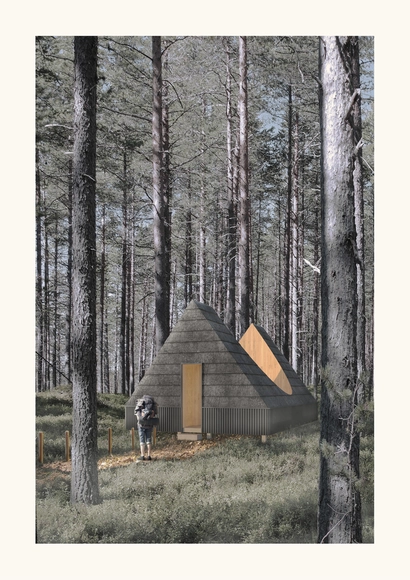
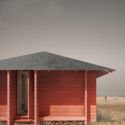
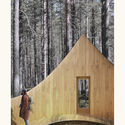
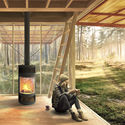
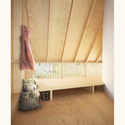
Bee Breeders have announced the winners of the Amber Road Trekking Cabins competition for the Latvian Baltic Coast. The competition sought proposals for low impact, transient and inhabitable infrastructure to support a planned hiking network along vast topographies of the Latvian Baltic Coast. The winning projects considered the various landscape elements of the site including pine trees, dunes, and white sand beaches while responding to programmatic requirements - economy, constructability, environmental sensitivity and utilitarian function.
The competition collectively provokes reflection of ecological conservation and its prescience in contemporary cultural and social practice, serving as an economic alternative to the commercialized, industrialized landscape definitive of global capital interests.
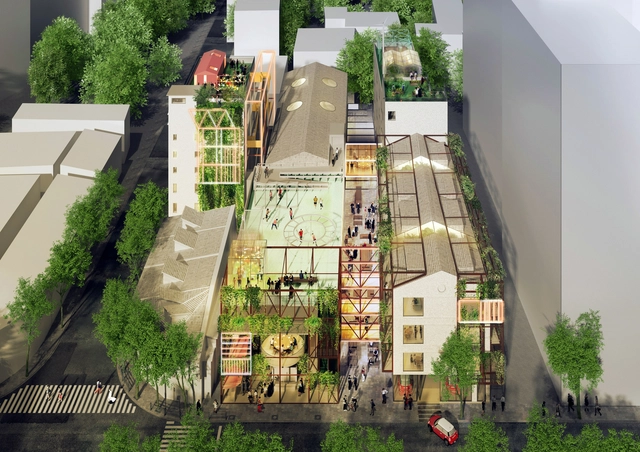
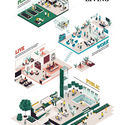
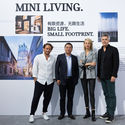
MINI LIVING has revealed plans for its first building-scale project: the transformation of a cluster of six buildings at a former paint factory in Shanghai into an mixed-use “urban hotspot” and co-living facility with space for living, working and socializing.
Partnering with Chinese project developer Nova Property Investment Co., MINI LIVING will fill the industrial shells of the existing buildings with a range of adaptable, program-rich spaces including apartments, rentable workspaces and shared-service areas that will enable “maximum personal flexibility and optimum use of space.”
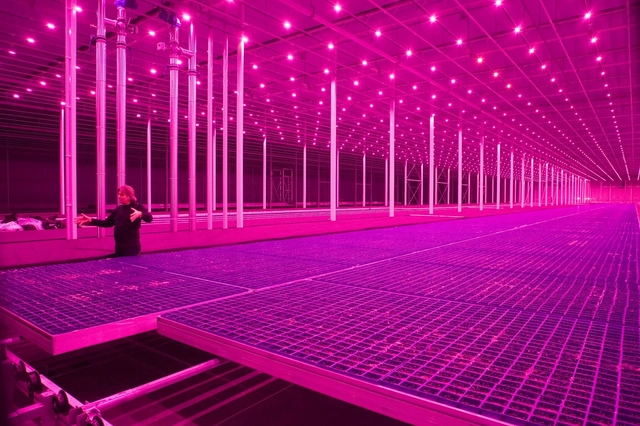
Countryside: Future of the World, a collaboration between Guggenheim and AMO / Rem Koolhaas examines radical changes transforming the non-urban landscape opens Fall 2019. Photo: Pieternel van Velden (Koppert Cress, The Netherlands 2011). Image Courtesy of Guggenheim
The Solomon R. Guggenheim Museum has announced a new research project exploring the “radical changes in the countryside, the vast nonurban areas of Earth” that will culminate in an exhibition at the museum’s Frank Lloyd Wright-designed New York home in Fall 2019.
Collaborating with Rem Koolhaas and his firm AMO, the think tank wing of OMA, the project will continue research already conducted by the Dutch architect and students from the Harvard Graduate School of Design.
In their latest issue, Rolling Stone has named Elon Musk "The Architect of Tomorrow," as well as listed architects David Benjamin and Kate Orff as two of their "25 People Shaping the Future in Tech, Science, Medicine, Activism and More."
A commitment to the environment is at the core of Fahed + Architects philosophy, so it was necessary to create a structure out of 100% recyclable material from the local waste management company, Bee’ah. The outer skin of the pavilion is a mesh of entwined bedsprings that naturally lends itself to an organic form, floating amongst the surrounding buildings.
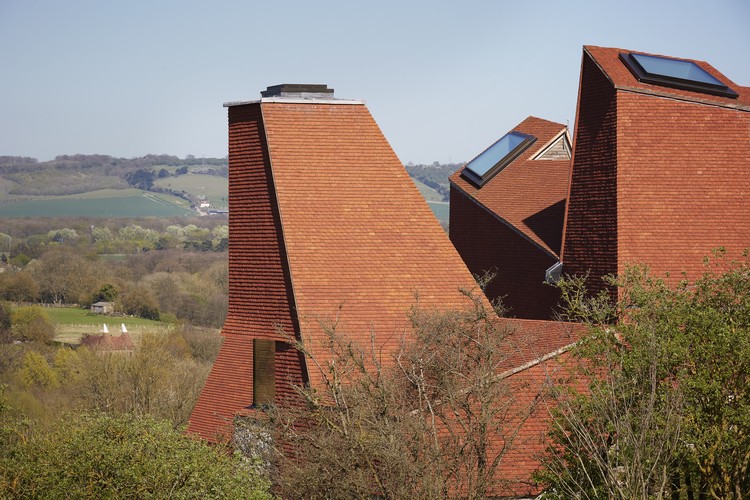
James Macdonald Wright and Niall Maxwell’s reimagining of the English country house, “Caring Wood,” has been selected as the 2017 RIBA House of the Year, bestowed annually by the Royal Institute of British Architects (RIBA) to the “best new house or house extension designed by an architect in the UK.”
Inspired by the traditional ‘oast houses’ – agricultural buildings used for kilning hops – found in the county of Kent, the house was lauded by the jury for its celebrating of local building crafts and traditions, including the use of handmade peg clay tiles, locally quarried ragstone and coppiced chestnut shingles.
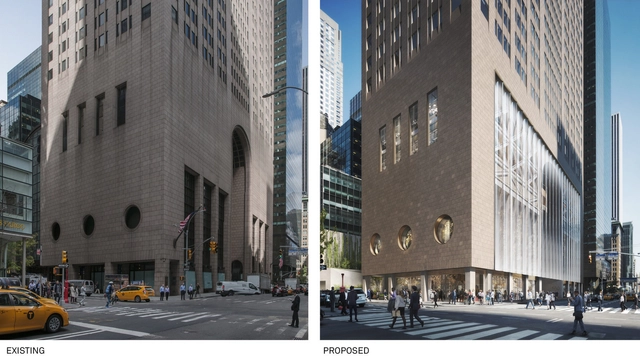
Facing plans for a major renovation that would significantly alter the street presence of the building, Philip Johnson’s Postmodern icon, 550 Madison (formerly AT&T Building) has now cleared the first stage in the process of becoming a designated New York City landmark.
Today, an application to schedule a hearing to landmark the building was approved unanimously by the city’s Landmarks and Preservation Commission (LPC). In a few months time, the LPC will hold a public forum for the building, followed by a deliberation on whether or not the tower deserves official landmark status.
Videos
Courtesy of The Supreme Committee for Delivery & Legacy
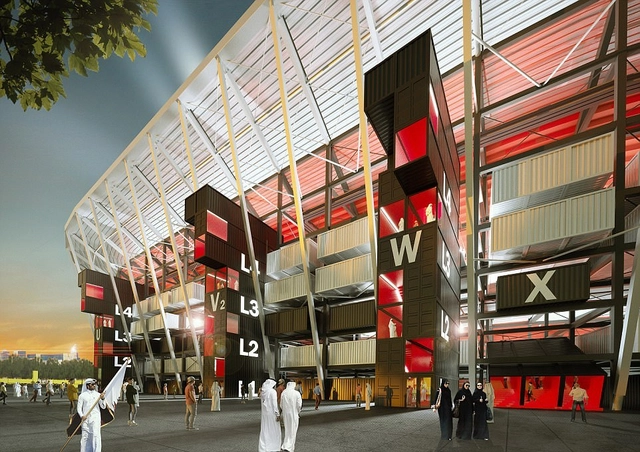
The design of the seventh stadium being constructed for the 2022 FIFA World Cup in Qatar has been revealed. Designed by Fenwick Iribarren Architects, the Ras Abu Aboud Stadium will be constructed from a series of modified shipping containers sitting within a steel framework, allowing it to be quickly assembled, disassembled and then reassembled in a new location following the conclusion of the event.
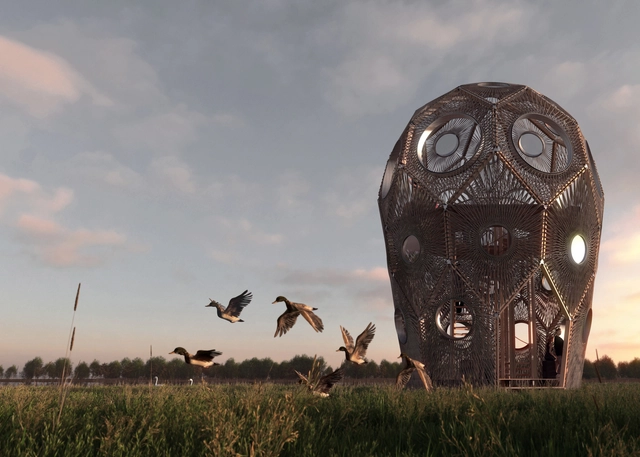
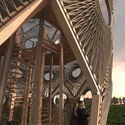
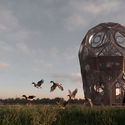
Bee Breeders have selected the winners for the Pape Bird Observation Tower competition, which saw participants submitting designs for a new bird observation station located in the Nica and Rucava Municipalities in the South Western region of Latvia. The competition is the first in a series organized by Bee Breeders in collaboration with Pasaules Dabas Fonds, Latvia's leading nature conservation fund. The competition asked for proposals for a tower that would replace a previous tower that was struck by lightening.
Herzog & de Meuron, with local firm Favre & Guth, has been selected as the winners of an international competition for the design of a new global headquarters for private banking company Lombard Odier to be located in Bellevue, Switzerland on Lake Geneva.
Responding to the competition theme of ‘One Roof,’ the design consists of a single building in which all sides are given equal prominence, with no obvious front or back. Herzog & de Meuron’s winning proposal achieves this through its glassy facade and sweeping flooplates supported by slender columns.
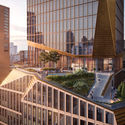
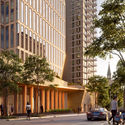
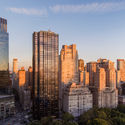
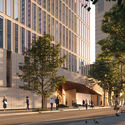
Snøhetta has unveiled the design of a new residential skyscraper to be built in Manhattan’s Upper West Side that will feature a unique, multi-level amenity terrace carved from the tower’s form. Located at 50 West 66th Street just steps from iconic New York City landmarks including Lincoln Center and Central Park, the tower aims to sensitively respond to the historic architecture of its context through its intricate form and refined material palette.
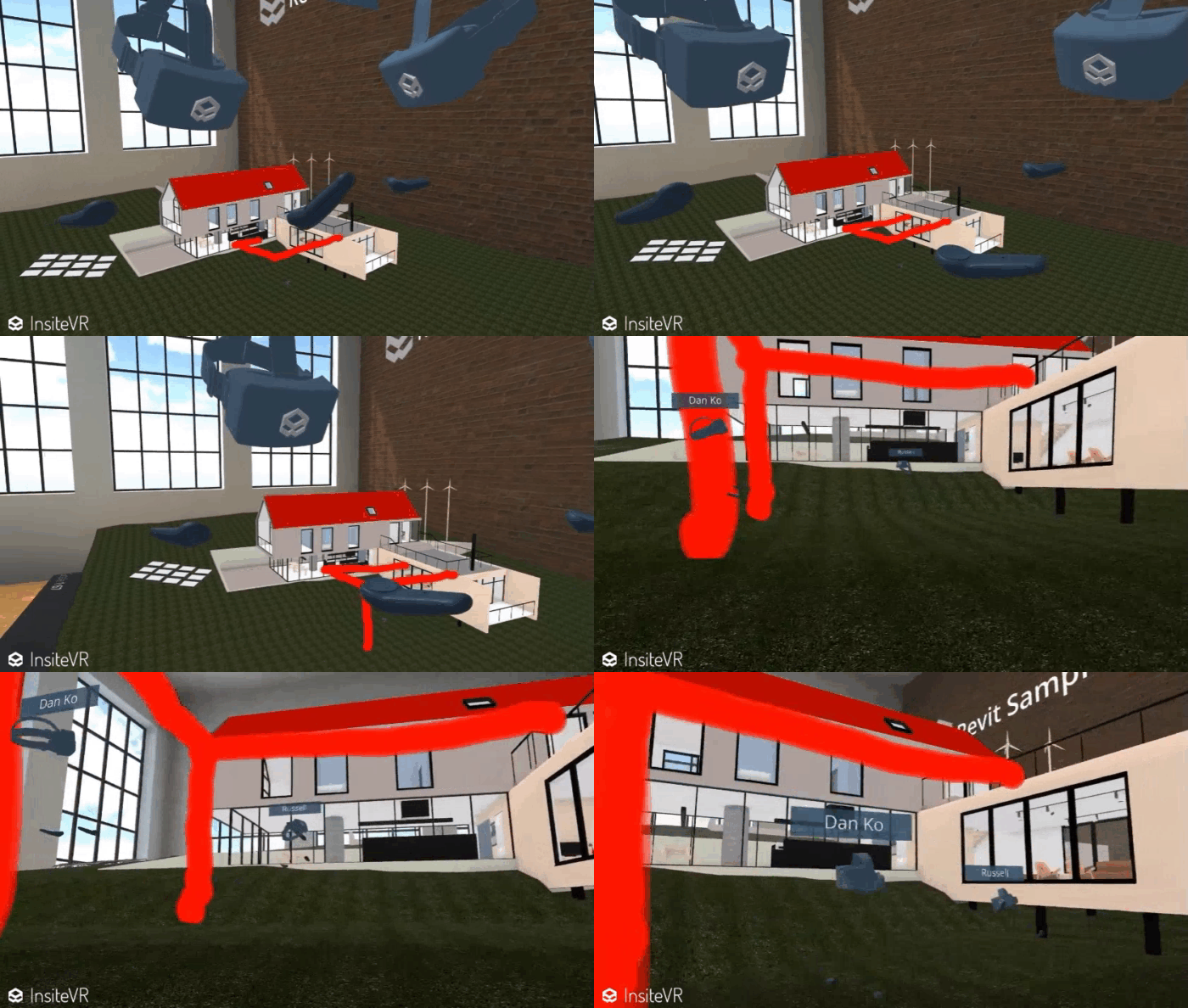
Successful communication is fundamental to the success of any project, especially in architecture and construction. The industry has moved from 2D drawings to 3D BIM with programs like SketchUp and Revit. At times, there is still a struggle to communicate in and through these 3D models. From InsiteVR comes a solution.
The newest innovation by InsiteVR is like screen sharing but for 3D. As virtual reality gets more affordable and portable, collaborative VR has the potential to be as common as a screen share meeting. Together or in separate parts of the world, InsiteVR meetings allow architecture and construction professionals to review their models in virtual reality. Features include a designated lead presenter, built in voice, collaborative markups, synchronized cloud models, scale and mute controls.