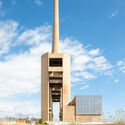
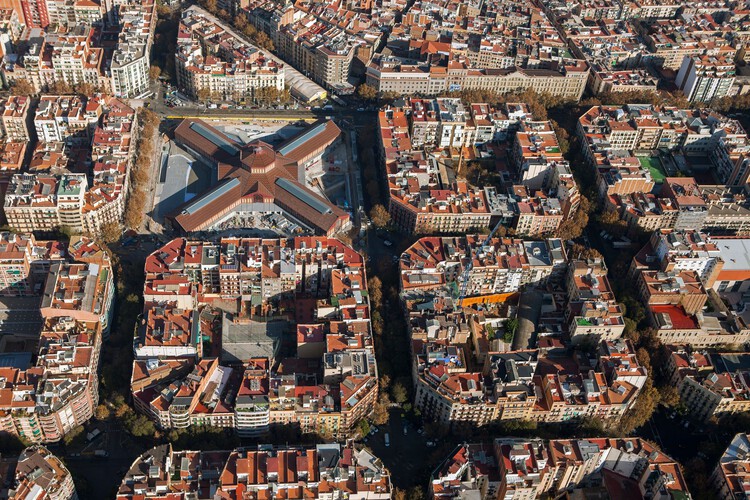
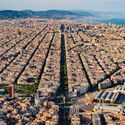
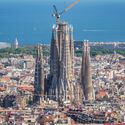
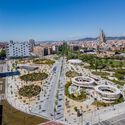
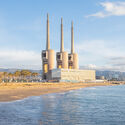
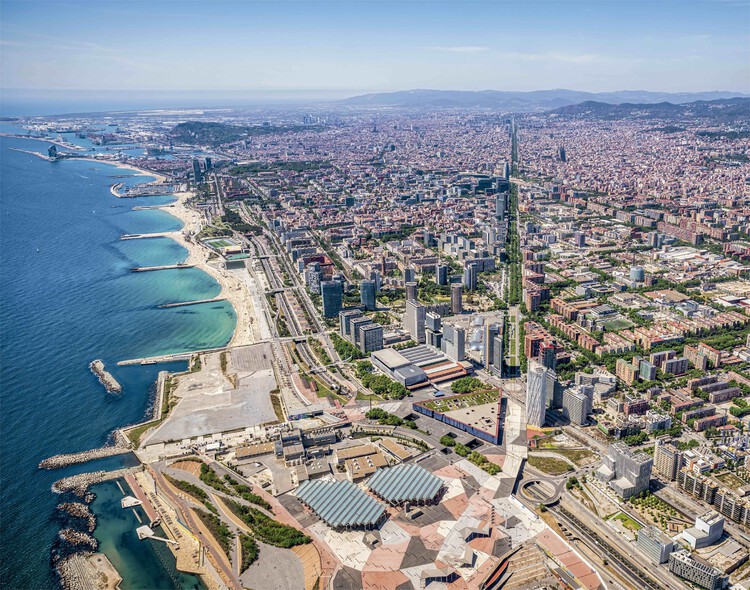
More than three decades after previously hosting the event, Barcelona is set to welcome the UIA World Congress of Architects 2026 Barcelona (UIA2026BCN), bringing the global architectural community back to the city between 28 June and 2 July 2026. Organized under the theme "Becoming. Architectures for a Planet in Transition," the Congress is expected to gather approximately 10,000 participants from over 130 countries, including practitioners, researchers, and students. Rather than being confined to a single venue, the event will unfold across multiple locations along the Mediterranean seafront, among them the Three Chimneys complex, positioning the city itself as an active platform for exchange, discussion, and public programming.
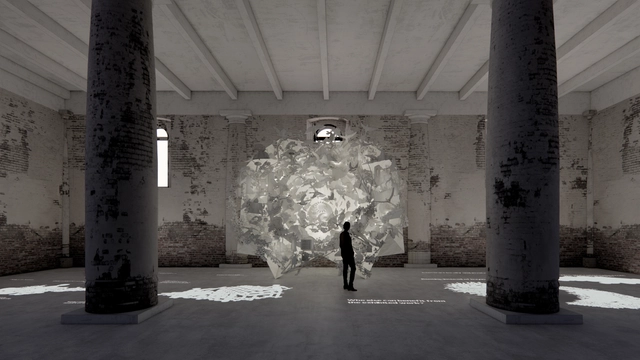
The Biennale promises to be a dynamic platform uniting over 750 participants from diverse backgrounds, including architects, engineers, mathematicians, climate scientists, and artists. Such a broad coalition of over 280 projects underlines the Exhibition's focus on inclusivity and interdisciplinary collaboration, an essential aspect for adaptation. The selection process proposed a bottom-up, open call approach through the Space for Ideas initiative, which ran between May and June 2024. It encouraged participation from global teams, from Pritzker Prize winners and Nobel laureates to emerging architects and scientists.
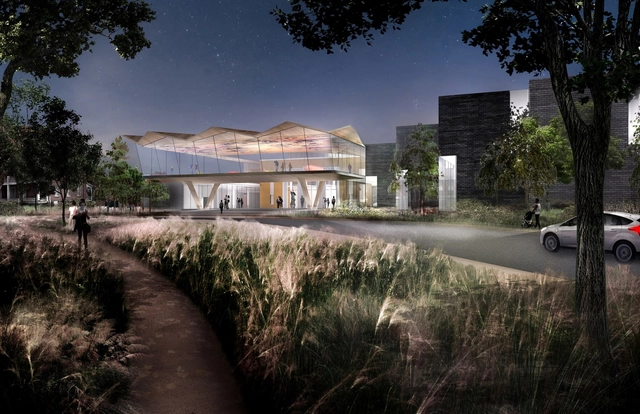
Studio Gang and SCAPE have broken ground on the new Arkansas Arts Center (AAC) in Little Rock. The current facility will be transformed, and the project includes a landscape design that will connect the AAC with the surrounding MacArthur Park. The project was made to embrace the Arkansas Arts Center’s history and create a contemporary space for the future.
Videos
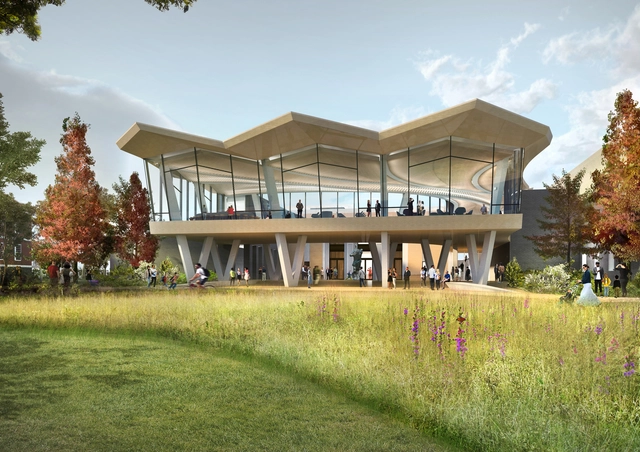
New North Entry from Crescent Drive. Image Courtesy of Studio Gang
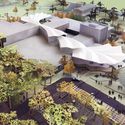
Studio Gang has revealed the design of their $70 Million expansion of the Arkansas Arts Center, located in historic MacArthur Park in the state capital of Little Rock. Working with associate architects Polk Stanley Wilcox and landscape architecture firm SCAPE, Studio Gang has envisioned a sweeping roof structure that will connect the existing architecturally disparate museum pavilions into a cohesive whole.
In their latest issue, Rolling Stone has named Elon Musk "The Architect of Tomorrow," as well as listed architects David Benjamin and Kate Orff as two of their "25 People Shaping the Future in Tech, Science, Medicine, Activism and More."
The MacArthur Foundation has announced the 24 recipients of their 2017 MacArthur Fellowships Grants (sometimes referred to as ‘Genius’ Grants), and for the first time since 2011, the list includes individuals from architectural fields: urban planner and designer Damon Rich and landscape architect Kate Orff.
Established in 1981, the grants are awarded annually “to encourage people of outstanding talent to pursue their own creative, intellectual, and professional inclinations.” This year’s fellowships come with a $625,000, no-strings-attached stipend for individual pursuits.
The Gowanus Canal is one of America’s most polluted waterways, and its location in the New York Harbor made it one of the many places that were effected by flooding as a result of Hurricane Irene. If that isn’t enough to think about, last year the EPA declared the Gowanus Canal as a Superfund site, “As a result of years of discharges, storm water runoff, sewer outflows and industrial pollutants, the Gowanus Canal has become one of the nation’s most extensively contaminated water bodies. Contaminants include PCBs, coal tar wastes, heavy metals and volatile organics. The contamination poses a threat to the nearby residents who use the canal for fishing and recreation.”
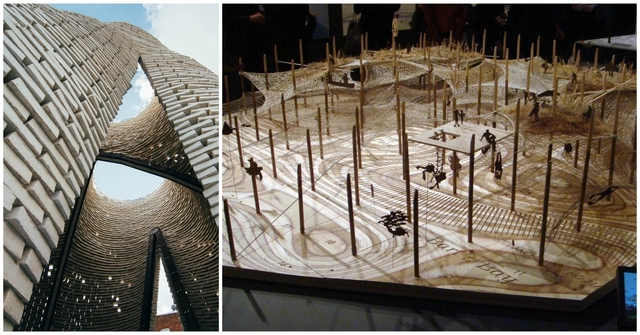
Rising Currents, an exhibit that was featured at the MoMA just last year, was a cohesive showcase of five projects tackling the lingering truth that within a few years, the waterfront of the New York harbor will drastically change. We highlighted Zone 0 earlier this week, comprised of ARO and dlandstudio, they specifically took a look at the lower Manhattan landscape, proposing to develop a new soft and hard infrastructure solution paved with a mesh of cast concrete and engineered soil and salt tolerant plants.
Zone 4, or Oyster-Tecture by Kate Orff, dealt directly with the highly polluted Gowanus Canal. We shared with you Orff’s TEDTalk on Oyster-Tecture back in Februrary, and feel like it is a subject worth revisiting. Eastern oysters being her focus, she shares how the oyster can improve water quality as a natural bio filter. Blending urbanism and ecology she proposes an oyster reef for the Gowanus Canal and Governors Island, an accessible idea that can be implemented immediately. A further description about Zone 4 Oyster-Tecture following the break.
Kate Orff shares her vision of ‘oyster-tecture’ utilizing oysters as an agent for urban change. Focusing on the New York Harbor, Orff, architect and founding principal of Manhattan based studio SCAPE, demonstrates how we can rethink our landscapes, both the green and blue spaces, linking nature and humanity for mutual benefit.