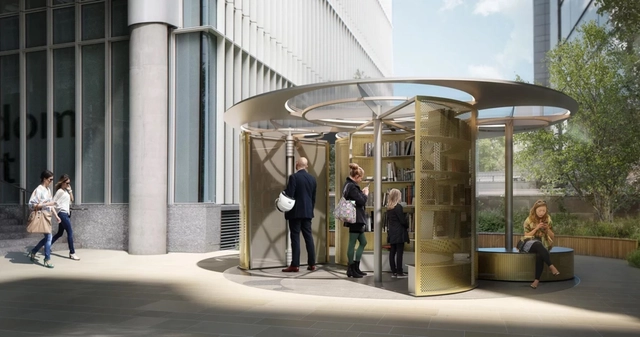
Celebrating Paddington Central’s first year as a Design Route at the London Design Festival, the design practice Snøhetta created a rotating book pavilion for British Land. Snøhetta wanted to create a project that would reimagine the traditional principles of a library through a mechanized pavilion that generates varied spatial types. Designed for visitors to immerse themselves into a world of books, the pavilion encourages exploration, interaction and reflection.
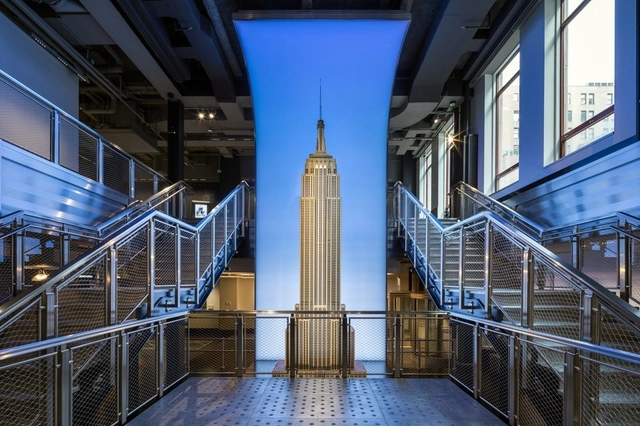
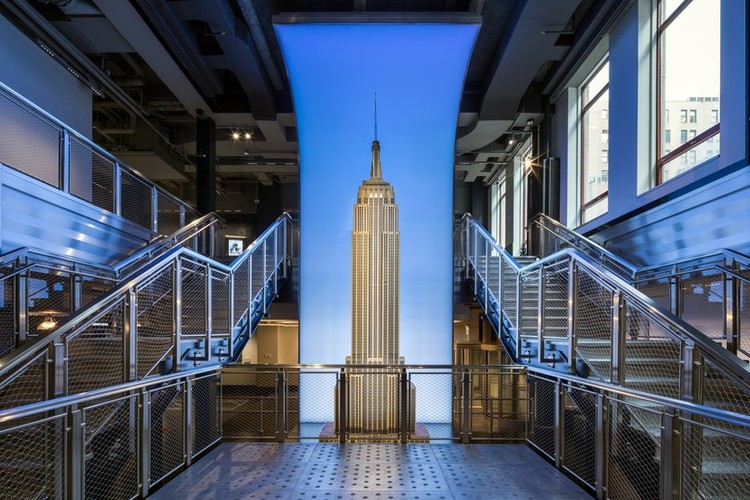
As part of the first phase in an extensive rebuilding project, the Empire State Building Observatories have a newly renovated entrance. Created by a team of architects and designers, the renovation aimed to transform visitor experience of the Art Deco skyscraper and its history. The 34th Street entrance was renovated for better flow, and to showcase a technology-driven lobby space. The project is the first in a multi-part rebuilding of the tower, which will be completed by late 2019 and include both digital hosts and a new lighting ceremony installation.
While cemeteries have long served as a place in which we can honor and remember our loved ones, they are also often places that showcase architecture, and landscape design. In the late 19th century, cemeteries evolved from overcrowded and unsanitary urban spaces into rural, park-like social centers. In cities that lacked public parks, cemeteries became popular destinations for picnics, holidays, and other family gatherings.
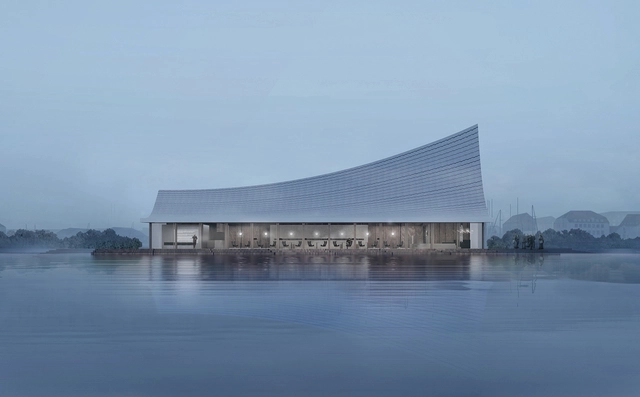
With 486 applicants and 249 conceptual plans received, MUDA-Architects stood out from the 20 finalists and won the first prize in "The Most Beautiful Bookstore in Chengdu" competition. The competition was sponsored by the Chengdu Tianfu New Area Investment Group, China Southwest Architectural Design and Research Institute, and co-sponsored by Chengdu Yi Zhu Yi Shi Culture Communication Ltd.
The Barbican, London’s iconic Brutalist estate designed by Chamberlin, Powell and Bon Architects, has launched a range of jewelry and homeware designed by creative studio Tom Pigeon, paying tribute to the vibrant aesthetic which put the scheme on London’s architectural map.
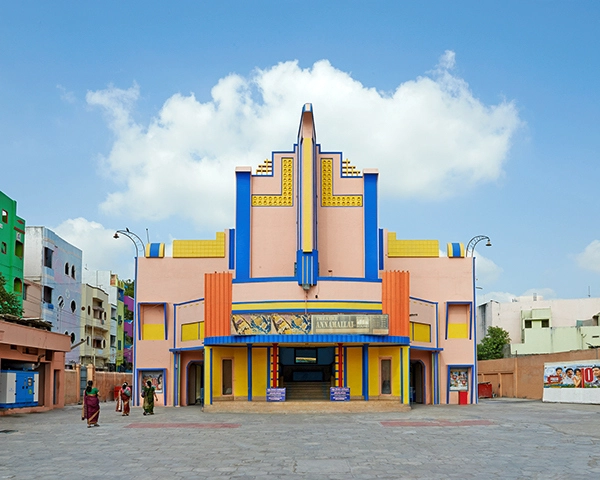
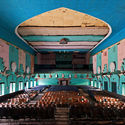
Photographer Stefanie Zoche of Haubitz-Zoche has captured a series of vibrant images showcasing the “hybrid modernist” movie theaters of Southern India. The images below, also available on the artist’s website, capture the large number of cinemas built in both rural and urban areas of South India in the 1950s, 60s, and 70s, all conveying an “unconventional mix of local building styles and Western influences."
As Zoche describes, the colorful facades, “suggestive of theatrical sets, provide a foretaste of the cinematic experience in the hall itself, in which extravagant shapes and ornamentation are continued and put the viewer in the right mood for the cinematic world before the screening itself.”
Following up on the AIA's recent update of guidelines regarding school safety, architect Jay Brotman, designer of the new Sandy Hook Elementary School, testified in front of the US Department of Education this week to urge the government to adopt safer standards for design. While not unheard of, it is not typical for architects to stand in front of Congress.
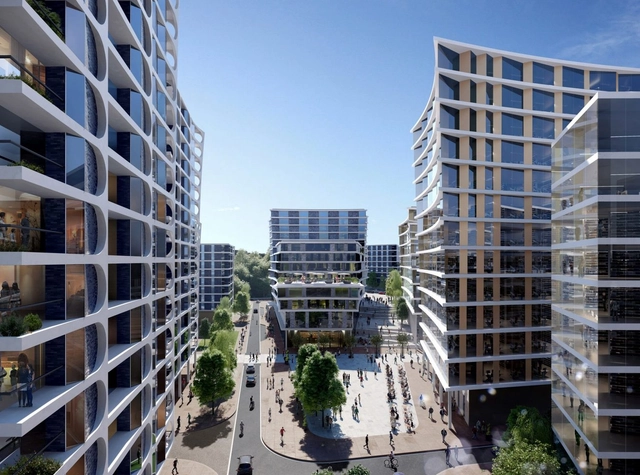
Temple Island Development. Image Courtesy of Zaha Hadid Architects
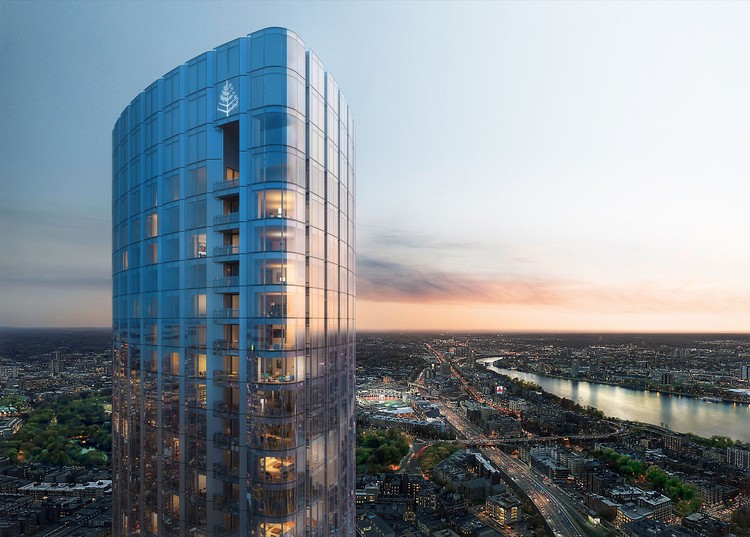
The Bristol Arena site faces yet another turn of events, as Zaha Hadid Architects and property investor Legal & General have released plans for a large housing development next to Temples Meads Station. The site is one of two proposed locations for the Bristol Arena, a project on hold for more than 15 years as Bristol City Council continues to debate its location. The proposal by Zaha Hadid Architects would include office blocks, a 345 room hotel, conference center and over 500 homes.
While most city planning portals are already freely accessible to the public, the new interface of the “NYC Active Major Construction” map presents detailed information in a clean, fast, user-friendly manner, giving architects and residents-alike a deeper insight into construction trends in what Bjarke Ingels refers to as “a capital of the world.”
https://www.archdaily.com/900753/explore-every-construction-project-in-new-york-city-with-this-new-interactive-mapNiall Patrick Walsh
Oslo councilors have voted to halt the Snøhetta-designed “A House to Die In,” located in the grounds of painter Edward Munch’s former house and workshop in western Oslo. The recent vote, reported by Norwegian newspaper The Local would appear to put an end to the 8-year collaborative process between Snøhetta and Norwegian artist Bjarne Melgaard.
As August draws to a close and our holidays - be they from work or school - already start to feel like distant memories, perhaps it's a good moment to reflect on our faith in what we do. Sometimes design affords us the ability to oversee massive and exciting change. Sometimes projects don't work out, despite our best efforts. And sometimes, design isn't as capable of making change as we believe it to be. This week's stories touched on our faith in design in a range of ways, from the literal (such as the bright churches of Kerala) to the more abstract (how much good taste in fast food design actually equates to good tastes.) Read on for this week's review.
As the demand of a sustainable lifestyle increases, cities are trying to find strategies to create environmentally friendly communities. From passive designs to recycled materials, architects are turning their attention to climate change and trying to find solutions through architecture and design.
The Zero Emission Neighborhood is an eco-village concept proposed by Architecture for Humans in the city of Pristina, Kosovo. The concept ensures optimum sustainability for the entire community through “zero emission” buildings, passive design strategies, active solar systems, and energy efficient appliances.
Videos
Shanghai Planetarium. Image Courtesy of Ennead Architects
Taking to the skies, Ennead Architects have released drone footage of the construction progress on their Shanghai Planetarium project. First revealed back in 2016, the 38,000-square-meter planetarium will be one of the largest in the world. By early June, nearly 85 percent of civil construction has been completed, and a new milestone was reached as temporary braces were removed with the 2,000-ton cantilever structure. The drone footage showcases the museum design and the construction process that's bringing it to life.
The existing Oakland-Alameda County Coliseum. Image via BIG
The Oakland Athletics baseball team have hired Bjarke Ingels Group (BIG), James Corner Field Operations, and Gensler to lead the design process for their new ballpark and surrounding development in California. The new stadium will replace the Oakland A’s existing 51-year-old Oakland-Alameda County Coliseum, which the A’s share with the Oakland Raiders football team.
It has been reported by the San Francisco Business Times that BIG will lead the masterplan for the privately-financed ballpark, either at Howard Terminal or near the existing stadium, while Gensler will collaborate on the ballpark design. Field Operations will adopt the role of landscape architect for the development.
https://www.archdaily.com/900688/big-gensler-and-james-corner-field-operations-to-design-new-stadium-for-oakland-athletics-baseball-teamNiall Patrick Walsh
More than 500 years after it was built, Filippo Brunelleschi's dome of Santa Maria del Fiore in Florence, Italy, remains the largest masonry dome ever built. But the dome's construction methods are still a secret, as no plans or sketches have been discovered. The only clue Brunelleschi left behind was a wooden and brick model. While the dome has been plagued by cracks for centuries, new breakthroughs in muon imaging may help preservationists uncover how to save the iconic structure and reveal new ideas on its construction.
The scheme, already under construction, has been described by the incoming president as a “bottomless pit” and that “the plan is to provide the Mexican people all the relevant information, truthfully and objectively, so that we can all decide together on this important matter of national interest.”
https://www.archdaily.com/900642/future-of-foster-plus-partners-mexico-city-international-airport-to-be-decided-by-public-voteNiall Patrick Walsh
Community Performing Arts Center. Image Courtesy of SHoP Architects
The New York practice SHoP Architects has been selected to design the Upper Harbor Terminal Community Performing Arts Center (CPAC) in Minneapolis, Minnesota. Sited on the Mississippi River waterfront, the center will be designed for First Avenue Productions as a year-round epicenter for live music and entertainment. SHoP's design aims to engage the community and its context to embrace the musical and cultural legacy of North Minneapolis.






































.jpg?1534967755&format=webp&width=640&height=580)
.jpg?1534967855 "Courtesy of Architecture for Humans")
.jpg?1534967980 "Courtesy of Architecture for Humans")
.jpg?1534967837 "Courtesy of Architecture for Humans")
.jpg?1534967825 "Courtesy of Architecture for Humans")
.jpg?1534967755)