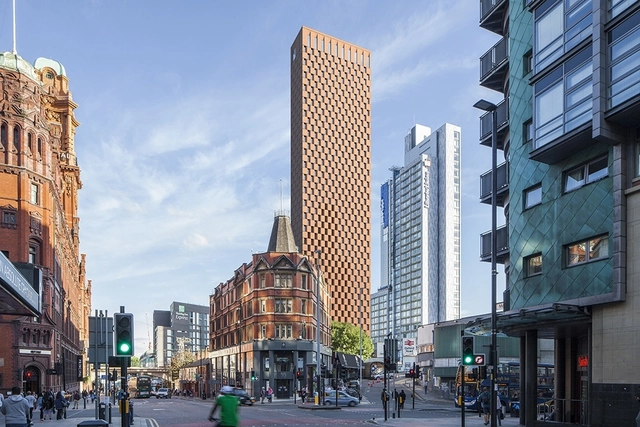
Housing developer Student Castle has partnered with Glenn Howells Architects to create a 55-story red brick tower in Manchester city center. Built to include 850 rooms and co-working space for students and start-up businesses, the new skyscraper would overlook Oxford Road station next to Great Marlborough Street tower. Glenn Howells says the scheme pays homage to the red brick chimneys that once dominated the city’s skyline.
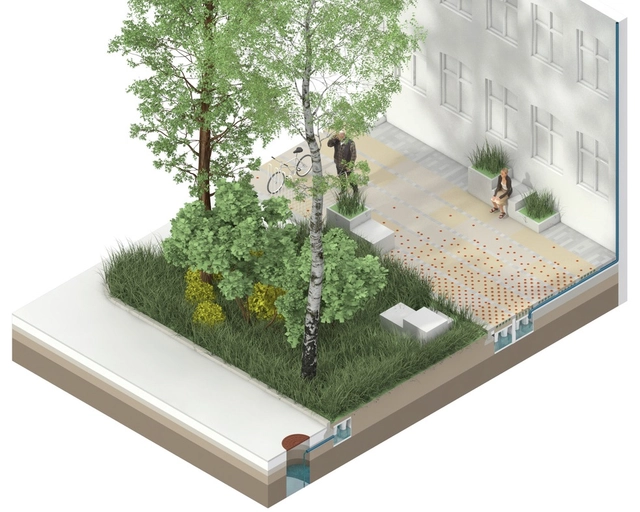
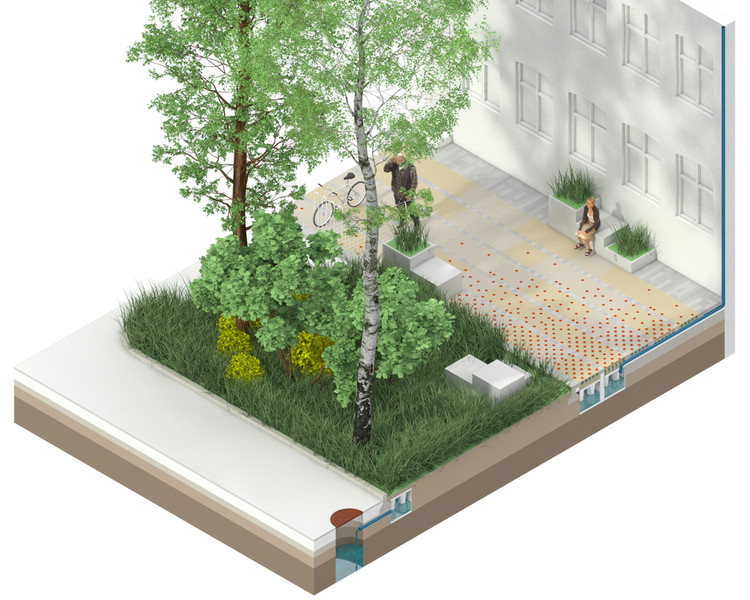
The Climate Tile is a pilot project designed to catch and redirect 30% of the projected extra rainwater coming due to climate change. Created by THIRD NATURE with IBF and ACO Nordic, the project will be inaugurated on a 50m pavement stretch at Nørrebro in Copenhagen. The first sidewalk was created as an innovative climate project that utilizes the Climate Tile to create a beautiful and adaptable cityscape. Aimed at densely populated cities, the tile handles water through a technical system that treats water as a valuable resource.
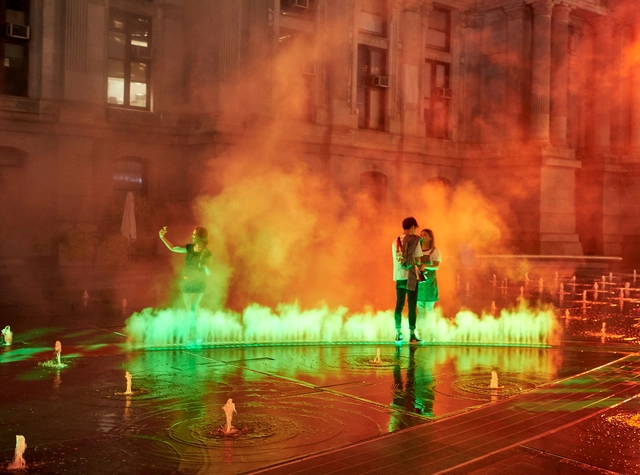
Artist Janet Echelman has unveiled her latest site-specific work of public art, with the activation of the first phase of “Pulse” in Philadelphia’s Dilworth Park. Pulse seeks to reshape urban space “with a monumental, fluidly moving sculpture that responds to environmental forces including wind, water, and sunlight.
Inspired by the square’s history as a water and transportation hub, Echelman’s work traces the paths and trolley lines of the subway beneath, with four-foot-tall curtains of colorful atomized mist traveling across the park’s fountain surface in response to passing trains underneath.
Randy’s Donuts shop and sign (a “decorated shed”) by Extra Medium (CC BY 2.0). Image via 99 Percent Invisible
Though the Las Vegas Strip may be garish to some, with its borderline intrusive décor and “pseudo-historical” architecture, some professional architects, most notably Robert Venturi and Denise Scott-Brown, have become captivated by the “ornamental-symbolic elements” the buildings present. The two architects developed the curious design distinction between a “duck” and a “decorated shed”, depending on the building’s decorative form. In his essay for 99% Invisible, Lessons from Sin City: The Architecture of “Ducks” versus “Decorated Sheds”, Kurt Kohlstedt explores how the architects implemented their knowledge of ornamentation in their own works and began an architectural debate still ongoing today.
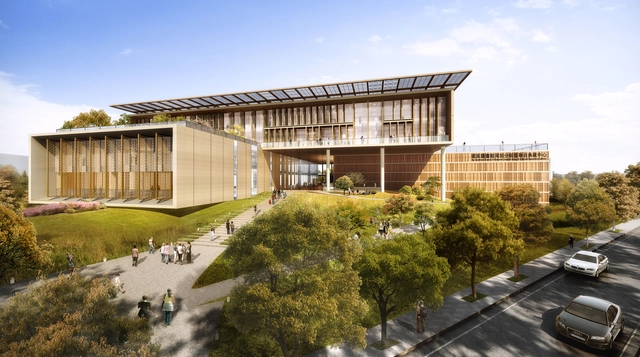
Taiwan National Library. Image Courtesy of BAF and Carlo Ratti
Bio-Architecture Formosana (BAF) together with Carlo Ratti Associatti have won the international competition for the Southern branch of the Taiwan National Library and Repository in Tainan, Taiwan. With the concept of "Library as a Town", the team created a proposal for a new public building that will accommodate a library, book museum and a joint archives center. Selected among nine competitors, the winning design will be placed in the southern part of Taiwan in the XinYing District. The proposal is made to investigate the role of the library in the future.
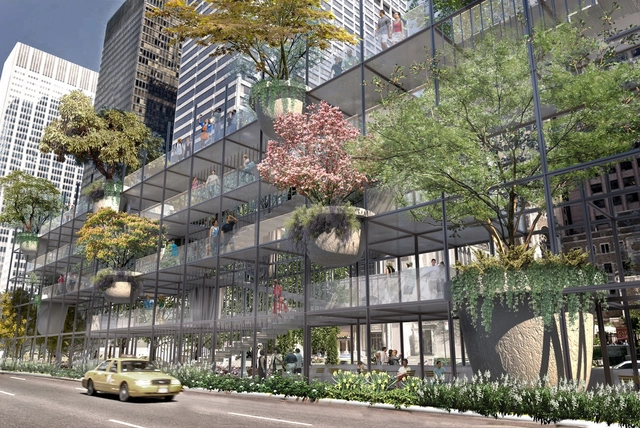
Studio JCW have created a proposal to revitalize the medians of Park Avenue in New York City. Founded by Chanon Wangkachonkait and Jaehong Chung, Studio JCW argues that Park Avenue’s medians have been a fixture on the boulevard for more than a century. Their Big Shelf proposal would create elevated public spaces within a grid structure for expanded programming. The design was made to echo the structural facades of surrounding skyscrapers and building grids.
Sir David Adjaye has been selected as design architect for the new Princeton University Art Museum. Working in collaboration with executive architect Cooper Robertson, Adjaye will engage with the design of a “cultural gateway” located on the museum’s current site at the center of Princeton’s campus.
The new museum will present “dramatically enlarged space” to exhibit and showcase the institution’s extensive collections, as well as classrooms and office space for 100 staff.
https://www.archdaily.com/902332/sir-david-adjaye-will-design-princeton-art-museum-to-be-a-place-of-mind-opening-encounterNiall Patrick Walsh
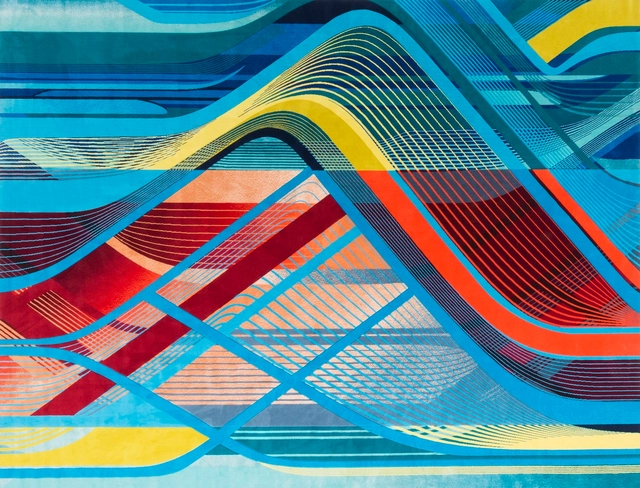
The four themes consist of striated lines, ribbonlike projections, pixelated landscapes, and organic cellular shapes. Each pattern captures “Hadid’s signature use of interweaving, layering and play with light and shadow.”
https://www.archdaily.com/902339/zaha-hadid-architects-presents-interweaving-carpet-collection-for-royal-thai-during-london-design-festival-2018Niall Patrick Walsh
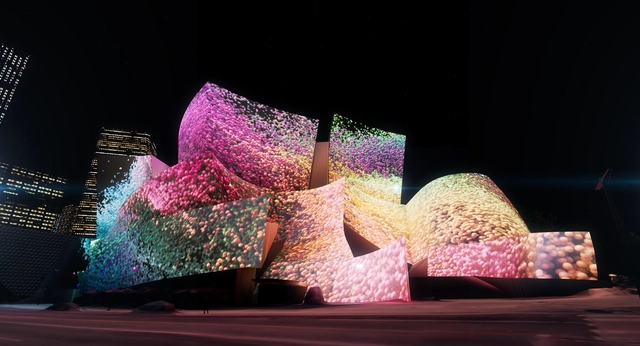
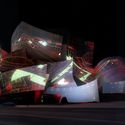
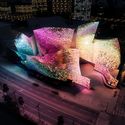
The Walt Disney Concert Hall is set to be transformed through digital art projections by media artist Refik Anadol and Google Arts & Culture. Created for the Los Angeles Philharmonic's centennial, the light show will be made through deep neural network connections projected as light. Designed for WDCH Dreams, the digital projections draw together the L.A.Philharmonic orchestra’s digital archives and translate them into data points.
Opening its doors last fall, Princeton University's Lewis Arts Complex by Steven Holl Architects and BNIM created a new campus gateway and state-of-the-art facilities for the arts. Expanding performance, rehearsal and teaching spaces, the complex has now been featured in a video directed by Spirit of Space. The footage shows how the building was designed to shape campus space while maximizing porosity and movement. Welcoming its second year of students, the complex is made to take the arts at Princeton to even greater heights.
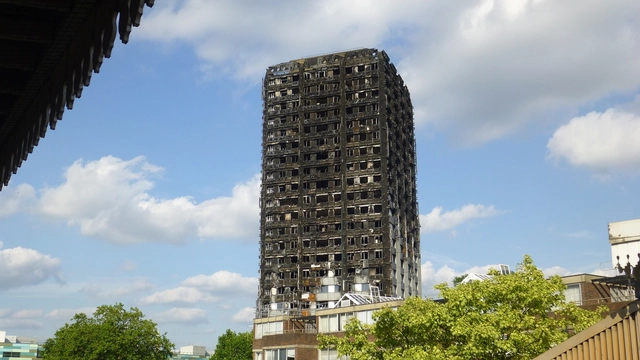
Following the Grenfell Tower fire in June 2017, which claimed 72 lives, the RIBA has launched a consultation for a new “Plan of Work for Fire Safety.”
Having consistently called for changes to building regulations in the wake of the tragedy, the organization has produced the document in response to Dame Judith Hackitt’s Independent Review of Building Regulations and Fire Safety, and her call for “greater transparency, accountability, and collaboration” from the industry.
https://www.archdaily.com/902265/riba-plan-of-work-for-fire-safety-announced-in-the-wake-of-grenfell-and-mackintosh-disastersNiall Patrick Walsh
Austria Pavilion. Image Courtesy of Querkraft Architekten
The Viennese architecture office Querkraft has been selected to design the Austrian Pavilion for Expo 2020 Dubai. The design combines traditional building materials with modern techniques to present Austria as a center of innovation. Former Federal Minister Beatrix Karl was appointed honorary commissioner for the world expo and will represent Austria externally. The Expo in Dubai will be the first world exhibition in an Arab country in the 170-year Expo history. The Austrian Pavilion will center on questions of how resources can be used more thoughtfully and respectfully in the future.
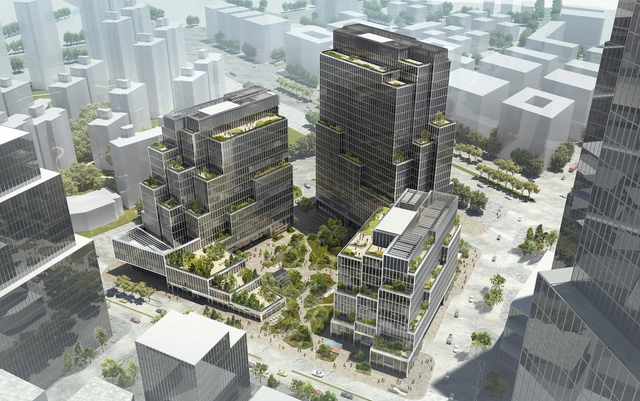
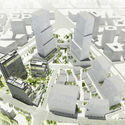
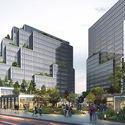
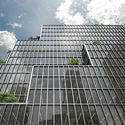
Henning Larsen have created a new proposal for The Springs, an urban oasis designed for Shanghai. Inspired by shan shui, a traditional form of Chinese landscape painting, the project is developed for Tishman-Speyer to evoke the mountain landscapes found throughout rural China. The project will mirror the mountain landscape with tall, terraced towers around a green public square. Made to create workspaces for creative industries, the three buildings will provide wide provide flexible workspace and common areas in the city center.
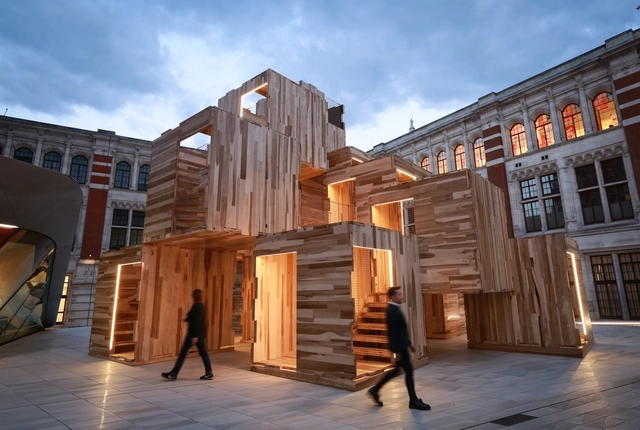
The 2018 London Design Festival is now underway, having returned for its 16th year. Running from 15th to 23rd September, and spread across the city, the Festival features works such as Snøhetta’s rotating book pavilion and a series of installations at the V&A celebrating the venue’s 10th year as the Festival’s official hub.
Below, we have compiled a list of collaborations to look out for throughout the week, including investigations into issues such as climate change and plastic pollution, and artistic themes such as Cubism and classical music.
https://www.archdaily.com/902215/7-installations-to-watch-out-for-at-the-2018-london-design-festivalNiall Patrick Walsh
Earlier this month, we published the results of DesignIntelligence’s annual ranking of U.S. architecture schools, listing the top Undergraduate and Graduate schools for 2019. Using feedback from architecture and interior design professionals, the full analysis delves deeper than a generic “Most Admired Architecture Schools” list, and instead breaks the rankings down into twelve categories, focusing on technology, design theory, and more.
Free and open to the public, the full list on DesignIntelligence’s website offers comprehensive top-10 listings at both Undergraduate and Graduate level across the twelve categories, attained from surveys from approximately 6000 professionals, 360 academics, and 5500 students. Below, we have summarized the findings in a top-5 format, with the full listings ready to be explored on the official website here.
https://www.archdaily.com/902205/a-definitive-list-of-the-best-us-architecture-schools-2019Niall Patrick Walsh
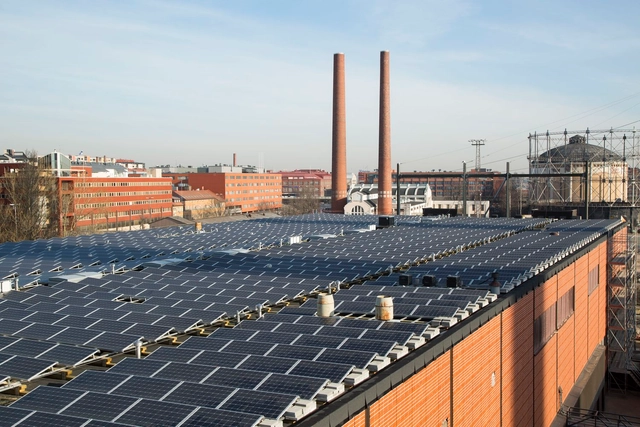
Helen’s Suvilahti solar power plant. Customers can lease panels and monitor their output in real time on the power plant’s webpage. Thus citizens can become solar power producers. In the background is the old Suvilahti power plant, today a cultural center. Photo attribution: Katri Tamminen / Helen
In the quest for carbon neutrality, the City of Helsinki in Finland announced its action plans to minimize greenhouse gas emissions substantially by 2035. The city’s fully owned energy company, Helen Ltd, a producer of district heating, power, and district cooling, aims to augment this policy by converting its largely coal and natural gas energy production processes to climate-neutral energy production, thereby eliminating carbon dioxide emissions fully by 2050.

















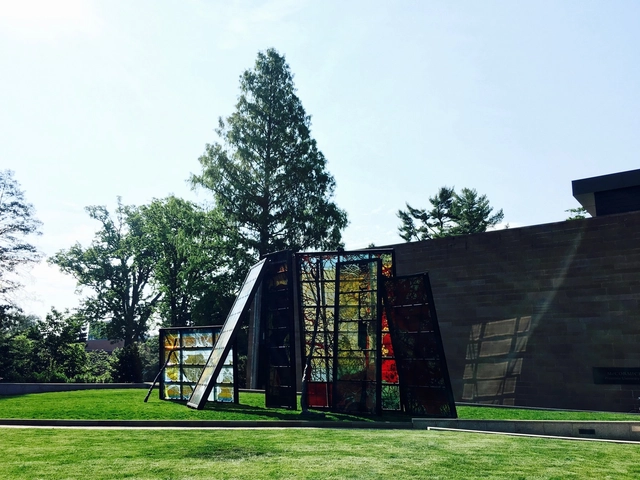




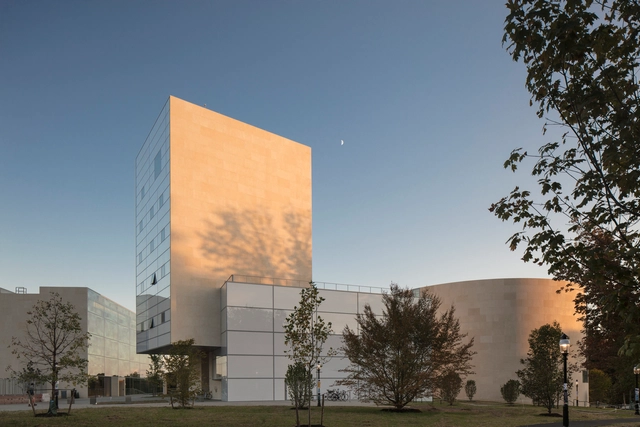
PaulWarchol.jpg?1537282894 "Lewis Arts Complex, Princeton University. Image © Paul Warchol")
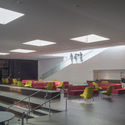
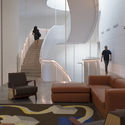


querkraft-bagienski.jpg?1537196954&format=webp&width=640&height=580)
querkraft-bagienski.jpg?1537197015 "Austria Pavilion. Image Courtesy of Querkraft Architekten")
querkraft.jpg?1537196980 "Austria Pavilion. Image Courtesy of Querkraft Architekten")
querkraft.jpg?1537196968 "Austria Pavilion. Image Courtesy of Querkraft Architekten")
querkraft.jpg?1537197037 "Austria Pavilion. Image Courtesy of Querkraft Architekten")
querkraft-bagienski.jpg?1537196954)

.jpg?1537176629&format=webp&width=640&height=580)