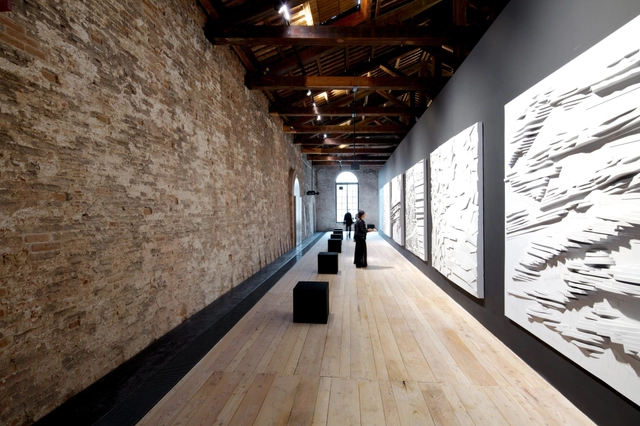
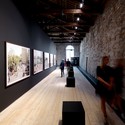
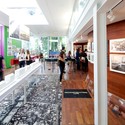
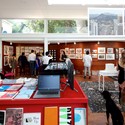
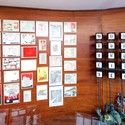
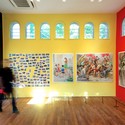
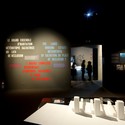
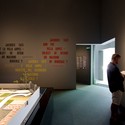
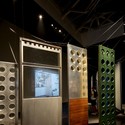
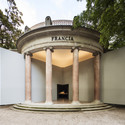
From the Curators. Rather than conducting a historical account of modern epoch in Turkey, presenting an exhaustive catalogue, or trying to capture its unique local attributes, “Places of Memory” attempts to explore the main theme of the biennial via perceptions and experiences.
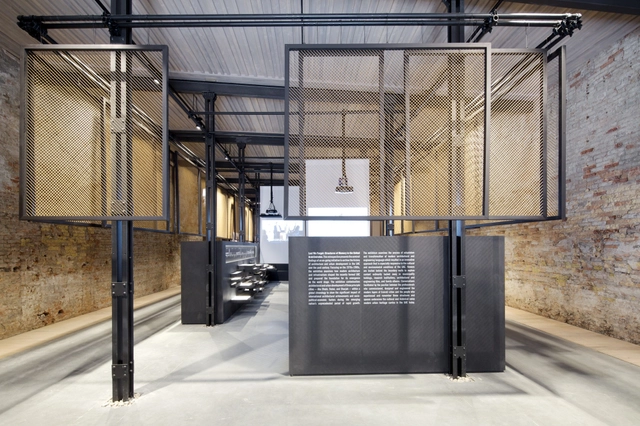
From the Curators. Responding to the theme ‘Absorbing Modernity: 1914-2014’ set by the curator of the 14th International Architecture Exhibition, Rem Koolhaas, ‘Lest We Forget: Structures of Memory in the United Arab Emirates,’ presents the seminal findings of a larger initiative to archive the history of architectural and urban development in the UAE over the past century. With a concentrated emphasis on the 1970s-1980s, the exhibition examines how public and residential architecture, built within a rapidly expanding urban context, shaped the newly established federation and prepared the foundation for its emergence on a global stage.
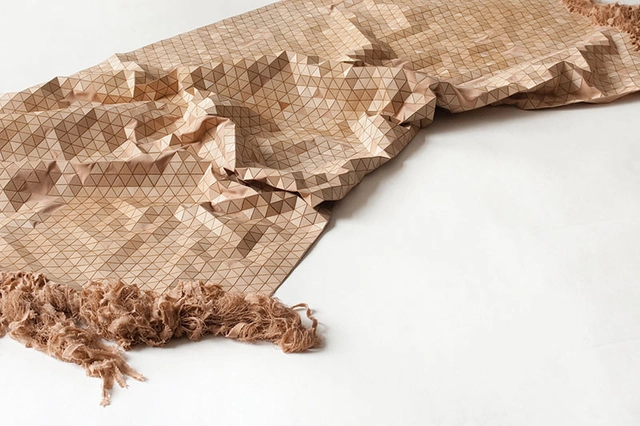
Wooden Textiles - A Mixture Of Of Materials That Makes Wood Feel Soft. Image Courtesy of Interiors & Sources
The following post is presented by ArchDaily Materials, our new US product catalog.
Recently, Interiors & Sources featured fourteen of the coolest materials they've come across in their 30-year history; the following post lists the five that most tickled our fancy. Enjoy!
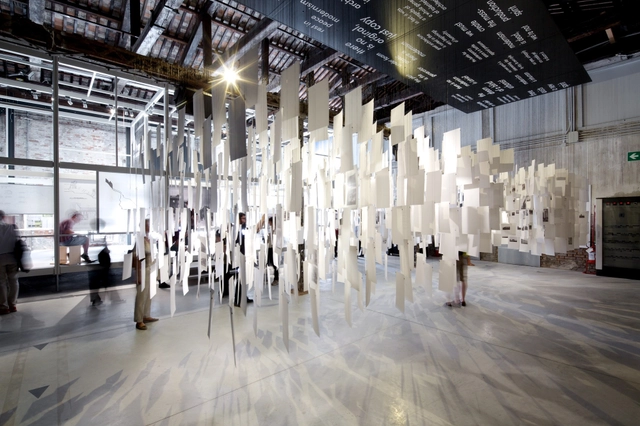
From the Curators. The exposition with the project title Unwritten highlights issues regarding the perception, research, and conservation of Latvian post-War architecture. Unwritten chronicles, in fact, inexistent research on this.
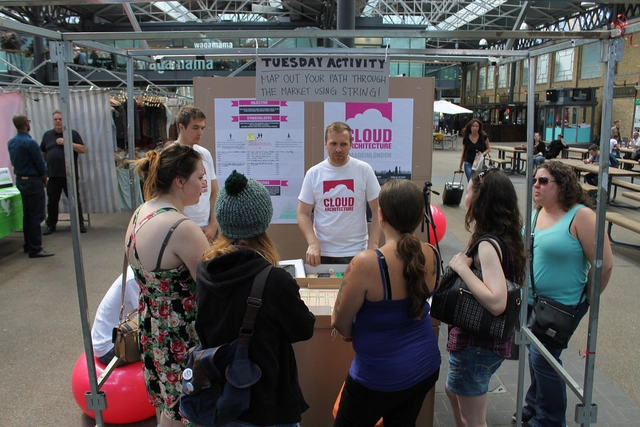
As part of the London Festival of Architecture, Cloud Architecture is conducting a participation-based research and design project from a pop up studio in Old Spitalfields Market in central London. Running until June 20th, the project aims to engage visitors to the market with the ideas and process of architectural design studios, which members of the public rarely get to experience first-hand.
At the same time, visitors to the studio will be encouraged to take part in a project to redesign the Old Spitalfields Market, based on data collected on site and the participatory input and opinions of those who use it.
Read on after the break for more on the studio and some of the results from the first week of research
Other awards included an Enduring Architecture award for Enrico Taglietti's 1979 project 'Apostolic Nunciature'; and the Australian National University Australian Centre on China in the World by Munns Sly Moore in association with Mo Atelier Szeto - which won the Romaldo Giurgola Award for Public Architecture, the Art in Architecture Prize and a commendation in the INLITE Light in Architecture Prize.
Read on after the break for the full list of awards
Architects have been experimenting with the potential of building envelopes for years. Now, Arup has an interesting, Zumtobel Group Award-nominated proposal: the Solarleaf bioreactor. Developed in collaboration with SSC Strategic Science Consult GmbH and Colt International GmbH, this thin, 2.5 x .07 meter panel, when attached to the exterior of a building, is capable of generating biofuel - in the form of algae - for the production of hot water. More efficient than electricity and more sustainable than wood, algae is ideal kindling for producing heat, especially since it can be grown on-site. Moreover, the water in which the algae grows also collects solar energy, providing an additional supply of heat. More details on this sustainable innovation, after the break.
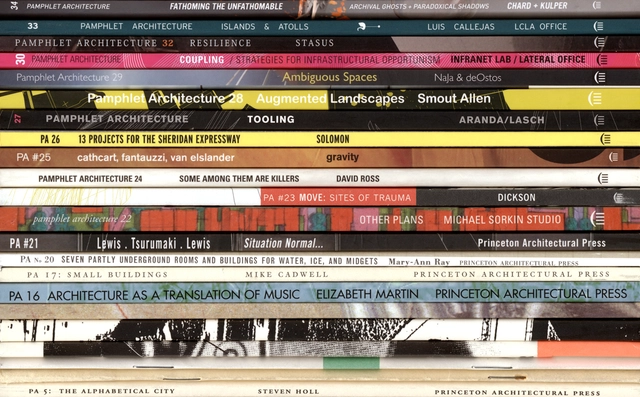
Following the success of the inaugural call for entries, which produced the Pamphlets 23–30, Pamphlet Architecture, with renewed support from the National Endowment for the Arts, announces the 2014 competition.
Between 1931 and 1981, the Soviet Union exported a prefab concrete panel system for housing - whose development and exportation embodied the ideals of the modern movement - to countries around the world, creating more than 170 million apartments. In 1972, during the socialist government of Salvador Allende, the USSR donated a panel factory to Chile. The Chile KPD (an acronym derived from the Russian words for “large concrete panel”) produced a total of 153 buildings during its operation, before being shut down and forgotten during the military dictatorship.
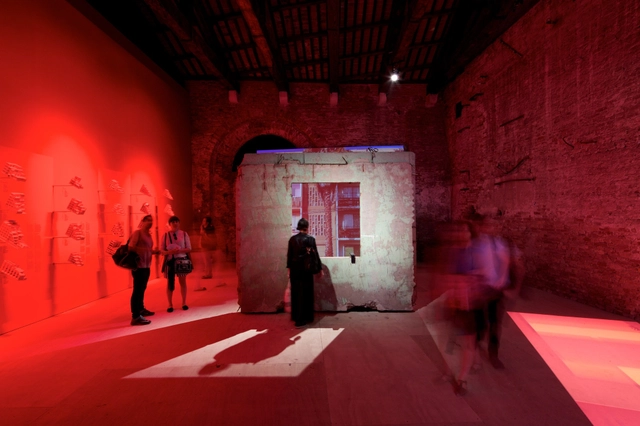
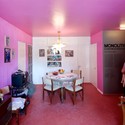
The full story of the concrete panels produced in Chile had been buried in history, but research conducted by curators Pedro Alonso and Hugo Palmarola for the Chile Pavilion has resurfaced the political, ideological and aesthetic implications of the panel. Monolith Controversies not only shows the technical aspects of a fundamental element of a prefab building system, but also demonstrates how it was connected to an ideology. Upon entering the Chile pavilion, visitors find themselves in the recreation of an interior of one of the apartments. Next they enter the main space, in which one concrete panel found by the curators stands as the representation of how modernity was absorbed in Chile.
In the Absorbing Modernity section of the Biennale, Koolhaas asked curators from all over the world to bring to light the ways modernism developed in their countries. The work done by the Chilean curators in the Monolith Controversies exhibition is one of the best examples of this call, recognized by the jury with the Silver Lion. Read on for the curator’s statement.
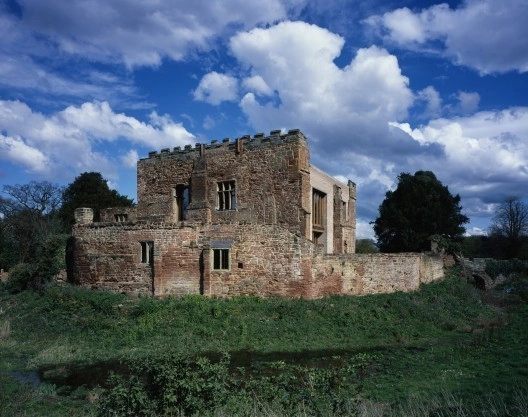
The annual RIBA Stirling Prize is set to regain its £20,000 cash prize following a year of no prize money in which Witherford Watson Mann scooped the accolade for Astley Castle. Considered to be the UK’s most prestigious architecture award, the Stirling Prize is presented annually to the “building that has made the greatest contribution to the evolution of architecture in the past year”. Brockton Capital have agreed to support the prize for the next three years starting from 2015, after which the prize will be known as the RIBA Brockton Stirling Prize. The lack of prize money in 2013 raised questions about the significance of the award.
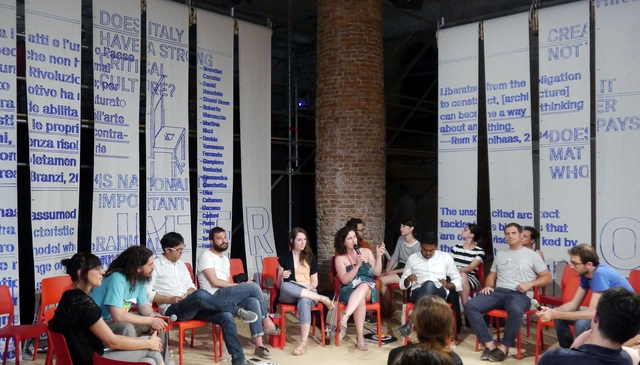
Towards a New Avant-Garde, Superscript’s three-part conversation series during the opening weekend of the 14th International Architecture Exhibition— La Biennale di Venezia, brought together 40 talented young architects, writers, critics, to debate issues of identity, collaboration, and economics. Over the course of three 90-minute conversations, several key themes emerged, including the need of architects to engage the public directly, the importance of evolving new forms of communication and criticism, and the value of capitalizing on opportunities to be proactive. Here’s a snapshot of what the participants had to say:
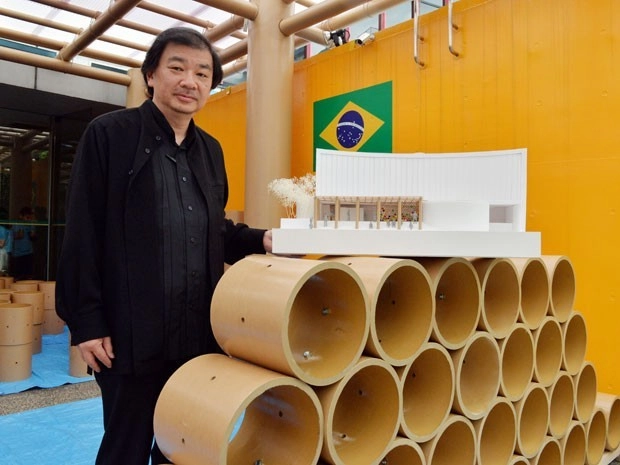
In honor of the World Cup (which starts today), the Brazilian Embassy in Tokyo, Japan, has invited Shigeru Ban, this year's Pritzker Laureate, to build a temporary pavilion.
Today, the Korean Peninsula provides a striking example of a post-war polarization: two opposite political and economical systems, constantly presented in contrast/conflict by the global media, that still maintain an intricate, complicated relationship. Architecture’s role in this polarization was instrumental. North Korea sought to represent the aspirations of a new communist nation within a context devastated after the war -- a tabula-rasa from which adaptations of modernism could appear. In South Korea, fast economic growth bred a form of modernization that represented the ideals of a globalized world.
These distinct absorptions of modernity, and the relation between the two neighboring nations, are represented in Korea’s Pavilion in an exhibition called Crow’s Eye View, winner of the Gold Lion at the Venice Biennale 2014. The dense exhibition, commissioned and curated by Minsuk Cho together with Hyungmin Pai and Changmo Ahn, used every corner of the pavilion to represent this subject. The curators invited a multidisciplinary group of architects, urbanists, poets, writers, artists, photographers, film-makers, curators and collectors to demonstrate (to best of their availability, since official cooperation with North Korean institutions proved impossible) the architectural intersections and divisions between North and South Korea.
Recognized by the judges as “research in action,” Crow’s Eye View provided an invaluable addition to a discourse which has been predominantly carried by Western-centric narratives. And it is precisely this that, according to rumors, made it Koolhaas’ favorite pavilion.
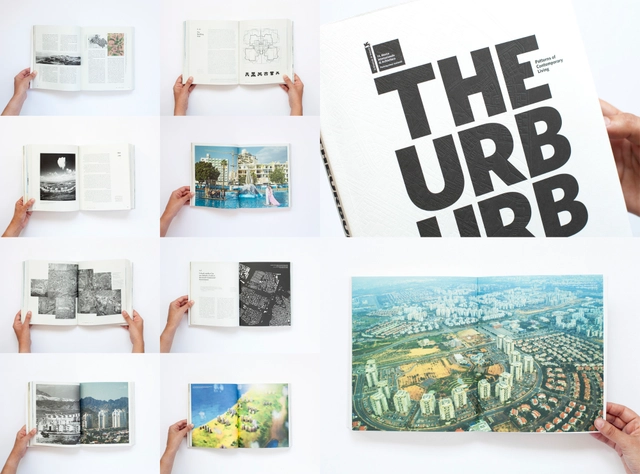
Written to accompany the minimal exhibition of the Israeli Pavilion at the Venice Biennale, “The Urburb - Patterns of Contemporary Living” tells the story of the Urburb, a built condition which is neither urban nor suburban, that dominates the contemporary Israeli landscape. Edited by Architect Ori Scialom and Dr. Roy Brand, the book brings together architectural photography and photographs of the installation interspersed amongst theoretical texts and short stories which address the cultural, political, and social aspects of the “Urburban” way of life. Learn more about the book, published by Sternthal Books,here.
Curated by Rem Koolhaas, this year’s Biennale set high expectations in the architecture world, a fact reflected in the massive attendance during the preview. As Koolhaas stated at the awards ceremony, he took on the hard task of reinventing the Biennale, recognizing its influence in how architecture is exhibited around the world.
Under the title “Fundamentals,” Rem rallied this year’s curators to assemble a vast amount of knowledge, bringing to light research that had been hidden, forgotten, scattered, and/or previously unexamined, and making it available to the larger architectural community. This was achieved not only in the form and content of the Biennale, but also in the numerous publications produced by the curators (a practice which closely follows OMA/AMO traditions).
Yet this is actually a double-edged sword; in many pavilions, the density and depth of the content made it hard to understand at first glance. Architecture festivals and exhibitions tend to lean on experiential one-liners, but since “Fundamentals” was so focused on conveying ideas about architecture’s relationship to modernity over the past 100 years, it was a significant challenge to the curators. Many pavilions produced impressive publications, so that all the rich knowledge they unearthed may continue to influence architectural thought long after the Biennale ends in November.
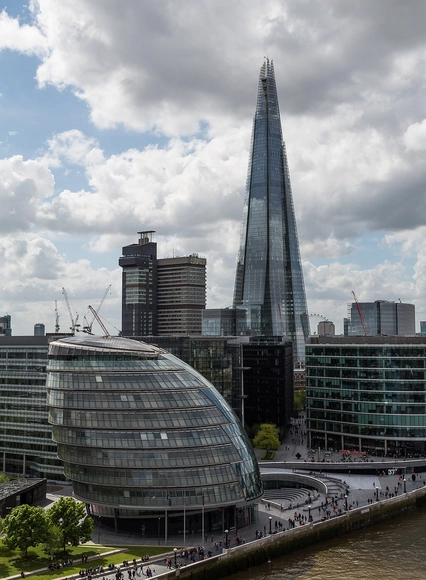
The debate over the future of London's Skyline stepped up a gear on Tuesday, as the issue was taken up by the London Assembly's Planning Committee in City Hall. The London Assembly is an elected watchdog which is tasked with examining the decisions and actions of London's mayor, and is expected to apply pressure to mayor Boris Johnson over the issue of skyscrapers in the capital.
The committee heard from leading architectural figures in London including former RIBA president Sunand Prasad (of Penoyre & Prasad), English Heritage planning and conservation director for London Nigel Barker and former City planning officer Peter Rees.
More on the London Assembly debate after the break
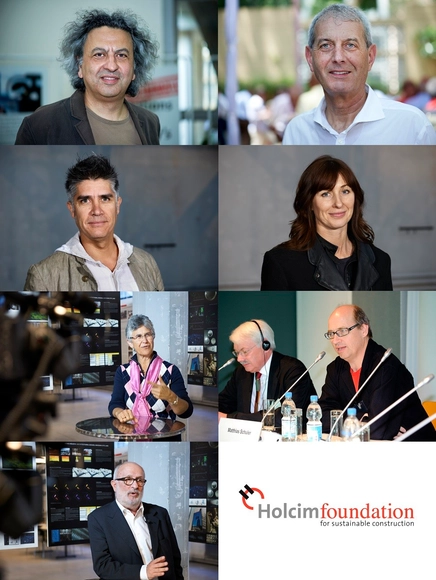
The Holcim Foundation has announced the global jury for the 2015 Holcim Awards, its triennial prize which encourages architects, planners, engineers, project owners and students to share their projects and visions that "go beyond conventional notions of sustainable construction."
The 2015 prize is the Holcim Foundation's fourth cycle, and this year will feature a total prize fund of $2 million - a significant increase on their 2012 prize fund of $300,000. To oversee the awards, they have recruited independent experts of international stature, including the Deans of the Harvard Graduate School of Design and ETH Zurich, and Alejandro Aravena of Chilean practice Elemental.
Read on after the break for the full list of jurors and more on the prize
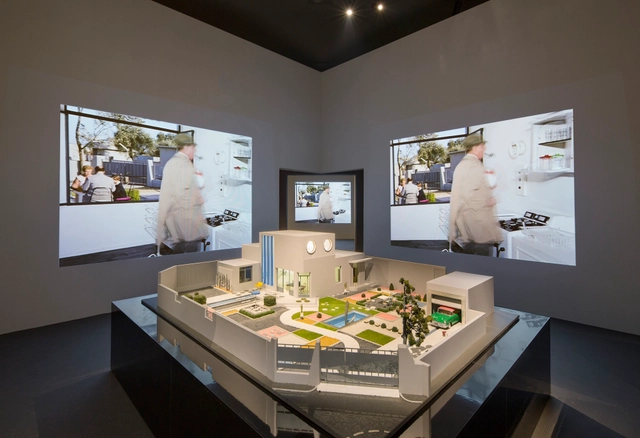
This year's French Pavilion stood out as one of the best pavilions in the Giardini, communicating a clear, engaging thesis and receiving a Special Mention from the jury.
Curator Jean-Louis Cohen poses four questions throughout four galleries, demonstrating the contradictions that fill the story of modernity and architecture in France. The ambivalent responses of architecture to the original promise of modernity is shown through the juxtaposition of a continuous cinematographic montage (playing simultaneously throughout all four galleries) and large-scale objects.
Watch an excerpt from Teri Wehn Damisch's film and read the curator's statement after the break. For a virtual tour of the space designed by Paris-based firm Projectiles, follow this link. And make sure to keep an eye out for our video interview with curator Jean-Louis Cohen (coming soon).
Natural systems offer architects and designers significant potential as alternative, ecologically performative architectonic strategies. The d3 Natural Systems competition invites architects, designers, engineers, and students to collectively explore the potential of analyzing, documenting, and deploying nature-based influences in architecture, urbanism, interiors, and designed objects.
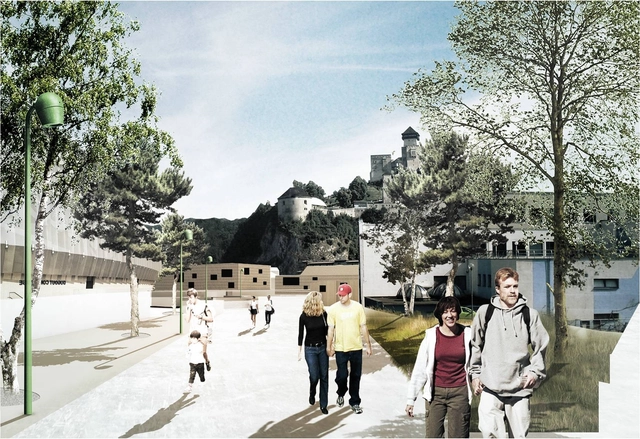
Swedish based Mandaworks + Hosper Sweden have recently won an international competition to find the "best comprehensive urbanistic proposals for connecting the city centre of Trenčín with both waterfronts of the River Váh." The winning scheme - Tracing Trenčín - "is not a proposal which is noticeably stunning" but is, according to Thomas Matta, deputy chair of the jury, "considerate to the existing structure of the historic core of the city."
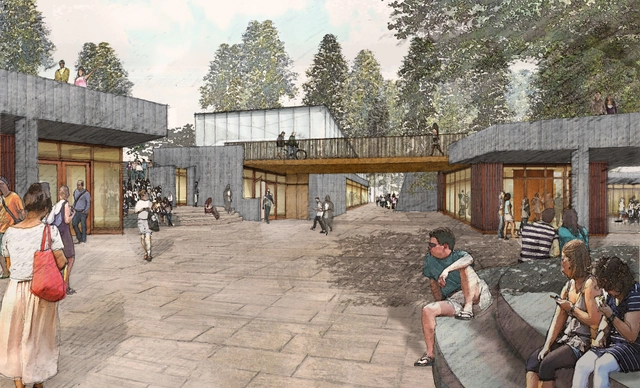
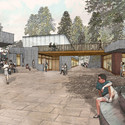
Set into a natural landscape of redwood trees and with views over Monterey Bay, Williams & Tsien's building avoids monumental or sculptural gestures, instead creating a dialogue with the site, with a series of paths, bridges and open spaces criss-crossing the site to provide a rich network of spaces.
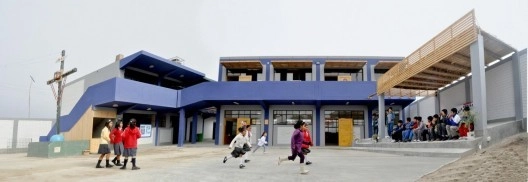
The Maria Auxiliadora School in Peru, designed/built with help from Architecture for Humanity Design Fellow, Diego Collazo, and with funding from the Happy Hearts Fund and the SURA Group. Image Courtesy of Maria Auxiliadora School
Architecture for Humanity, the non-profit responsible for propagating designers and designs around the world that "give a damn," has named its latest Executive Director. After co-founders Kate Stohr and Cameron Sinclair announced their decision to step down in September of last year, the organization began a global search for the person who would replace them. Today, the Board of Directors has announced the appointee: Eric Cesal, an experienced designer and author of the memoir/manifesto Down Detour Road: An Architect in Search of Practice who first joined Architecture for Humanity in 2006 as a volunteer on the Katrina reconstruction program and later established and led Architecture for Humanity’s Haiti Rebuilding Center in Port-au-Prince from 2010 to 2012.