Global Holcim Award 2012 Winners Announced

GOLD: Gando secondary school © Holcim Foundation

A secondary school project in Gando, Burkina Faso, a community center project in São Paulo, Brazil, and an urban renewal plan in Berlin, Germany are the winners of the Global Holcim Awards for 2012. These leading sustainable construction projects were selected from 15 finalist submissions by a jury of independent experts led by Enrique Norten. The finalists were the regional 2011 winning projects that had been selected from more than 6,000 entries in 146 countries.

All 53 prize-winning projects at the regional level also competed for further prizes based on their contributions to sustainable construction through innovative building materials and construction technologies. The Global Holcim Innovation prizes conferred by a jury of materials and industry experts led by Harry Gugger went to projects in Switzerland, Germany and the United Kingdom.

Continue after the break to view the winning proposals!

North American winners of Holcim Awards competition announced

Gold 2011 - Regional food-gathering nodes and logistics network, Iqaluit, NU, Canada

The Holcim Awards Gold 2011 for North America and USD 100,000 was awarded to the Arctic Food Network (AFN) regional food-gathering nodes and logistics infrastructure for the scattered Inuit communities in Northern Canada. The project by Lateral Office / InfraNet Lab based in Toronto and Princeton, New Jersey, enables a better distribution of local foods, serves as a series of bases for the reinforcement of traditional hunting, and also establishes new foundations for a sustainable, more independent economy.

Silver went to a two-level zero energy certified school building design to be constructed on multiple campuses throughout Los Angeles. The project led by architects Swift Lee Office of Los Angeles uses “off-the shelf” components and modular panels to create a pre-fabricated system that features a double-layered façade for solar, acoustic, and environmental control and achieves a climate-responsive solution for each site.

Holcim Awards Bronze was presented to Julie Snow Architects of Minneapolis, for a border control station on the US frontier to Canada at Van Buren, Maine. The approach meets a range of stringent regulations for safety, operation and durability, sets zero net energy and water saving targets, and yet is a highly aesthetic structure marking the national frontier.

You can see more info and images on the winners after the break. For a complete list of the winners including the acknowlodgement prizes and “next generation” prizes please click here.

A Holistic Perspective in Sustainable Construction Projects

Even during the construction process, the surrounding vegetation is handled with much care. Green roofs will provide insulation and wildlife habitat

Truly sustainable construction projects do not solely focus on environmental performance, but also incorporate aspects of innovation, economic feasibility, architectural quality and above all social impact. These so-called five target issues serve as the basis for the adjudication process of the competition for sustainable construction projects and visions. Naturally, each project has its own focus, but to be successful in the competition they have to perform well in all five target issues.

Holcim Awards Juries Showcase Leading Experts on Sustainability

Yes is more: an archicomic on architectural evolution – Bjarke Ingels presents his extraordinary architecture in cartoon-form

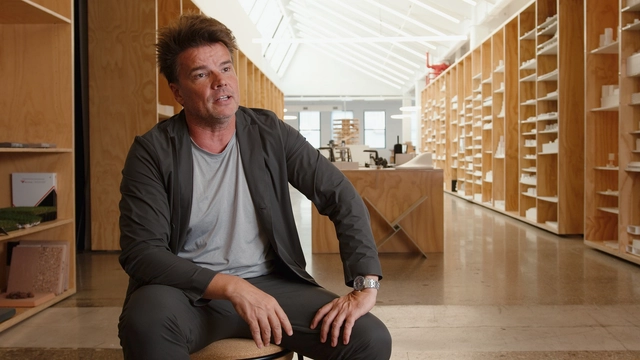
Selecting the most outstanding projects in sustainable construction from several thousand submissions will be the challenging task of more than fifty leading experts on sustainability. The jury members for the 3rd International competition include architects Bjarke Ingels (Denmark), Keller Easterling () and Michel Rojkind (Mexico) – all independent experts of international stature engaged in the sustainable development of society, building processes, construction materials, and building projects.

Entries in the USD 2 million competition are evaluated using five “target issues” to define sustainable construction. Three of these stem from the triple bottom line of balanced social, environmental and economic performance. The two remaining issues pay homage to contextual and aesthetic impact, along with innovation and transferability. A series of five jury panels will meet in June/July 2011 in each of the five world regions: Europe, North America, Latin America, Africa Middle East, and Asia Pacific.

Competition for Exemplary Sustainable Construction Projects and Visions

Monte Rosa Hut, Courtesy of

Sustainable development typically looks at the “triple bottom line” of economic, ecological and social factors and has become the Zeitgeist of the industry. In the context of the built environment, innovative and contextual impacts must also be factored into any calculation of sustainability. With such broad elements to be considered, it’s no wonder that exemplary projects in sustainable construction are rarely the work of one single person or profession, but combine the expertise of several fields: architecture, engineering, research, biology and sociology.

To bring the concept of broad sustainability for the building industry to life, the 3rd International Holcim Awards for Sustainable Construction identify and recognize the cutting-edge of sustainability – propelling more widespread and consequential adoption of approaches to build a more sustainable future. The Holcim Awards competition also includes a category for the “Next Generation” of university students to share their concepts for the sustainable projects of the future.

Awards competitions lift profile of sustainability projects

Bronze 2008 North America – “Living with Lakes Center for freshwater restoration and research”, Sudbury, Canada

Design competitions are an ideal vessel to raise awareness and introduce a broad audience to issues affecting the built environment. Winning an award can have a significant impact on gaining public support or securing sponsorship for the respective project. The Holcim Awards is such a design competition: it promotes and rewards innovative approaches to sustainable construction.

One of the award-winning projects is the “The Living with Lakes Center” (above) in northeastern Ontario, Canada. The project will also house a research center to aid the restoration of the city of Sudbury’s ecosystem with an emphasis on water security for future generations. The research center will be self-sufficient for electricity and heating needs and be built to LEED platinum standards with instrumentation fitted to monitor the effectiveness of an array of technical features and their impact on lake water quality.

Global Holcim Awards 2009 Winning Projects

The second cycle of the Holcim Awards competition has reached its pinnacle: the top sustainable construction projects out of thousands of submissions from all continents have been selected. THOLChe four winning entries are a river remediation scheme in , a greenfield university campus in Vietnam, a rural planning strategy in China, and a shelter for day laborers in the . A series of prize-handovers will be held at the site of each project to celebrate the winners and their highly-acclaimed examples of sustainable construction.

Almost 5,000 sustainable construction projects and visions from 121 countries entered the five regional Holcim Awards competitions in 2008. Winners of the Gold, Silver and Bronze Awards in each region automatically qualified for the Global Holcim Awards competition in 2009. The global jury was headed by Charles Correa (architect, India) and included Peter Head (structural engineer, UK), Enrique Norten (architect, Mexico/USA), Saskia Sassen (sociologist, USA), Hans-Rudolf Schalcher (civil engineer, Switzerland), and Rolf Soiron (economist, Switzerland).

More images and description of the winning projects, after the break.