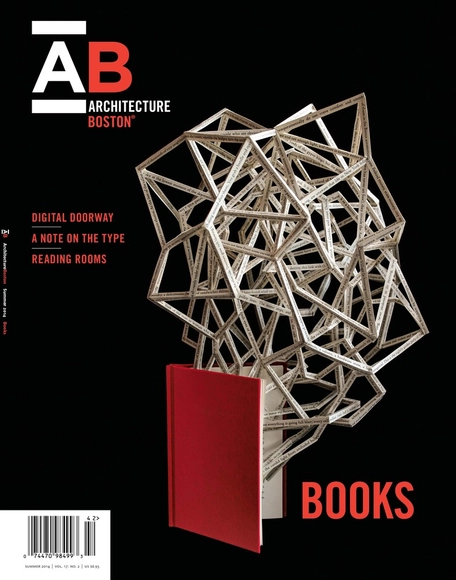
This summer, ArchitectureBoston gives readers a reason to linger in their hammocks a little longer and drift away into the world of architecture and design. The new issue contains extensive and insightful suggestions for book lovers looking to build a personal library of new and important titles. Read on for more information.
New images have been leaked of the inside of Zaha Hadid’s New York City luxury apartment complex, set to be built alongside the second section of the High Line at 520 West 28th Street.
The renderings, first published by Curbed, show the layout of a typical kitchen and master bath in this 11-story sculpted glass and steel apartment. While the kitchen rendering features a curvy island and faucet in the middle, the bathroom appears to have textured walls.
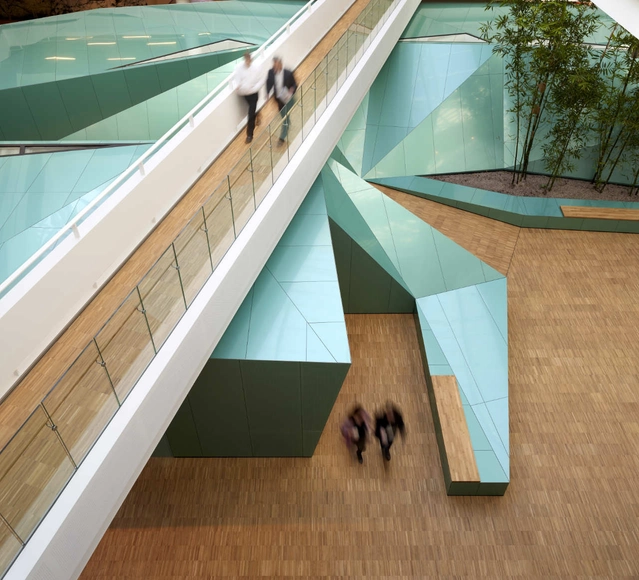
In honor of World Photo Day (August 19th) ArchDaily wanted to thank the photographers who bring to life the projects that we publish every day. So we asked architects to weigh in on the work of some of our most-appreciated architecture photographers. Here, Kim Herforth Nielsen of 3XNwrites on behalf of Adam Mørk.
https://www.archdaily.com/538789/world-photo-day-adam-mork-by-kim-herforth-nielsen-of-3xnAD Editorial Team
The 20th Century was a time of significant political unrest, seeing two World Wars and the 70-year rise and fall of a major superpower, the Soviet Union, among countless other conflicts. In some ways, "modernity" could be characterized by the rapid creation and crystallization of huge numbers of nation states since the outbreak of World War One a hundred years ago.
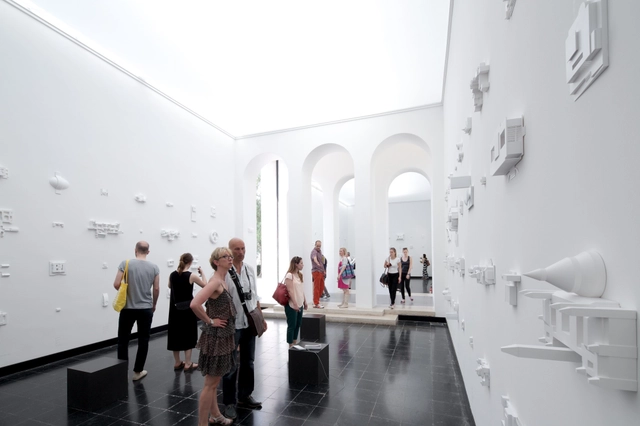
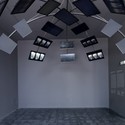
Reacting to the theme of "Absorbing Modernity" set for the national pavilions at this year's Venice Biennale, the curators of the Austrian pavilion chose to investigate the area where this political unrest most overlaps with architecture: the Parliament Buildings of countries around the world.
Read the curator's take on the pavilion after the break
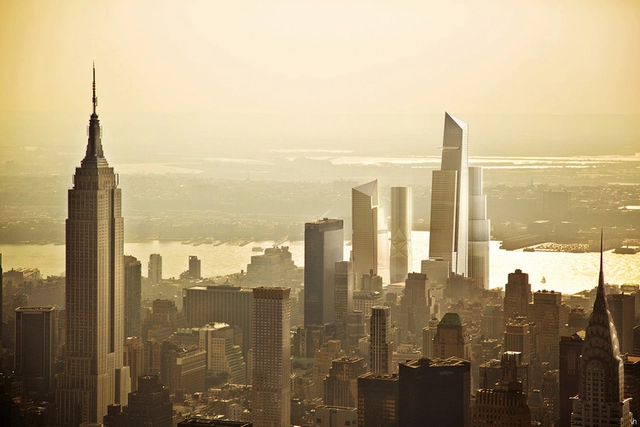
Hudson Yards, New York by Related Properties. Image Courtesy of Visualhouse
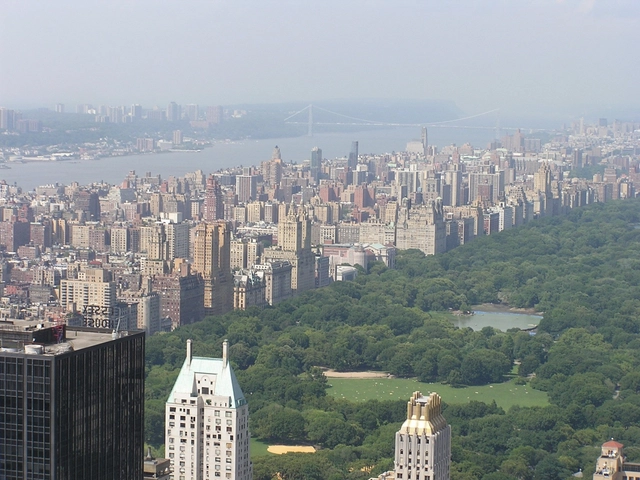
The idea of “star architects” or “starchitects” is, if nothing else, polemic. Frank Gehry has expressed his hatred for being labeled with the term, and in 2013 we received a letter from a reader urging us to ban the phrase as it “undermines serious discourse regarding architecture and urbanism.” Now, the “starchitect” debate has reached the opinion section of the New York Times.
Following recent comments by Witold Rybczynski that “starchitects” -- often unfamiliar with the cities they are designing for -- are designing buildings that don’t fit into their surroundings, the NYT has posed the question: Are superstar architects ruining city skylines? Weighing in on the topic are Allison Arieff, an architecture and design writer for the NYT, Vishaan Chakrabarti, an associate professor at Columbia and a partner at SHoP Architects, Angel Borrego Cubero, a Madrid-based architect, and the director and producer of "The Competition," a documentary about architectural competitions, and Beverly Willis of the Beverly Willis Architecture Foundation.
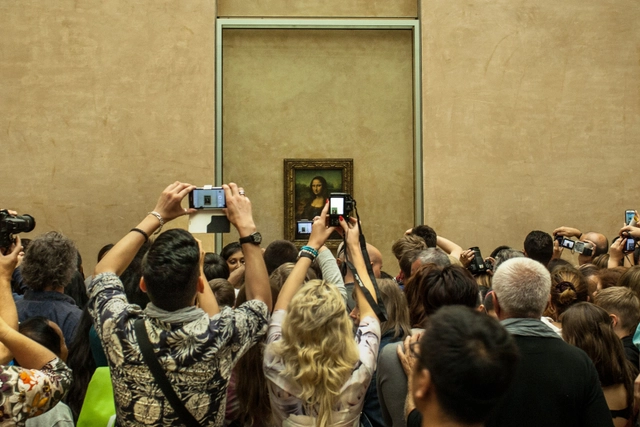
In an article for the New York Times Rachel Donadio examines Masterworks vs. the Masses. From the Louvre in Paris to London'sBritish Museum, Florence's Uffizi to the Vatican Museums, the increasing surge of visitors to these international cultural nodes "has turned many museums into crowded, sauna-like spaces." Balancing everyone's right to be "nourished" by cultural experiences with protecting and preserving the works of art in question is a very real problem. According to Donadio, "even when the art is secure, the experience can become irksome." With some museums seeing annual visitors of up to 6.7 million visitors (British Museum), addressing the issues faced by institutions that are a victim of their own success is becoming more and more pressing. Read the article in full here.
The project consists of a 605-foot condominium tower -- the tallest residential project on the West Coast -- and an 850-foot hotel, residential and office tower. Together the two towers will add more than a million square feet of flexible office and commercial space, as well as 650,000 square feet of residential units to the Transbay Area.
View more images and learn more about the design of the "First and Mission" project after the break...
The House of Lords has announced that the proposal to appoint a 'Chief Architect' in the UK, one of the major recommendations of this year's report by Terry Farrell, will be discussed by the UK's minister for architecture Ed Vaizey and Housing and Planning minister Brandon Lewis. The proposal was among 60 recommendations made by the Farrell Review at the end of March. Other proposals due to be discussed by ministers are a the idea of establishing a Place Leadership Council and design review panels for infrastructure projects. More after the break...
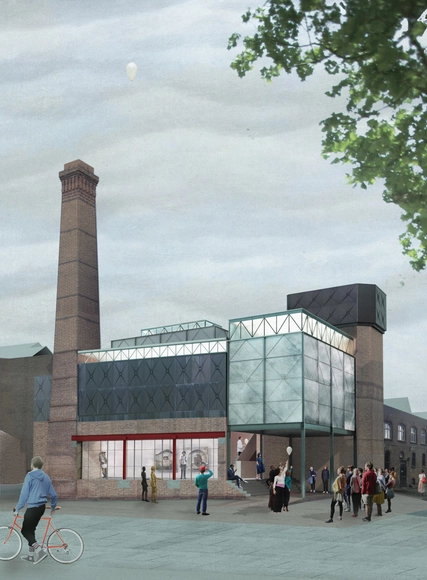
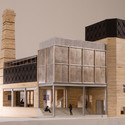
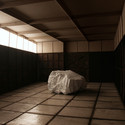
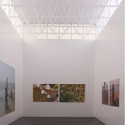
London-based firm Assemble has been selected to design a new art gallery for Goldsmiths College at the University of London. Assemble was chosen over five other shortlisted firms for the project, which consists of constructing a new 400 square meter gallery in the back of what was formerly a Victorian bath-house, and is now the college’s Grade-II listed art studios.
Assemble is a young practice that gained attention for its pop-up cinema in a gas station during 2010. The firm’s most recent project is their Yardhouse workspace in Stratford. Assemble’s Goldsmiths gallery design integrates new and modern elements - such as steel frame lanterns - into the building’s unique character and existing structures, which includes old water tanks. “The Victorian bathhouse at Laurie Grove offers a series of extraordinary found spaces. The cast iron water tanks have a powerful materiality which will be preserved and amplified, whilst new top-lit galleries will provide a rich spatial counter-point in an ensemble offering unique opportunities for the display of art,” Paloma Strelitz and Adam Willis, from Assemble, said in a statement.
More details on Assemble’s winning design after the break…
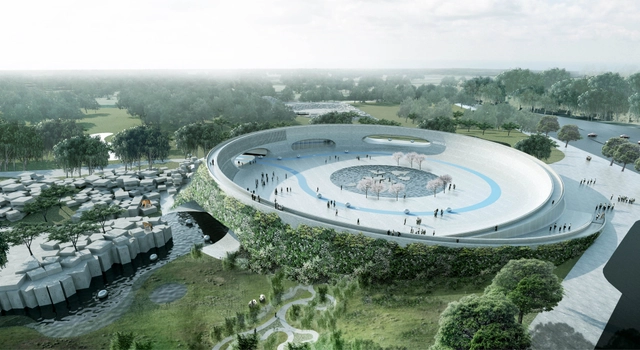
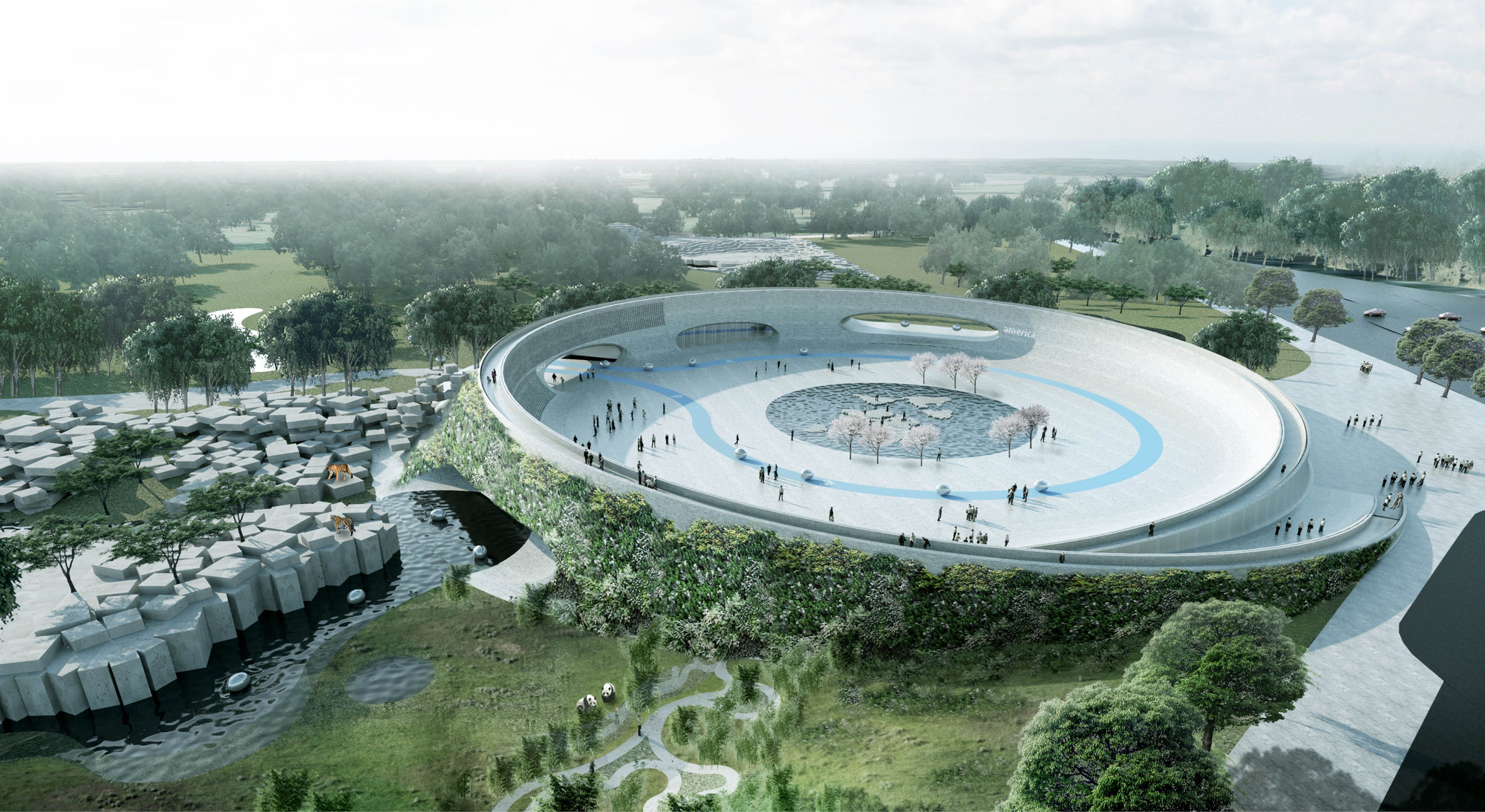
Danish architects BIG (Bjarke Ingels Group) have just released ambitious designs for a zoo in Givskud, Denmark. It's a project that provides an intriguing opportunity for, as BIG explains, the creation of a space with "the best possible and freest possible environment for the animals’ lives and relationships with each other and visitors." The firm has been working for the past two years to make Zootopia what the Danish press is calling "the world's most advanced zoo." According to Givskud Zoo's director Richard Østerballe, the park's transformation will benefit greatly from BIG's fresh approach to design--one that has been characterized by the integration of nature and natural elements into cutting-edge, innovative architecture.
The project will attempt to "integrate and hide buildings" within the landscape. Upon entering the zoo, visitors can either enter a large central square or climb the "building-landscape," allowing them to get a general overview of the layout of the park. From this central element, visitors can access different areas of the zoo. A 4km hiking trail connects the different areas (which represent the continents of Africa, America and Asia).
The first phase is expected to be completed in 2019 to coincide with the park's 50th anniversary.
Read on for more images and BIG's project statement.
In honor of World Photo Day (August 19th) ArchDaily wanted to thank the photographers who bring to life the projects that we publish every day. So we asked architects to weigh in on the work of some of our most-appreciated architecture photographers. Here, Felipe Assadiwrites on behalf of Fernando Alda.
https://www.archdaily.com/538677/world-photo-day-fernando-alda-by-felipe-assadiAD Editorial Team
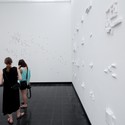
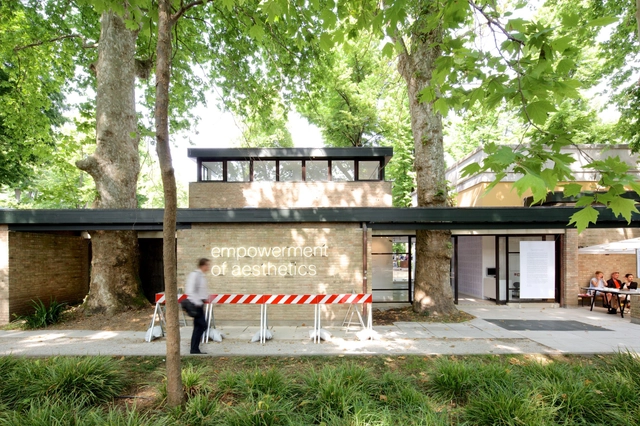
Denmark's exhibition for the 2014 Venice Biennale focuses on the country's history as a pioneer in the development of a welfare state, and the role that architecture, in connection with art, literature and science had in creating an aesthetic manifestation of this 'better life for all'. By exploring the output of a range of fields in connection to a wider social movement, Empowerment of Aesthetics comes to a fuller understanding of how modernity affected architecture in Denmark.
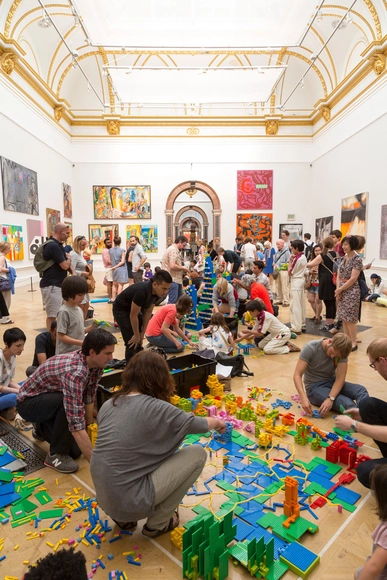
As part of the 2014 London Festival of Architecture, teams of architects from the four of the most recent Stirling Prize winning British practices were challenged with creating the most imaginative piece of a city - out of LEGO. Each team began with a carefully laid out square on the floor of the largest gallery of the Royal Academy Summer Exhibition, at which point they were given just one hour and 45 minutes to create an urban masterpiece out of blocks. Each group of architects worked alongside students from the Royal Academy’s attRAct programme, which offers A-level art students the chance to engage with art and architecture. An esteemed panel of judges ultimately selected the team from Zaha Hadid Architects as victorious, who "considered London on a huge scale and used curving buildings of different typologies which echoed the shape of the Thames."
Read more about the brief and the other participating entries after the break.
In 2008, a group of students from SCI-Arc put out a proposal for a series of mixed income city housing projects for Dubai. In their design, wealthy residents would live in apartments on the building’s perimeter, with natural daylight and views of the city, while low-income housing tenants would live in the core of the building, isolated from “the upper class.” The proposal was a parody aimed at the classist design of residential development in Dubai, but what unsettled the SCI-Arc students was that their proposal generated almost no controversy. Inspired by the recent approval of a similar 'poor door' in a project in New York, this article from the LA Times covers that parody, and shows that both at home and abroad, residential design is slipping towards socio-economic segregation.
7N Architects have revealed their designs for the 8.2 acre Fountainbridge site, one of the largest city centre developments in Edinburgh, where they plan 350 homes, a range of workspaces, a 130 room hotel, canalside retail and café space and two arts buildings. The intention for the former industrial zone is to offer "enhanced canalside features, open space and paths for both pedestrian and cycle use."
Heatherwick's trademark ingenuity, demonstrated in previous projects such as the London Garden Bridge proposal, will be needed for the difficult site in Leeds. Image Courtesy of Arup
The Maggie's cancer charity has announced Thomas Heatherwick as the latest high-profile designer who will contribute to the Maggie's Centre program, with a site at the new Bexley Wing of St James's University Hospital in Leeds. The new centre will be the first Maggie's in Yorkshire, with Heatherwick joining the likes of Norman Foster, Richard Rogers, Zaha Hadid, Frank Gehry and Steven Holl in the list of Maggie's Centre designers.
The building itself will be designed by MAD Architects, chosen "because of its innovative approach to design and the firm’s philosophy of connecting urban spaces to natural landscapes." In this case, that landscape will be designed by Studio Gang, who will also add a bridge to Northerly Island, an area which they have worked on turning into an ecologically diverse urban park.
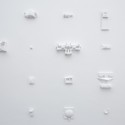
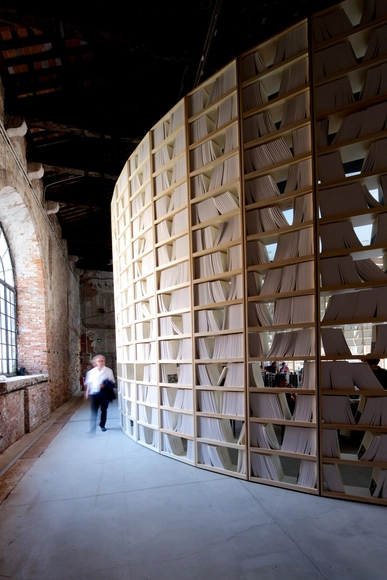
In Bahrain's pavilion for the 2014 Venice Biennale, the country uses its position on the eastern edge of the pan-Arabic region to investigate modernity's impact on the Arab world: first as a colonial imposition, then as a local attempt to reconcile global and Arabic culture, then finally as an acceptance of neoliberal ideals.
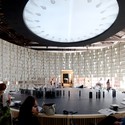
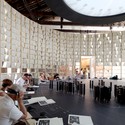
The exhibition collects 100 projects from across the Arabic states, with the intention of consolidating and preserving knowledge of this critical period. The installation itself, a giant bookcase, is the manifestation of this research, and will later be made available at the Arab Center for Architecture.
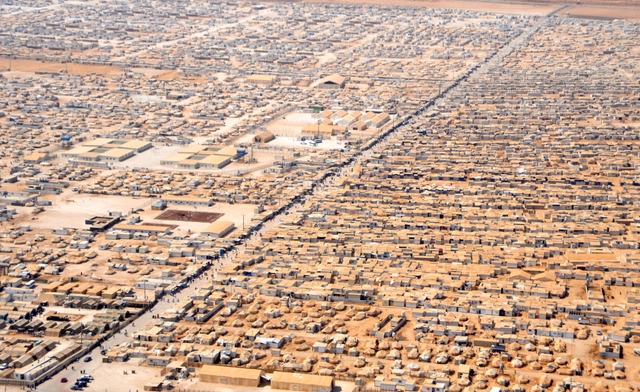
Aerial View of Zaatari Refugee Camp. Image Courtesy of Wikimedia
As the Syrian civil war continues to rage, more and more Syrian citizens are emigrating across the border to refugee camps in Jordan. While these camps were intended to be temporary, the sheer number of people they support and the uncertainty of when the Syrian crisis will end has leant them a sense of permanence. This article from the New York Times takes a look at how Syrian refugees are prompting urban development and what this means for the future of refugee camp design.
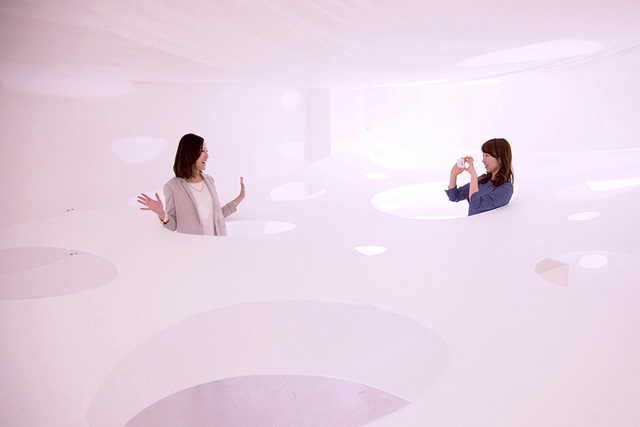
Japanese firm Kotaro Horiuchi Architecture's "Fusionner 1.0" was on display this past March at the White Gallery Cube in Nagoya, Aichi, Japan. The installation consisted of two horizontal floating membranes stretched across a simple rectilinear room, dividing the space vertically into three sections.
Led by Madhav Raman and Vaibhav Dimri, Anagram Architects is a growing studio that works in architecture, installation, urban design and material innovation. The firm is often experimental in nature, and each project is developed with a distinct, independent framework. Beyond architecture, Anagram Architects has also designed objects and installations with a strong, cohesive sense of material, detail and execution. Indian Architect & Builder’s interview with the founders, after the break…
The much anticipatedTime Space Existence collateral event at Palazzo Bembo and Palazzo Mora for the 2014 Venice Architecture Biennale brought together a diverse group of 100 architects from six continents in an "extraordinary combination." Summoned by the Dutch non-profit Global Arts Affairs Foundation, the exhibitions the architects were asked to produce documents current developments and thoughts in architecture, highlighting fundamental questions by discussing the philosophical concepts of Time, Space and Existence. Featuring well established architects next to lesser known practices, they all share a "dedication to architecture in the broadest sense of their profession."
The World Architecture Festival (WAF) has announced the shortlist for its first Wood Excellence award, which will honor a project where wood is an integral part of the design. Out of over 40 projects considered, WAF has selected eight for the shortlist, including a21studio’s “The Tent” and “Salvaged Ring,” as well as DSDHA’s “Alex Monroe Studio” and the University of Hong Kong’s “The Pinch.”
Re-Creation is a two-part installation based on a concept by Anssi Lassila. One part of the installation was constructed by a Finnish master carpenter and his team, and the other by a Chinese team. Together the two parts of the installation strike up a subtle and complex dialogue between the architects and local builders.
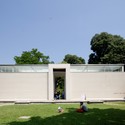
Presented by the pavilion designed by Alvar Aalto in 1956, the installation "takes a stand on our relationship with the modern legacy and its tradition of international dialogue, and represents a quintessential product of topical international dialogue while at the same time offering its own unique interpretation of the dynamic between tradition and modernity." See images of the pavilion and enjoy a statement from the curators after the break.