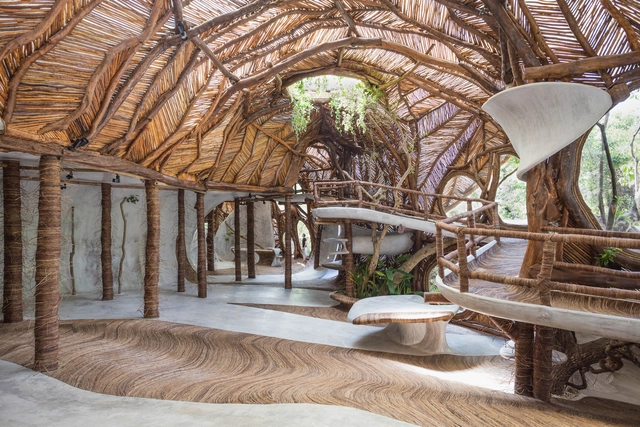
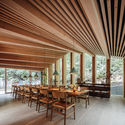
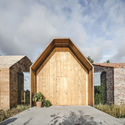
Wood has been an indispensable material in the history of civilization. Different regions from around the world have used it for specific climatic conditions. Mexico, as we have mentioned on several occasions, is an extensive country where different climates, resources and ways of life fit. Therefore the application of wood in architecture has been developed in a number of ways, from its structural use to produce roofs for Mayan huts to projects that seek to revive vernacular architecture.
While the handling of this material is difficult due to its specific detail management, it presents a multitude of benefits from its aesthetic appeal, air circulation, and even smell. Take a look at 16 Mexican projects that use wood in wondrous ways.
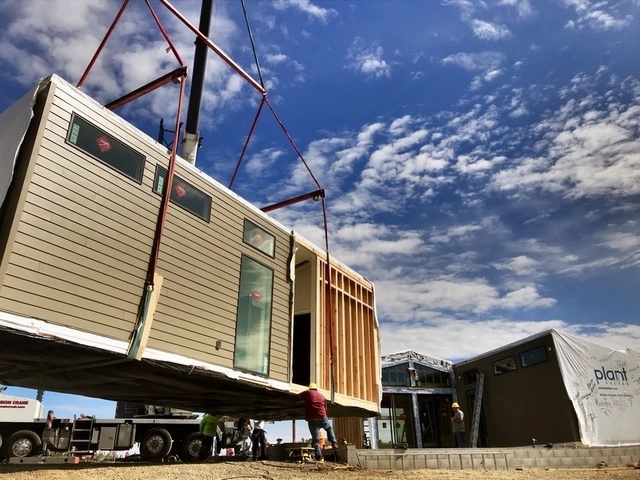
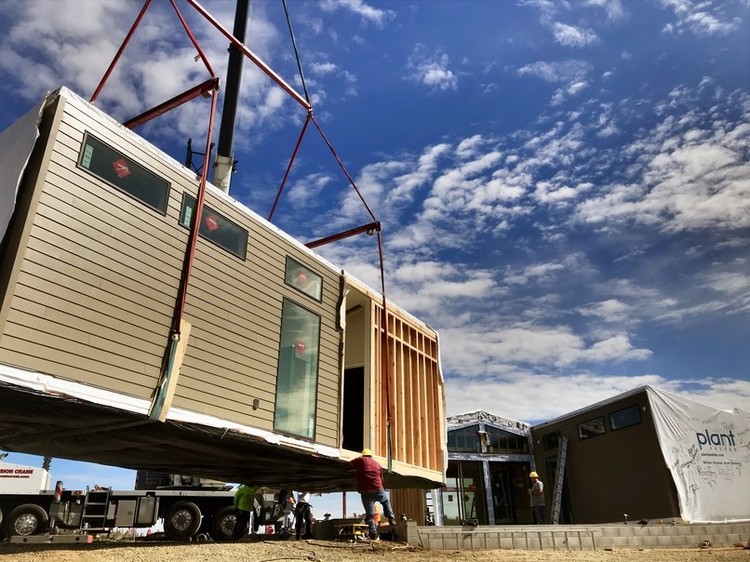
As the tech giant's first move into prefab construction, Amazon has invested in home-building start-up Plant PreFab. Known for smart home technology and sustainable construction, Plant PreFab is based in Rialto, California and is set to become the latest addition in Amazon's Alexa-integrated homes. As CNBC reports, Amazon's Alexa Fund invested in Plant PreFab for their prefabricated single and multifamily houses and their plan to use automation to build homes faster at lower costs.
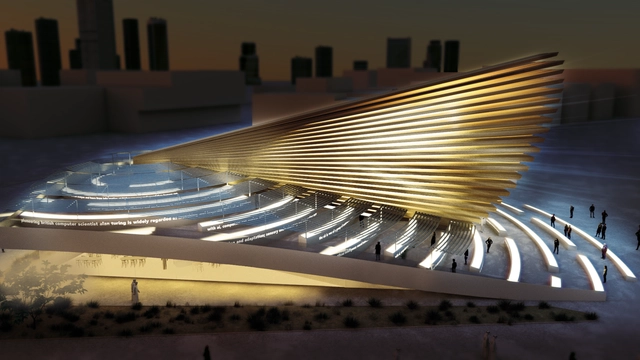
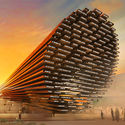
Award-winning artist and designer Es Devlin OBE is set to design the UK Pavilion for Expo 2020 Dubai. The scheme, titled “Poem Pavilion” will highlight “leading British expertise in Artificial Intelligence and Space,” and will be produced in collaboration with global brand agency Avantgarde.
The Poem Pavilion will feature an illuminated “Message to Space,” with each of the Expo’s projected 25 million visitors invited to contribute.
https://www.archdaily.com/902853/es-devlin-to-design-the-uks-poem-pavilion-for-dubai-expo-2020Niall Patrick Walsh
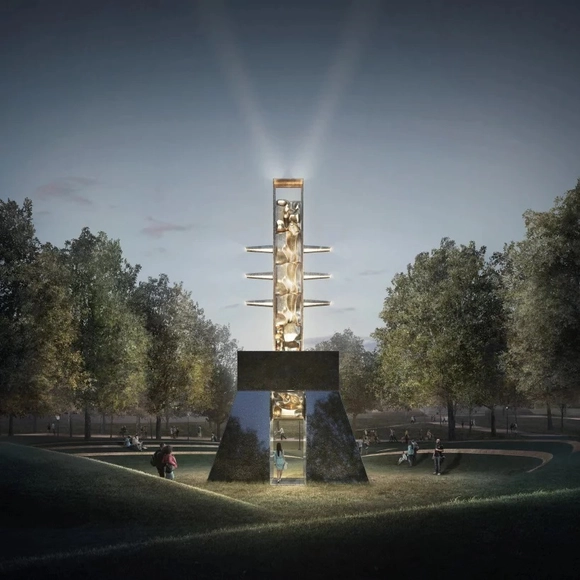
Empty Pulpit Monument. Image Courtesy of Barbara Chase-Riboud
Nonprofit MLK Boston has released the final five designs for a monument to civil rights leaders Martin Luther King Jr. and Coretta Scott King. The finalists include a range of offices like Adjaye Associates, Maryann Thompson Architects and MASS Design Group, as well as artists like Yinka Shonibare, Barbara Chase-Riboud and Walter Hood. As reported by Curbed Boston, the city is working with MLK Boston to make the monument part of a larger initiative that includes an educational center in Roxbury and $1 million endowment for programming related to the Kings.
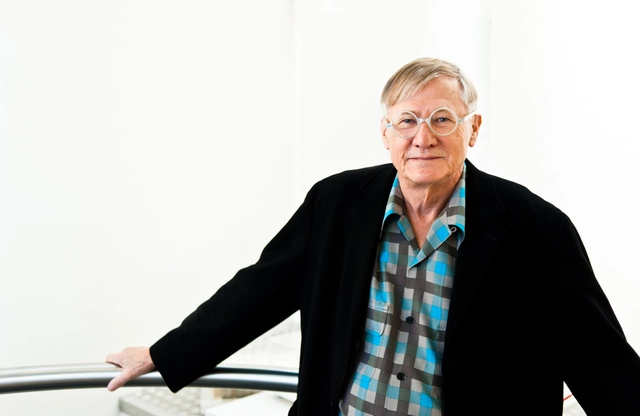
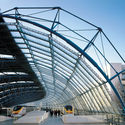
Sir Nicholas Grimshaw has been awarded the 2019 Gold Medal by the Royal Institute of British Architects. Having played a leading role in British architecture for more than half a century, Grimshaw’s acclaimed works include the landmark International Terminal at London’s Waterloo station and the visionary Eden Project in Cornwall.
The medal is awarded in recognition of a lifetime’s work and is approved personally by Her Majesty Queen Elizabeth II. It is given to a person, or group of people, who have had a significant influence "either directly or indirectly on the advancement of architecture." Previous winners include Neave Brown (2018) and Paulo Mendes da Rocha (2017).
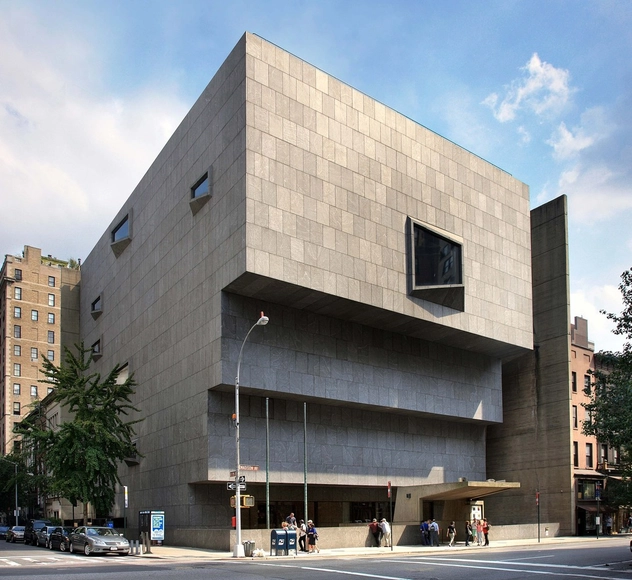
In the latest turn of events for the New York art scene, the Frick Collection has announced that the Met will vacate it's home in Marcel Breuer's Madison Avenue building in 2020. As the Art Newspaper reports, the Frick will move in later that year while its mansion undergoes a renovation and expansion by Selldorf Architects. The news follows the recent decision by the New York City Landmarks Preservation Commission to approve the museum’s latest expansion plan to its 1914 Gilded Age mansion. The move is the latest development in an ongoing effort to provide additional space for the Frick Collection.
The National Building Museum has announced critics Inga Saffron and Robert Campbell as the recipients of the 2018 Vincent Scully Prize. The award celebrates the pair's thoughtful, insightful, and clear journalistic observations and criticisms of the built environment. Both Pulitzer Prize winning journalists, the two are honored by the Museum for their ability to reveal how smart architecture criticism can raise the consciousness and expectations for the built environment.
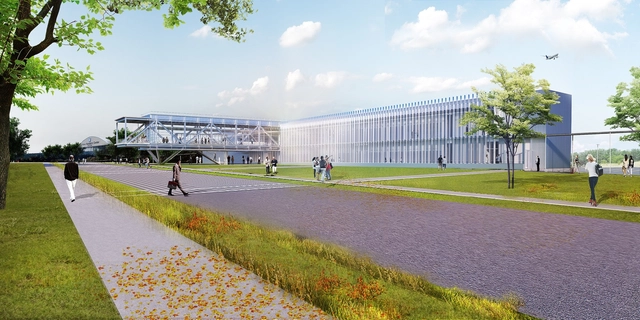
TEN Arquitectos has released images of their NASA Research Support Building at the Glenn Research Center in Cleveland, Ohio. Marking the Agency’s diamond (60th) anniversary, the research center is to serve as “a new and contemporary public face for the home of the country’s most prolific aeronautic and aerospace innovations.”
The two-story, 60,000-square-foot research center, which has just broken ground, consists of a series of rectilinear massings positioned to optimize program adjacencies, creative interaction, and to accommodate public green spaces both indoors and out.
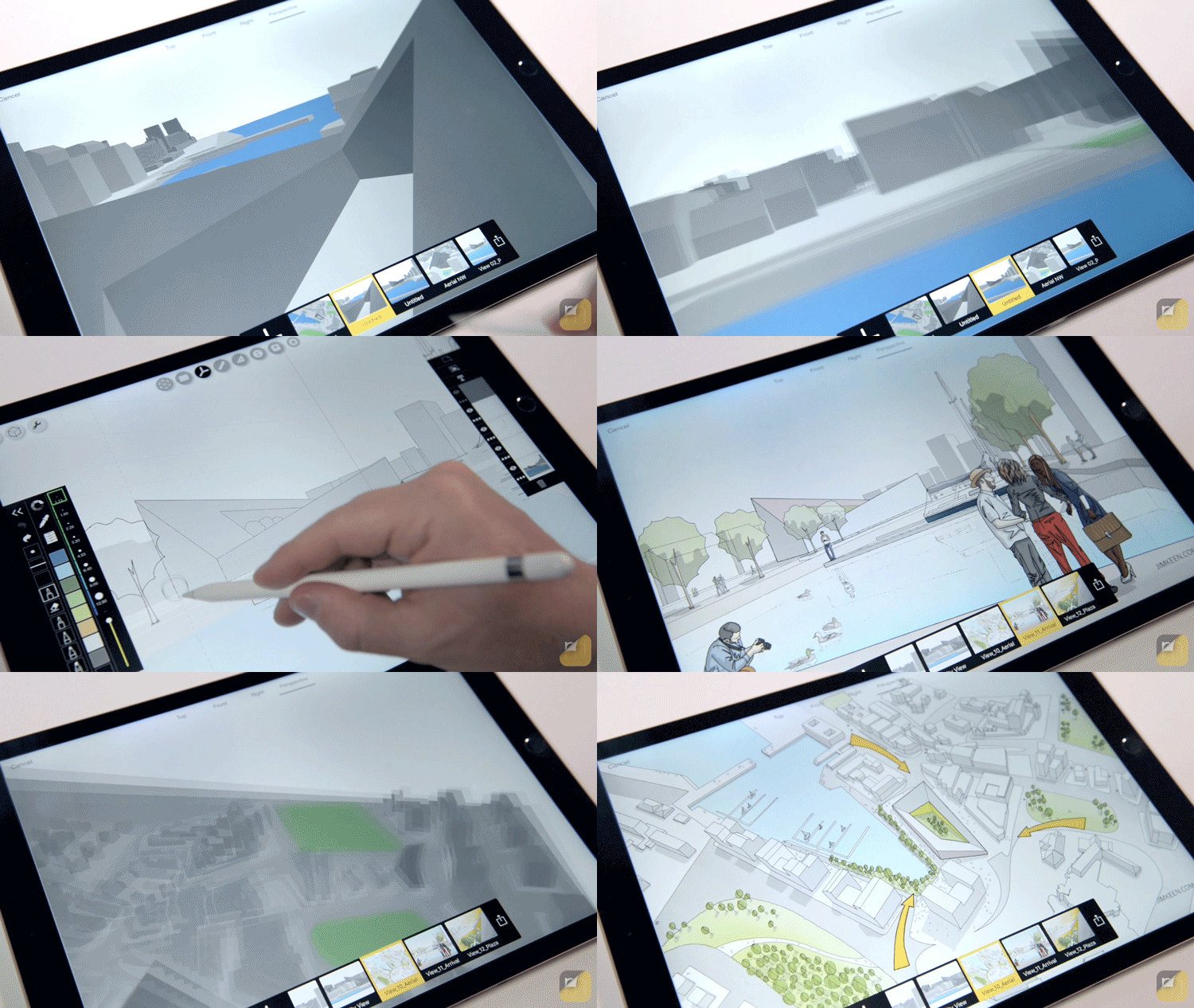
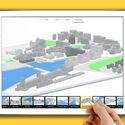
Morpholio Trace and Shapr3D have joined forces to imagine a new workflow for iOS 12. Their new feature named “Drag’n’Fly” allows users to “literally put a live 3D model into their Trace sketches, create infinite views and then, automatically generate the perspective grids to draw over.”
Designed for the iPad Pro, Drag’n’Fly seeks to streamline the existing process of architects exporting one view at a time to sketch over. The new feature offers an infinite number of views to draw over, allowing designers to navigate around a 3D model from sketch to sketch to create a narrative, or zoom in on spatial details.
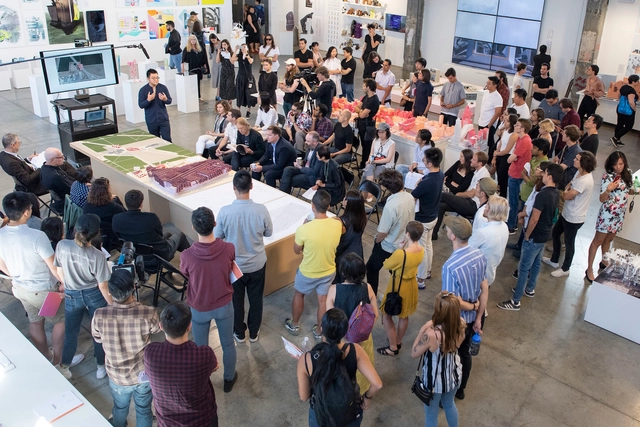
Three SCI-Arc graduates became the recipients of the first Woods Bagot Prize, an award that recognizes the top design portfolios and academic achievements from students in the undergraduate and graduate programs on September 9. The prize-winners were awarded USD $20,000 along with an offer for a position at any of the international firm’s 15 studios. From a pool of over 50 applicants, the prize-winners Mikiko Takasago from Japan, M.Arch 1, José Carlos García from Mexico, M.Arch 2, and undergraduate Luciano Meghini from Italy, B.Arch, were selected.
Suhewan Skyscraper. Image Courtesy of Foster + Partners
Work has begun on Foster + Partners' 200-meter-high Suhewan Skyscraper in Shanghai. Designed as part of a larger regeneration plan, the 42 story tower will be built for property development company China Resources Land. The first office tower in the residential district, the project is part of a larger move to make Shanghai a top financial and technology center by 2020. Designed as a landmark development in the Suhewan East Urban Complex, the skyscraper will open up to views of Pudong, Bund and the Huangpu River.
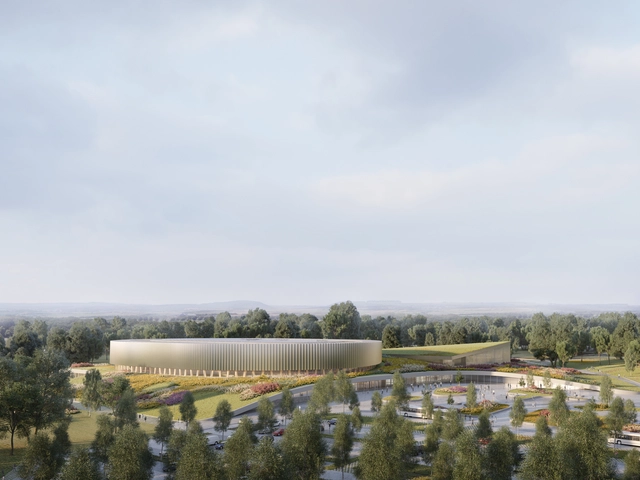
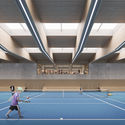
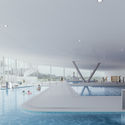
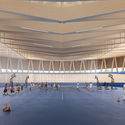
Mondorf-les-Bains Velodrome and Sports Complex. Image Courtesy of Mecanoo
Mecanoo and Metaform Architects have won a competition to design a new Velodrome and Sports Complex in Mondorf-les-Bains, Luxembourg. Sited in the countryside outside the city, the project was designed as a destination for recreation. The new project will include a new national velodrome with an aquatic centre, multisport hall and climbing wall. The design aims to be a sporting hub that could host national and international cycling events while also remaining open to the community and future international school on site.
How much of our utility bills are devoted to heating and cooling? What is the R Value of fiberglass? In fact, what is an R Value?
Senator Windows answers these questions with a new infographic driven at “reducing heat loss in your home.” Aimed at both designers and home users, the infographic features a blend of statistics, diagrams, and definitions outlining how heat loss occurs, and how to mitigate against it.
We have republished the infographic below, offering a useful introduction to an almost universal issue in both the design and occupation of buildings.
https://www.archdaily.com/902686/this-infographic-offers-a-guide-to-reducing-heat-loss-in-homesNiall Patrick Walsh
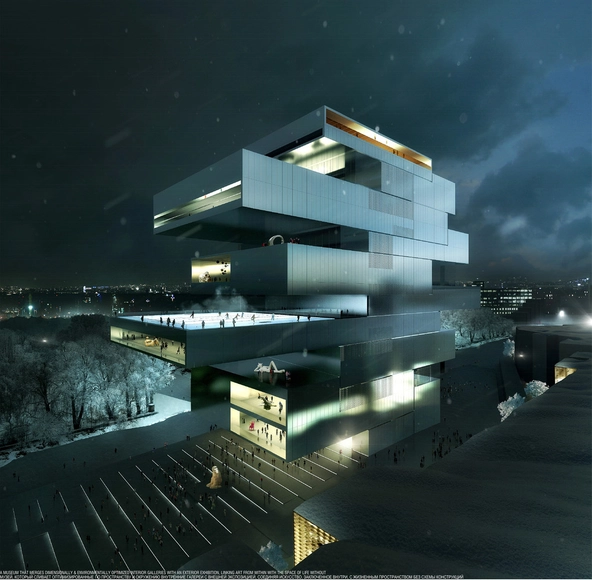
Speaking to the Art Newspaper Russia, the head of the NCCA Sergey Perov confirmed that the project has been officially scrapped due to lack of funding.
https://www.archdaily.com/902678/heneghan-pengs-moscow-contemporary-arts-center-scrapped-due-to-funding-shortageNiall Patrick Walsh
Videos
A still from PLANE-SITE's video of Jorge Hernandez' installation at the Palazzo Bembo in Venice. Image Courtesy of PLANE-SITE
The European Culture Center’s Time Space Exhibition during the Venice Biennale 2018 features a new short film depicting the spatial qualities of light in architectural design, both as a material and metaphor.
This collaboration between architect and professor Jorge L. Hernández and photographer Carlos Domenech explores their endeavors in providing a lighting-based design solution for the Williamsburg, Virginia courthouse. Battling the issues of security and privacy of the court with the need for natural daylight, Hernández recreated the cupola, a vernacular roof turret intended for ventilation for illumination instead. Light, entering the courtroom from above, transforms the previously dull space and becomes, “an allegory for justice”.
The European Culture Center’s Time Space Exhibition during the Venice Biennale 2018 features a new short film depicting the spatial qualities of light in architectural design, both as a material and metaphor.
This collaboration between architect and professor Jorge L. Hernández and photographer Carlos Domenech explores their endeavors in providing a lighting-based design solution for the Williamsburg, Virginia courthouse. Battling the issues of security and privacy of the court with the need for natural daylight, Hernández recreated the cupola, a vernacular roof turret intended for ventilation for illumination instead. Light, entering the courtroom from above, transforms the previously dull space and becomes, “an allegory for justice.”
Material manufacturer Re-Structure Group has begun using a new 3D cementitious sandwich panel in the United States to help protect homes during natural disasters. As CNBC reports, the material has been widely used around the world, but is now being tested in the United States. Designed for mass production, the panels are fireproof, seismic resistant beyond any earthquake recorded in human history, and are hurricane resistant. The material is made as a sustainable and resilient building system that aims to reshape the U.S. housing market.
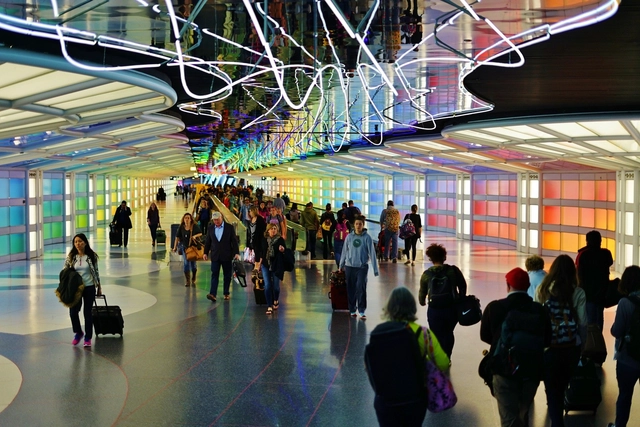
Studio Gang, BIG, Calatrava and SOM are among twelve leading architecture teams vying to work on the Chicago O'Hare International Airport expansion. The city’s request for qualifications calls for demolishing O'Hare's Terminal 2 to replace it with a global concourse and terminal for both domestic and international flights from United and American Airlines. The city’s Department of Procurement Services estimates the total costs of the expansion process (from design through construction) will cost an approximate $8.7 billion. Known as O’Hare 21, the project represents O’Hare’s first major overhaul in 25 years.
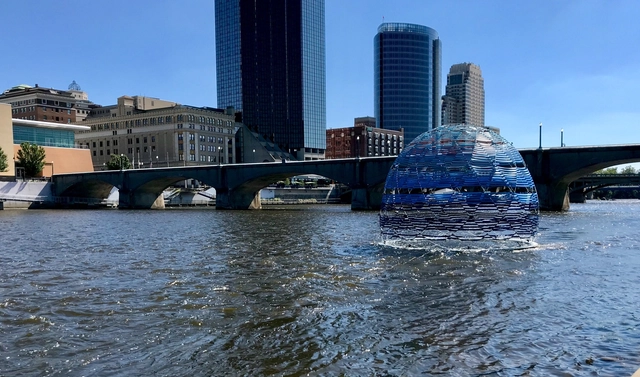
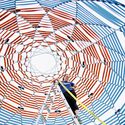
SLO Architecture has built Harvest Dome 3.0, a floating dome project made to celebrate the riparian heritage of Grand Rapids. Made with local materials harvested from the Grand River industry, the 20-foot-diameter orb would be constructed from brightly colored surplus seat-belts and studded with rearview mirrors, set atop a ring of 128 repurposed two-liter soda bottles. The project explores the city’s legacy of manufacturing and a history of production.
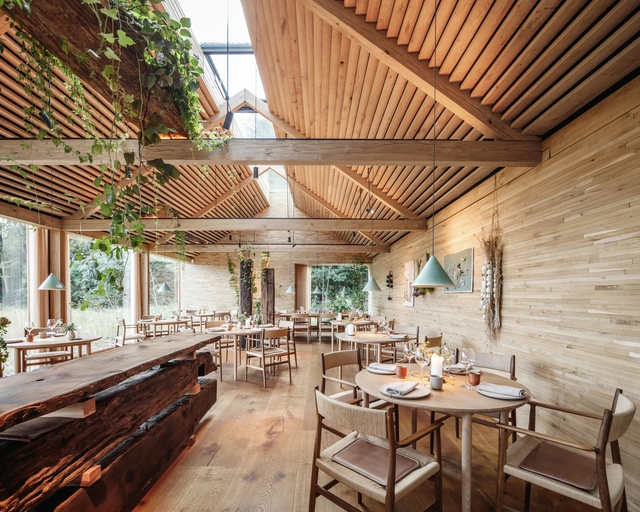
Bjarke Ingels Group has designed a cluster of buildings as the new home for Noma, one of the world’s most acclaimed restaurants. Situated between two lakes within the community of Christiania in Copenhagen. Built on the site of an ex-military warehouse once used to store mines for the Royal Danish Navy, the project is imagined as an intimate culinary garden village. With interiors completed in collaboration with Studio David Thulstrup, the project dissolves the restaurant’s individual functions into a collection of separate yet connected buildings.
When it comes to sustainability, the Netherlands has always been at the forefront. In recent news, Zwolle, one of the country's "greenest cities," implemented the world's first bicycle lane composed of post-consumer waste that would normally be discarded or incinerated.
To create the material, Zwolle used old, plastic bottles, festival beer cups, cosmetic packaging, and plastic furniture. Still, in the pilot phase, the bike path contains 70% recycled plastic in its 30-meter pathway. Although, the city hopes to create a bike path made entirely of recycled plastic in the future.
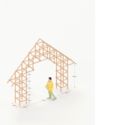
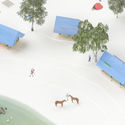
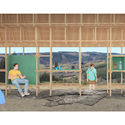
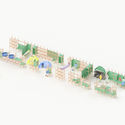
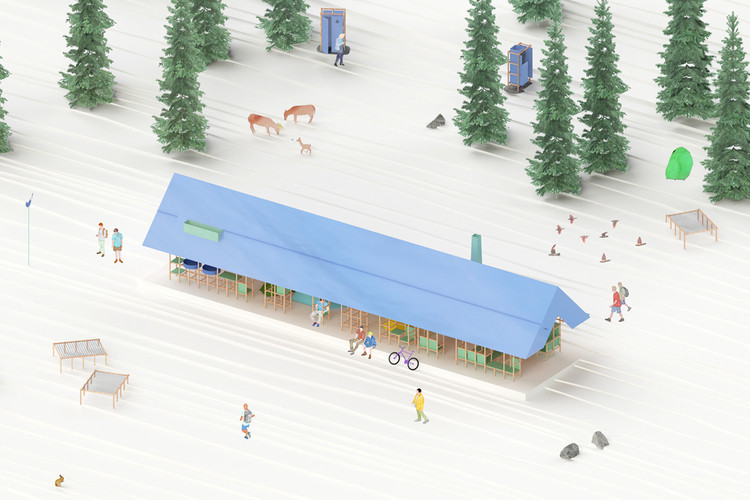
French architects USUS Architectes reinvent the typical campground by designing a modular multipurpose structure as an ecologicalbivouac along the trekking routes in Massif Central, France. Together, the Association of Natural Parks of the Massif Central (IPAMAC), PNR Livradois-Forez, PNR Millevaches in Limousin, and the International Center for Art and Landscape (CIAP) wanted to tackle the lack of suitable accommodation along the trails. After deliberating from over 64 proposals, the agencies ultimately selected Peaks + Simon BOUDVIN and USUS + Zebra3 as project co-laureates of the competition.












































_Prudence_Upton.jpg?1537804562 "© Prudence Upton")


_Hamilton_Lund_2017251.jpg?1537804531 "© Hamilton Lund")




.jpg?1537110386&format=webp&width=640&height=580)