In this episode of Design and the City - a podcast by reSITE on how to make cities more liveable – scholar, writer and consultant Tim Gill, author of Urban Playground: How Child-Friendly Planning and Design Can Save Cities, talks about the importance of designing cities that can foster play and empower children autonomy, as a way of creating inclusive urban environments fit for all ages and abilities. Gill argues for enhancing children's everyday freedom and discusses his research into ideas and principles that would make neighbourhoods rich in experiences in possibilities, which he defines as child-friendly urban planning.
Westfield Mall of the Netherlands / MVSA Architects. Image Courtesy of Kriskadecor
In architecture and interior design, ceilings are fundamental elements that combine functionality with aesthetic features such as colors, textures, and materials. While providing quality and comfort, unique and well-thought ceilings can create a dramatic visual impact, defining a building’s tone and character. However, even though a room’s “fifth wall” is a crucial design component, it is not frequently emphasized in architectural projects – or not nearly as much as decor, furniture, wallpaper, or other elements that define interior ambiance. It is therefore important to explore the numerous creative opportunities that a ceiling can offer, beyond the typical plain white shade that continues to dominate in most interior spaces.
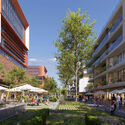
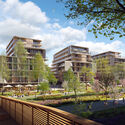
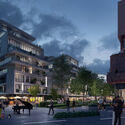
MVRDV has revealed "O", one of four letter-shaped apartment buildings that spell out the word HOME in Franklin Mitte, Mannheim. The 15-storey residential building features a brightly colored structure with 120 apartments, commercial spaces, and a terrace, and is part of Franklin Mitte's complete master plan transformation.
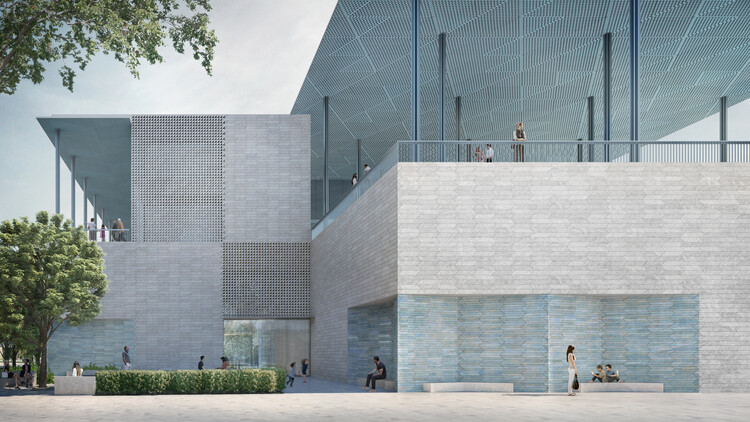
Farshid Moussavi Architecture has recently revealed the design for the Ismaili Center in Houston, a project dedicated to cultural exchanges and civic outreach. An ambassadorial building for the largest Ismaili Muslim community in the United States, the new building will host educational, cultural and social events, while also providing a space for contemplation and prayer. The design showcases a contemporary image while reinterpreting traditional Persian elements, thus establishing a dialogue between tradition and modern architecture.
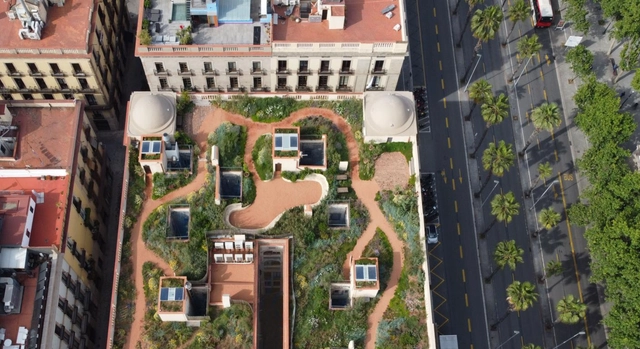
Xifré’s Rooftop: “Floating” Wild Garden (Barcelona, España). Image Cortesía de New European Bauhaus
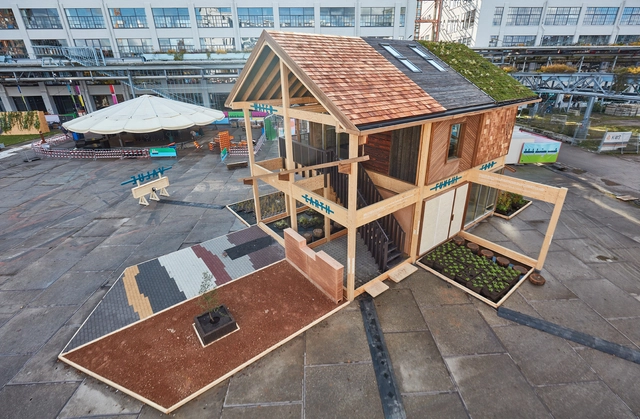
The European Commission's New European Bauhaus has announced the winners of the 2021 edition at the Ateliers des Tanneurs in Brussels, Belgium.
According to the organization, the main objectives have been to recognize current achievements and help the younger generation to continue developing emerging concepts and ideas that illustrate three values: sustainability, aesthetics, and inclusion. Accordingly, President of the European Commission Ursula von der Leyen has stated that "these projects give a lot of hope for our fight against climate change and the European Green Deal."
Opal orbs diffuse the light in the Ace pendant by Troy Lighting, seen here. Reminiscent of the molecular designs of the 1950s atom age era, the pendant’s textured bronze finish pairs well with wood. Image Courtesy of Hudson Valley Lighting Group
With winter drawing in across the northern hemisphere, Hudson Valley Lighting Group share tips on how to warm up homes with layered lighting and worn-in finishes.
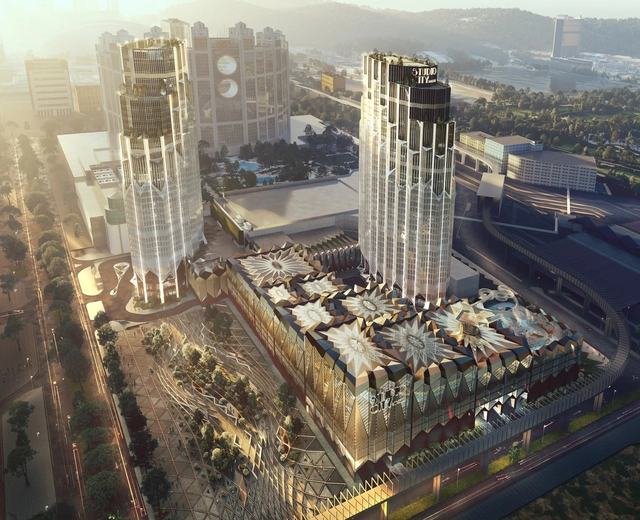
Zaha Hadid Architects' Hollywood-inspired Studio City Phase 2 has reached its full height of construction. Located in the Cotai district of Macau, the resort expansion was assigned to Zaha Hadid Architects back in 2017, featuring new leisure, entertainment, and hospitality facilities, including one of Asia’s largest indoor & outdoor water parks. The project was named winner of the ‘Regional Award Asia’ at the BREEAM Awards 2021, and is set to be complete in December 2022.
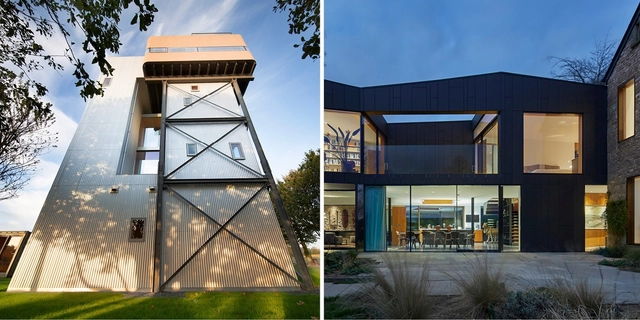
The Royal Institute of British Architects (RIBA) has announced the first two shortlisted projects for the 2021 House of the Year, an annual award that honors the best new architect-designed house or extension in the United Kingdom. The following two projects will be announced on November 24th, and the complete shortlist will be announced on December 8th, 2021, on UK's Channel 4.
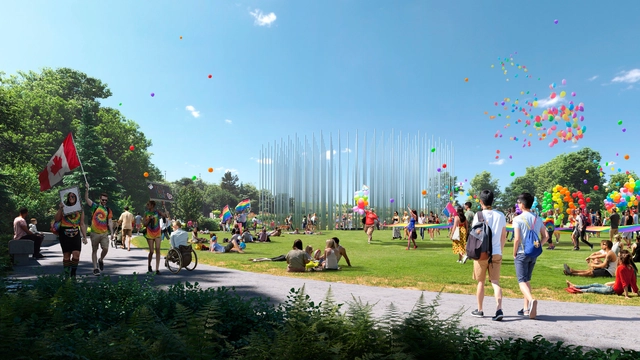
Canada's Department of National Heritage has announced the five finalists for the LGBTQ2+ National Monument competition, a project meant to honour the community and recall its oppression during the LGBT Purge period. Among the shortlisted designs is SOM's proposal, consisting of an array of flagpoles stripped of their flags, symbolising the trauma, deprivation of culture and concealment of identity that the LGBTQ2+ community was experienced. Designed in collaboration with Rebecca Belmore, Noam Gonick, and HTFC Planning & Design, the design titled Bapiiwin, meaning survival /overcoming in native Ojibwe, seeks to provide a space of remembrance while serving as a symbol of resilience.
Led by American Lebanese architect Hashim Sarkis, the jury of the global Holcim Awards for Sustainable Construction has announced the winners of the sixth edition of the global competition at a handover ceremony at the 2021 Venice Biennale in Italy.
Sou Fujimoto Architects has unveiled its design for the Hida Takayama University, a new academic institute tucked in a small rural area of Japan. The project aims to revitalize the rural areas which are often overlooked, especially by academic institutes, and nurture the sense of community and appreciation of the rich culture provided by nature. The design features an organic-shaped structure inspired the surrounding landscape and a walkable roof. The university is set to open in 2024, and will be followed by 11 other regional learning centers across the country.
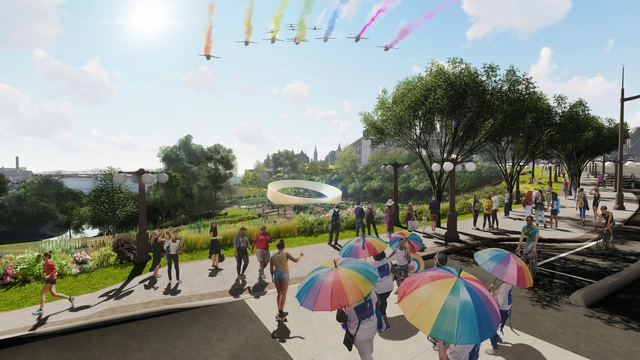
Canada’s Department of National Heritage has announced the five finalists for the LGBTQ2+ National Monument competition, a project meant to tell the story of generations of people who have been persecuted, specifically during the LGBT Purge period. Among the shortlisted designs is The Lens, a proposal that turns a symbol of oppression into an identity element and uses the landscape to express the community’s reverberation into society. Designed by a team comprising Canadian office Fathom studio, MVRDV and Two Row Architect, the proposal seeks to express resiliency, creating a space for memorialization and education while providing an inclusive space for the 2SLGBTQQIA+ community.
Rendering of the TFAM art complex. Image Courtesy of Taipei Fine Arts Museum
Following several years of preparation, Taipei Fine Arts Museum announces the start of its two-phase expansion project titled Out of Bounds: TFAM Expansion. Construction on a new collections vault began in October of this year, and an open call for architectural proposals for another new museum building will be launched in January 2022. The Museum was completed in 1983 and together with the new collection storage area and a second building, it will gradually expand Taiwan's contemporary art vista.
The Royal Institute of British Architects (RIBA) has announced its shortlist for the 2021 International Prize, a prestigious biennial award that celebrates the world’s best new projects that “champion buildings that change the world and positively impact the community around them". The jury has selected three projects from a list of 16 projects in 11 countries, and will announce the winner on Thursday 2nd December.
UNStudio revealed its competition-winning design for K31 Courtyard, a residential complex in Moscow that fosters community-building in the context of a rapidly changing city. The proposal features a stepped podium and two towers and reinterprets Moscow’s typical courtyard block, aiming to create a new neighbourhood through various housing typologies, amenities, and outdoor spaces.
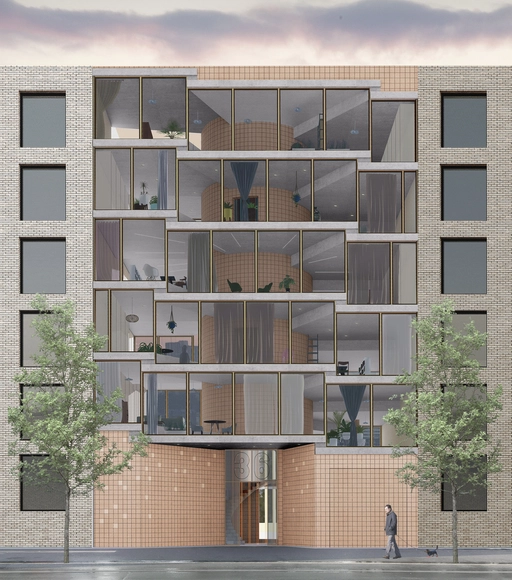
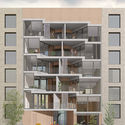
German architecture firm Meyer-Grohbruegge has proposed a new residential typology that "adds a dynamic spatial dimension to a small building gap and emphasizes physical experience in housing". The competition-winning design features a central spiral staircase that connects the entire structure together and offers residents a fluid and dynamic interior that merges the outdoors and indoors.
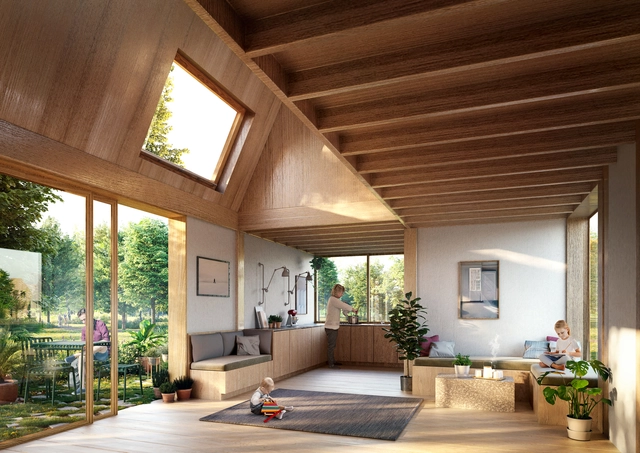
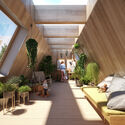
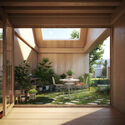
VELUX Group reveals The Build for Life concept aimed at creating sustainable communities and built environment through affordable, socially-oriented designs and new housing models, healthy indoor climates and the use of low-impact materials. Developed together with EFFEKT, MOE engineers and Danish construction company Enemaerke & Petersen A/S, the concept provides architects and city planners with a “compass’ for navigating the sustainability imperatives of the moment while encouraging the design of healthier living places.
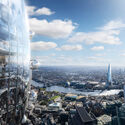
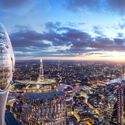
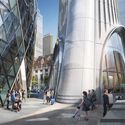
The UK government announced yesterday that planning approval will not be granted for Foster+Partners' Tulip tower. The decision letter published on behalf of the UK's housing secretary cites concerns over the design's embodied carbon and the possible negative impact on the surrounding architectural heritage. First revealed in 2018, the 305-metre tower would have become the tallest building in London's financial district.
The climate crisis has become a staple of the architecture discourse, with the field slowly acknowledging its contribution to environmental issues and seeking to reframe its values and approaches. However, there is an evident lack of commitment and consistency in addressing the matter and an absence of systemic change. Emerging practices, organizations and startups are carving a new architecture practice, slowly unfolding a paradigm shift beyond "green" add-ons and technical equipment. Addressing environmental issues on multiple levels, from policy and design strategies to materials and construction processes, the following are some of the actors reframing the profession's relationship with sustainability.
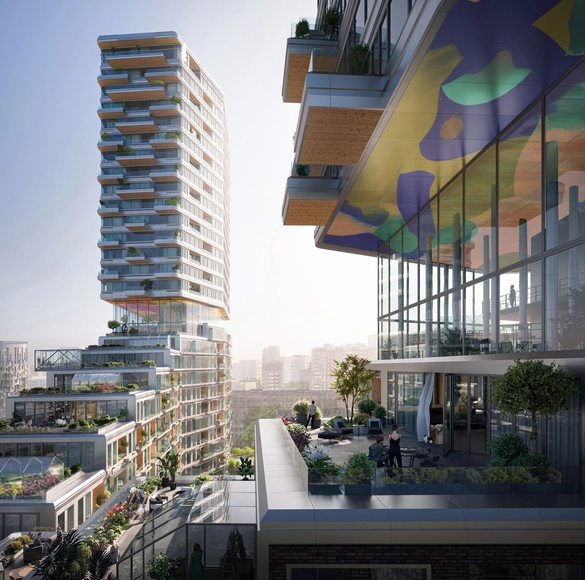
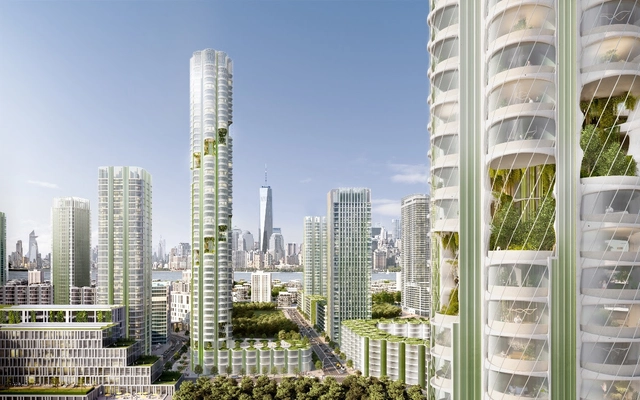
"What if the built environment could be a solution to the climate crisis, rather than part of the problem? What if buildings could act like trees – capturing carbon, purifying the air, and regenerating the environment?" Responding to these questions, Skidmore, Owings & Merrill (SOM) has proposed Urban Sequoia, an architectural concept inspired by the ecosystem at the 2021 UN Climate Change Conference in Glasgow - COP26. The design features “forests of buildings" that isolate carbon and produce biomaterials that create a new ecological and resilient urban environment.
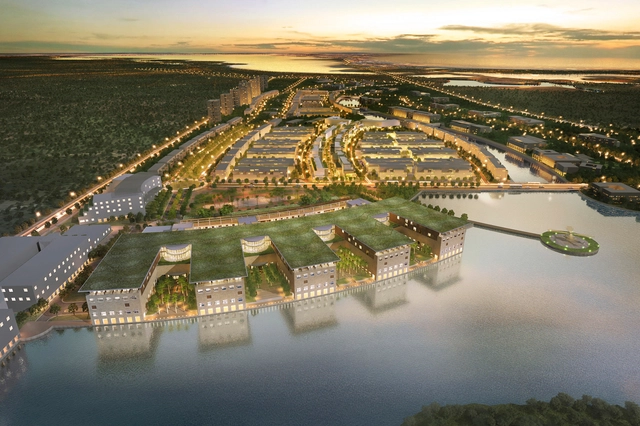
Zaha Hadid Architects reveals the winning design proposal for a mixed-use development in Budapest, comprising residential, office and retail functions, tied together by civic spaces and landscaped areas. The Zugló City Centre establishes a network of public squares and urban gardens that re-establish the natural ecosystem of Rákos Creek and connects the new development to the surrounding framework of parks and avenues.
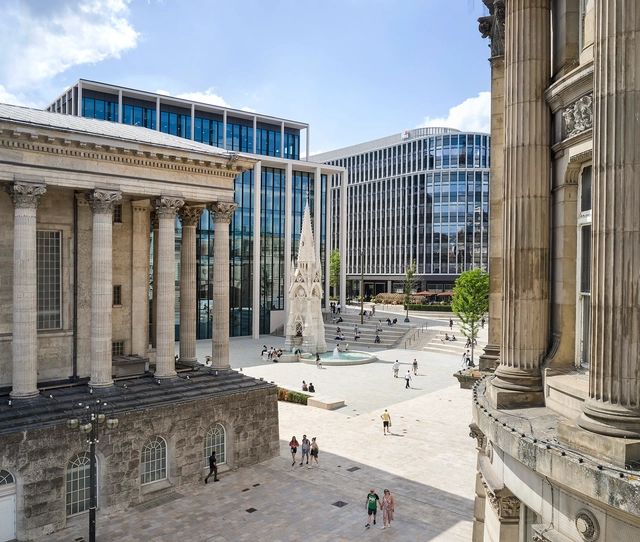
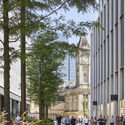
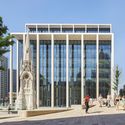
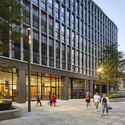
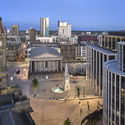
The first phase of the Paradise Masterplan by Glenn Howells Architects (GHA) in Birmingham’s historic square has been completed, marking a major milestone in the city’s redevelopment plans. The newly restored civic square features Two Chamberlain Square, an eight-storey office building with a glazed facade and expansive column frame amidst 19th century cultural buildings.
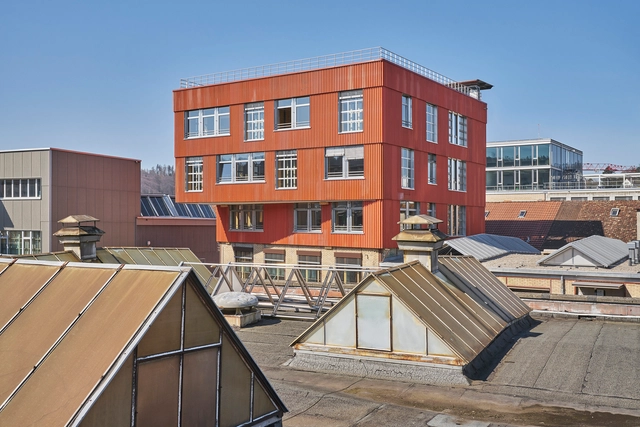
MVRDV revealed plans for adaptive reuse of Berliner Union Film Ateliers (BUFA), receiving planning approval to redevelop the first two buildings. The project expands the scope of the site to address a broader user base, including all kinds of creative industries, as well as organisations and individuals involved in activism and social justice. Building on the site's heritage and spatial diversity, MVRDV proposes a series of sustainable transformations of the existing structures, reaffirming the adaptive reuse ethos.
The Serena del Mar Hospital Center (CHSM) is the first hospital designed by Safdie Architects. Focusing on the human being, the concept revolves around the idea that "access to nature and natural light are vital in creating improved therapeutic experiences for patients, families and staff alike". Seeking to provide a sense of well-being that leads to better clinical outcomes, the hospital has started opening in phases to the public, earlier this year. The firm's first project in Latin America is not the only one, in fact, Safdie Architects are working on Qorner, a residential project under construction in Quito, Ecuador, and the Albert Einstein Education and Research Center in Brazil, to be inaugurated in early 2022.


.jpg?1636467268&format=webp&width=640&height=580)
.jpg?1637314414&format=webp&width=640&height=580)
.jpg?1637314414 "Courtesy of MVRDV")

.jpg?1637314404 "Courtesy of MVRDV")
.jpg?1637314508 "Courtesy of MVRDV")
.jpg?1637314414)





.jpg?1637229880 "Courtesy of Zaha Hadid Architects / Minmud")




Sou_Fujimoto_Architects_004.jpg?1637138724&format=webp&width=640&height=580)
Sou_Fujimoto_Architects_004.jpg?1637138724 "Courtesy of Sou Fujimoto Architects")
Sou_Fujimoto_Architects_001.jpg?1637138564 "Courtesy of Sou Fujimoto Architects")
Sou_Fujimoto_Architects_003.jpg?1637138684 "Courtesy of Sou Fujimoto Architects")
Sou_Fujimoto_Architects_002.jpg?1637138565 "Courtesy of Sou Fujimoto Architects")
Sou_Fujimoto_Architects_004.jpg?1637138724)

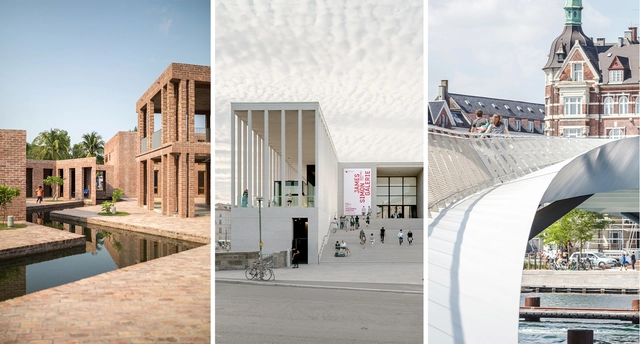
.jpg?1637053142 "James-Simon-Galerie / David Chipperfield Architects (Berlin, Germany). Image © Simon Menges")
.jpg?1637053340 "Lille Langebro / WilkinsonEyre + Urban Agency (Copenhagen, Denmark). Image © Rasmus Hjortshøj")
.jpg?1637053381 "Friendship Hospital, Satkhira / Kashef Chowdhury-URBANA (Shyamnagar, Bangladesh). Image Courtesy of URBANA")














.jpg?1636652992 "Courtesy of SOM | Miysis")
.jpg?1636652975 "Courtesy of SOM")
.jpg?1636652975 "Courtesy of SOM")
.jpg?1636653008 "Courtesy of SOM")