1. ArchDaily
  2. Rotterdam

Rotterdam: The Latest Architecture and News

MVRDV Advances Urban Densification with The Sax Residential Towers in Rotterdam

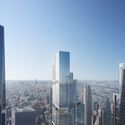
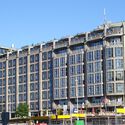
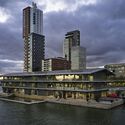
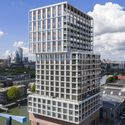
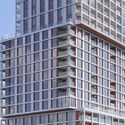
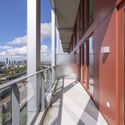
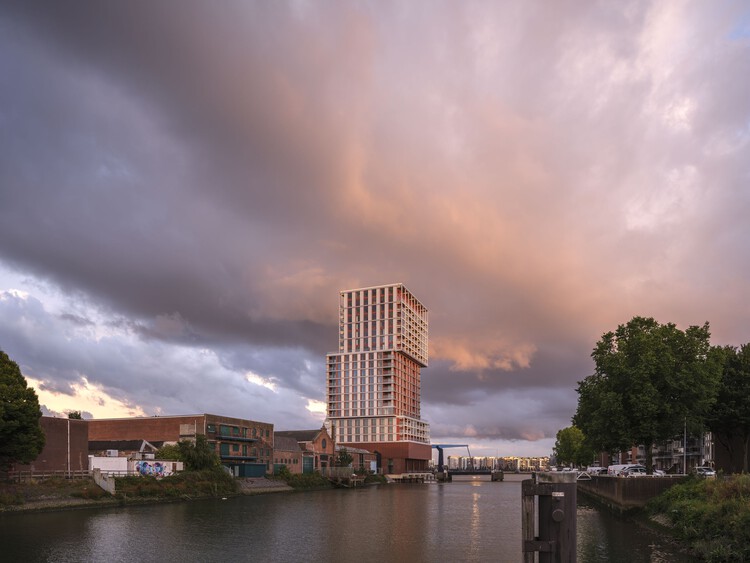
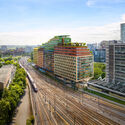
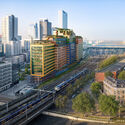
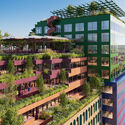
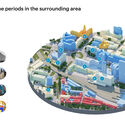
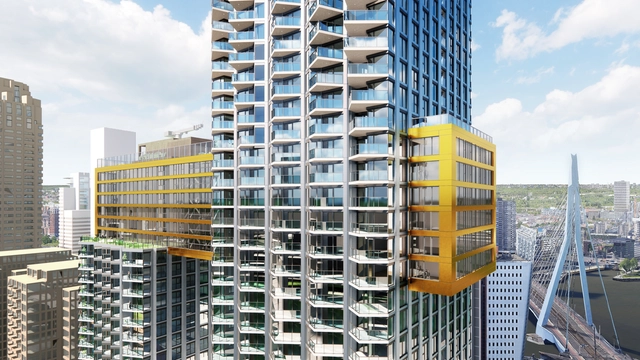
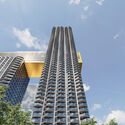
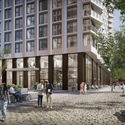
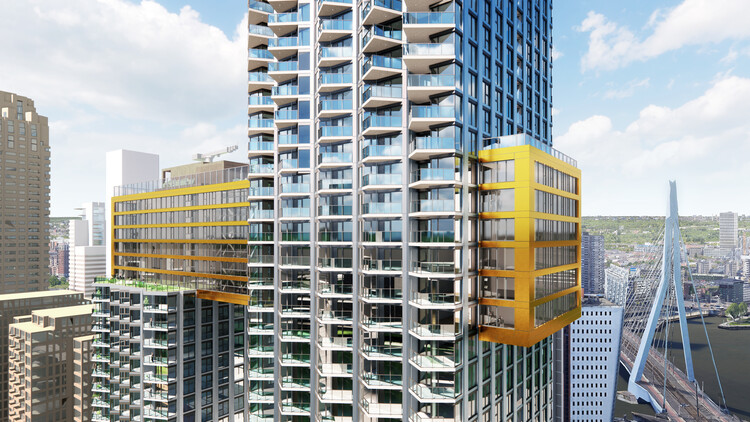
The City of Rotterdam, developers BPD and Synchroon, and architecture firm MVRDV have officially begun construction on The Sax, a major residential project located on Rotterdam's Wilhelminapier. Designed to contribute to the city's ongoing densification efforts, the development will deliver 916 apartments within two interconnected towers. Once completed, The Sax will make Wilhelminapier the most densely populated area in the Netherlands, making the project an example of compact urban growth. The design comprises two towers, combining a wide mix of housing types and shared amenities with strong connections to public transport and sustainable mobility solutions, including parking for 1,800 bicycles and a fully automated car garage. With its silver façade and undulating balconies, the building's form echoes the shape of a saxophone, reflecting the character of Rotterdam.

MVRDV Advances Urban Densification with The Sax Residential Towers in Rotterdam - Image 1 of 4MVRDV Advances Urban Densification with The Sax Residential Towers in Rotterdam - Image 2 of 4MVRDV Advances Urban Densification with The Sax Residential Towers in Rotterdam - Image 3 of 4MVRDV Advances Urban Densification with The Sax Residential Towers in Rotterdam - Image 4 of 4MVRDV Advances Urban Densification with The Sax Residential Towers in Rotterdam - More Images+ 18

MAST Reveals Floating Neighborhood Design for Rotterdam’s Disused Spoorweghaven Dock

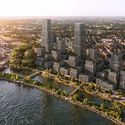
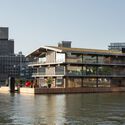
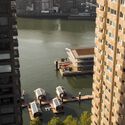
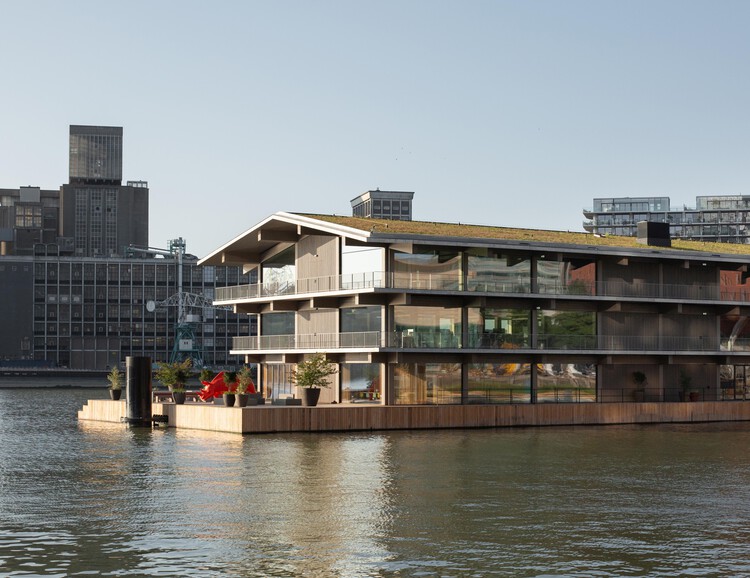
Danish maritime architecture studio MAST, in collaboration with construction company BIK Bouw, has designed a new floating community for the disused Spoorweghaven dock in Rotterdam, Netherlands. The proposed neighborhood, which has received initial support from the Municipality of Rotterdam, includes over 100 apartments, public spaces, commercial units, and a recreational harbor near the city center. Floating architecture is MAST's response to the Netherlands' housing crisis, offering a modular, adaptable solution for building a wide range of structures on water.

MAST Reveals Floating Neighborhood Design for Rotterdam’s Disused Spoorweghaven Dock - Image 1 of 4MAST Reveals Floating Neighborhood Design for Rotterdam’s Disused Spoorweghaven Dock - Image 4 of 4MAST Reveals Floating Neighborhood Design for Rotterdam’s Disused Spoorweghaven Dock - Image 2 of 4MAST Reveals Floating Neighborhood Design for Rotterdam’s Disused Spoorweghaven Dock - Image 3 of 4MAST Reveals Floating Neighborhood Design for Rotterdam’s Disused Spoorweghaven Dock - More Images+ 10

MAD Architects’ Fenix Museum of Migration Opens in Rotterdam’s City Harbor

Fenix is a new museum in Rotterdam's City Harbour, dedicated to the collection of historic and contemporary objects that explore migration through art. It is located on the Katendrecht peninsula on the south bank of the River Maas, in a 100-year-old former warehouse recently renovated by MAD Architects and Bureau Polderman. This marks MAD Architects' first commission for a public cultural building in Europe. Recently completed, the building is set to open this Friday, May 16, showcasing three exhibitions: All Directions, featuring over 150 artworks and objects from the Fenix collections; The Family of Migrants, a photographic exhibition by Edward Steichen; and The Suitcase Labyrinth, an interactive installation made up of 2,000 donated suitcases.

MAD Architects’ Fenix Museum of Migration Opens in Rotterdam’s City Harbor - Image 1 of 4MAD Architects’ Fenix Museum of Migration Opens in Rotterdam’s City Harbor - Image 2 of 4MAD Architects’ Fenix Museum of Migration Opens in Rotterdam’s City Harbor - Image 3 of 4MAD Architects’ Fenix Museum of Migration Opens in Rotterdam’s City Harbor - Image 4 of 4MAD Architects’ Fenix Museum of Migration Opens in Rotterdam’s City Harbor - More Images+ 11

Kop Dakpark: The Project by INBO and h3o architects that Redefines Social Housing in Rotterdam

Subscriber Access | 

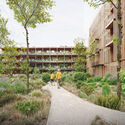
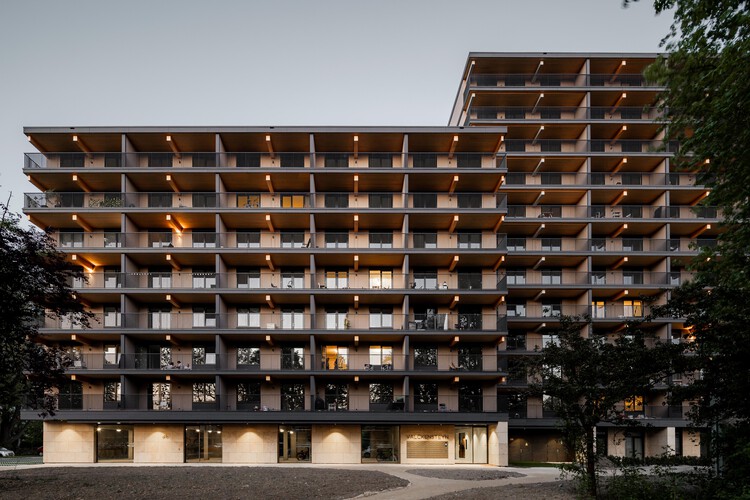
Located at the edge of Rotterdam's iconic Dakpark, the new Kop Dakpark project, designed by the architectural firms INBO and h3o, stands as an innovative model of sustainable and inclusive housing. Developed by Woonstad Rotterdam, this residential complex includes 153 affordable homes —63 social and 90 middle-income— that not only address the need for housing but also integrate nature and community to enhance both the urban and ecological landscape.

Kop Dakpark: The Project by INBO and h3o architects that Redefines Social Housing in Rotterdam - Imagen 1 de 4Kop Dakpark: The Project by INBO and h3o architects that Redefines Social Housing in Rotterdam - Imagen 2 de 4Kop Dakpark: The Project by INBO and h3o architects that Redefines Social Housing in Rotterdam - Imagen 3 de 4Kop Dakpark: The Project by INBO and h3o architects that Redefines Social Housing in Rotterdam - Imagen 4 de 4Kop Dakpark: The Project by INBO and h3o architects that Redefines Social Housing in Rotterdam - More Images+ 13

Van Nelle Factory: The Story Behind a Modernist Icon in Rotterdam

Subscriber Access | 

The Van Nelle Factory, located in Rotterdam, is one of the most significant examples of Modernist Industrial Architecture. Designed by Johannes Andreas Brinkman and Leendert van der Vlugt between 1925 and 1931, with the involvement of Mart Stam — a pioneer in modernist furniture design and architecture — the factory was conceived as a progressive and functional building for processing coffee, tea, and tobacco.

Envisioned as a "daylight factory", the Van Nelle complex introduced revolutionary architectural and social concepts for its time. By integrating glass, steel, and concrete into an open, rational layout, it demonstrated how design could transform industrial processes while improving the lives of the people within. It was not merely a space for production but a symbol of optimism, representing the potential of architecture to reshape industries and communities.

Van Nelle Factory: The Story Behind a Modernist Icon in Rotterdam - Imagen 1 de 4Van Nelle Factory: The Story Behind a Modernist Icon in Rotterdam - Imagen 2 de 4Van Nelle Factory: The Story Behind a Modernist Icon in Rotterdam - Imagen 3 de 4Van Nelle Factory: The Story Behind a Modernist Icon in Rotterdam - Imagen 4 de 4Van Nelle Factory: The Story Behind a Modernist Icon in Rotterdam - More Images+ 37

Exploring High-Rise Innovations: 8 Conceptual Towers Redefining Urban Density from the ArchDaily Community

Subscriber Access | 

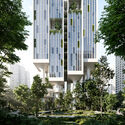
As cities grow and available land becomes more limited, high-rise architecture plays an important role in addressing urban density while shaping new ways of living and working. Tall buildings are evolving beyond their traditional functions to integrate environmental strategies, enhance public engagement, and contribute to the urban fabric. Architects are exploring new materials, energy-efficient technologies, and spatial configurations that make towers more adaptable to their surroundings. Some projects incorporate green spaces and shared amenities to create a stronger connection between the built environment and its users, while others introduce innovative construction techniques to improve sustainability and efficiency.

Among this selection of projects submitted by the ArchDaily community, The Residences at 1428 Brickell by Arquitectonica in Miami, United States introduces a solar-powered facade that contributes to the building's energy needs. In Dubai, UAE, AVA by SOMA creates a transition from the city into a more enclosed, water-defined environment with a focus on luxury living. In Bangkok, Thailand, HAS Design and Research proposes the Bangkok Civic Center Tower as a new type of public space, combining green landscapes with mirrored surfaces to connect the city with nature. These projects reflect different approaches to vertical architecture and highlight how designers are responding to the challenges and opportunities of dense urban environments.

Nieuwe Instituut Hosts "Garden Futures": An Exhibition on Modern Landscape's History and Impact

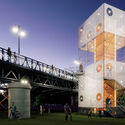
The "Garden Futures" exhibition, currently showing at the Nieuwe Instituut in Rotterdam until April 13, 2025, explores the multifaceted history and future of the modern garden. Curated by Maria Heinrich and spatially designed by Frank Bruggeman, the exhibition presents the garden not only as a personal refuge, but also as a site reflecting broader political and commercial forces. The show's structure, divided into four thematic chapters, allows for a comprehensive exploration of the garden's evolution and its potential for future development.
Nieuwe Instituut Hosts "Garden Futures": An Exhibition on Modern Landscape's History and Impact - Image 1 of 4Nieuwe Instituut Hosts "Garden Futures": An Exhibition on Modern Landscape's History and Impact - Image 2 of 4Nieuwe Instituut Hosts "Garden Futures": An Exhibition on Modern Landscape's History and Impact - Image 3 of 4Nieuwe Instituut Hosts "Garden Futures": An Exhibition on Modern Landscape's History and Impact - Image 4 of 4Nieuwe Instituut Hosts Garden Futures: An Exhibition on Modern Landscape's History and Impact - More Images+ 17

Lloyd Yard Rotterdam Block / WE architecten + Paul de Ruiter Architects + ZUS

MAD Architects’ Metallic Tornado Is Taking Shape Above Rotterdam’s Museum of Migration

Designed by MAD Architects, the FENIX Museum of Migration is scheduled to open in Rotterdam's City Harbor in 2025. Currently under construction, the museum is set to explore the global narrative of migration through art, architecture, photography, and history. Situated in a 16,000-square-meter warehouse built in 1923, once part of the world's largest warehouse, the building has historical significance as a key storage and shipping hub for the Holland America Line. New construction photographs showcase the assembly of the metallic helix, named The Tornado, taking shape above the historical warehouse.
MAD Architects’ Metallic Tornado Is Taking Shape Above Rotterdam’s Museum of Migration - Image 1 of 4MAD Architects’ Metallic Tornado Is Taking Shape Above Rotterdam’s Museum of Migration - Image 2 of 4MAD Architects’ Metallic Tornado Is Taking Shape Above Rotterdam’s Museum of Migration - Image 3 of 4MAD Architects’ Metallic Tornado Is Taking Shape Above Rotterdam’s Museum of Migration - Image 4 of 4MAD Architects’ Metallic Tornado Is Taking Shape Above Rotterdam’s Museum of Migration - More Images+ 6

Rotterdam Apartment Renovation / Ulli Heckmann

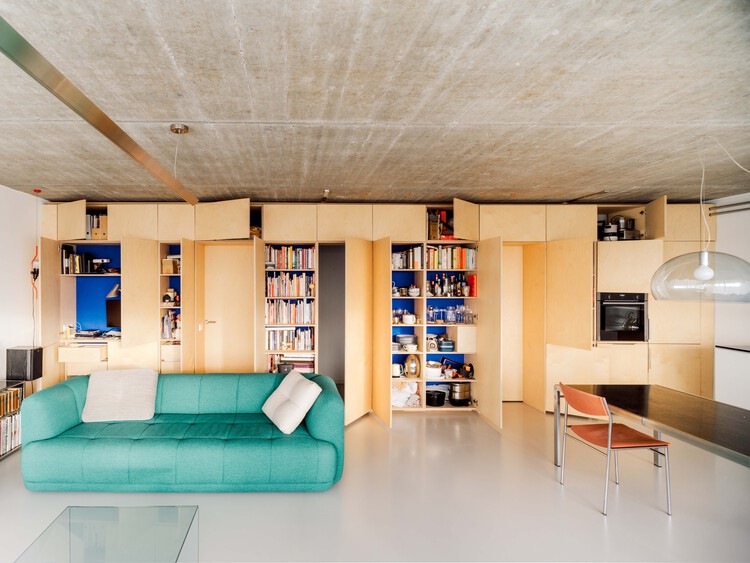
Rotterdam Apartment Renovation / Ulli Heckmann - Interior Photography, Apartment InteriorsRotterdam Apartment Renovation / Ulli Heckmann - Interior Photography, Apartment InteriorsRotterdam Apartment Renovation / Ulli Heckmann - Interior Photography, Apartment Interiors, Table, ChairRotterdam Apartment Renovation / Ulli Heckmann - Apartment InteriorsRotterdam Apartment Renovation / Ulli Heckmann - More Images+ 22

  • Architects: Ulli Heckmann
  • Area Area of this architecture project Area:  100
  • Year Completion year of this architecture project Year:  2023
  • Manufacturers Brands with products used in this architecture project
    Manufacturers:  Gaggenau, Kaldewei, FLOS, Franke, HAY, +5

How Barcelona, Medellin, and Rotterdam Have Generated Public Space Where It Seemed Impossible

CityMakers, The Global Community of Architects Learning from Model Cities and Their Makers is working with Archdaily to publish a series of articles about Barcelona, Medellin, and Rotterdam. The authors are the architects, urban planners, and/or strategists behind the projects that have transformed these three cities and are known in the "Schools of Cities" and "Documentary Courses" made by CityMakers.

There is currently a broad consensus on the importance of public space in the city. Although it may seem quite logical, its significance is not as old as human settlements, which have existed for millennia. The Athens Charter, written just 91 years ago, did not speak so much about the city as a place to live but as a functional machine. Almost a century later, the paradigm has shifted: the city is, above all, its public space. But what happens when public space is threatened by car proliferation, insecurity, or even water?

How Barcelona, Medellin, and Rotterdam Have Generated Public Space Where It Seemed Impossible - Image 1 of 4How Barcelona, Medellin, and Rotterdam Have Generated Public Space Where It Seemed Impossible - Image 2 of 4How Barcelona, Medellin, and Rotterdam Have Generated Public Space Where It Seemed Impossible - Image 3 of 4How Barcelona, Medellin, and Rotterdam Have Generated Public Space Where It Seemed Impossible - Image 4 of 4How Barcelona, Medellin, and Rotterdam Have Generated Public Space Where It Seemed Impossible - More Images+ 3