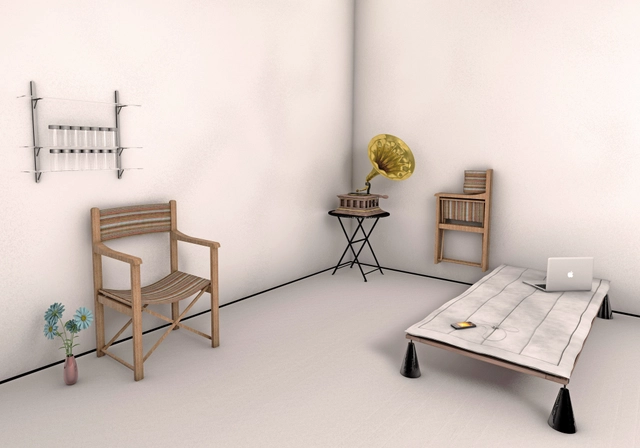
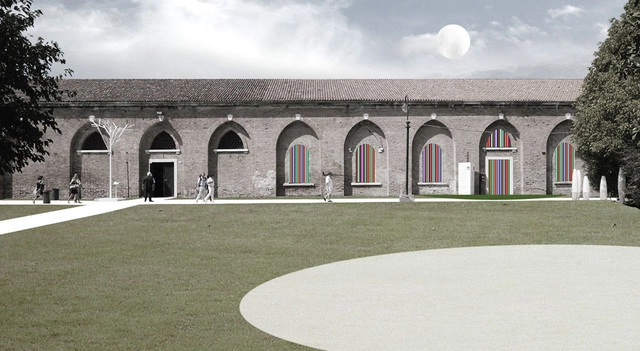
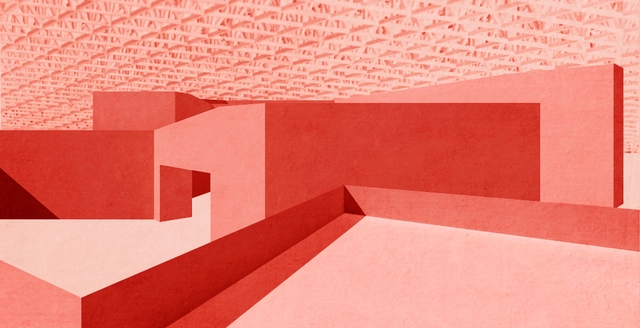
The Istanbul Foundation for Culture and Arts (IKSV) is hosting an open call for proposals for the Pavilion of Turkey's exhibition at the 2016 Venice Biennale. The call is open to all people and institutions of relevant fields, including architects, designers, artists, historians, curators, theoreticians and critics.
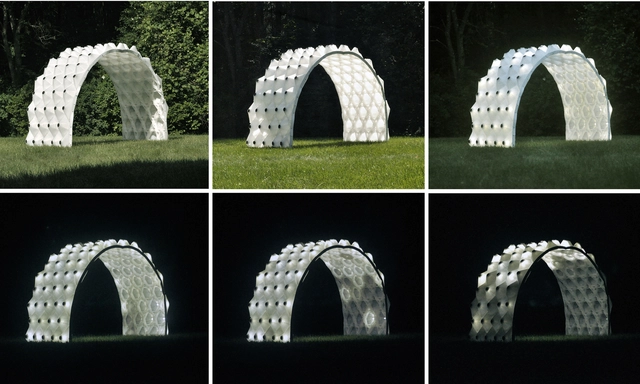
The Solar Bytes pavilion, designed by assistant professor at Kent State UniversityBrian Peters, is a temporary structure which highlights the potential of new techniques available to architecture: robotic arms, 3D printing, smart technologies such as lighting sensors, and solar energy.
Leveraging the strength and range of motion of a robotic arm, the pavilion was printed in three dimensions with an experimental extruder, resulting in a structure composed of 94 unique modules that capture energy during the day, and shine at night. After their initial function, the plastic modules making up the pavilion will be completely crushed and reused in a new structure.
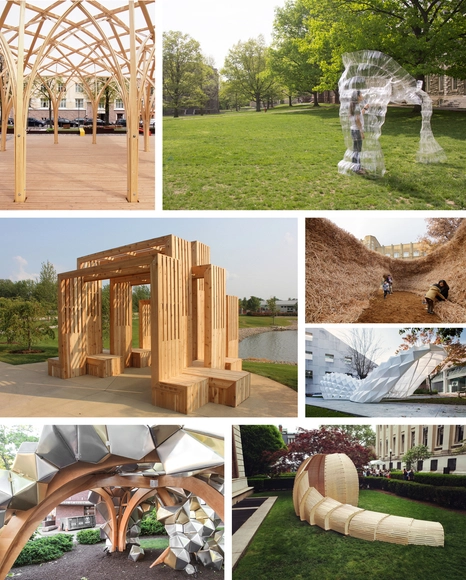
Almost two months ago we put a request out to all of our readers who were completing the academic year to send us any built work that they may have completed as part of their studies. Our hope was to display the fantastic diversity of ideas and styles that is emerging from institutions across the globe, and the response that we got was fantastic. With almost 100 submissions, we received projects from countries as far afield as Chile, the United States, Norway and Japan. We also received everything from pragmatic projects such as a chapel for a disadvantaged community in Mexico or a low-budget sidewalk parklet, to wondrously bizarre constructions such as a steel worm that connects spaces through sound and an inhabitable haystack.
With the help of our colleagues at ArchDaily Brasil andallofArchDailyen Español, we've compiled a selection of 26 of the most interesting, elegant or unusual projects from around the world - join us after the break to see what your international peers have been up to.
Izaskun Chinchilla Architects have made their recycled, upcycled, and bicycled “Organic Growth Pavilion” a reality on New York’s Governors Island. One of two winners of the “City of Dreams” pavilion competition (hosted by AIANY Emerging New York Architects Committee and the Structural Engineers Association of New York), Izaskun Chinchilla Architects carried out a kickstarter campaign to fund the pavilion’s construction.
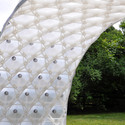
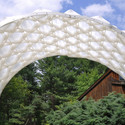
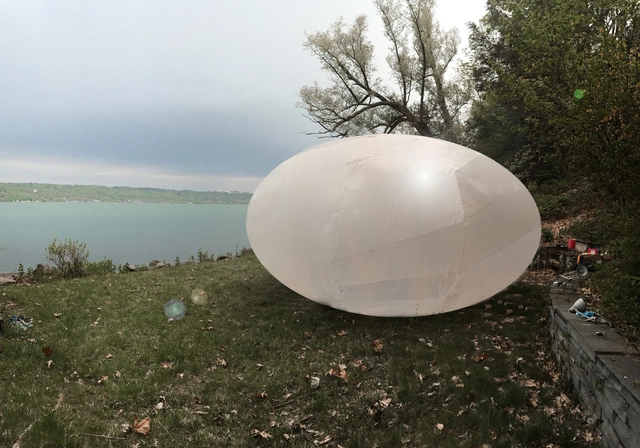
Cornell University Student's inflatable pavilion, the result of Lorena Del Río's "A Journey Into Plastics" seminar. Image Courtesy of Lorena Del Río / Cornell University Department of Architecture
It's graduation time. As universities around the globe - or at least most in the Northern hemisphere, where over 80% of the world's universities are located - come to the end of the academic year, many university architecture studios have recently closed out the construction of pavilions, installations and other small educational projects. At ArchDaily, we've already received a number of submissions from students and professors who would like to see their studio's work reach a larger audience, such as the example above from Cornell University's "A Journey Into Plastics" seminar, and the University of Wisconsin-Milwaukee's studio project completed with the assistance of Marcus Prizewinner Sou Fujimoto (more on that project here). But we're interested in doing something more.
The Beijing Contemporary Art Foundation has commissioned OMA to design the Chinese Pavilion at the 56th Venice Art Biennale, just a year after Rem Koolhaas served as director of the 14th Venice Architecture Biennale. The exhibition, "Other Future" will feature the work of composer Tan Dun, architect Liu Jiakun, artist Lu Yang, filmmaker Wu Wenguang / Caochangdi Work Station and choreographer Wen Hui / Living Dance Studio in an "immersive environment where artworks are juxtaposed in a field of projections and stages connecting the interior and exterior works."
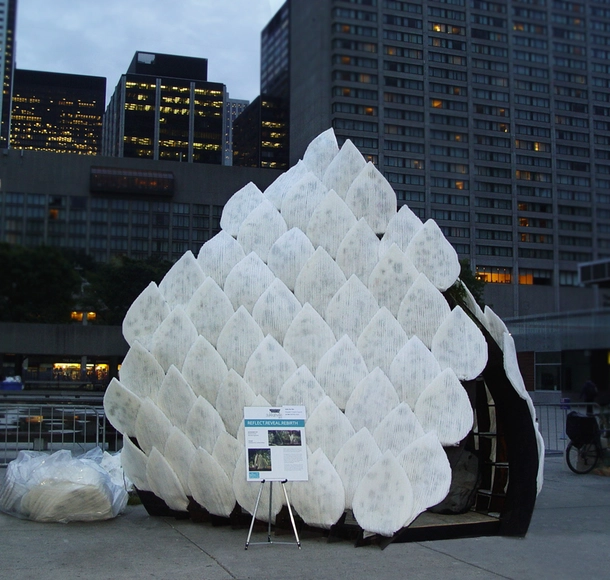
In the annual Sukkahville design competition in Toronto, entrants are challenged to reimagine the sukkah, a structure that the competition organizers describe as a "symbolic wilderness shelter, symbolizing the frailty and transience of life," traditionally built during the Jewish festival of Sukkot to commemorate the 40 years that the Jews spent wandering the desert. For the 2014 competition, New Jersey-based graduates Michael Signorile and Edward Perez created "Reflect.Reveal.Rebirth," a structure that responds to this challenge to create a transient space for contemplation by utilizing a biodegradable skin.
Tokyo-based French architect and filmmaker Vincent Hecht has captured the opening of Sou Fujimoto’s polyhedral Naoshima Pavilion on the Kagawa shoreline in Japan. The inhabitable, seven-meter, white stainless steel structure is part of the 2016 Setouchi Triennale. Watch the video above for a closer look.
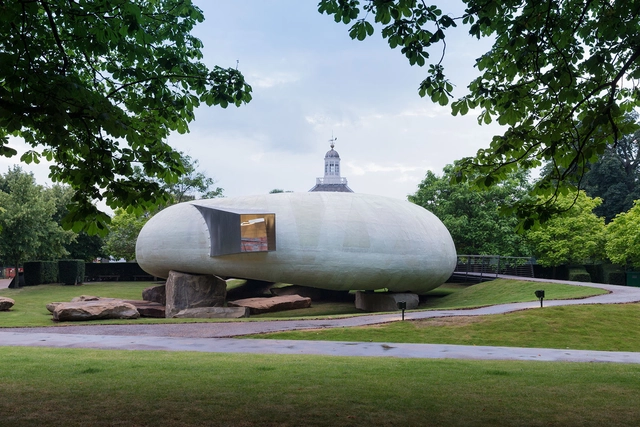
Chilean architect Smiljan Radić’s shell-shaped Serpentine Pavilion has been relocated from Hyde Park to the gardens of Hauser & Wirth Somerset in Bruton. Just under three hours from London, the new site positions the translucent fiberglass structure in short proximity to a main gallery complex designed by Paris-based Argentine architect Luis Laplace and within an lush garden designed by Dutch landscape architect Piet Oudolf.
Conceptual Design. Image Courtesy of Carmody Groarke
The British Council recently announced that London-based practice Carmody Groarke have been selected to design the UK pavilion at the 2015 Feria Internacional del Libro (FIL) in Guadalajara, Mexico. The organisers of the international event, which is the largest literary festival in the Spanish speaking world, have chosen the UK to be this year's "Guest of Honour" as part of a bilateral initiative launched to "build, strengthen and celebrate the growing connections" between the two countries.
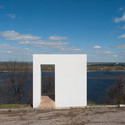
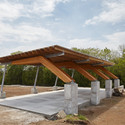
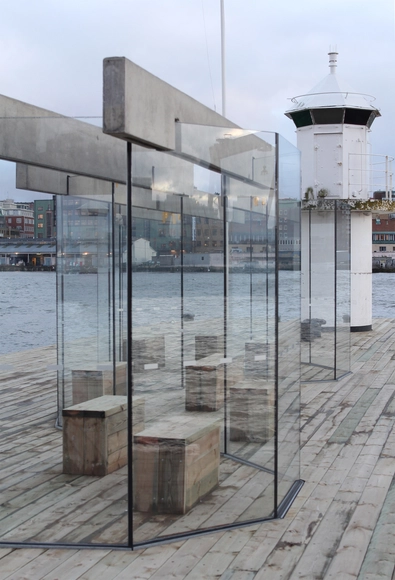
In the the former shipbuilding city of Gothenburg on Sweden's west coast stands Daniel Ellis Karlsson and Pauine Algeröd's "Bärande Möte," a glass and concrete wind shelter and pavilion.
Concrete beams are suspended in midair by load-bearing glass walls, inverting the traditional structural hierarchy between the two materials and allowing uninterrupted river views. Read more about the project and view selected images after the break.
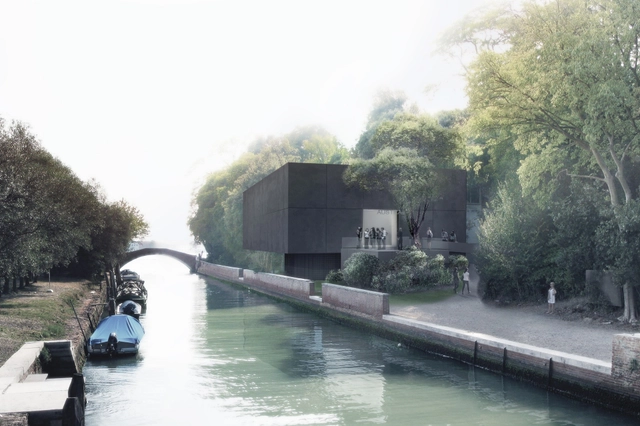
The first building to be constructed in Venice in the past two decades, Denton Corker Marshall's AustralianPavilion will welcome its first visitors on May 9, as part of the 56th Venice Biennale.
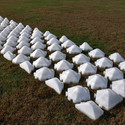
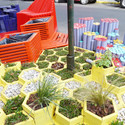
Imagine walking beneath an illuminated canopy of lush greenery, in the form of inverted pyramids sculpted to perfection. In early August 2014 visitors were welcomed by this succulent living roof to the Harmony Arts Festival in West Vancouver, British Columbia. Guests were guided through the fairgrounds beneath the 90-foot long canopy, creating an immersive sensory experience befitting the interdisciplinary creative arts festival. Designed by Matthew Soules Architecture and curated by the Museum of West Vancouver, Vermilion Sands was created as a temporary installation for the ten day festival.
Submerge yourself in Vermilion Sands with photos and more info after the break.
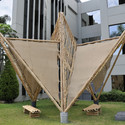
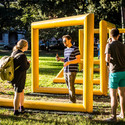
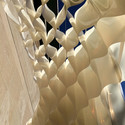
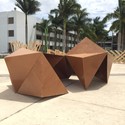
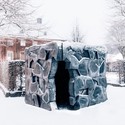
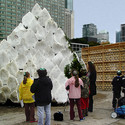
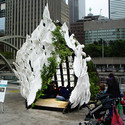
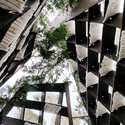
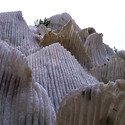
Each summer, the French cities of Montpellier and La Grande Motte host Le Festival Des Architectures Vives (Festival of Lively Architecture). These twin festivals seek to raise awareness about architecture among the public, and to give needed exposure to the work of up-and-coming designers. In the process, they also draw attention to previously unknown places in the two cities—in Montpellier, many of the private courtyards in the city are opened to the public specifically for the festival. In La Grande Motte, the exhibition weaves its way through the city center, a site designated as “Heritage of the 20th Century” due to the prevalence of works designed by architect Jean Balladur. This year’s festivals featured a total of 18 temporary installations. Read more about the festivals, and view photos, after the break.
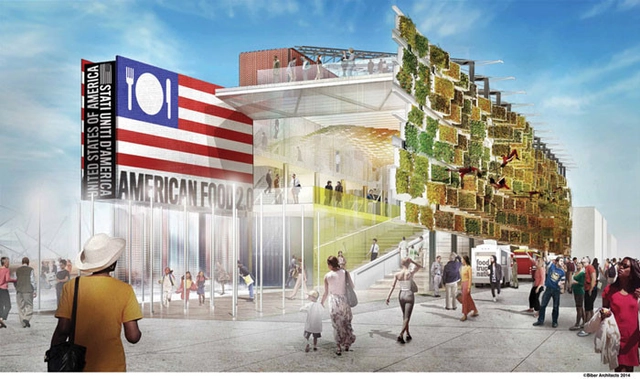
New York-based firm Biber Architects has unveiled its design for the US pavilion - "American Food 2.0: United to Feed the Planet" - at the Milan Expo 2015. An airy, barn-inspired structure, the design represents the pavilion’s food-centric theme, focusing on a farm-to-table food model and sustainable production.
Norwegian architect and Pritzker LaureateSverre Fehn’s original drawings for the Nordic Pavilion in Venice are to be presented alongside Ferruzzi’s monochromatic photographs of the building in an exhibition at the National Museum of Architecture in Oslo. Venice: Fehn’s Nordic Pavilion documents the incredible task undertaken by Fehn who, at the age of thirty-four, won the competition to design the pavilion and subsequently won international acclaim when the building was completed in 1962.
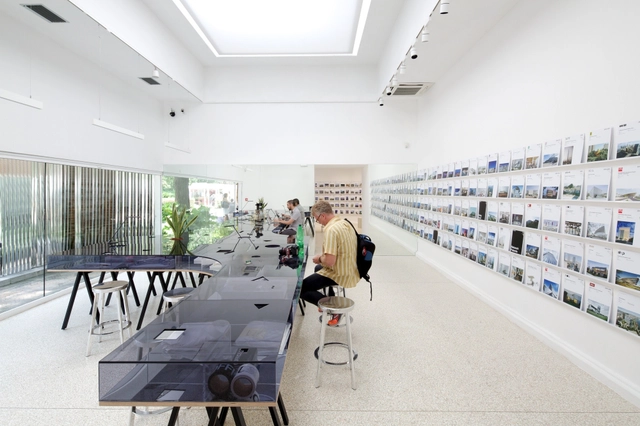
During this year's Architecture Biennale in Venice, homes rented through AIRBnB (although not the company itself) will host an independently curated pavilion. AIRBnB is a six-year old platform through which home owners can rent out rooms, apartments, and entire houses, allowing "the fortress of the family and the individual" to be infiltrated. The pavilion will take advantage of this "infiltration" and how it reveals "the house, the home and today's life." To learn more, follow @airbnbpavilion on instagram and twitter.


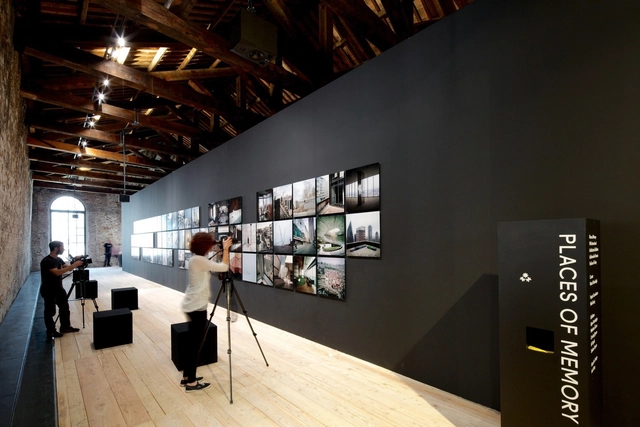


.jpg?1434637677&format=webp&width=640&height=580)
.jpg?1434637707 "Organic Growth Pavilion. Image © Sergio Reyes")
.jpg?1434637587 "Collaborative Construction of Organic Growth Pavilion. Image © Sergio Reyes")
.jpg?1434637645 "Organic Growth Pavilion. Image © Sergio Reyes")
.jpg?1434637551 "Organic Growth Pavilion. Image © Sergio Reyes")
.jpg?1434637677)


.jpg?1407116896&format=webp&width=640&height=580)
.jpg?1407117096 "Marion Moustey and Alex Arcens Onde Sensuelle- La Grande Motte. Image © photoarchitecture, Courtesy of Paul Kozlowski")
.jpg?1407116881 "NAS Architecture's Breath Box- La Grande Motte. Image © photoarchitecture, Courtesy of Paul Kozlowski")
.jpg?1407117154 "Lea Corba and Nicolas Baudru's Sensualite Invisible- La Grande Motte. Image © photoarchitecture, Courtesy of Paul Kozlowski")
.jpg?1407117129 "Fakir's Sens Dessous Sen Dessous- La Grande Motte. Image © photoarchitecture, Courtesy of Paul Kozlowski")
.jpg?1407116896)