Architecture has never been confined to the act of building. It constantly negotiates between material practice and intellectual reflection, yet throughout the twentieth and twenty-first centuries, many architects felt that the built project alone was insufficient to address the full range of questions facing the discipline. Economic pressures, political contexts, and programmatic demands often narrowed the scope of practice.
Exhibitions and curatorial platforms, by contrast, created spaces of experimentation and critique, opening arenas where architecture could interrogate itself, where its past could be reinterpreted, its present challenged, and its future projected. In this tension, the figure of the architect-curator emerged, treating curating itself as a form of design — not of walls or facades, but of discourse, narratives, and frameworks of meaning.
The Mid-Century Modernist movement was more than an aesthetic or material shift in the United States, as it was a response to a rapidly changing world. Emerging after World War II, this architectural revolution rejected ornate, traditional styles of the past in favor of clean lines, functional design, and incorporation of flashy materials like steel, glass, and concrete. Modernism was a break from tradition, focusing instead on simplicity, efficiency, and a vision for the future. It reflected the optimism of a nation rebuilding itself, where technology and innovation shaped everything from cityscapes to suburban homes.
Sustainability in architecture is often framed as a universal challenge, leading to standardized solutions that prioritize efficiency over context. However, architecture is inherently tied to its environment — buildings interact with climate, topography, and cultural history in ways that demand specificity. Instead of relying on standardized sustainability checklists, how can architecture embrace site-specific solutions? This conversation is deeply connected to the concept of Genius Loci, or the spirit of a place, introduced by Christian Norberg-Schulz and embraced by architects advocating for designs that resonate with their surroundings. It suggests that architecture should not be imposed upon a site but rather emerge from it, informed by its materials, climate, and cultural significance. This philosophy challenges the widespread application of generic sustainable technologies, instead proposing that sustainability must be inherently tied to the location in which it operates.
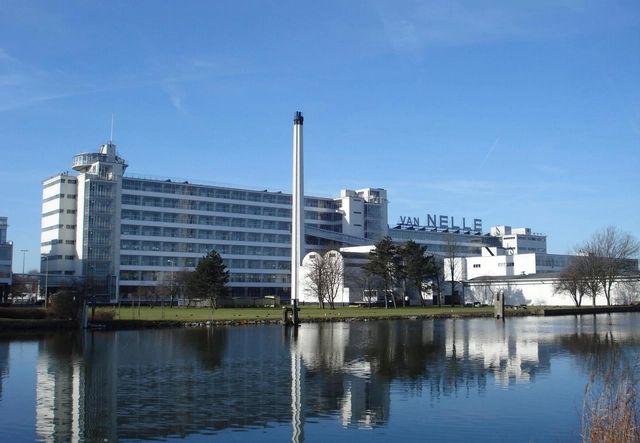
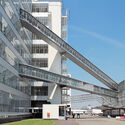
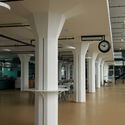
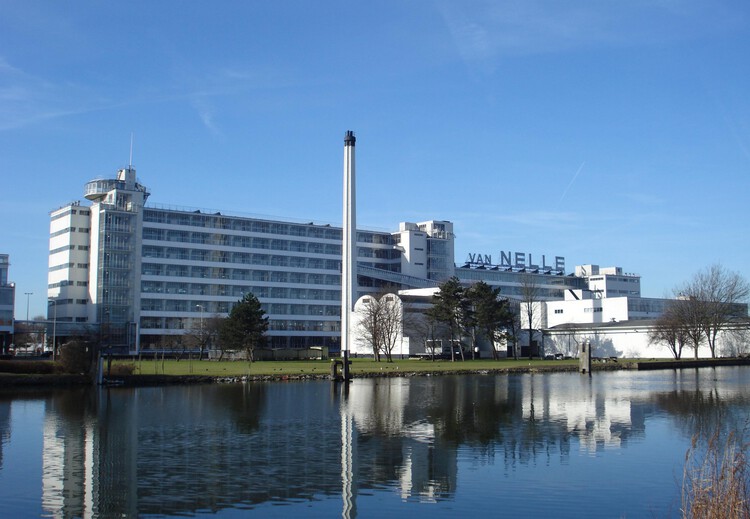
Envisioned as a "daylight factory", the Van Nelle complex introduced revolutionary architectural and social concepts for its time. By integrating glass, steel, and concrete into an open, rational layout, it demonstrated how design could transform industrial processes while improving the lives of the people within. It was not merely a space for production but a symbol of optimism, representing the potential of architecture to reshape industries and communities.
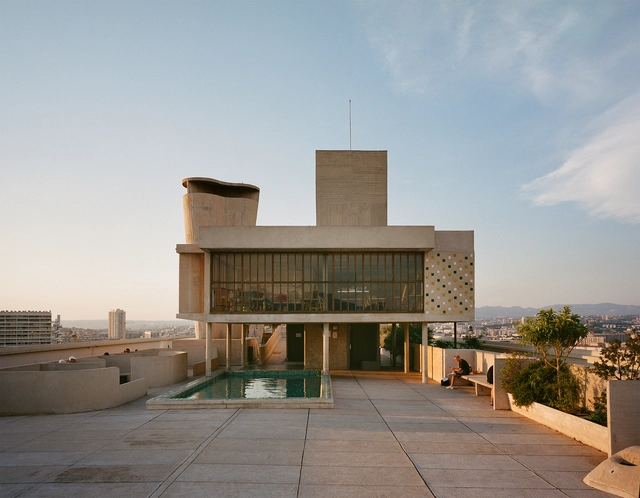
Modernism emerged in the early 20th century as a revolutionary movement that rejected historical styles, prioritizing functionality, innovation, and rationality. Grounded in the promise of industrial progress, architects like Walter Gropius, Le Corbusier, and Ludwig Mies van der Rohe championed using new materials and construction methods, striving for a universal architectural language. Their work introduced radical ideas: open floor plans, expansive glazing for natural light, and pilotis that elevated structures, symbolizing a new architectural era. However, alongside its groundbreaking ideas, modernism's relationship with sustainability has sparked ongoing debates.
While modernist architects sought to address social and economic challenges through affordable housing and efficient design, their reliance on energy-intensive materials like concrete and steel created unintended environmental consequences. The large-scale industrialization celebrated by modernists often disregarded local climates and ecological systems, leading to inefficiencies. Yet, the principles of functionality and adaptability embedded in modernist architecture laid the groundwork for what we now recognize as sustainable practices. From Le Corbusier's rooftop gardens to Frank Lloyd Wright's integration of nature, the seeds of environmentally conscious design were undeniably present, albeit limited in their execution.
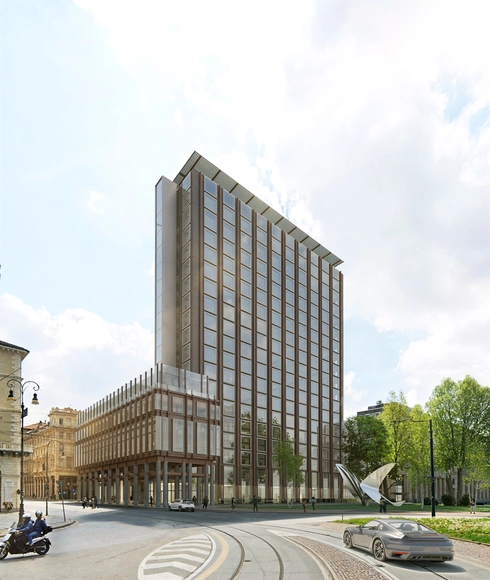
CRA-Carlo Ratti Associati, in partnership with real estate group IPI, has revealed plans to transform the iconic modernist Palazzo Micca in Turin, Italy. Originally the headquarters of RAI, Italy's national broadcaster, the 19-story building will undergo a comprehensive adaptive reuse project. A significant feature of the redesign is the creation of an elevated public plaza at 26.5 meters, offering views of Turin's Baroque rooftops, the surrounding hills, and the Alps. The project also integrates sustainable design principles by converting parts of the office spaces into residential units and reusing existing materials.
"O beautiful, for spacious skies, for amber waves of grain, has there ever been another place on earth where so many people of wealth and power have paid for and put up with so much architecture they detested as within thy blessed borders today?"
Tom Wolfe wrote this in his 1981 book From Bauhaus to Our House. The conflict between modern and traditionaldesign has barely abated since, as is evident in this recent article. In the U.S., modern buildings are often met with community aversion, for familiar reasons: their perceived coldness and lack of contextual sensitivity, the impact on local character, and the loss of historical continuity. But on another level, the critique against modern design finds even more purchase on the larger scale: the city. Modern U.S. cities reek of traffic congestion and pollution, social inequality and gentrification, a loss of community and cultural spaces, and a lack of usable open space.
https://www.archdaily.com/1020898/contemporary-architecture-and-the-modern-cityGerhard W. Mayer
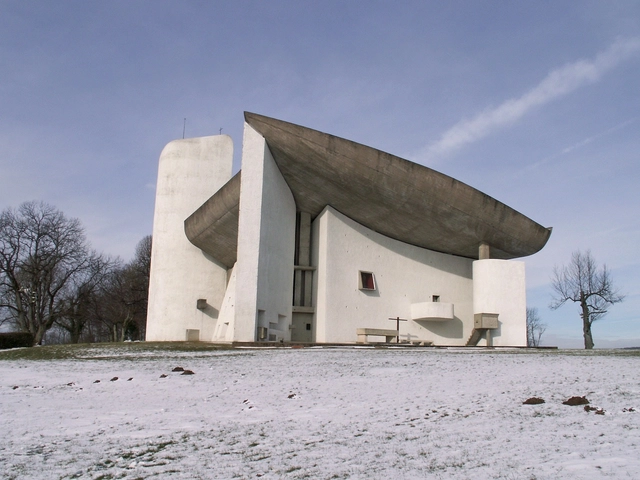
Chapel of Notre Dame du Haut in Ronchamp. Image via Maxpixel
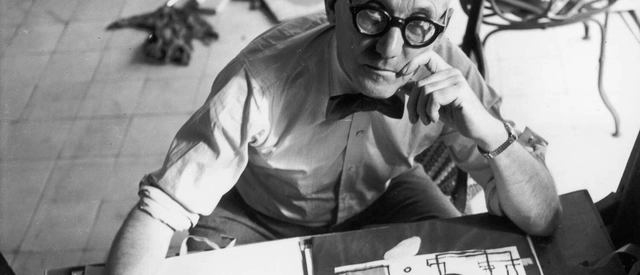
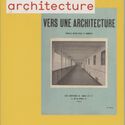
One hundred years ago, in 1923, Le Corbusier’s “Vers une Architecture” was published in the magazine “L’Esprit Nouveau.” The controversial collection of essays authored by the Modernist master served as a manifesto for the development of modern architecture, influencing generations of architects and sparking polemics on the proposed principles of architectural design. The book advocates for the beauty of streamlined industrial designs, like those of airplanes, automobiles or ocean liners; it proposes a completely different way of building cities, favoring tall and slender towers surrounded by abundant greenery, and introduces Le Corbusier’s 5 principles for modern design.
Now, a century later, these theories have become part of every architect’s education, but they are also highly contested. Some critics argue that the rigid approach, especially in relation to urban planning principles, fails to engage the cultural and contextual nuances of different communities, leading to alienating urban environments. Still, the legacy of Le Corbusier is significant, serving as a constant point of reference for architects when exploring the balance between functionality, aesthetics, symbolism and the social impact of their designs.
This year marks the centennial of the first edition of Vers Une Architecture, Le Corbusier’s epoch-making book. Though a new English translation appeared in 2007 to much acclaim, most other practicing architects read the first English edition that appeared in 1928, entitled Towards a New Architecture. Comparing the three editions is instructive, particularly in one crucial respect: the insertion of the word “new” in the title. The book wasn’t really about new architecture, because very little of it showed buildings in the International Style. Instead, it was in many respects a clever diatribe intended to convince Europeans that they had no choice but to renounce every kind of architecture that had been built before the Great War and begin anew. It was remarkably successful in fulfilling that aim.
https://www.archdaily.com/1000499/away-from-old-architecture-what-le-corbusier-really-meantMark Alan Hewitt
Architectural education has always been fundamentally influenced by whichever styles are popular at a given time, but that relationship flows in the opposite direction as well. All styles must originate somewhere, after all, and revolutionary schools throughout centuries past have functioned as the influencers and generators of their own architectural movements. These schools, progressive in their times, are often founded by discontented experimental minds, looking for something not previously nor currently offered in architectural output or education. Instead, they forge their own way and bring their students along with them. As those students graduate and continue on to practice or become teachers themselves, the school’s influence spreads and a new movement is born.
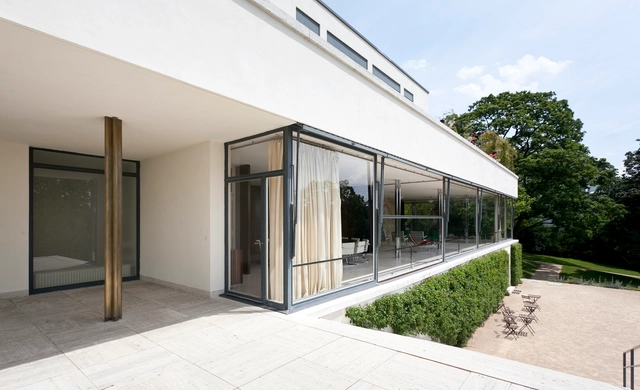
When people describe the modernist movement as a whole, they broadly reference the steel and glass skyscrapers which dot many of our cities’ skylines, or more specifically, the International Style that once emerged from Europe after World War I. The International Style represented technological and industrial progress and a renaissance of social constructs that would forever influence the way that we think about the use of space across all scales. Often designed as politically charged buildings seeking to make a statement towards totalitarian governments, many architects who influenced the style moved to the United States after World War II, paving the way for some of the most iconic buildings and skyscrapers to be built in the 20th century.
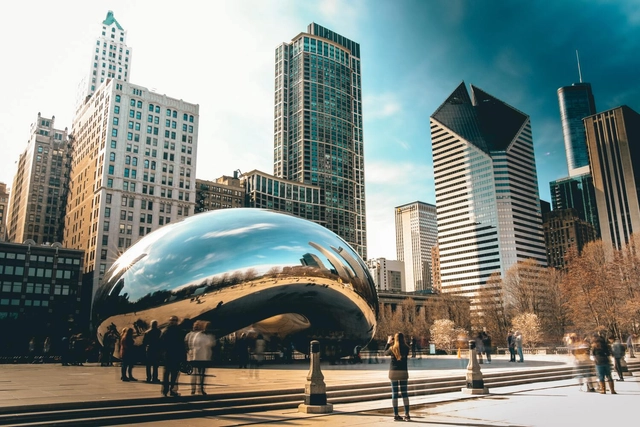
Chicago, The Windy City, Chi-Town, or The Second City. It’s a place that is known by many names, but to architects and urban planners alike, it’s famous for its history which has given us some of the best-known buildings and important advancements that have helped to shape other cities across the United States. From its inception, Chicago has long served as an architectural hub for innovation.
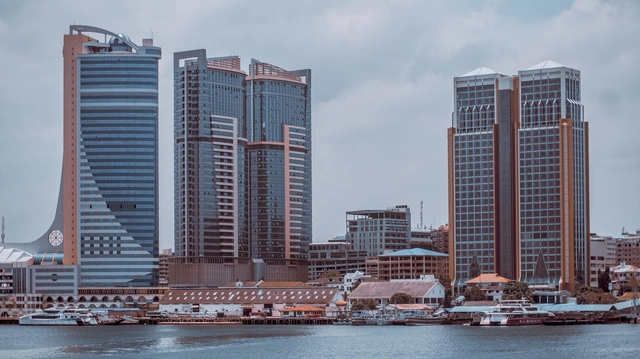
Cities have been, and will always be multi-faceted, elastic sites. They are settlements in continuous evolution, molded by proximity to natural resources, by migrating populations, and by capital. Despite the diversity in the urban character of disparate cities, it has been said that cities look alike now more than ever before, a uniformity that means a glass-and-steel tower in Singapore would not look out of place in Mumbai’s Bandra Kurla Complex.
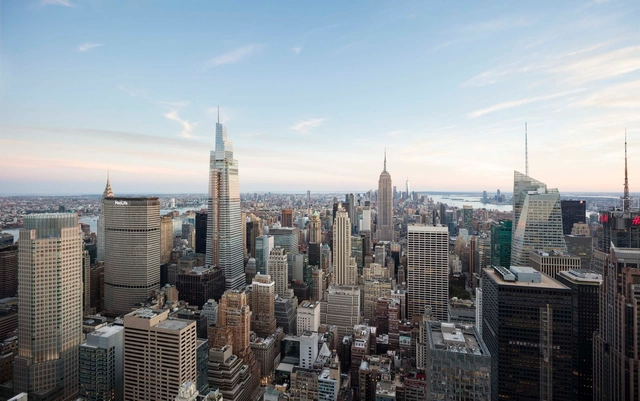
As the largest city in the United States, New York City is one of the most diverse and vibrant cities in the world, recognized by many as the center for global media, culture, fashion art, and finance. The city was founded in 1624 by settlers from the Dutch Republic and has since grown into “the city that never sleeps”.
While almost every style of architecture exists in New York City, the metropolis is most well known for its skyscrapers, both in historical styles such as Neoclassical and Art Deco and in their varied contemporary expressions. The first building to bring the world's tallest title to New York was the New York World Building, in 1890. Later, New York City was home to the world's tallest building for 75 continuous years, starting with the Park Row Building in 1899.
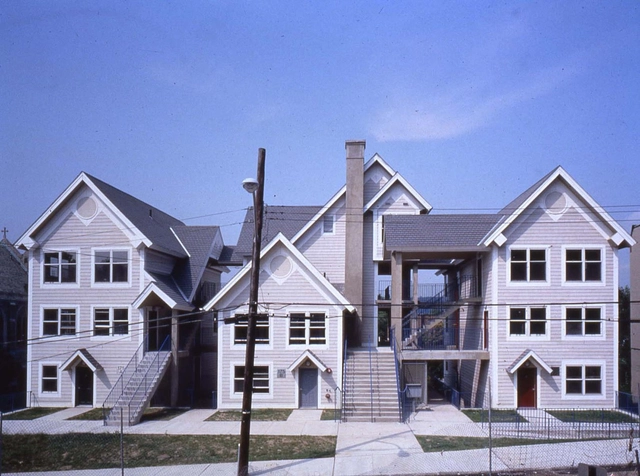
Courtesy of Duo Dickinson Cephas Housing, Yonkers, New York
In the 14th century, Geoffrey Chaucer wrote “Familiarity breeds contempt”. By definition “local” is “familiar”. Why are humans so thrilled to go beyond the familiar, the local, and reach for what is new, universal, and salvational? The word “local” has the weight of true value, like “density” or “sustainable” But the lure of connection between all humans is powerfully seductive, and that desire to connect almost always falls short of our hopes.
Modernism could be described as one of the most optimistic styles in architectural history, drawing from notions of utopia, innovation, and the reimagination of how humans would live, work, and interact. As we reflected in our AD Essentials Guide to Modernism, the philosophy of Modernism still dominates much of architectural discourse today, even if the world that gave rise to Modernism has changed utterly.
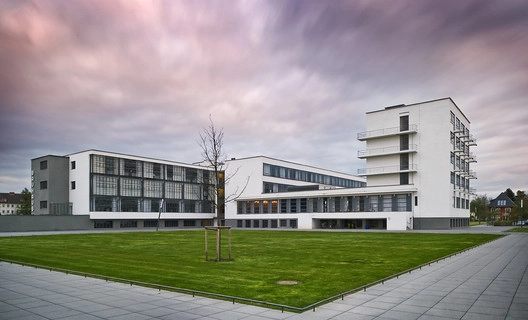
As we say goodbye to 2019, a year that saw the centenary of the Bauhaus, we have collated a list of key architectural styles that defined Modernism in architecture. This tool for understanding the development of 20th-century design is complete with examples of each style, showcasing the practice of Modernism that lay behind the theory.
I taught architectural history in two schools of architecture during the 1980s and 1990s. Back then it was common for students to get a full three-semester course that began with Antiquity and ended with Modernism, with a nod to later twentieth-century architecture. My text for the middle section was Spiro Kostof’s magisterial History of Architecture: Settings and Rituals. With many centuries to cover, he spent very little effort in dealing with the twentieth century. In the last third of the course, students read texts such as Towards a New Architecture by Le Corbusier and Reyner Banham’s Theory and Design in the First Machine Age. My colleagues and I felt that we offered students a pluralistic and comprehensive review of key developments in the history of the built environment.