1. ArchDaily
  2. Hospitality Architecture

Hospitality Architecture: The Latest Architecture and News

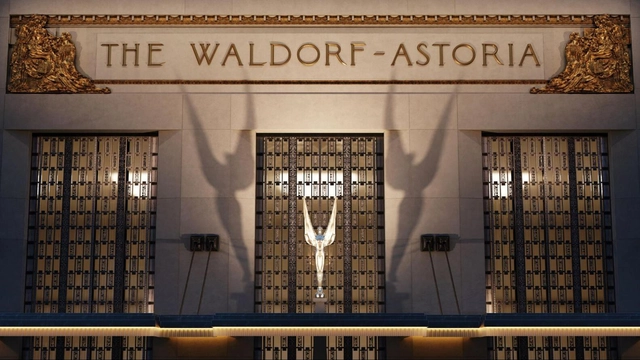
Visualizing an Art Deco Icon: The Reimagined Waldorf Astoria

 | Sponsored Content

The quintessential symbol of Manhattan, Waldorf Astoria New York officially reopened for the public this year after an extensive renovation. Over its long history, the property has undergone numerous transformations, from its 19th-century beginnings to the modern landmark that stands between Park Avenue and Lexington Avenue.

Reimagining a building that pioneered modern hospitality—a jewel in New York's skyline—posed a challenge that required close collaboration between preservationists, 3D visualizers, architects, and designers. Together, they worked to preserve its protected architectural heritage while meeting contemporary expectations for craftsmanship and comfort.

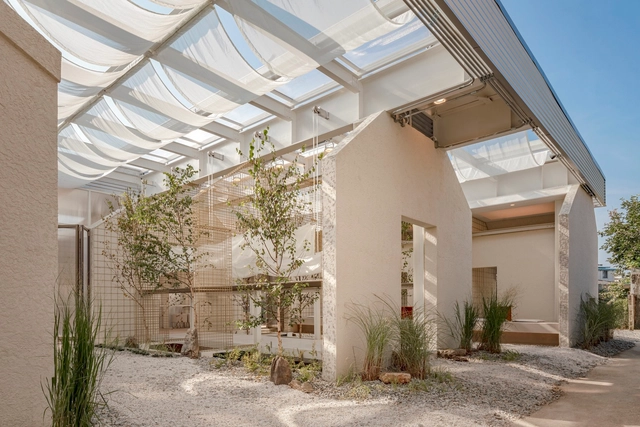
Design Ethos of Subtraction and Addition: 10 Adaptive Reuse Projects for Commercial and Social Spaces in Asia

While adaptive reuse has been increasingly acknowledged as a vital architectural strategy worldwide, its discourse and implementation in Asia are still expanding—driven by growing ecological awareness and a shifting understanding of architectural knowledge. Rather than accelerating a developmentalist model centered on demolition and new construction, architects today are confronted with a different approach to the built environment: treating the existing structure as a resource—an archive of materials, spatial organizations, and informal histories.

Adaptive reuse is often associated with the preservation of historic buildings and culturally significant heritage. Yet the vast field of seemingly 'less-valued' structures—abandoned houses, standard yet old dwellings, non-conforming office buildings, and overlooked urban voids—has become ground for experimentation. These sites challenge architects and designers to reconsider prevailing standards of efficiency and market-driven development, and to imagine spatial and ecological practices that avoid the continual loss of embodied material and cultural knowledge inherent in constant rebuilding.

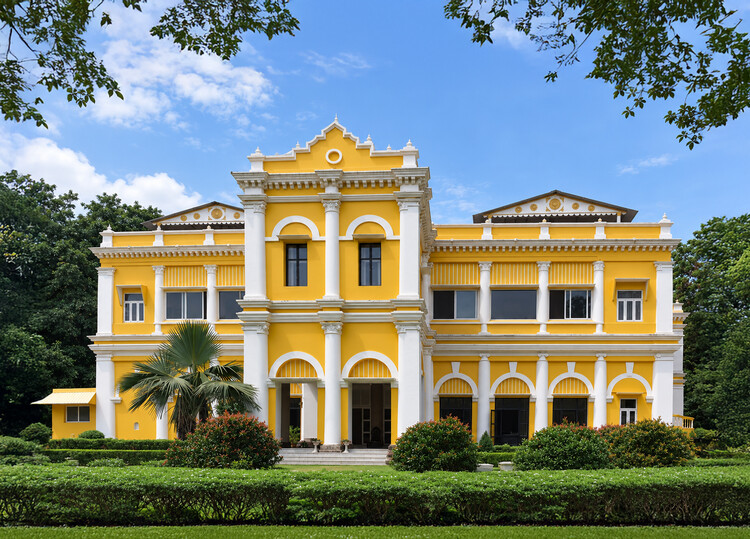
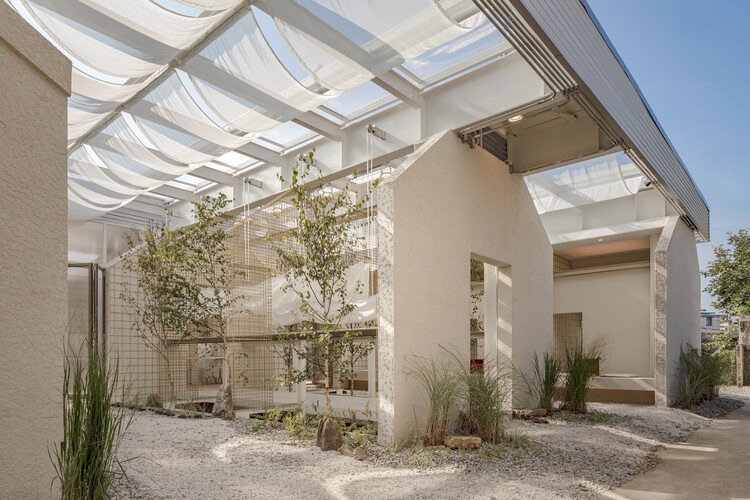
Design Ethos of Subtraction and Addition: 10 Adaptive Reuse Projects for Commercial and Social Spaces in Asia - SustainabilityDesign Ethos of Subtraction and Addition: 10 Adaptive Reuse Projects for Commercial and Social Spaces in Asia - SustainabilityDesign Ethos of Subtraction and Addition: 10 Adaptive Reuse Projects for Commercial and Social Spaces in Asia - SustainabilityDesign Ethos of Subtraction and Addition: 10 Adaptive Reuse Projects for Commercial and Social Spaces in Asia - SustainabilityDesign Ethos of Subtraction and Addition: 10 Adaptive Reuse Projects for Commercial and Social Spaces in Asia - More Images+ 29

Behind 8,000 Doors: Inside Three Standout Architectural Projects

 | Sponsored Content

14 individual brands and two subsidiaries are represented under the Swiss brand Arbonia. Although the brand, which is now making its long-overdue public debut, maybe new, the list of realized projects certainly is not. A glance at the reference archive, which Arbonia presents prominently, shows this. These include construction projects for the healthcare sector as well as offices and administration, historical buildings, educational institutions, hospitality and residential developments. Three particular distinct highlights stand out, as they uniquely embody Arbonia's motto: 'open to aspiration'.

From the Cliffs of Saudi Arabia to the Vineyards of Santorini, Discover 8 Unbuilt Hotel Proposals from the ArchDaily Community

Subscriber Access | 

Hotels are increasingly being designed as more than just places for accommodation. As expectations around travel shift, architects are approaching hospitality projects as opportunities to explore ideas of context, experience, and identity. Whether integrated into remote landscapes or inserted into dense urban environments, these proposals examine how architecture can shape the guest experience through spatial organization, material selection, and connection to place. The hotel becomes a framework not only for rest, but for interaction with the surroundings, with others, and with the design itself.

Each month, ArchDaily's editors curate a selection of unbuilt projects around a shared typology or theme. Submitted by firms of all scales from around the world, these proposals represent the diversity of approaches within our global architecture community. This month's selection focuses on hotels, ranging from the sculptural Pistachio Villas in Ubud to the modular Dubai Edition Hotel and the vineyard-rooted Terra Dionysia in Santorini. Together, they reflect a wide spectrum of architectural thinking around hospitality, from landscape integration and cultural references to questions of density and public space. Submissions are open to everyone.

From the Cliffs of Saudi Arabia to the Vineyards of Santorini, Discover 8 Unbuilt Hotel Proposals from the ArchDaily Community - Imagen 18 de 4From the Cliffs of Saudi Arabia to the Vineyards of Santorini, Discover 8 Unbuilt Hotel Proposals from the ArchDaily Community - Imagen 24 de 4From the Cliffs of Saudi Arabia to the Vineyards of Santorini, Discover 8 Unbuilt Hotel Proposals from the ArchDaily Community - Imagen 40 de 4From the Cliffs of Saudi Arabia to the Vineyards of Santorini, Discover 8 Unbuilt Hotel Proposals from the ArchDaily Community - Imagen 51 de 4From the Cliffs of Saudi Arabia to the Vineyards of Santorini, Discover 8 Unbuilt Hotel Proposals from the ArchDaily Community - More Images+ 48

Bali Architecture Guide: 25 Projects Blending Tradition with Innovation in Indonesia's Most Visited Island

Subscriber Access | 

Bali might most commonly be associated with its beaches and leisure sector. Rightfully so, since the Indonesian province received more than 2.9 tourists this year alone. Along with the temporary visitors, Bali also houses some longer-term inhabitants and digital nomads, which contributed to its fast population increase. This has naturally affected its urban density and its need for additional accommodation and services, offering opportunities for some creative architecture and materials exploration.

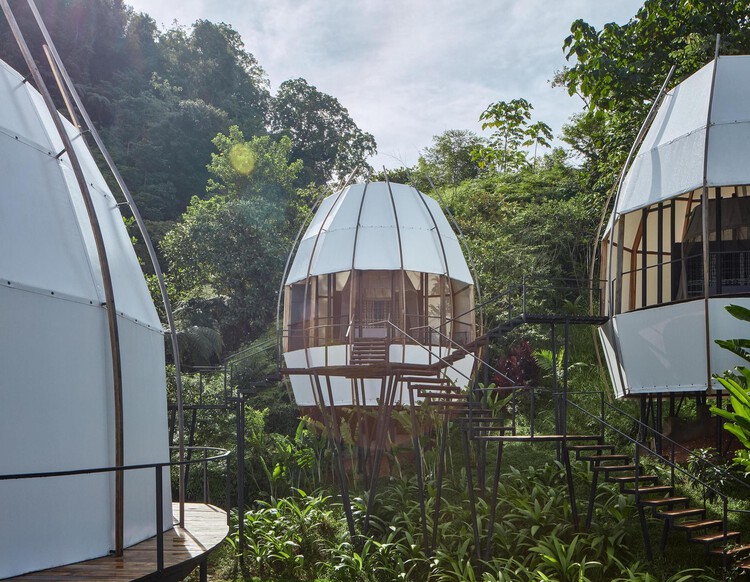
This often appears through the many bamboo-built projects, with the island being the stage for some of the oldest and most intricate bamboo vernacular construction. This knowledge can be transmitted to willing architects and professionals from all around the globe who seek to understand how this versatile material can be applied in their own countries. Many renowned global and local practices, such as IBUKU, and Bamboo U, have championed this ecologically aware architecture through their projects, which are always focused on nature preservation and the revival/ optimization of traditional building techniques.
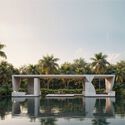
Bali Architecture Guide: 25 Projects Blending Tradition with Innovation in Indonesia's Most Visited Island - Imagen 1 de 4Bali Architecture Guide: 25 Projects Blending Tradition with Innovation in Indonesia's Most Visited Island - Imagen 2 de 4Bali Architecture Guide: 25 Projects Blending Tradition with Innovation in Indonesia's Most Visited Island - Imagen 3 de 4Bali Architecture Guide: 25 Projects Blending Tradition with Innovation in Indonesia's Most Visited Island - Imagen 4 de 4Bali Architecture Guide: 25 Projects Blending Tradition with Innovation in Indonesia's Most Visited Island - More Images+ 23

Designing with Empathy: Architecture for Social Equity

Architecture has long been understood as a powerful tool for shaping the physical environment and social dynamics within it. However, its potential to foster social equity is often overlooked. Empathy-driven design invites architects to approach their work not only as creators of space but as facilitators of human connection and community well-being. This approach centers on understanding people's lived experiences, struggles, and aspirations — particularly marginalized communities — and responding to their needs through thoughtful, inclusive architecture. It goes beyond aesthetics and functionality, instead focusing on creating spaces fostering dignity, accessibility, and social equity. By prioritizing empathy, architects can design environments that uplift communities, address disparities, and create inclusive spaces that promote positive societal change in a tangible, human-centered way.

Designing with Empathy: Architecture for Social Equity - Image 1 of 4Designing with Empathy: Architecture for Social Equity - Image 2 of 4Designing with Empathy: Architecture for Social Equity - Image 3 of 4Designing with Empathy: Architecture for Social Equity - Image 4 of 4Designing with Empathy: Architecture for Social Equity - More Images+ 13

Snøhetta Reveals Vacation Home Overlooking Mount Yotei in Hokkaido, Japan

Snøhetta has unveiled a vacation home design nestled within the landscape of Hokkaido Island for the Japanese hospitality group NOT A HOTEL. Situated atop the renowned Rusutsu Resort, the project centers itself around Mount Yotei and provides framed views. The 1200 sqm building’s design aims to be minimal, influenced by the surrounding terrain and defined site boundaries.

Snøhetta Reveals Vacation Home Overlooking Mount Yotei in Hokkaido, Japan - Image 1 of 4Snøhetta Reveals Vacation Home Overlooking Mount Yotei in Hokkaido, Japan - Image 2 of 4Snøhetta Reveals Vacation Home Overlooking Mount Yotei in Hokkaido, Japan - Image 3 of 4Snøhetta Reveals Vacation Home Overlooking Mount Yotei in Hokkaido, Japan - Image 4 of 4Snøhetta Reveals Vacation Home Overlooking Mount Yotei in Hokkaido, Japan - More Images