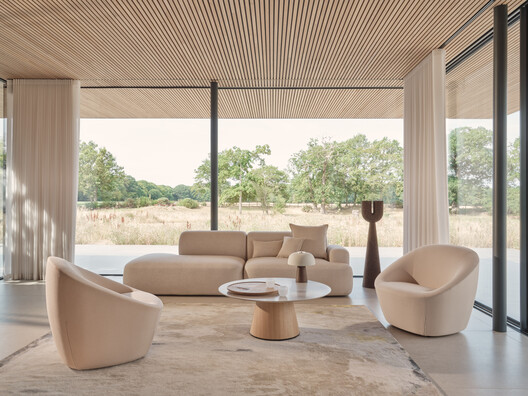
Furniture waste is not always the result of physical damage that renders a product unusable. Chairs, sofas, and tables are often discarded because they no longer fit an interior concept, are perceived as outdated, or are replaced during a renovation. In many cases, their structures remain functional, even when upholstery is worn, or the surrounding space has changed. The result is a cycle of replacement in which usable products become waste, while new resources are extracted and processed to manufacture their successors.
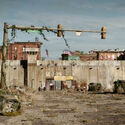
Industrial activity can end long before its effects disappear from the land. Factories close, buildings are demolished, and former industrial districts gradually become part of new residential developments. Yet the soil beneath them may still contain traces of their previous use, sometimes requiring extensive intervention before construction can begin.
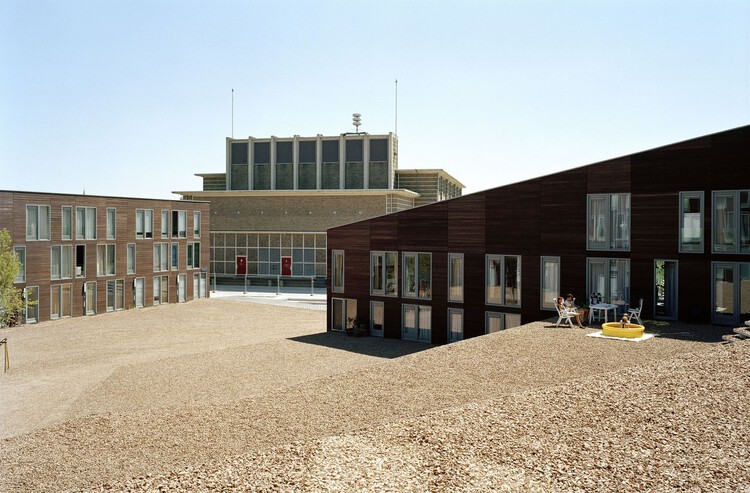
Redeveloping these sites raises a question about how much of the existing ground can remain and what it takes to build housing above it. The extent of contamination affects what must happen before construction begins, while the cost of preparing the land can influence the development itself. Much of this work eventually disappears beneath the completed buildings, leaving little indication of the site's previous condition.
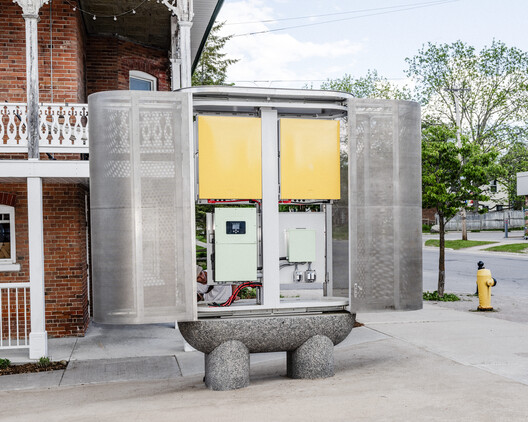
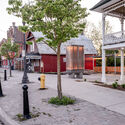
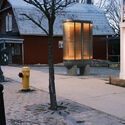
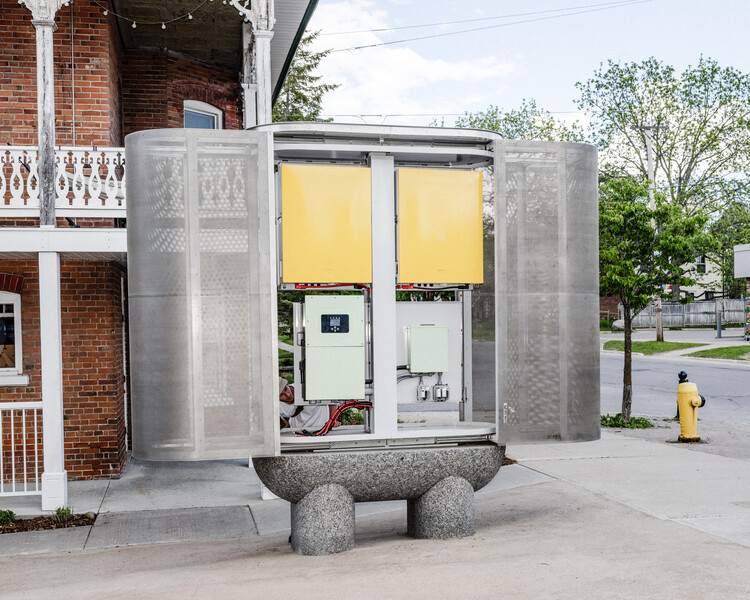
Against a backdrop of climate change, inflation, and armed conflict, the global energy system is undergoing change and facing scrutiny. As stated by the United Nations, buildings must be heated, lit, and electrified through clean, accessible, affordable, sustainable, and reliable power sources. Architecture and urban planning can contribute both to expanding energy access and to exploring different forms of storage. The Toronto-based startup Civic Grid designs and builds energy storage systems with the aim of changing the relationship communities have with the electrical power behind everyday life. Their first architectural battery was designed as public architecture by architects Jack Self and Josh Harskamp with industrial designer Max Fine. The prototype is the evolution of a deployable energy system developed with Lisbon Civil Defence for the Lisbon Architecture Triennale 2025, still in operation, and is paired with a scale model.
Images of the benches at New York City's High Line Park spread around the world when the project opened in 2009. Emerging diagonally from the same material and modular pattern as the paving, they transition seamlessly from concrete to wood, evoking the railway tracks that once occupied the site. To withstand decades of exposure to the elements, the project required a wood species of exceptional durability, and ipe, harvested from the Brazilian Amazon, was selected. Its slow growth produces a dense, low-porosity hardwood that is naturally resistant to wear, moisture, and biological decay. The choice, however, sparked controversy at the time amid concerns over the certification of the timber's forest management. This broader view changes how we think about materials. Their origin still matters, but so does what happens after the building's life comes to an end.
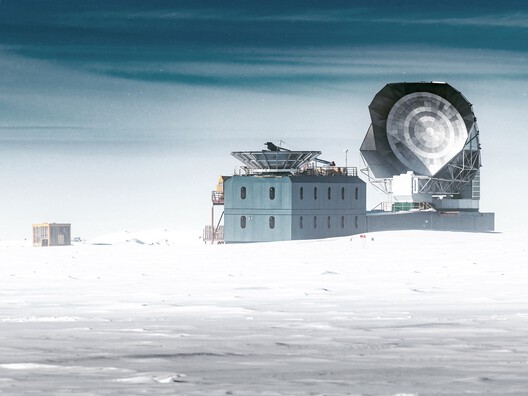
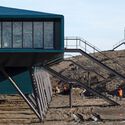
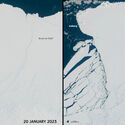
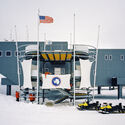
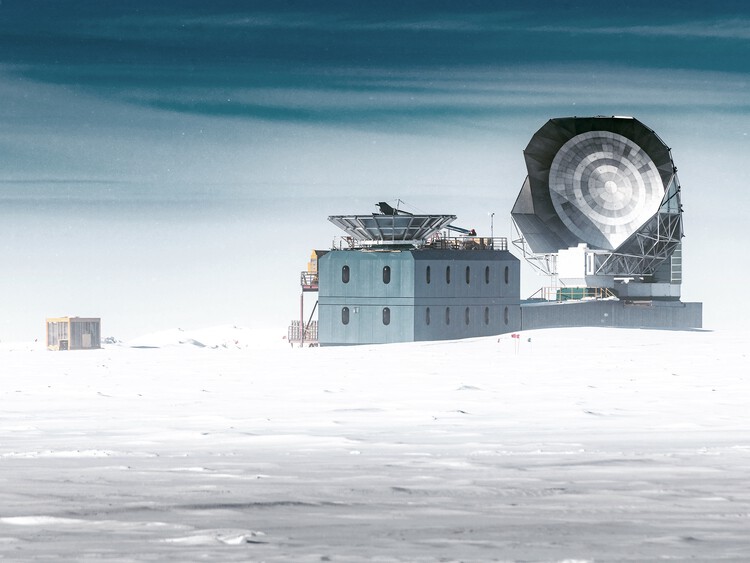
Antarctica has no government, no permanent population, and no economy. It also, since 1959, has had no legally recognized owner as the Antarctic Treaty freezes every territorial claim on the continent. On paper, this makes Antarctica the closest thing on Earth to a true commons. In practice, close to thirty countries currently operate more than seventy research stations there, several of them within a short flight of one another, and one of those stations has a school, a chapel, a cemetery, and a civil registry office that has recorded eleven births since 1978.
None of that architecture is accidental, and very little of it is explained by science alone. A research station costs millions of dollars to build and supply in one of the most logistically hostile places on the planet; a country does not commit to that expense purely to measure atmospheric ozone it could, in several cases, measure somewhere closer. What a station does, reliably, is stake a claim to a territory that legally forbids exactly that.
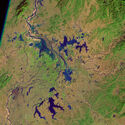
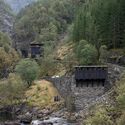
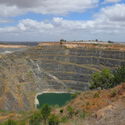
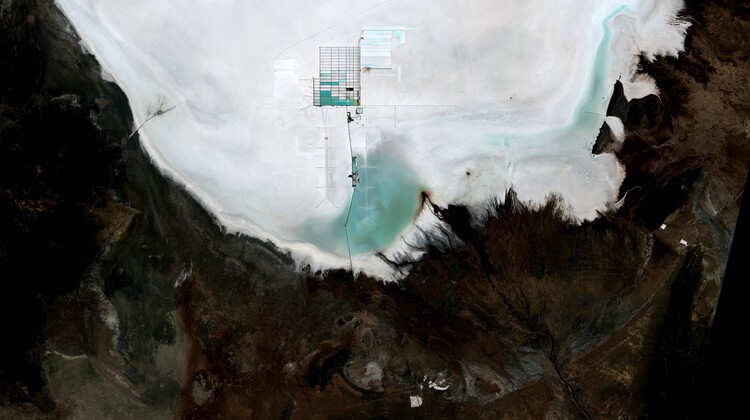
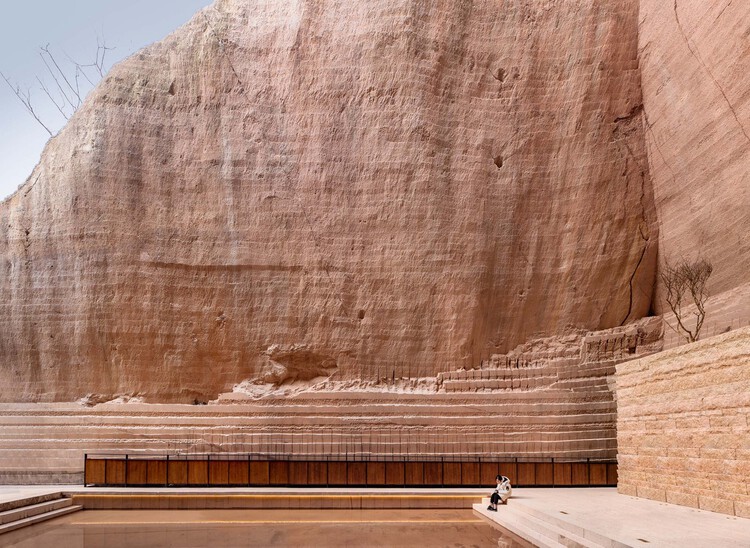
Every building begins somewhere else. The sand in its concrete, the stone on its façade, the lithium that may one day power its systems. It arrives, already stripped from a mountain, a riverbed, or a salt flat thousands of kilometers away, having passed through a chain of trucks, ships, and customs declarations that erase almost everything about where it came from. Architecture tends to treat material as a starting condition, something simply available, but extraction is where construction actually begins.
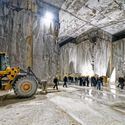
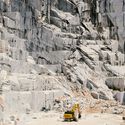
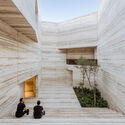
The global trade in construction sand alone now moves on a scale that rivals the illegal markets in timber, gold, and fish combined, run through networks violent enough to have cost reporters and activists their lives. A single mountain in Tuscany has yielded more marble in the past few decades than in the two thousand years before them, hollowed out by a workforce whose own history of revolt has been almost entirely forgotten. Beneath the salt flats of three South American countries and the copper belt of Central Africa, the minerals that will supposedly power a cleaner future are pulled from ground that Indigenous communities have inhabited for generations and that children, in some cases, mine by hand. Each of these is sold as ordinary commerce; each is also a territorial transaction whose terms were set somewhere far from where the material was taken.
Soporte oculto para vigas - CBH. Image Cortesía de Simpson Strong Tie
In the field of architecture, wood was one of the first materials used by humans for construction, evolving and facing various challenges over the years. From the integration of new technologies into industrial production processes to ancestral techniques and materials reinterpreted for contemporary times, timber construction continues to garner significant interest among architects and designers. Beyond its versatility, strength, appearance, and sustainability, cross-laminated timber, commonly known as CLT, presents a highly promising future for the industry.
In the field of architecture, however, this question remains relatively marginal. We often know who designed a building, its finishes, the manufacturer of its frames, the brand of its wall coverings, and even its energy performance, but we almost never ask where the tons of material that made its existence possible actually came from.
Fired clay has been used in construction for over 9,000 years, evolving from vernacular craft into one of the most widely applied materials in the built environment. Its durability, water resistance, thermal performance, and adaptability have made it a staple for facades, sanitaryware, flooring, architectural surfaces, and structural systems. Today, new manufacturing technologies are extending these possibilities as architects and manufacturers confront the environmental implications of material extraction and production.
What happens when you choose reuse over demolition? In Østbirk, Denmark, a 30-year-old timber warehouse has been transformed into a 14,000-square-meter world-class innovation hub for nearly 500 VELUX employees. This article explores how the LKR Innovation House project challenges conventional building practices, preserves material legacy, and offers practical lessons for architects working with existing structures. A new book documents the process through essays, interviews, and photographs.
In Six Memos for the Next Millennium, Italo Calvino explores lightness from a literary perspective and argues, "Opposed to lightness is weight. Removing weight produces lightness; it is a value, not a defect." Drawing on Greek mythology, he reflects on one of Perseus's feats after severing the head of the terrible Gorgon Medusa without being turned to stone. Assisted by the gods Hades, Hermes, and Athena, Perseus flies with his winged sandals and uses a bronze shield as a mirror to reflect her image. Relying, like many architects, on what is lightest—the wind and the clouds—he also fixes his gaze on what is revealed through indirect vision: an image reflected in a mirror.
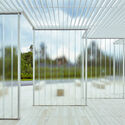
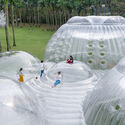
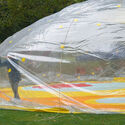
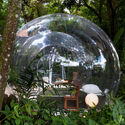
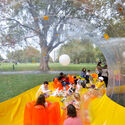
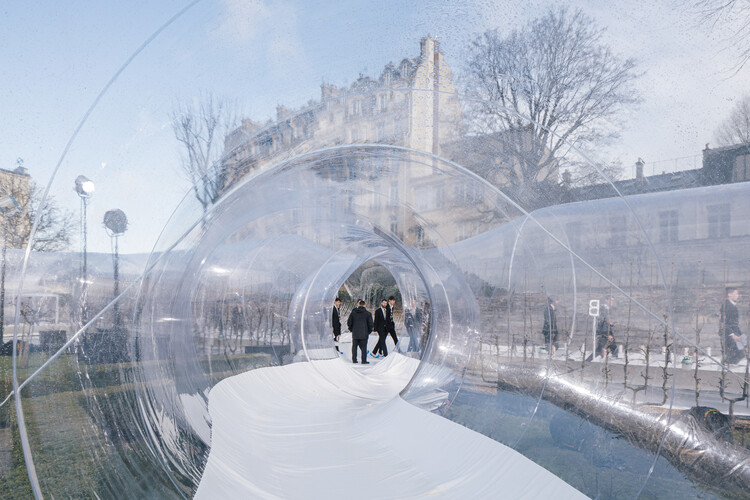
Historically, transparency has been naturalized as an inherent condition of modern architecture. With the shift from the heavy load-bearing wall to the lightweight glass envelope, glass was introduced into the discipline, blurring the boundaries between interior and exterior spaces. In connection with inflatable architecture, transparency is linked to lightness and impermanence, leaving temporary traces on the landscapes it inhabits. By using textiles or plastics as main materials and air as a structural system, the search for lightness in the built environment now recognizes more than a single atmosphere of application.
Using massive s plates, often several centimeters thick and weighing tons, Richard Serra's sculptures convey an almost improbable sense of lightness. This effect does not result from a reduction of mass, but from how that mass is organized: large curved surfaces tilt, narrow passages compress the body, and seemingly unstable elements create a constant sense of imbalance. Serra transforms weight into a dynamic spatial experience.
In architecture, lightness has occupied a central role at least since the modern period. While earlier traditions, such as Greek and Roman architecture, were closely associated with stability, and large churches with monumentality, the twentieth century introduced a decisive shift in how matter is handled, particularly through the separation of structure and enclosure.
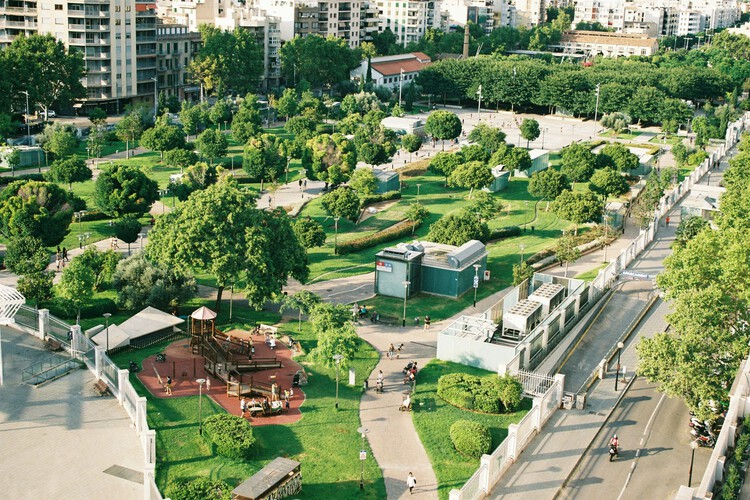
European City Context. Image Courtesy of ReGreeneration
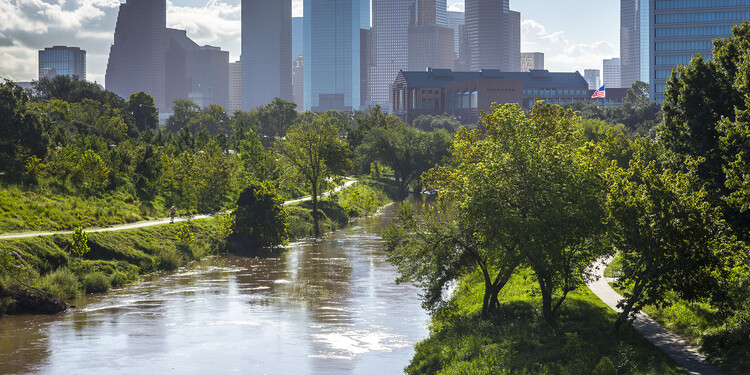
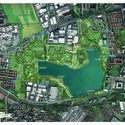
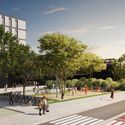
The ReGreeneration project, a Horizon Europe project led by Inetum and supported by C40 Cities, ARUP, Placemaking Europe, and several others, operates as an active collaboration with local governments, private companies, academia, and civil society organizations at the intersection of urban regeneration, green public spaces, and neighborhood-scale design. Its premise addresses how European cities are built and maintained and how they experience a changing climate, arguing that cities must fundamentally change to remain livable under accelerating climate pressures.