1. ArchDaily
  2. Research Stations

Research Stations: The Latest Architecture and News

South of Everything: Architecture and Territorial Presence in Antarctica

Subscriber Access | 
Audio available

Antarctica has no government, no permanent population, and no economy. It also, since 1959, has had no legally recognized owner as the Antarctic Treaty freezes every territorial claim on the continent. On paper, this makes Antarctica the closest thing on Earth to a true commons. In practice, close to thirty countries currently operate more than seventy research stations there, several of them within a short flight of one another, and one of those stations has a school, a chapel, a cemetery, and a civil registry office that has recorded eleven births since 1978.

None of that architecture is accidental, and very little of it is explained by science alone. A research station costs millions of dollars to build and supply in one of the most logistically hostile places on the planet; a country does not commit to that expense purely to measure atmospheric ozone it could, in several cases, measure somewhere closer. What a station does, reliably, is stake a claim to a territory that legally forbids exactly that.
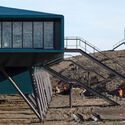

South of Everything: Architecture and Territorial Presence in Antarctica - Image 1 of 4South of Everything: Architecture and Territorial Presence in Antarctica - Image 2 of 4South of Everything: Architecture and Territorial Presence in Antarctica - Image 3 of 4South of Everything: Architecture and Territorial Presence in Antarctica - Image 4 of 4South of Everything: Architecture and Territorial Presence in Antarctica - More Images+ 24

Construction Works Begin on Hugh Broughton's Discovery Building at Rothera Research Station in Antarctica

A new building in Antarctica breaks ground at the Rothera Research Station. Designed by Hugh Broughton Architects, the project commissioned by the Natural Environment Research Council (NERC), aims to facilitate the British Antarctic Survey’s (BAS) ongoing climate-related research.

British Council Launches Open Call for First Ever Exhibition of Antarctica Architecture

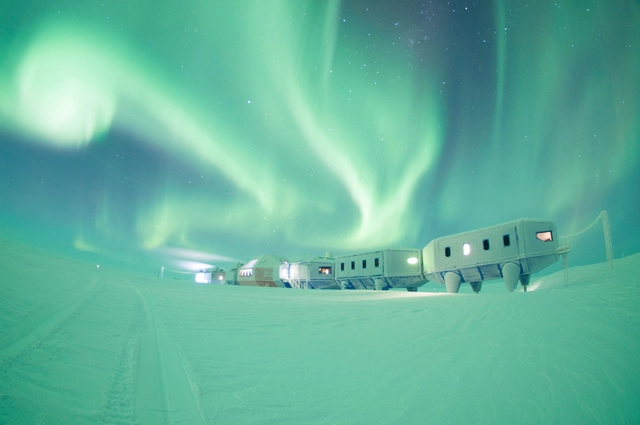
In order to illustrate the ingeniuity and innovation of contemporaray architecture, the British Council and curated by the Arts Catalyst, Ice Lab: New Architecture and Science in Antarctica has declared an open call for an international touring exhibition that will feature architecture of Antarctica. With one of the most extreme and desolate environments on the planet, the facilities must be laboratories and residences for scientists working in this distant terrain. The exhibition will feature five designs for Antarctica research stations: British Antarctic Survey's Halley VI by Hugh Broughton Architects; Princess Elisabeth Antarctic by International Polar Foundation; Bharati Research Station by bof Architekten / IMS; Jang Bogo Korea by Space Group; and the Iceberg Living Station by MAP Architects.