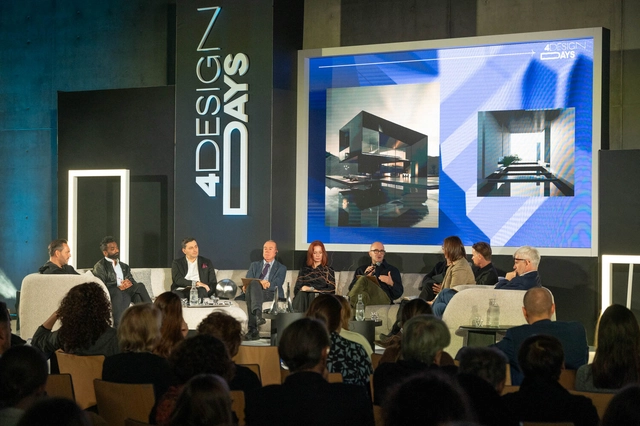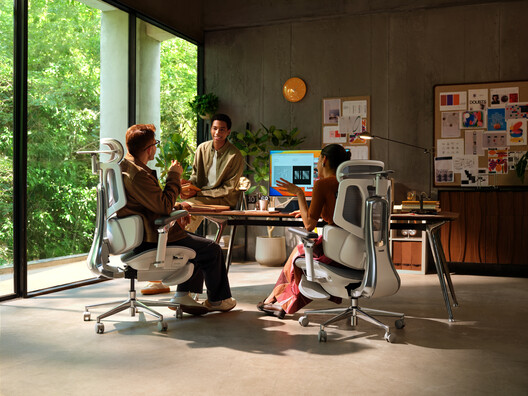
4 Design Days 2026 is the jubilee 10th edition of one of the most important events for the architecture, design, and real estate sectors in Poland. On 22–23 January 2026, the International Congress Centre in Katowice will host architects, designers, investors, developers, manufacturers, representatives of local authorities, and experts who actively shape the directions of contemporary spatial development.
Buildner is pleased to announce the results of its third annual Architect's Chair Competition, which received excellent ideas from around the globe. Buildner has published two books on the topic, highlighting key ideas and outstanding projects from its past editions. With registration now open, we invite you to share your vision of the ideal chair by September 18th—submit your entry here.
Chair design exemplifies the interdisciplinary nature of architecture, showcasing architects' ability to adapt skills and sensibilities across scales and contexts, blurring the lines between architecture, design, and art. This versatility empowers architects to explore new ideas and challenge conventional notions of chair aesthetics, materials, and technology.
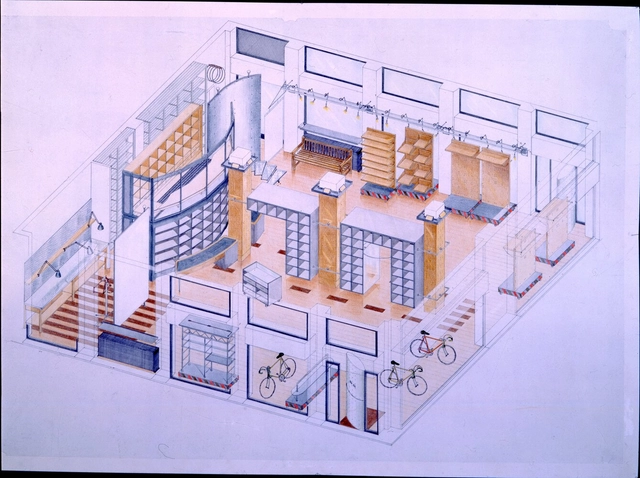
Axonometric drawing of the Granciclismo showroom (with Daniela Puppa), 1988. Image Courtesy of Archivio Franco Raggi
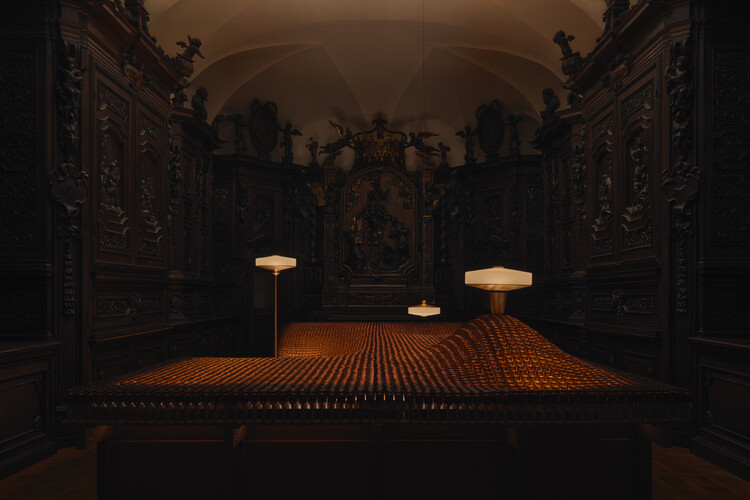
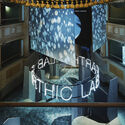
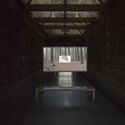
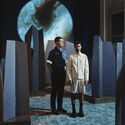
"Franco Raggi. Unstable Thoughts" (Franco Raggi. Pensieri Instabili) offers an in-depth exploration of the work of Italian architect, designer, and intellectual Franco Raggi. Curated by Marco Sammicheli and Francesca Pellicciari, the exhibition provides visitors with an experimental and immersive experience that traces Raggi's creative journey. Designed by the architecture studio Piovenefabi, the installation is hosted in the Design Platform space at the Museo del Design Italiano in Milan, a museum dedicated to key themes and figures in contemporary design. Held from February to April, the event is part of the prelude to the 24th edition of the Milan Triennale International Exhibition, titled Inequalities, which will run from May to November 2025.
PRACTICE is a Seoul-based studio founded in 2020 by designers Sisan Lee and Sehou Ahn, and one of ArchDaily's 2024 Best New Practices. With backgrounds in architecture and interior design, they explore a wide range of creative fields, from spatial and exhibition design to custom furniture, art objects, and material experimentation, and had been highlighted last year due to their fast design approach which "matches the fast-evolving iterations at the world's bustling hub of fashion and design". The studio brings a unique depth to each project by creating custom-designed elements, furniture, and objects that reflect their diverse creative capacities. Pieces within their projects are crafted from a deep understanding of its purpose and materiality, demonstrating the studio's commitment to thoughtful, integrity-driven design.
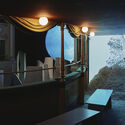
Simone Farresin is the co-founder of Formafantasma, a research-driven design studio exploring the ecological, historical, political, and social influences that shape the design industry. Most recently, the studio participated in Milan Design Week 2024 and Salone del Mobile.Milano with various products and exhibitions. Onsite in Milan, ArchDaily had the chance to speak to Simon Farresin about the studio’s installation for Cosentino at the historic Teatro Gerolamo, and the broader Formafantasma design practice.
Architecture praxis has traditionally focused on customized, project-based services – a well-established model continually favored by industry professionals. While this approach yields remarkable built environments, it struggles to achieve scalability and longevity. The architectural industry has shown little interest in exploring alternative practices, processes and business models, considering that the traditional mode is equally vulnerable to market cycles as other industries are. Bespoke design solutions, the cornerstone of conventional practice, make standardizing processes and scaling services challenging. This focus also leads to fragmented workflows among firms and stakeholders. The stability and establishment of traditional practices can breed a risk-averse culture, hampering disruptive innovations within the industry.
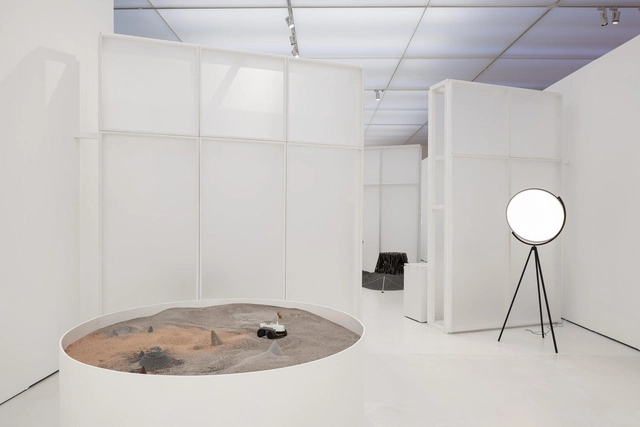
Ever since humans first looked up towards the heavens, we’ve wondered what is up there. From 1923 when Edwin Hubble first discovered galaxies beyond our own, our hunger and obsession for knowledge of the cosmos has grown almost as quickly as the universe itself.
As our technology advanced throughout the 20th century, we realized that ‘space’ is, in fact, filled with a huge array of ever more colorful galaxies, gasses, and stars. And the world’s leading product designers were taking note.
Social by Snohetta for Varier. Image Courtesy of Mishael Phillip Fapohunda
Milan Design Week is an annual festival that returned to Milan this April, with as a main event, The Salone del Mobile, which runs from April 18 to 23, 2023, at the Fiera Milano exhibition venue. Over 370,000 people attended the furniture fair this year, while thousands of design studios presented furniture, lighting, appliances, kitchen, bathroom, outdoor and workstation products. To highlight furniture and object design and the broader context of Milanese architecture and culture, many architectural offices collaborated with various businesses to make architect-designed items and construct architectural installations.
Reputable architects participated in the week-long event as they do every year, using products, furniture, and installations to share their expertise, address some of the most pressing issues facing the field, and demonstrate how their work can benefit the environment and society. Many firmly established architecture studios, from Foster + Partners, Mario Cucinella, and Hassell, designed various products. Furthermore, architects such as The New Raw, Snøhetta, and Studio Etienne Bastormagi have designed products focusing on efficient and sustainable systems that can inform future decision-making.
Subscriptions are quickly becoming an integral part of everyday life. For example, streaming platforms have completely replaced the need to own video cassettes, while ride-sharing services partially cover the need to own a private car. Subscriptions have been largely understood as digital services, but a new trend suggests that the same concept could be transferred to physical objects in the near future. Instead of owning a fridge, a washing machine, or even light bulbs, one could acquire a subscription to ensure the freshness of produce, clean clothes, and a well-lit home.
The concept is known as the “subscription-based economy,” a variant of the “circular economy” notion. It postulates that instead of owning some of the objects used every day, one could subscribe to a service to gain access to the same benefits, but without the need to own, maintain or dispose of the object in question. Consumers no longer buy products; they buy access to services. Sometimes, it would mean simply leasing the object instead of purchasing it, but the model goes one step further. It inscribes a shift of responsibility and mentality. Because consumers no longer own the objects, the responsibility to reuse and recycle falls to the producers, who are now in charge of the entire life cycle of the objects they create.
This year's architectural contributions, which were on display across the busy streets of Milan, Brera design district and botanical garden, Alcova, BASE, and other cultural venues, highlighted this year's Milan Design Week theme of sustainability and environmental awareness with respect to furniture production.
Graduating with an architecture degree is often met with the expectations of working a 9-5 job at an office. However, the reality is that many fresh graduates are venturing into diversified careers and exploring fields such as architectural photography, writing, rendering, set design, and project management. In this Editor's Talk, ArchDaily's Founder and Editor in Chief, Director of Software Product Development, Managing Editors, and Social Media Editor share their experiences of graduating with a Bachelor's Degree in Architecture then finding themselves exploring different, yet very complimentary career paths post graduation, proving that there is a lot more to the architecture practice beyond designing built spaces.
'Innovation' and 'design thinking' could possibly be two of the most extensively-used phrases both online and offline during the past decade. To respond to the global need of "changing the status quo", established companies, start-ups, and even universities have used this framework to generate novel ways of solving problems and create new products, taking into account their desirability, feasibility, and viability. And with that, a new archetype was conceived: the design thinker, someone who has the creative toolkit to generate something disruptive. So what is the meaning behind design thinking and what is its relationship with architecture?
After a year of absence in light of the pandemic, Milan Design Week, one of the most anticipated design events to take place in Italy, will finally open its doors to visitors. From the 5th to the 10th of September, more than 350,000 architects, designers, artists, and craftsmen from all around the world will have the chance to explore new design innovations and exchange ideas about the interior design, furniture, and lighting. During the week-long event, Salone del Mobile, the awaited furniture and interior design event of the year, will be hosting local and international exhibitors at the Fiera Milano, Rho, along with interventions by world-renowned architects across the city.
ArchDaily will be attending the Salone del Mobile so stay tuned for exclusive interviews and collaborations, and read on to discover what to expect during the week-long exhibition and how architects are taking part of the event.
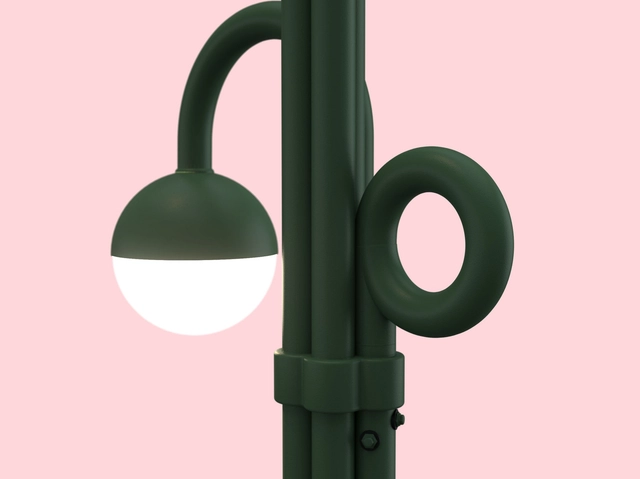
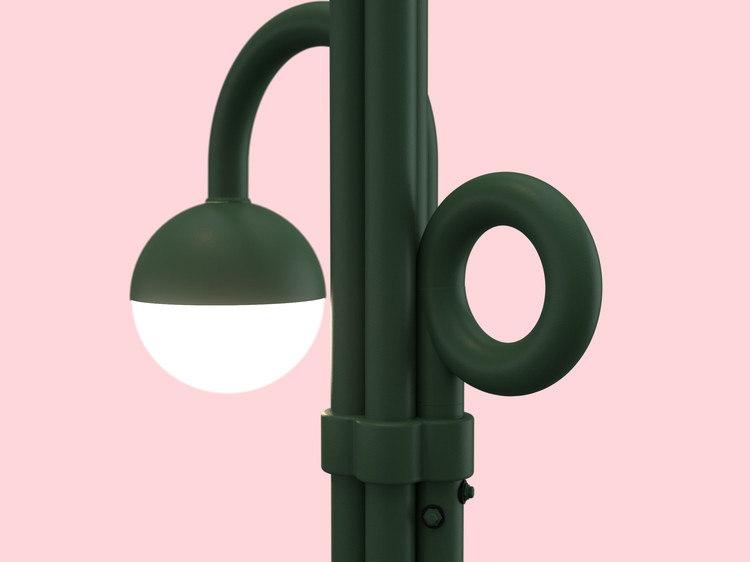
Design studio Project Room has been announced as the winner of the competition to design and create a new standard streetlight for Los Angeles. Initiated by the City of L.A. and led by the Mayor's Office with the Bureau of Street Lighting, the competition asked designers to create a lighting system that would incorporate new technology, include space for text on each pole, and provide shade to help ease the impacts of the climate crisis.
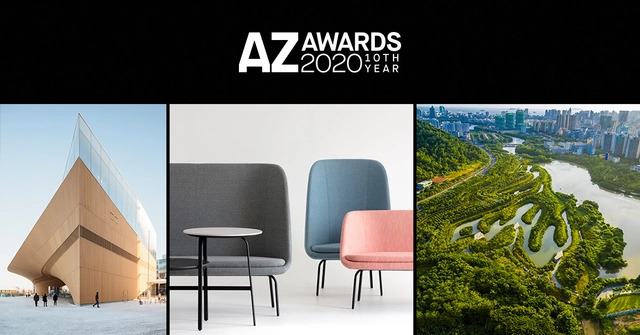
AZURE announces the opening of submissions to the 2020 AZ Awards!
Now entering its 10th year, the AZ Awards celebrates the best in architecture and design from around the world. Each winner will receive the AZ Awards trophy, get international exposure through our media partners, and have their achievements recognized by AZURE in print, online and at the AZ Awards gala in June 2020.
The AZ Awards is open to architects, interior designers, landscape architects, product designers, industrial designers, experimental graphic designers, product manufacturers and students in design-related disciplines.
Early-bird deadline: January 31, 2020 Competition closes: February 18, 2020
Sydney Harbour Bridge made using Mola kit. Image Courtesy of Mola
It is often difficult to detect structures' potential deformations and behaviors with the naked eye, which is why interactive education and model-making have proved to be some of the most beneficial methods of learning about structural design.
To help with the learning of structures in a more playful and intuitive way, Brazilian brand Mola, have developed Mola Structural Kits, a selection of interactive physical models that simulate the behavior of architectural structures and create countless design combinations.
Following the success of the Structural Kits 1 and 2, Mola will be launching the Mola Structural Kit 3 in a Kickstarter campaign in a couple of weeks, and to celebrate, the innovative company has once again teamed up with ArchDaily for another exclusive giveaway, offering 10 of our readers the chance to win a complete structural kit, along with additional accessories.
Zaha Hadid Design has released images of its latest collection set to be featured at the Maison et Objet 2019 in Paris later this month. The collection, embodying Zaha Hadid’s inventive process, features a Swirl bowl in crystal glass, and a monochromatic marble collection from the Cell range.
The Maison et Objet festival is described as the international authority for home décor, interior design, architecture, and lifestyle culture, with its bi-annual Paris trade fair taking place from January 18th to 22nd 2019.
From city master plans to pocket-sized products, Zaha Hadid Architects (ZHA) have explored architectural formalism through innovative digital design methods. In 2006, the collaboration with furniture-makers and fashion houses led to the creation of Zaha Hadid Design that served both as an iterative process for and a resultant of ongoing architectural design.
A pop-up exhibition, located suitably on the ground floor of ZHA's renowned condominium along the High Line in New York City, features a scale model of the building itself on display. To honor and present the work produced by the firm in the last four decades, the Zaha Hadid Gallery showcases a series of projects in a wide range of mediums including the six 'Silver Models' that represent eight of the firm's key works.