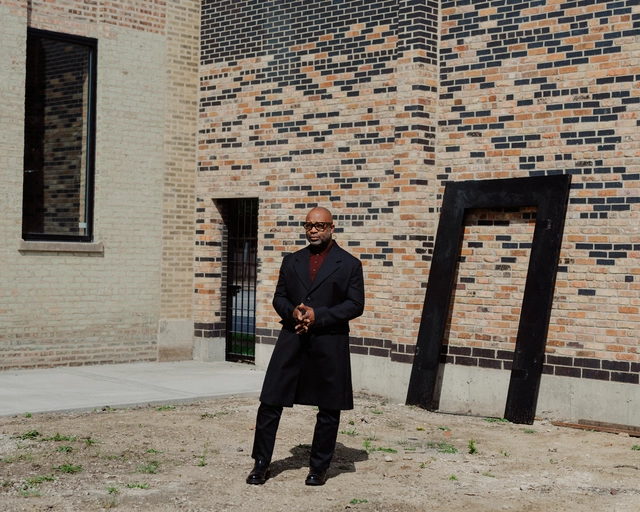
The Harvard Graduate School of Design (Harvard GSD) has announced the Class of 2025 Loeb Fellows. Ten practitioners and activists from around the world have been selected to join the Loeb Fellowship program to expand their careers and advance their programs and initiatives focused on equity, resilience, and collective action.
The ten selected practitioners are mid-career professionals coming from diverse backgrounds. Each one has been recognized for initiating practices that are transforming public spaces and urban infrastructures, addressing public health concerns and environmental injustices, as well as housing needs and efforts to preserve the cultural, natural, and architectural heritage of diverse regions from all continents.
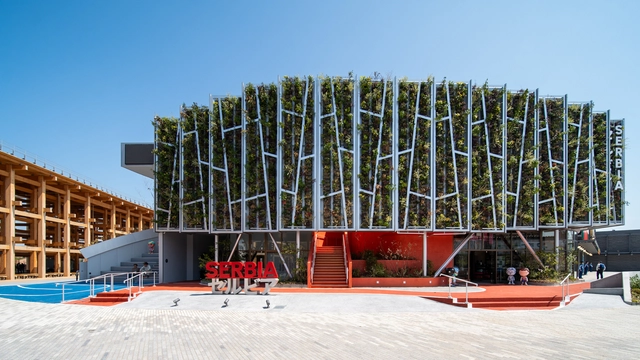
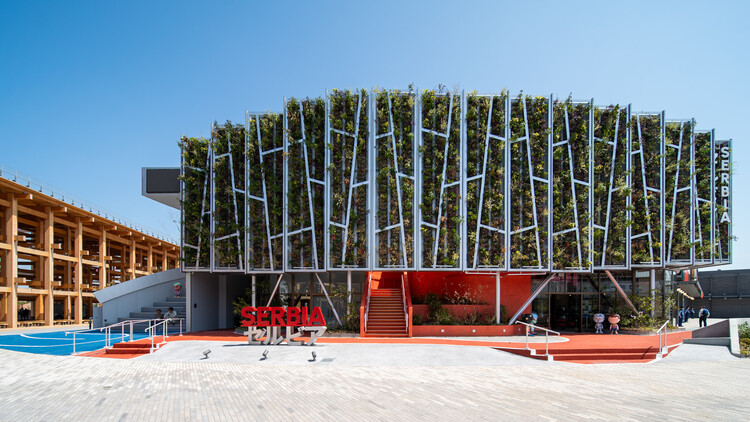
The Serbian Pavilion at Expo Osaka 2025 emerges as a compelling example of sustainable architecture infused with cultural storytelling, seamlessly integrating cutting-edge technology and emotional resonance. Designed by Aleatek Studio, the pavilion takes inspiration from Belgrade's protected Ratno Ostrvo (Great War Island) to realize the concept of a "Floating Forest." It stands out as the only Expo pavilion featuring a living façade, with over 95% of its materials recyclable and 80% intended for reuse in future construction. The design strategy also aligns with the theme "Play for humanity" of the upcoming Specialised Expo 2027 to be held in Belgrade.
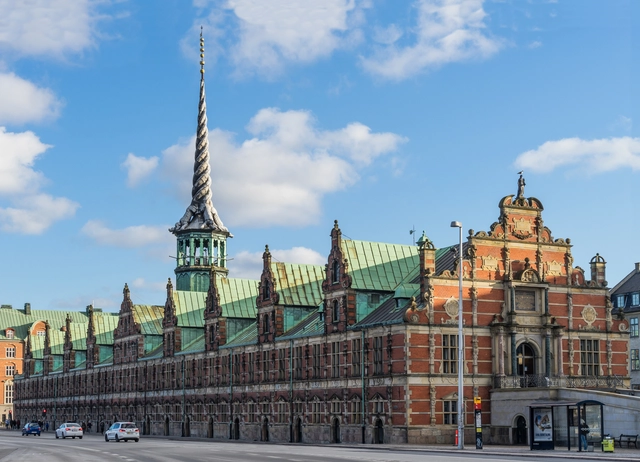
In the early morning of April 16, a fire broke out in the capital of Denmark, engulfing Copenhagen’s Old Stock Exchange, one of the oldest landmarks in the city. In the fire, the 56-meter-tall Dragon Spire, shaped as the tails of four entwined dragons, collapsed. In just a few hours after the fire begun, half of the 17th century Børsen building was destroyed according to authorities. The structure was undergoing renovation works at the time of the event. Emergency workers, staff members and passers-by collaborated to rescue the historic artworks housed in the former stock exchange.
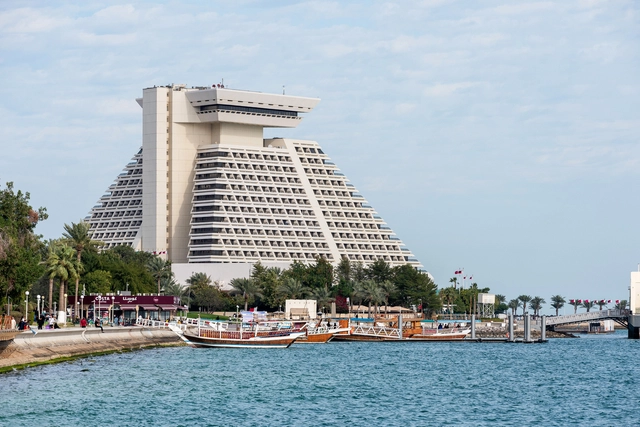
As part of the Design Doha 2024 Biennial, Glenn Adamson and Péter Tamás Nagy present the exhibition “Colors of the City: A Century of Architecture in Doha” investigating the architectural evolution of the capital of Qatar based on multiple global influences that characterize it. Running until March 30, 2024, the exhibition offers a journey through Doha's architectural history featuring various styles such as Classicism, Art Deco, and Modernism, contemplating the Qatari adaptations of these styles developed by architects from Europe, America, the Middle East, and South Asia.
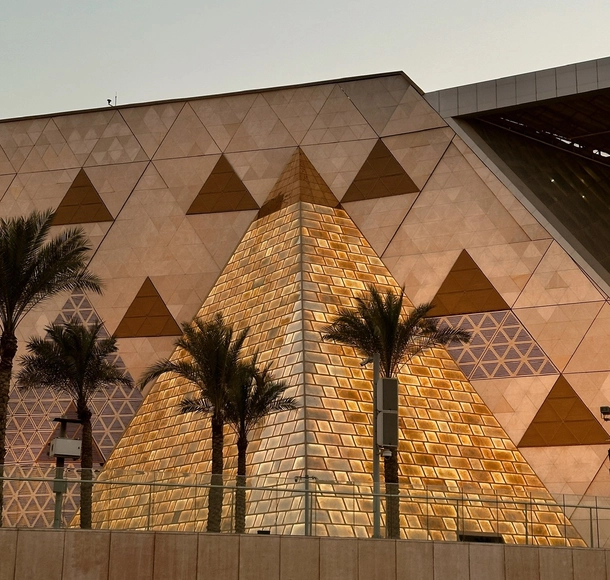
Showcasing millennia of Egyptian history and culture, the Grand Egyptian Museum is a monumental project in Cairo, Egypt, designed by the Irish firm Heneghan Peng Architects. Home to over 100,000 artifacts spanning Egypt’s storied past, the museum is on the brink of opening its doors to the public after multiple setbacks. Recent updates offer glimpses of the structure’s progress, with photographs captured by Egyptian photographer Farida Bustani providing sneak peeks of the architectural landmark.
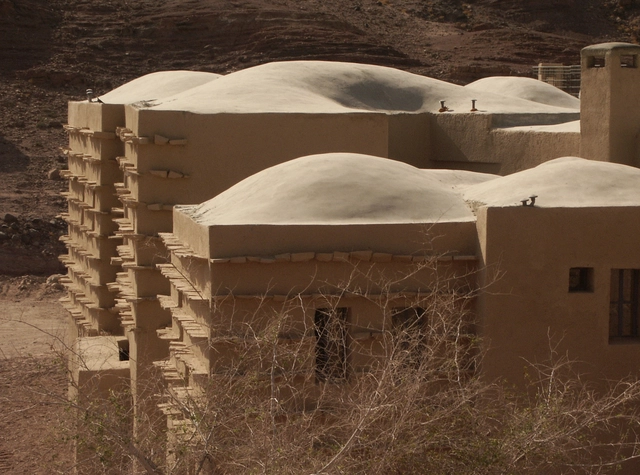
The Feynan Ecolodge project. Image Courtesy of Dongola DAS 01 | Notes on Formation and Ammar Khammash
Ammar Khammash is a Jordanian architect, designer, and artist best known for his approach that focuses on the preservation of cultural and natural heritage while crafting an architecture that engages with its surroundings. With deep admiration for nature and its ecosystems, Khammash trusts that "the site is the architect”, a statement for which he is renowned that underscores the profound influence of context on his architectural design. With over three decades of experience spanning various disciplines and across several Middle Eastern countries such as Jordan, Oman, Palestine, Egypt, Syria, and the UAE, Ammar Khammash has consistently attempted to preserve and enhance the symbiosis between human constructions and the natural environment. His contributions include the Royal Academy for Nature Conservation, the Wild Jordan Center, and the restoration of the Church of Apostles.
In 2022, he was featured in the first edition of the Dongola Architecture Series, a biannual publication that offers unique perspectives into Arab culture by highlighting prominent contemporary architects. The issue, titled “Notes on Formation: Ammar Khammash,” written by Raafat Majzoub, explores "architecture as a transdisciplinary tool of expression, and as a method of imagining and reimagining the future," encapsulating the ethos of the publication. ArchDaily had the opportunity to talk to Ammar Khammash and Sarah Chalabi, founder of Dongola Limited Editions, to delve into the architect’s perspectives on site, materiality, and culture, along with his philosophy, notions on academia, and insights into the future of the profession.
Last week, Japanese architect and social advocate Riken Yamamoto was announced as the 2024 Pritzker Architecture Prize Laureate, becoming the 9th Japanese architect honored with the profession's most prestigious award. Throughout the 45-year history of the Pritzker Prize, Japan stands out as the nation with the highest number of laureates. While geography is not a criterion in the selection of the laureates, Japanese architecture consistently impresses with its interplay of light and shadow, the careful composition of spaces, soft transitions between interior and exterior, and attention to detail and materiality. An ingrained culture of building also celebrates diverse designs and encourages global dialogue and the exchange of ideas and best practices. Read on to rediscover the 9 Japanese Pritzker laureates and glimpse into their body of work.
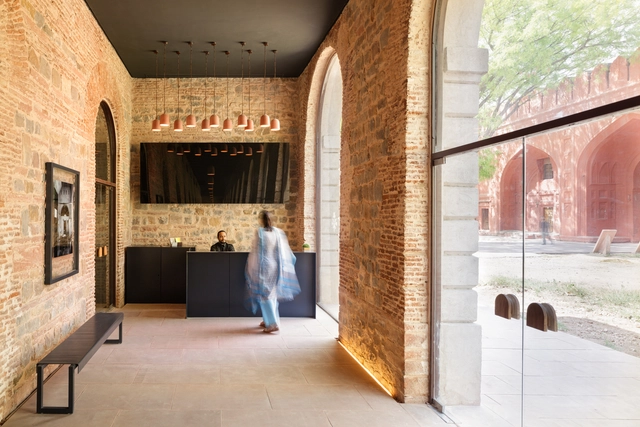
The Indian built environment constantly negotiates ancient traditions, diverse population, and globalized ambitions. When it comes to heritage preservation, these forces often converge to create a distinctive approach to conservation efforts in the country. Beyond the conventional models seen in many parts of the world, India's conservation projects intertwine historical practices, community engagement, and a reverence for the living essence of buildings.
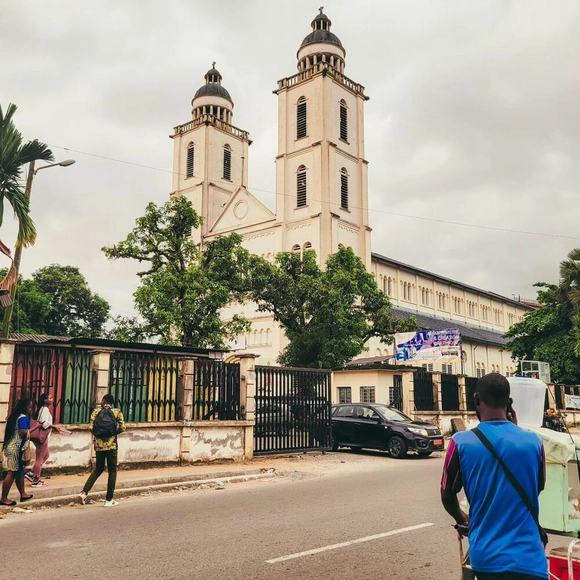
Cameroon boasts a rich architectural heritage of Catholic Christian worship buildings. These buildings encompass various styles, including contemporary designs, Terracotta brick explorations, and Gothic, and Byzantine architectural influences. Since the arrival of missionaries and colonial communities in 1890, numerous religious buildings have been constructed with the involvement of local communities. These buildings not only contributed to the development of the Christian faith but also served as venues for the exchange of architectural ideals between the local and foreign communities.
During this period, Cameroon explored the Gothic and Byzantine movements, which had reached their peak in Europe, to create these churches. They were interrogated through local building practices and now represent the historical heritage of the country's cathedrals.
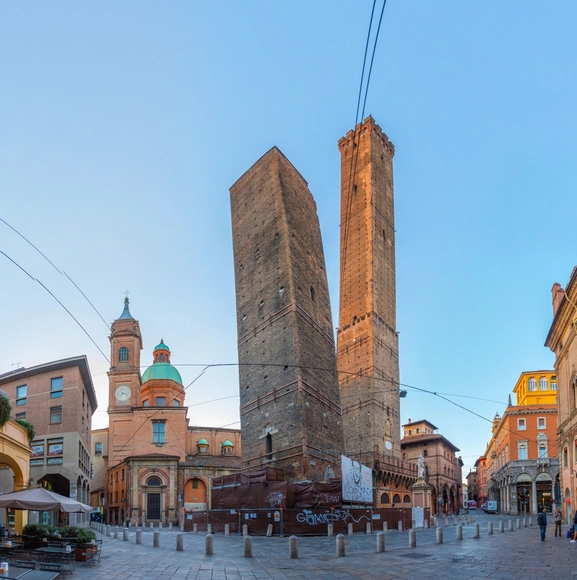
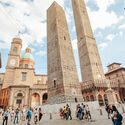
Bologna officials announced plans to secure and repair the leaning Garisenda Tower, a medieval structure in the center of the Italian city. Earlier last month, the area surrounding the tower was secured after raising fears of collapse, as monitoring has found shifts in the direction of the tilt. The 47-meter-tall tower leans at a four-degree angle, similar to its more famous counterpart, Leaning Tower of Pisa. The Garisenda Tower has been a defining feature of Bologna’s skyline along with its neighboring Asinelli Tower, which is around twice the height and also leans, though at a smaller angle, and is usually open for tourists to climb.
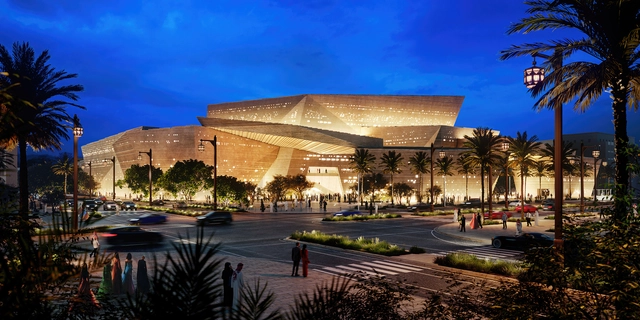
Snøhetta has revealed the design of a new opera house to be added to the historic area of Diriyah in Saudi Arabia. The proposal strives to blend the local cultural heritage and Najdi building traditions with the contemporary requirements of an international music and performing arts venue. Scheduled to open in 2028, the Royal Diriyah Opera House anchors a wider master plan to redevelop the Diriyah area on the outskirts of Riyadh, aiming to transform it into a cultural destination.
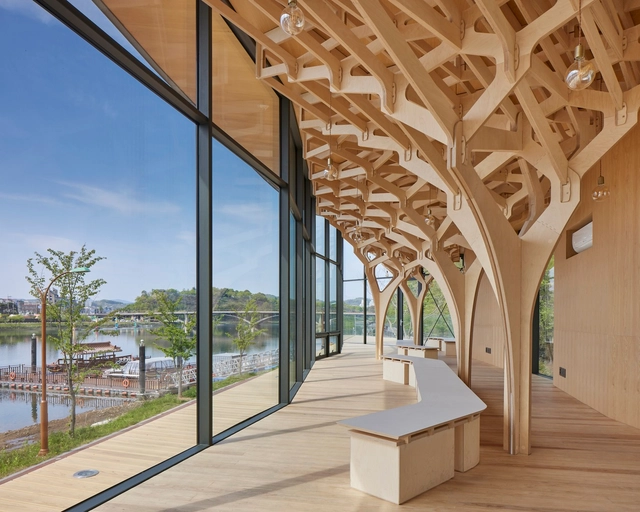
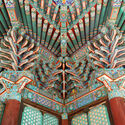
By imagining an alternative reality and rediscovering his cultural background, architect Jae Kyung Kim of JK-AR established his identity as an architect when creating his practice, selected as one of ArchDaily’s New Practices 2023. After studying and working in South Korea and the US, he’d noticed an absence of traditional Asian architecture, which had peaked his interest. He began to thoroughly look at a possibility where the traditional timber buildings of East Asia had still been relevant and continued to evolve.
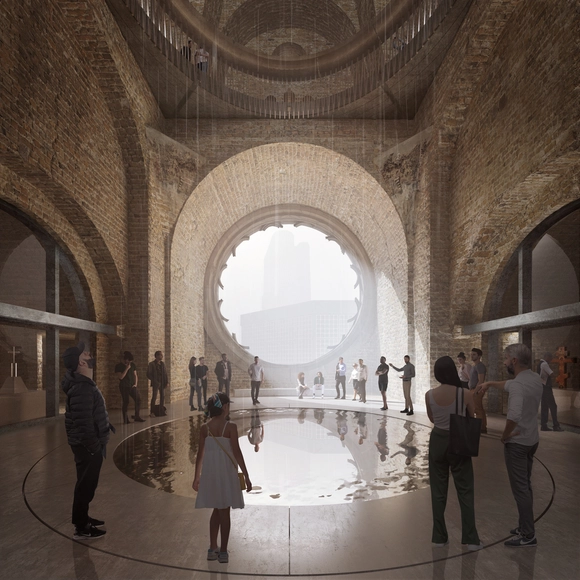
The design by heneghan peng architects, Dublin, with Ralph Appelbaum Associates, Berlin, was awarded 1st prize in the international competition for the replanning and expansion of the Old Tower of the Kaiser Wilhelm Memorial Church. The competition’s purpose was to redesign the original West Tower, which was partially destroyed during a bombing by the Allied Forces in 1943, and return it to the tourist circuit as a war memorial and exhibition space.
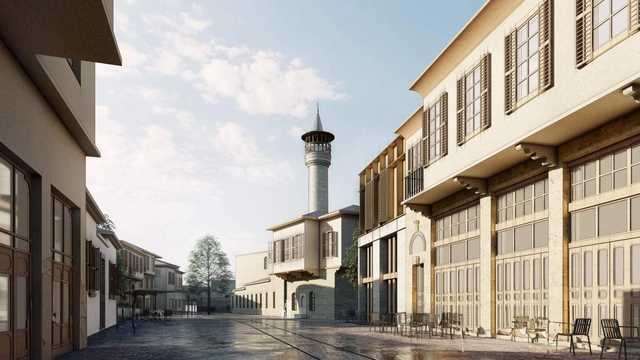
The Türkiye Design Council (TDC) has gathered 13 design practices, including Foster + Partners and Bjarke Ingels Group, to contribute to the revitalization of the historic province of Hatay, an area severely damaged by the 7.8 magnitude earthquake in February this year. Foster + Partners has been selected to lead the design and planning of the new master plan for the city of Antakya, known to antiquity as Antioch, while several other offices including Turkish practices DB Architects and KEYM (Urban Renewal Center) will work together to create a vision for the rebuilding of the city. The master plan is expected to be revealed in its entirety in 2024.
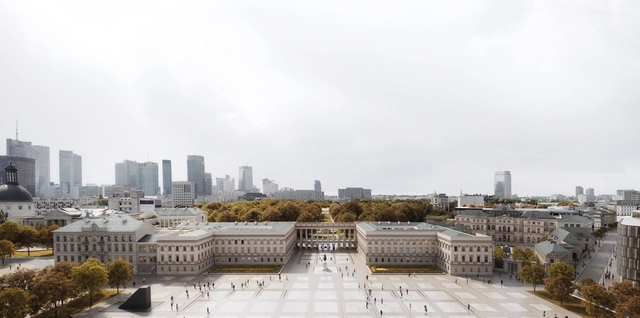
WXCA Architectural Design Studio has won the international competition for the reconstruction of the Saxon Palace, a heritage site located in the historical city center of Warsaw, Poland, that was significantly damaged during the Second World War. The competition, organized by the Polish Ministry of Culture and National Heritage in cooperation with the Association of Polish Architects, aimed to create a concept for the restoration of the monument, which is set to be rebuilt in its external Neoclassicist form of 1939.
In this Louisiana Channel interview with Yasmeen Lari, the renowned Pakistani architect speaks about the role of architects and the needed perspective shifts of the industry in contemporary times. Awarded the RIBA Royal Gold Medal in 2023 for herhumanitarian efforts, Lari emphasizes the need to rethink the architecture industry to address social disparities and resource deficiencies. In the interview, the architect and designer reflects on her upbringing, architectural education, and her practice today.