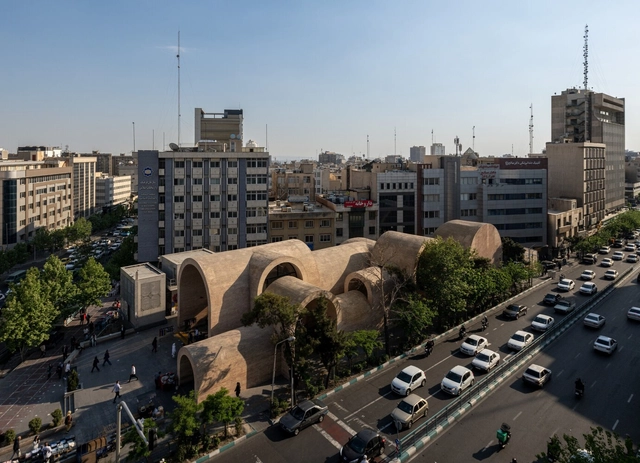
For DB Studios, architecture is not only about building, but about belonging. It is about creating a situated practice, one that responds to its context, its people, and its local identity, expressed through materials, color, and spatial decisions. In this sense, design becomes a way of articulating a language rooted in its context and shaped by the people it serves.
Lilly Reich Grant for Equality in Architecture. Transnational Narratives documentary presentation at the Mies van der Rohe Pavilion in Barcelona, March 10th, 2026. Image
"Gender equity remains an ongoing problem in architecture. Women architects are roughly one-third of the profession or less worldwide." This is the opening statement of the documentary Transnational Narratives: A Documentary Celebrating South Asian Women in Architecture, a result of the 4th Lilly ReichGrant for Equality in Architecture. The grant, an initiative by the Fundació Mies van der Rohe, promotes equal access to opportunities in architectural practice and supports the study and dissemination of contributions to architecture that have been unfairly rendered invisible. Within this context, the documentary, created by Dr. Igea Troiani, Dr. Mamuna Iqbal, artist and researcher Paula Roush, and filmmaker Rime Tsujino, brings visibility to the experiences of six architects of South Asian origin: Sumita Singha, Chitra Vishwanath, Sara Khan, Fauzia Qureshi, Sajida Vandal, and Neelum Naz, whose professional careers span India, Pakistan, and the United Kingdom.
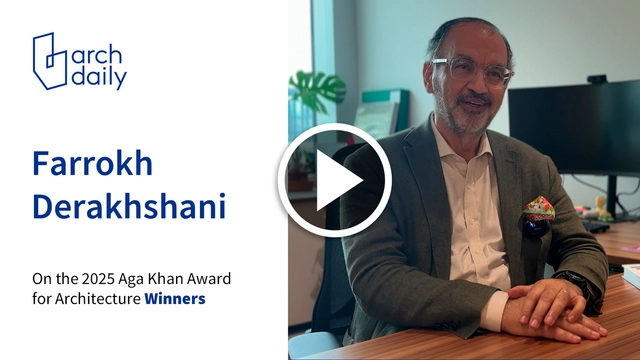
Today, September 2, the seven winners of the 16th Cycle (2023–2025) of the Aga Khan Award for Architecture were announced, following on-site reviews of the 19 shortlisted projects revealed in June. Established in 1977, the Award seeks to identify and encourage building concepts that respond to the physical, social, and economic needs of communities with a significant Muslim presence, while also addressing their cultural aspirations. To understand the vision behind this cycle's winners, ArchDaily's Editor-in-Chief, Christele Harrouk, spoke with Farrokh Derakhshani, who has been with the award for over four decades. He described the initiative as "a curated message to the world," a message that evolves with the times.
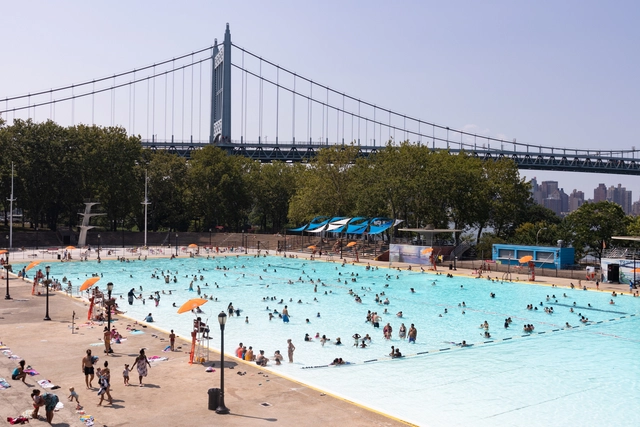
When one thinks of public spaces, the image of a pool rarely comes to mind. Public spaces are the center of civic life, places where most interactions, activities, and behaviors follow strict social and cultural norms to ensure the safety and comfort of all users. In contrast, swimming and bathing represent something more intimate and primordial, a sensorial experience distinct from any other. In addition to the health benefits, the act of floating in space creates a break from everyday life and its constraints.
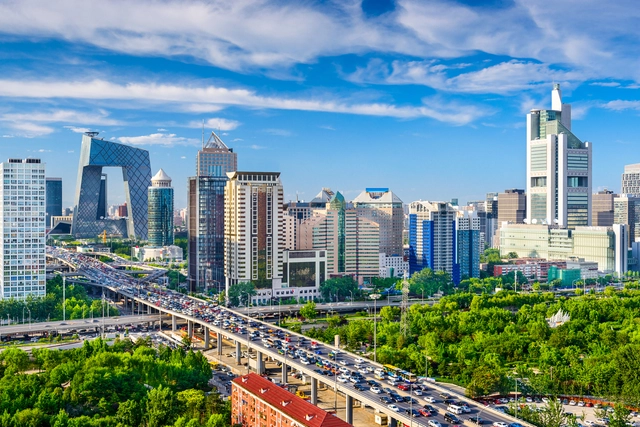
Every year, World Population Day is observed on July 11th, aiming to increase people's awareness of various population issues, such as the importance of urbanization, genderequality, poverty, health, and human rights. In 2025, under the theme "Empowering Youth to Build the Families They Want," the United Nations draws attention to the largest generation of young people in history, many of whom are coming of age in rapidly urbanizing contexts. Urban centers remain key to understanding these demographic patterns, as cities continue to attract populations seeking opportunity, stability, and access to essential services. Today, more than half of the global population resides in urban areas, a share projected to increase to 66% by 2050.
Pakistan has unveiled its national pavilion for the 19th International Architecture Exhibition - La Biennale di Venezia, set to take place from May 10 to November 23, 2025, in Venice, Italy. Titled (Fr)Agile Systems), the pavilion explores the dual nature of resilience and vulnerability in the face of climate change, using Pakistan's rich geological and cultural heritage as a lens to examine global environmental inequities. Through a striking installation featuring rock salt, a material shaped by time yet susceptible to change, the pavilion challenges dominant narratives of climate adaptation, advocating for localized, nature-based solutions rather than one-size-fits-all approaches.
With millions of residents flocking to metropolitans each year, South Asia is witnessing staggering levels of urban development. Growth brings economic prosperity and ecological strain as concrete jungles replace natural habitats. The region, home to countries such as India, Pakistan, Bangladesh, Sri Lanka, Bhutan, the Maldives, and Nepal, is faced with addressing contextual challenges when it comes to balancing urbanization with environmental sustainability. These negotiations are fairly nuanced, with a need to understand the economic, social, and political scenarios systematically in each country.