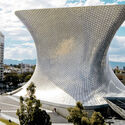
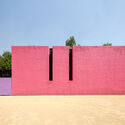
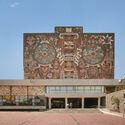
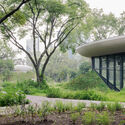
Theaters serve as cultural and social institutions, shaping society by providing spaces where stories of identity, race, and justice are brought to life. These venues foster community through shared, live experiences, sparking conversations that resonate beyond the stage. Architecturally, theaters are more than performance spaces—they are landmarks that embody both the history and future of the arts. Their design often reflects the cultural importance of storytelling, while their refurbishments ensure they remain relevant in a modern context.
In this week's AD Interior Focus, ArchDaily explores how the refurbishment of iconic theaters like the Royal Opera House in London, United Kingdom, and Sydney Opera House in Australia goes beyond modernizing comfort and accessibility. It delves into how these projects preserve the architectural integrity of these historic landmarks, ensuring their design continues to serve as a backdrop for both artistic expression and social discourse.
Wine production has long been tied to place, climate, and culture, and in recent decades, architecture has become a central part of this relationship. Wineries are no longer understood only as functional facilities for fermentation, storage, and distribution, but also as spaces where landscape, materiality, and visitor experience intersect. From subterranean cellars hidden beneath fields to sculptural landmarks rising in rural territories, these buildings shape the identity of winemaking regions while offering visitors a carefully choreographed encounter with the process of production.
At the intersection of agriculture, tourism, and culture, wineries present architects with unique opportunities to merge technical requirements with a spatial narrative. They must respond to environmental conditions, manage temperature and humidity with precision, and integrate with delicate ecosystems, while also providing spaces for tasting, gathering, and celebration. As a result, the typology has given rise to a wide range of architectural solutions. Some are rooted in tradition and local craft, others are exploring advanced technologies and contemporary forms.
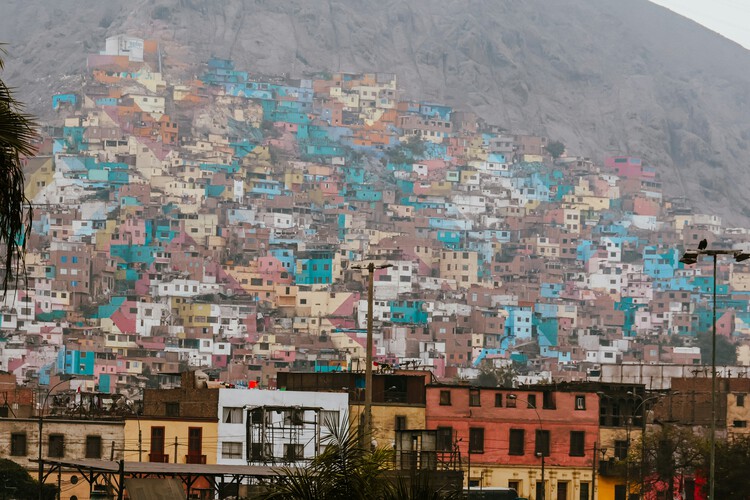
Hormuz Island, located in Iran, was a strategically significant port in the Persian Gulf, characterized by its landscape of colorful mountains. Despite its tourist appeal, the island faces significant socio-economic problems, with the local population having historically faced economic hardship. In response, the Majara Complex by ZAV Architects was conceived not merely as a building but as a deliberate architectural intervention designed to give control, opportunity, and economic benefit directly to the local community. To do this, the project channeled investment into local human resources and prioritized accessible construction techniques, creating a pathway for localized wealth creation. This allowed the Majara Complex to be one of the recipients of the Aga Khan Award for Architecture in 2025.
As cities continue to expand upward, the office tower remains one of the most visible symbols of architectural ambition and urban evolution. No longer defined solely by efficiency or corporate image, contemporary workplace architecture is being reimagined as a hybrid ecosystem, one that balances density with daylight, productivity with well-being, and technology with material and spatial integrity. The following unbuilt projects, submitted by the ArchDaily community, reveal how architects across continents are rethinking the typology of the tower, turning verticality into an opportunity for connection, adaptability, and sustainability.
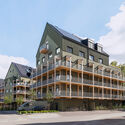
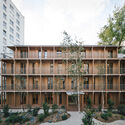
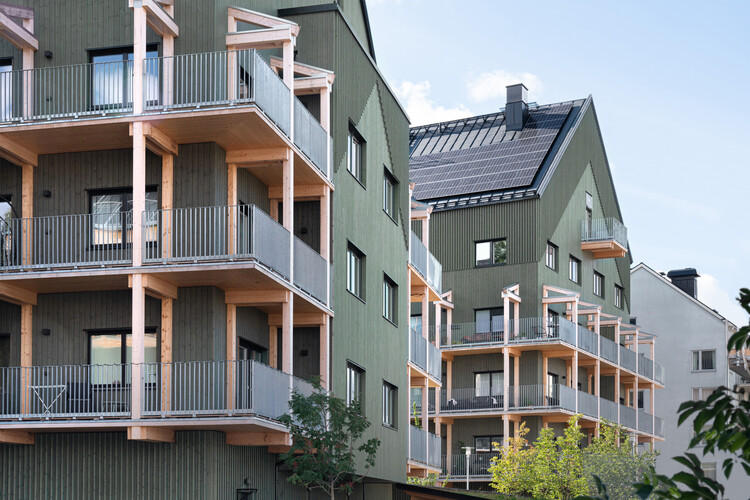
From India's Shivalik Curv and Embassy Zenith, where form and movement are combined to redefine skyline identity, to Dungen in Sweden, a low-rise timber office that mirrors the calm of a forest grove, each project explores how workplaces can become more flexible, humane, and environmentally conscious. In Kyiv, APEX Business Center positions itself as a catalyst for urban vitality, while Jakarta's BNI Tower PIK 2 transforms the corporate tower into a crystalline symbol of growth. In Munich and Ankara, mixed-use concepts like Highrise Hufelandmark and Rhythm Ankara explore the office as part of a broader civic landscape, where work, leisure, and public life intersect.
Architecture has never been confined to the act of building. It constantly negotiates between material practice and intellectual reflection, yet throughout the twentieth and twenty-first centuries, many architects felt that the built project alone was insufficient to address the full range of questions facing the discipline. Economic pressures, political contexts, and programmatic demands often narrowed the scope of practice.
Exhibitions and curatorial platforms, by contrast, created spaces of experimentation and critique, opening arenas where architecture could interrogate itself, where its past could be reinterpreted, its present challenged, and its future projected. In this tension, the figure of the architect-curator emerged, treating curating itself as a form of design — not of walls or facades, but of discourse, narratives, and frameworks of meaning.
Rapid urbanization, driven by population growth, is among the powerful megatrends transforming how cities are built. The world is adding a city the size of Madrid every single week — and will do so for decades to come. To meet this demand sustainably, a collaborative, systems-thinking approach to construction is needed.
Montreal, the second largest city in Canada is home to a wide array of heritage residential architecture, most of it dating to the 19th and early 20th-century. These are particularly abundant in some of its central neighborhoods like the Plateau Mont-Royal. Interestingly, their preservation is not accidental; it is the result of decades of advocacy by influential figures who recognized the value of the city's built environment, such as Phyllis Lambert and Blanche Lemco Van Ginkel. Efforts like theirs were instrumental in landmark preservation battles that helped to ensure current municipal support. Today, the city has implemented a set of comprehensive heritage protection laws designed to safeguard the integrity of the city's historic neighborhoods.
For over a century and a half, corporations have periodically taken on the role of city builders. Neighborhoods or even entire settlements that exist at the intersection of commerce and civic life, "company towns" are recurring urban types. The corporate city has long reshaped itself to match the spirit of each era, whether through the pastoral idealism of industrial England or the cinematic optimism of mid-century America. In its latest guise, the mixed-income campus district, architecture becomes a language of belonging, branding, and quiet persuasion.
Cultural diplomacy refers to the use of cultural expression and creative exchange to foster understanding and build relationships between nations. In this context, architecture has long played a distinctive role. Beyond its functional and aesthetic dimensions, it serves as a medium of communication, a language through which countries express identity, values, and ambition on the global stage.
Architecture operates as a form of soft power — persuasive rather than coercive — enabling nations to project influence through material presence. From modernist embassies in the post-war era to monumental pavilions at world expositions, governments and institutions have recognized the built environment's potential to shape perception. By commissioning prominent architects and adopting specific design languages, countries have used architecture to signal modernity, tradition, innovation, or stability.
Sandibe Okavango Safari Lodge / Nicholas Plewman Architects in Association with Michaelis Boyd Associates
In Eastern and Southern Africa, safari lodges attract tourists from around the world wishing to witness the landscapes and fauna of the natural world. Usually situated in national parks and game reserves, their remote locations make for costly journeys and are therefore suitable for luxury stays. Often overlooked as an architectural typology, many lodges risk falling into the trap of being contextually insensitive or crudely mimicking vernacular building methods, resulting in pastiche. On the other hand, the safari lodge sits at the intersection of the man-made and natural worlds, bringing together rural dwellers and townfolk, wealth and poverty, wildlife and humans. Thus, it can be an opportunity to design with the highest social and environmental responsibility.
Frankfurt is often recognised for its distinctive skyline, a rare feature in European cities. Towering glass skyscrapers mark its role as a global financial hub, yet beneath this vertical image lies a city layered with centuries of history, destruction, and reconstruction. From medieval timber-framed houses to post-war modernism and contemporary high-rises, Frankfurt has consistently reinvented itself through architecture, producing a built environment where different periods coexist in dialogue.
The city's transformation accelerated after World War II, when much of its historic core was destroyed and planners sought to balance rapid economic growth with the need for cultural reconstruction. Landmarks such as the Römerberg square were meticulously rebuilt, while modernist interventions and infrastructural projects introduced new scales and languages. More recently, projects by internationally renowned offices have reshaped the riverfront and business districts, adding architectural icons that express Frankfurt's global role.
Ciudad Cayalá, a privately developed, mixed-use community on the outskirts of Guatemala City, is often described as a "theme park" of white lime-washed walls, red tiles, and cobbled plazas. A closer examination, however, reveals a more complex urban narrative. Its significance, however, lies in its capacity to create a safe and well-managed public space, proposing a modern reinterpretation of historic urban principles that mark the region's architectural and urban heritage. Behind the Antigua-style façades lies an urban experiment: a modern re-engagement with architectural elements like arcades, courtyards, and open plazas, which propose a privately-managed public space as a solution to urban challenges in the region.
Today, on the first Monday of October, we celebrate World Architecture Day. This year, the International Union of Architects (UIA) has set the theme "Design for Strength," a powerful call to action that resonates deeply with the UN's focus on urban crisis response. In a world facing unprecedented environmental and social disruptions, this theme challenges us to move beyond temporary fixes. It asks: How can our buildings and cities not only withstand shocks but also foster equity, continuity, and resilience?
While the concept of strength in architecture can easily evoke images of reinforced concrete and steel, a more profound interpretation is emerging, one that defines strength not as mere rigidity, but as a holistic capacity to endure and adapt. This includes many facets, from ecological resilience and stewardship to long-lasting concepts of social resilience or the long-lasting conservation of existing urban structures, all contributing to a built environment more able to respond to the multitude of crises faced by cities worldwide.
As countries in Africa emerged from colonialism in the mid-twentieth century, many expressed their independent identities through architecture. This process continues several decades later, exemplified by several new museums in West Africa, recently completed or in planning. Although varying in purpose and form, they have some common goals: addressing the need for restitution of many artifacts taken during colonialism and mostly kept in European museums; and defining a museum with local identity as opposed to a non-contextual import.
In the Dutch city of Hilversum, a municipal building completed in 1931 redefined the very idea of what a town hall could be. More than a house for local administration, the Hilversum Town Hall became the architectural expression of a community in transformation. With its tower rising above reflective ponds, its brick masses composed around courtyards, and its carefully detailed interiors, the building asserted that civic architecture could unite function with symbolism, efficiency with ceremony.
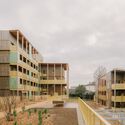
The architect behind this vision, Willem Marinus Dudok, was not only responsible for individual buildings but for the broader shaping of Hilversum itself. As a city architect and planner, he designed schools, housing districts, and parks, developing a language that fused Dutch craftsmanship with Modernist clarity. The town hall represented the culmination of this trajectory: a civic centerpiece where urban ambition, material refinement, and human scale converged in a single, coherent form.
Across China, a legacy of vast industrial structures stands decommissioned, as a direct result of the nation's economic shift to different forms of industry. These buildings are defined by their colossal height and deep structural capacity. Today, they present an architectural challenge for contemporary urban renewal and a new topic for heritage preservation. As they become absorbed by growing urban developments, architects are tasked with translating them into functional, public-facing assets. Thus, recent interventions are capitalizing on defining elements such as furnaces and chimneys to help reposition these massive complexes as critical urban landmarks.