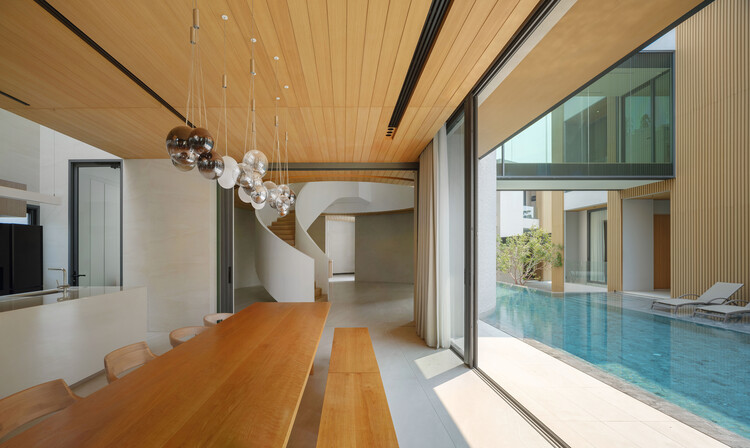
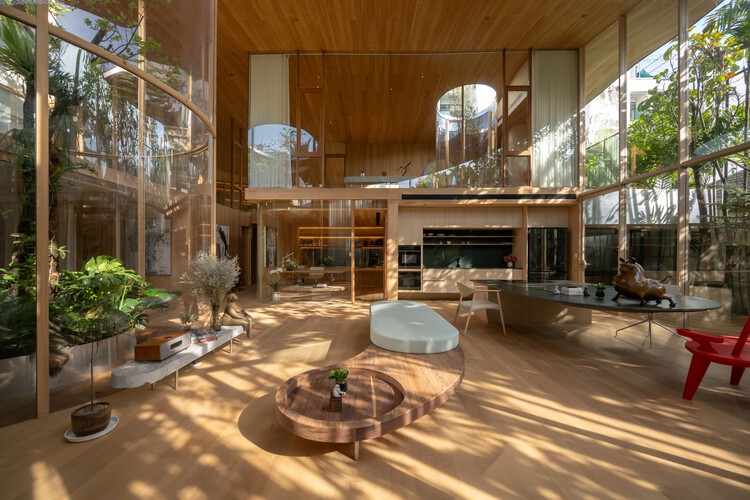
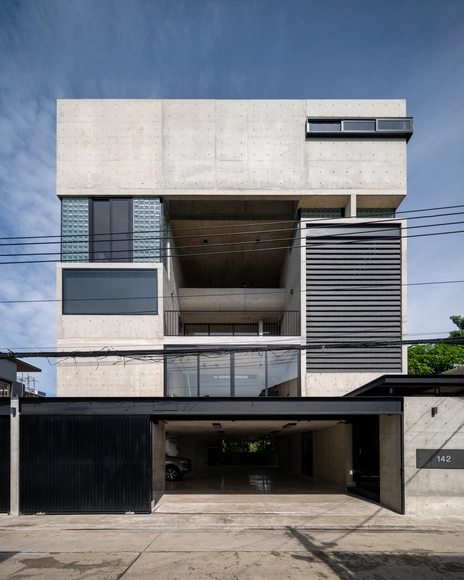
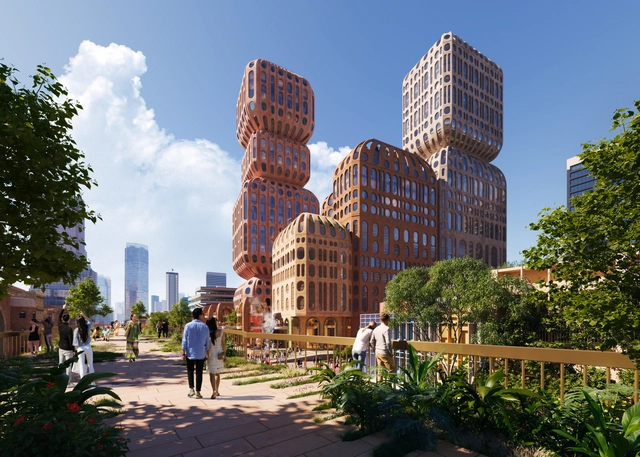
Baccarat Residence . Image Courtesy of Sou Fujimoto Architects
This week's news landscape brought together diverse approaches to built and cultural heritage, ranging from the design of a Museum of Jesus' Baptism at a UNESCO World Heritage Site in Jordan to major transformations of modern industrial sites and the development of major cultural districts. The World Monuments Fund's support for 21 locally led heritage projects foregrounds conservation strategies that reinforce the role of architecture in safeguarding both material and intangible heritage. Across this week's highlighted projects, adaptive reuse, landscape integration, and the reconfiguration of civic space emerge as recurrent strategies for extending the life and relevance of existing built environments. The projects also reflect broader contemporary concerns, including material research in timber construction, zero-waste urban installations, large-scale residential efficiency, and infrastructure upgrades linked to global events like the Olympic Games. Framing these developments within a wider territorial perspective, discussions on relocating capital cities worldwide offer an example of how geopolitical discourses continue to shape architecture, revealing the evolving relationship between the built environment and structures of power over time.
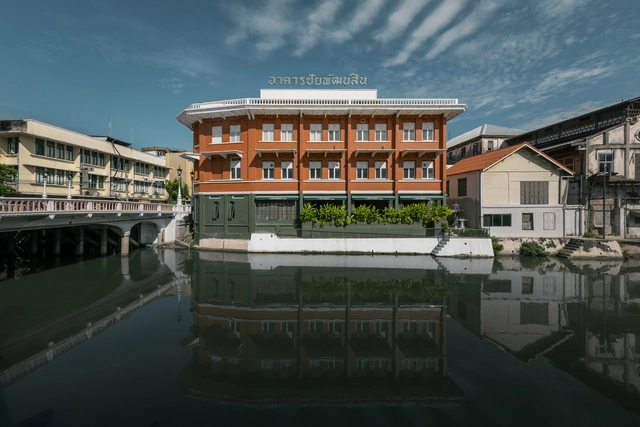
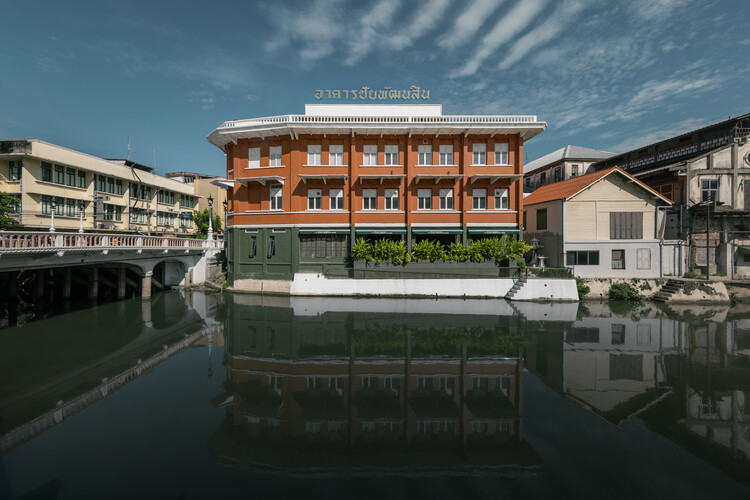
"Projecting Future Heritage: A Hong Kong Archive," one of the Roving Architecture Exhibitions organized by The Hong Kong Institute of Architects Biennale Foundation under the sponsorship of the Cultural and Creative Industries Development Agency of the Government of the Hong Kong Special Administrative Region, held its ribbon-cutting ceremony on Saturday, 31 January, at the Former Residence of Prince Sawasdiprawat (Sommot Amornbhand) in Bangkok. Unveiled at the Hong Kong Pavilion at the Biennale Architettura 2025 in Venice, where it garnered widespread international attention, this Roving Exhibition series brings Hong Kong's archive of civic architectures to Bangkok. Responding to the theme of the Biennale Architettura 2025, 'Intelligens. Natural. Artificial. Collective', the exhibition's curators Fai Au, Ying Zhou, and Sunnie S.Y. Lau highlight the collective 'intelligens' of Hong Kong's public infrastructures that represents the Hong Kong's shifting paradigms.
Public spaces remain some of the most dynamic sites for unbuilt architectural experimentation, revealing how cities and architects can imagine accessibility, gathering, and civic identity. In this curated Unbuilt edition, submitted by the ArchDaily community, the selected proposals examine parks, pedestrian corridors, cultural landscapes, and open-access urban environments that invite people to meet, move, rest, and participate in collective life. Rather than treating public space as leftover terrain, these projects position it as essential infrastructure—shaping urban health, memory, and social interaction.
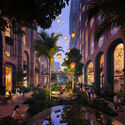
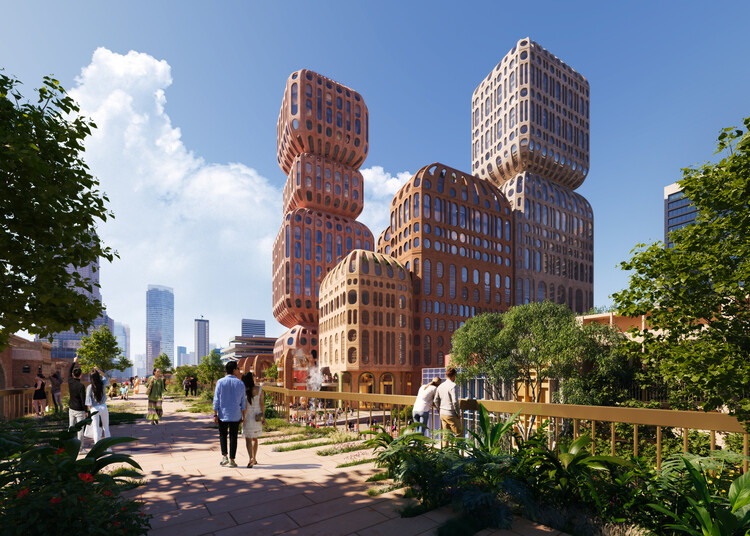
Heatherwick Studio has unveiled the first design images of Hatai, a new public space and two hotels in the heart of Bangkok's Silom district. The complex marks the studio's first project in Thailand and is located on the historic site of the original Narai Hotel, within a bustling business area. The project envisions 5,200 square metres of new public space, including elevated walkways and a publicly accessible ground level with retail and services. The building design draws inspiration from the craftsmanship of traditional Thai lanterns, featuring a series of stacked, rounded forms.