Over the years, the nocturnal landscape of cities has witnessed a significant transformation, marked by the emergence of more than 80-night mayors globally, a trend that has been on the rise since the early 2000s. Andreina Seijas, currently working as an Associate at Gehl, has analyzed these shifting dynamics of night-time governance in her research and during her doctoral studies at Harvard GSD. Seijas speaks in the interview about this development, challenges, and opportunities with night mayors, global differences, and the role of climate change. Seijas' upbringing in Caracas, Venezuela, where safety concerns dictated strict curfews, ignited her passion for creating safer, more inclusive urban environments, particularly for the youth. Her quest for a better future for the urban night explores the potential for cities to become safer, more inclusive, and more productive by creating spaces for work and leisure after dark.
The 17th edition of World Architecture Festival (WAF) will take place at Marina Bay Sands in Singapore from the 6-8th November 2024. In addition to the unique live-judged awards programme and crit presentations, this year's event will include fringe events, an exhibition, and keynote talks from an international panel of speakers.
This week, the festival announced their short list of most innovative projects from around the globe, celebrating the best new completed buildings and landscapes as well as the most inspiring future architectural concepts, across 33 categories, ranging from residential, to transport, to retrofit. This year's finalists range from major world architects including Zaha Hadid Architects, WOHA, Renzo Piano Building Workshop, MVRDV, Tadao Ando Architect & Associates, Kohn Pederson Fox, and Nikken Sekkei, with many emerging practices also on stage competing against the big names.
The Holcim Foundation for Sustainable Construction announced the winners of the 2023 edition, celebrating projects that showcase innovative approaches to sustainable construction practices. For the Europe region, the Gold Prize was awarded to Husos, Elli, and Ultrazul for their project “Composition of Knowledge House.” In a video interview with the winners, they explain the details of this rehabilitation project. Developed for the Carasso Foundation headquarters, the project uses an innovative “360° co-design process” to promote inclusivity and community involvement.
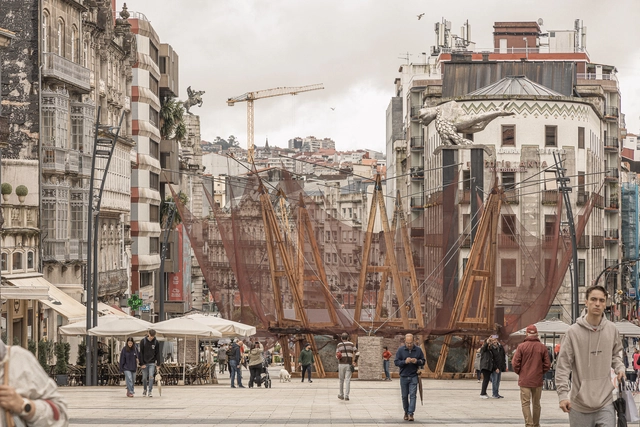
Until July 14, 2024, the pavilion ¡Qué faena(r)! ('What a Task!') by Óscar Cruz García and Pablo Paradinas Sastre will be installed at Puerta del Sol in Vigo, one of the two winning temporary pavilions of the third edition of TAC! Urban Architecture Festival. Reflecting on public spaces and the regeneration of urban centers as the main theme of this new edition, the proposal combines tradition and innovation, involving local producers and artisans during the process and simultaneously reusing materials considered waste, such as fishing nets, rusty 'bombos,' recovered wood from bateas, and granite blocks that gain a second life after fulfilling their mission in the sea.
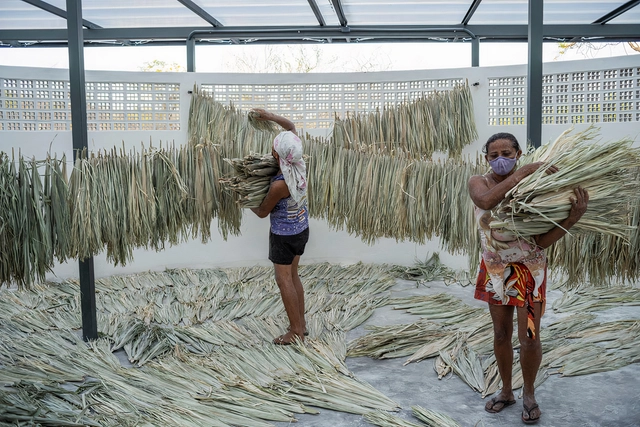
Marcelo Rosenbaum speaks with vivacity and excitement, reflecting his undeniable passion for what he does. His approach to architecture is marked by a proactive stance, leading him to travel to the most remote interiors of Brazil, often voluntarily. There, he listens carefully to local demands and seeks to develop projects that go beyond simple buildings, becoming instruments of transformation for the local reality. One of his best-known projects is in Tocantins, the Children's Village on the Canuanã Farm, done in partnership with the Aleph Zero office, which has been recognized worldwide and won awards. On June 20, he closed the program of the AsBEA 2024 National Convention, whose theme was "Sustainable Roots," held in Florianópolis, Brazil. We had the chance to talk to him about his professional career and some of his recent work.
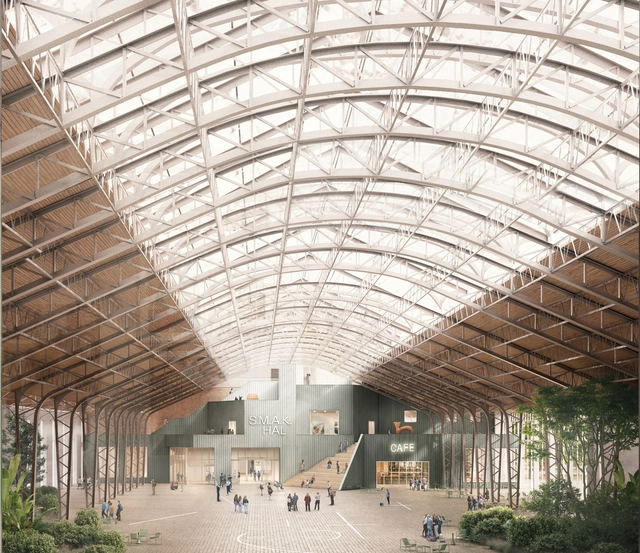
Courtesy of David Kohn Architects, noA Architecten, and Asli Çiçek
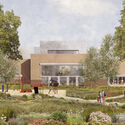
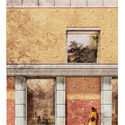
The team comprised of David Kohn Architects, noA Architecten, and Asli Çiçek has won the international competition for the redesign of SMAK, the Municipal Museum of Contemporary Art in Ghent, Belgium. The project includes the reconfiguration of the museum grounds and the extension of a cluster of historic buildings in the center of the city. Established in 1999, the Stedelijk Museum voor Actuele Kunst aims to redefine its relationship with the city and to create more appropriate space for the design of its extensive contemporary art collection.
Celebrating groundbreaking projects that showcase sustainable construction practices, this year’s winners of the Holcim Foundation for Sustainable Construction 2023 highlight innovative approaches across various scales, forms, geographies, and forms. The Gold Prize for North America was awarded to Partisans Architects and Well-Grounded Real Estate with their high-tech, low-cost modular housing solution for urban living in Toronto. In a video interview for ArchDaily, Jonathan Diamond from Well-Grounded Real Estate discusses the development of the winning project and the forces that shaped it.
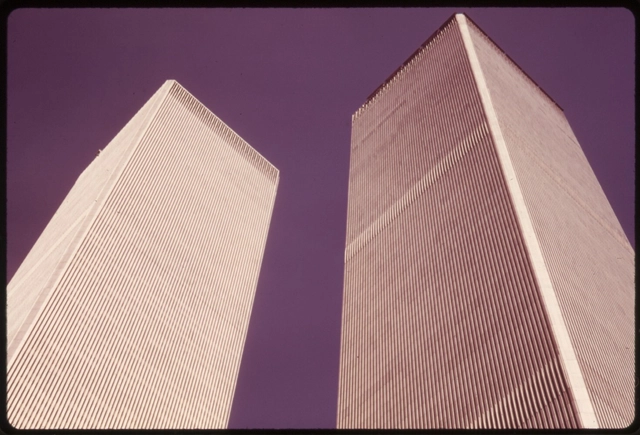
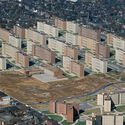
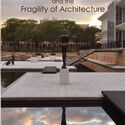
His work – more than 250 buildings in the span of 30 years – was lauded by critics and colleagues, cited for international design awards, and landed the architect on the cover of Time. But today, even practitioners and aficionados might be challenged to name one of Minoru Yamasaki's buildings beyond his two most infamous creations that no longer exist: the Pruitt-Igoe housing project in St. Louis and New York’s World Trade Center towers. Paul Kidder explores this complex architect and his work in a new book, Minoru Yamasaki and the Fragility of Architecture (Routledge).
Kidder, a professor of philosophy at Seattle University, provides a fresh, sobering assessment not only of Yamasaki's architecture but the man himself: his challenges, triumphs, and contradictions, as well as the fragility of architectural achievement. The loss of this architect’s most famous buildings suggests the growing scope of architecture’s fragility, especially today, when real-estate investment often augers against preservation of even late-modern works. Yet, paradoxically, Yamasaki believed that fragility could be a desirable architectural quality—the source of its refinement, beauty, and humanity.
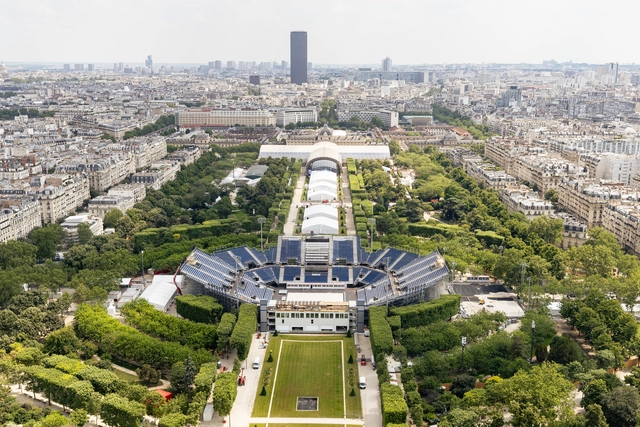
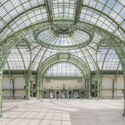
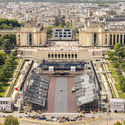
At the beginning of the 20th century, the Olympic games included some unusual medal competitions, including architectural design and town planning. While these are no longer awarded Olympic events, architecture and urban planning continues to continue to have a crucial effect on the development of the global sporting event. Cities that bid to host face an important challenge in adapting their infrastructure to accommodate not only the venues and facilities, but all the support structures needed for a safe and enjoyable edition. Paris is no different. While the city hosted 2 previous editions of the games over a century ago, the challenges of the modern-day Games have proven significant. However, the city’s expansive infrastructures have enabled officials to adjust the measures in an effort to have sustainable development for and after the Games. With less than a month to go until the opening ceremony, explore the measures taken by city officials and the long-lasting effects of hosting an Olympic event.
Gendo Design to Image Output. Image Courtesy of Gendo
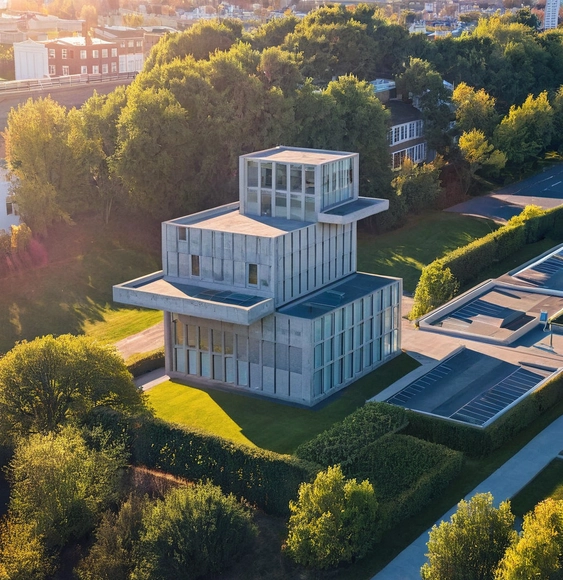
The introduction of AI generative tools represents one of the most significant technological revolutions in the field of architecture and design. While there is concern about this changing the working landscape for professionals in the field, a significant number of practices are embracing the new technology. Architectural visualizations represent one of the main areas where these changes take effect. However, the array of AI tools accessible to non-specialist users rarely allows for true control over the design process, often offering general interpretations of scripts. This can be helpful during early conceptual design phases but loses its appeal soon after. Gendo, a new browser-based app, aims to change this, offering the possibility to not only generate visualizations in seconds but also to edit and customize them, even introducing real-life products in the design. Until August 3, readers of ArchDaily can register and use the code ARCHDAILY50 to get 50% off any plan.
Ostrava Concert Hall . Image Courtesy of Steven Holl Architects
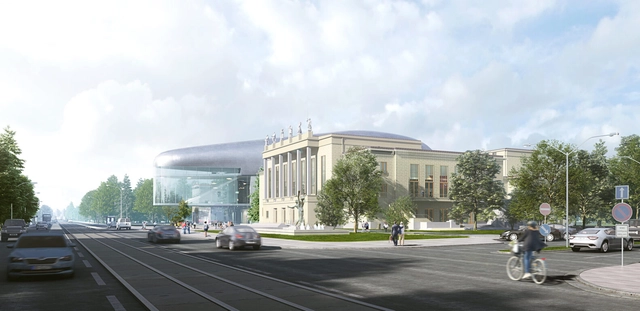
The Ostrava Concert Hall, designed by Steven Holl Architects, has just broken ground in the Czech Republic. Commemorating the start of construction, the concert hall “promises to be an inspiring venue for both locals and internationals who cherish Ostrava’s rich music heritage.” Designed for the Janacek Philharmonic Orchestra, it creates a dramatic contrast between old and new, aiming to create a cultural landmark.
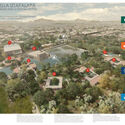
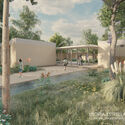
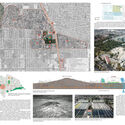
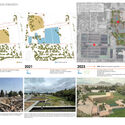
Located in Mexico City, the municipality of Iztapalapa has some of the most densely populated areas within the metropole. Serving a population of 1,800,000 people, many of them with lower incomes, the municipality struggles to provide sufficient public spaces and amenities. In an effort to correct this, the administration set out to take underutilized and abandoned plots of land and transform them for public use. Utopia Estrella is one of these initiatives. Located near Mexico City’s largest water treatment plant, the project combines a socially engaging architectural program with a pedagogical approach to the role of water infrastructures in the larger ecosystem. Designed by Cano Vera Arquitectura, the project has been recognized as the Gold Prize Winner of the Holcim Awards 2023 for Latin America. In a video interview for ArchDaily, Juan Carlos Cano of Cano Vera Arquitectura discusses the impact of this project, its goals, and the unique conditions that led to its development.
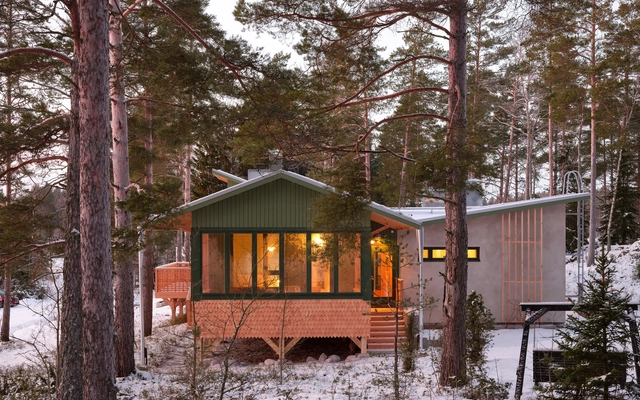
Huvila by Jenni Reuter Architects, Finland. Image Courtesy of UIA 2030 Awards
The UIA, in collaboration with UN-Habitat, has revealed the finalists for the first stage of the second edition of the UIA 2030 Award. Celebrating architecture that contributes to the 2030 Agenda for Sustainable Development and the New Urban Agenda, this biennial award honors built projects that demonstrate design quality and alignment with the UN Sustainable Development Goals (SDGs).
The regional finalists will now proceed to Stage 2, where they will submit a three-minute video demonstrating their projects in action and explaining in detail how they align with the relevant SDGs and meet the eligibility criteria. During stage 1, the finalists were evaluated regionally, representing the five UIA regions: Western Europe, Central and Eastern Europe and the Middle East, the Americas, Asia and Oceania, and Africa. Winners in each of the six will be awarded a medal. The awards ceremony will be taking place in Cairo, Egypt, at the twelfth session of the World Urban Forum from November 4-8, 2024.
Harvard University Graduate School of Design (GSD) has just announced Thandi Loewenson as the winner of the 2024 Wheelwright Prize. The prestigious $100,000 grant is dedicated to supporting innovative research in contemporary architecture with a global perspective. Loewenson’s project, “Black Papers: Beyond the Politics of Land, Towards African Policies of Earth & Air,” explores the social and spatial dynamics in modern Africa.
In the evolving landscape of workplace design and office architecture, the boundaries of creativity and functionality are constantly being pushed. From futuristic skyscrapers to co-working spaces, the future of work environments respond to the dynamic needs of modern businesses and their employees. This week's curated selection of Unbuilt Architecture focuses on office, workplace, and administrative buildings submitted by the ArchDaily Community.
The realm of office architecture is a chance for designers to innovate and influence work cultures. From the Sinuating Flow High-Rise in Chongqing, China, drawing inspiration from the surrounding mountains and valleys to the Parisian GRDF Headquarters reimagining urban offices as small city districts. The ABS Workspace integrates maritime elements into its workplace design, while the FUTURA tower in Kyiv breaks conventional norms with artistic and sculptural forms and the use of black. Together, these projects showcase the diversity in office architecture, each working within a context to offer unique solutions to sustainable work environments.
Picture by Elias Daaboul. Image Courtesy of ArchDaily
ArchDaily, part of DAAily platforms, is thrilled to announce an exciting transition. After nearly two decades of pioneering leadership, ArchDaily’s esteemed founder and current Editor-in-Chief, David Basulto, will be stepping down. Born and raised in Chile, David founded ArchDaily in 2005 and has been instrumental in shaping it into the globally recognized platform it is today.
Christele Harrouk, who has been an integral part of our team since 2019 and has served as Managing Editor since 2020, will step up as the new Editor-in-Chief of ArchDaily starting August 2024. Having worked closely with David over the years, Christele brings a wealth of experience and a fresh perspective that will guide ArchDaily’s editorial team into an exciting future.
ArchDaily’s teams look forward to the editorial vision Christele will bring and invite you to join in welcoming her to her new role.
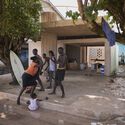
At the initiative of the Surf Ghana Collective, architects Glenn DeRoché and Jurgen Strohmayer, the co-founders of DeRoché Strohmayer, set out to transform a small waterfront plot in Busua, a surfing hotspot on Ghana’s western coast. The result is a dynamic community hub, complete with amenities for local surfers, but also providing spaces for the entire community to gather in and off-season. The project has been recognized as the winner of the Gold Prize of Holcim Awards 2023 for the Middle East and Africa commended for the profound local impact and the resourceful approach to construction techniques.In a video interview for ArchDaily, architects Glenn DeRoché and Jurgen Strohmayer discuss the development of this initiative and the innovations that shaped it.