Coffee shops are spaces whose history dates back to the 15th century. Originating in Arab countries before the rise of Europe, they began to play an important social role, often described as taverns where significant conversations took place, deals were struck, and political debates unfolded. Over time, these spaces evolved and the concept expanded to European countries like England, France, Italy, and Germany, where they served as highly public gathering spots for merchants, politicians, scientists, academics, philosophers, and poets.
The Orbit illustrates Partisans’ vision for a cutting-edge community where small town and rural lifestyles are enhanced by the benefits and attributes of urban living. The award-winning Toronto-based architecture studio imagined a new urban fabric that inspires citizens.
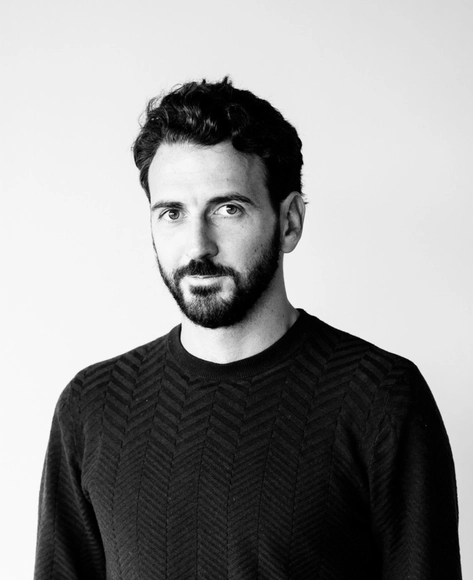
Boris Bernaskoni (born 1977, Moscow, Russia) is the leading Russian architect of his generation. He is interested in what technology can do today, so his architecture would be able to utilize it tomorrow. His work is not about façade aesthetics, which the architect says is the thing of the past. Instead, he is proposing radically new methodologies and prototypes. In the future, Bernaskoni believes, buildings will be immortal because they will continuously evolve and attune themselves to the most current technologies and demands. The ability to transform with the times will be architecture’s most precious commodity.
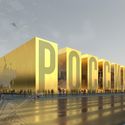
OMA'S architect and urbanist Ippolito Pestellini Laparelli will serve as the curator of the Russian Pavilion at the Venice Biennale 2020. Moreover, Teresa Iarocci Mavica, co-founder, and director of the V-A-C Foundation was appointed as commissioner of the Pavilion by the Russian Ministry of Culture. The exhibition entitled Open! will showcase young Russian architects and will focus on the renovation of the century-old building of the pavilion, built by renowned Russian architect Alexey Shchusev in 1914.
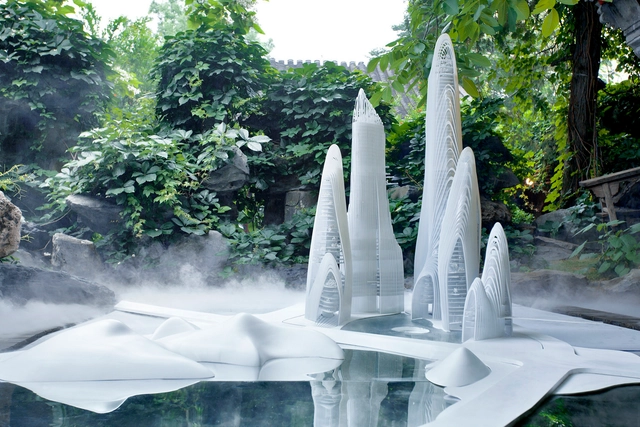
Ma Yansong has come to represent a new generation of Chinese architects shaping a forward-looking architecture. Founder of the firm MAD Architects, Yansong was the first Chinese architect to receive a RIBA fellowship. Today, Ma continues to explore contemporary architecture that's grounded in traditional Eastern values of nature, bridging design between the East and West. His latest TED Talk explores his new projects and surreal designs.
Aerial view of Paulista Avenue. Illustrative image. Photo by Gabriel Ramos via Unsplash
The city of São Paulo is the first in South America to freely release laser-scanned data covering its entire territory. The files are available for download on the GeoSampa Portal. The technology, known as LiDAR (Light Detection and Ranging), goes beyond standard satellite imagery or aerial photography to provide a high-resolution geometric representation of a city. Consequently, it offers a much more accurate and detailed model of the mapped area.
Other than curating amazing architecture, ArchDaily is well-known for producing exclusive content and cutting-edge editorial pieces. Sought-after, these articles are produced by a highly experienced team of editors, scattered around the world, generating writings in 4 languages.
Moreover, our platform has pushed its educative status, furthermore this year, in order to function as a comprehensive tool for Architecture. 2019 has given us an abundance of materials to explore, and our editors have tackled with different possibilities, from highlighting technical information, material guidelines, theoretical and conceptual approaches to investigating the digital realm, cities, and traveling. Read on to discover a curated selection from our readers’ most notable articles for 2019.
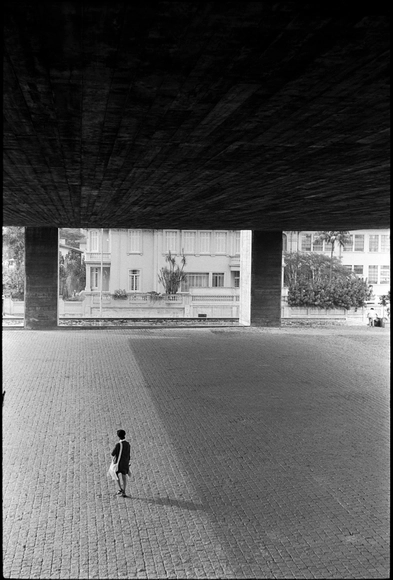
Human figures take center stage over buildings and streets through the lens of photographer Carlos Moreira, 82. Urban space is depicted through framings suggested not only by historical monuments (which are indeed there) but, above all, by the body and its actions. What emerges is an emotional, living vision of cities, capable of triggering a sensory expansion of spatial portraits.
First Place: "Entre sombras" / Josué Coeto Velasco, Ignacio González, Abraham Méndez, Hueman Hidalgo. Image
The TEMA Pavilion Competition was created to provide young architects and students from the University of Guadalajara student body with the opportunity to design an ephemeral project that expresses ideas beyond the typical academic requirements of an architecture or design school. On November 11, the proposals were evaluated by internationally recognized architecture and design practices, including José Amozurrutia and Carlos Facio / TO; Andrea Castilla and Deha Chehade / Chehade Carter Interior Design; and architect Diego Vergara Álvarez.
Architectural Photographer Laurian Ghinitoiu recently won in three categories in the Architectural Photography Awards 2019. The categories where he received awards were Social Housing, Exterior and Buildings in Use.
What started as a curiosity for Ghinitoiu, photography, through hard work and passion soon became a lifestyle and a continuous journey around the world. To date, this journey, has allowed him to receive an improved and more complex understanding of architecture, where he documents the built environment.
On December 15, we celebrate "Architect's Day." While this date is an opportunity for celebrations and tributes to the profession, it also serves as an occasion to reflect on what the practice of architecture and urbanism in Brazil is—and what it could be. At this time of year, it is also common to take stock of the past and look toward the future. Therefore, let us take this opportunity to reflect on our professional practice and our role as architects, asking: "Where were you in December 2017, and what were you doing then?"
https://www.archdaily.com/1122382/whom-do-architecture-and-urbanism-serveFelipe Moreira e Vitor Nisida
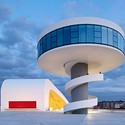
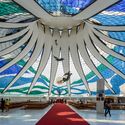
Oscar Ribeiro de Almeida Niemeyer Soares Filho, or simply Oscar Niemeyer, (December 15, 1907 – December 5, 2012) was one of the greatest architects in Brazil's history, and one of the greats of the global modernist movement. After his death in 2012, Niemeyer left the world more than five hundred works scattered throughout the Americas, Africa, and Europe.
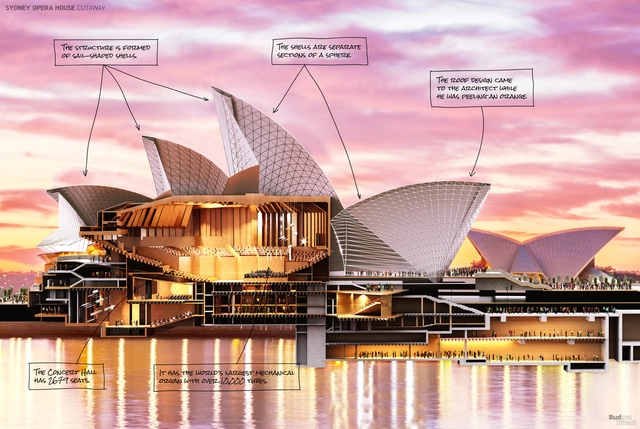
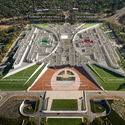
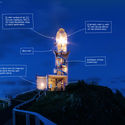
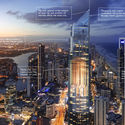
Australia’s most iconic landmarks have had their facade peeled off to reveal their interior, in order to make these spaces more recognizable to the general public and cater to the curiosity of people.
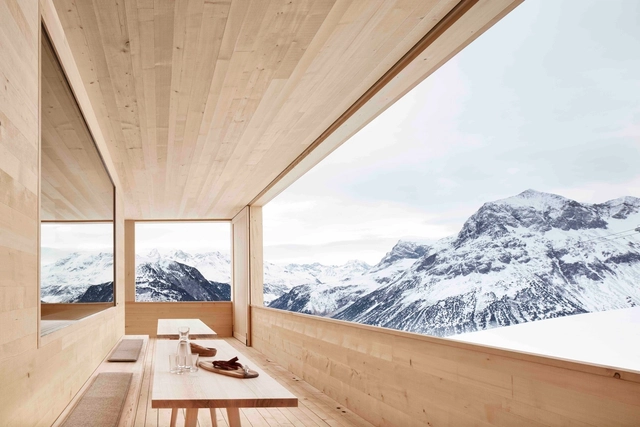
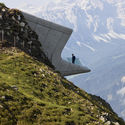
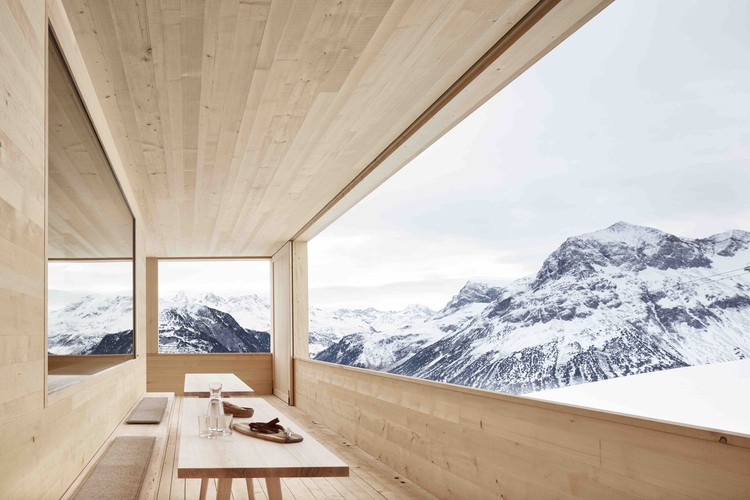
The mountains—one of the contexts that almost every architect would like to build in at least once. And yet even though it's an attractive setting, the associated challenges, including, but not limited to the sheer remoteness of mountain regions and their distance from basic services, make building in the mountains particularly demanding.
We've compiled a selection of 15 incredible works of architecture that maximize the breathtaking surroundings found in mountainous areas, featuring photographs from Felipe Camus, Janez Martincic, and Anze Cokl.
Example of pedestrian pattern heatmaps, as produced by software-translated timelapse recordings in our project Co-Creating Responsive Urban Spaces, transmitting interaction installations in the practice of urban design to activate public spaces. See www.responsiveurbanspaces.amsterdam
What happens when the sensor-imbued city acquires the ability to see – almost as if it had eyes? Ahead of the 2019 Shenzhen Biennale of Urbanism\Architecture (UABB), titled "Urban Interactions," Archdaily is working with the curators of the "Eyes of the City" section at the Biennial to stimulate a discussion on how new technologies – and Artificial Intelligence in particular – might impact architecture and urban life. Hereyou can read the “Eyes of the City” curatorial statement by Carlo Ratti, the Politecnico di Torino and SCUT.
Cities, as Goethe had already pointed out, should be understood as continuously developing 'forms in motion' (see Batty 2018). In the past, technological developments and our hopeful, as well as our dystopian imaginations of them, have been one of the main sources of kinetic energy to kick-off the shapeshifting processes of urban transformations. Most of the time with unexpected side-effects, evolving center stage in retrospect.
https://www.archdaily.com/930040/from-the-city-as-a-service-to-the-city-as-a-license-martijn-de-waal-and-frank-suurenbroek-for-the-shenzhen-biennale-uabb-2019Martijn de Waal and Frank Suurenbroek
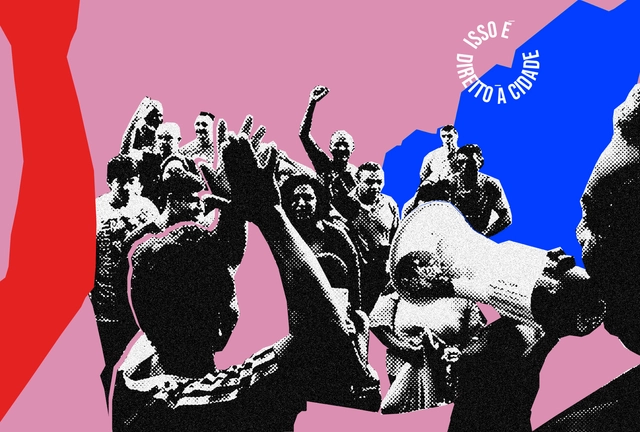
This week marks the launch of the national advertising campaign by the Council of Architecture and Urbanism of Brazil (CAU/BR), themed "Architecture and Urbanism, a Right for All." Its objective is to highlight the importance of the work of architects and urban planners for society as a whole, including those planning modest renovations and construction projects. As an example, the campaign features the Moradas da Saúde residential complex in Rio de Janeiro, designed by architect and urban planner Demetre Anastassakis.
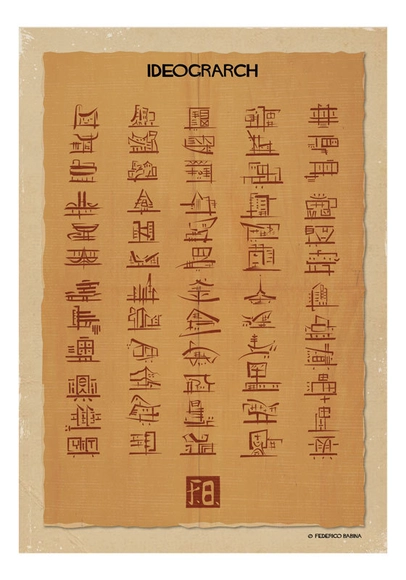
Frederico Babina is an Italian architect and graphic designer who creates artwork that focuses on the abstract replications of famous imagery and buildings. Through a strong focus on geometry and form his work represents a sense of innocence, inexperience and spontaneity throughout.
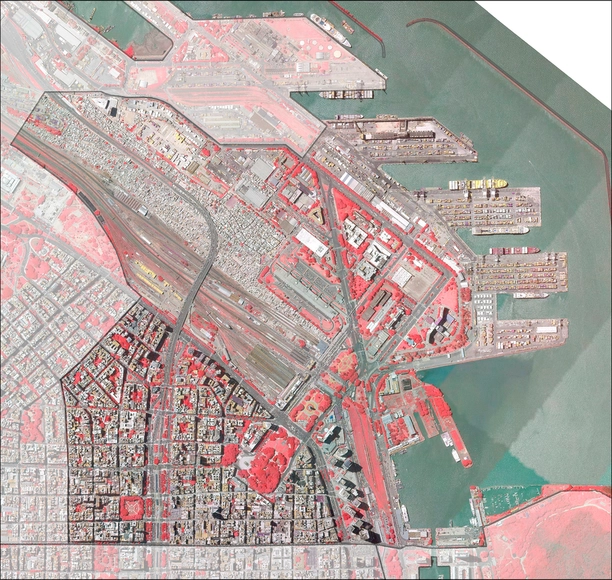
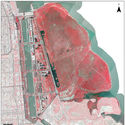
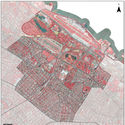
Vegetation cover Retiro. Image via Government of the Autonomous City of Buenos Aires are licensed under Creative Commons Attribution 2.5 Argentina License
Based on the photogrammetric analysis of the City of Buenos Aires, the General Directorate of Data, Statistics, and Urban Projection produced a "Vegetation Cover Report." This document offers a detailed survey of the city's entire vegetation surface, classified by neighborhood, using zenithal aerial imagery. An infrared sensor was used to capture images that highlight any type of vegetation in red—whether on absorbent or non-absorbent ground—with 100% accuracy.
Conversations around resiliency today seem to imply that planners and designers might be capable of—might even be expected to—save every building and public space at risk. The sad truth is, however, that we cannot, and perhaps we should not. Climate change and its attendant sea level rise will radically redraw urban edges, forcing us to make difficult decisions. Even if we had the vast sums of money required to protect the precarious status quo, that might not be enough to stave off the inevitable.
So, then: What are our priorities? How do we choose what to save? How do we responsibly chart this uncertain future? I believe the answers to these and similar questions should begin with an honest assessment of three essential considerations:
At the end of each year, we launch a call for submissions for graduation thesis projects from our readers in Portuguese-speaking countries. Through this, we aim to select the projects we find most interesting in order to share inspiring perspectives and discussions with our entire audience.
In this edition, we received 333 proposals from all over Brazil and several Portuguese cities. The selection of these projects is based on those we consider best presented, visually compelling, and whose theme we find thought-provoking and timely for a graduation thesis. More than simply delivering a satisfactory design, we believe that a final graduation project—by condensing the student's efforts during a transition period from academia to professional life (while, it is important to note, still being part of the academic journey)—must raise questions and spark discussion about the proposed theme.
It is worth noting that several submissions did not follow the guidelines and were either disqualified or provided insufficient material for evaluation.
Below is our selection* of the 32 best final graduation projects from Portuguese-speaking countries, accompanied by descriptions provided by their authors.
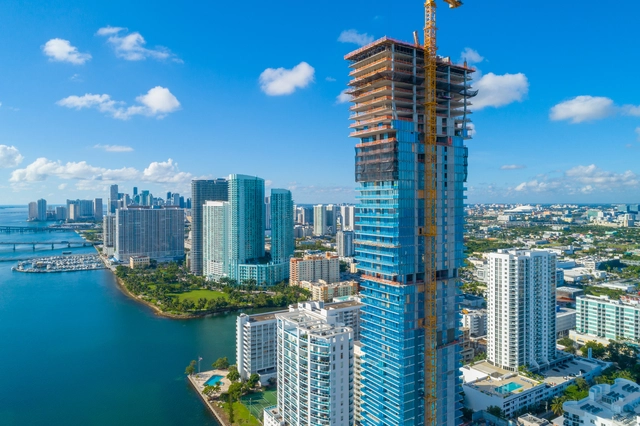
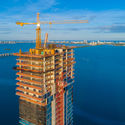
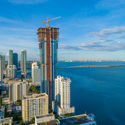
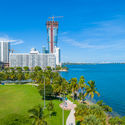
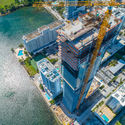
Designed by Arquitectonica, Miami’s most anticipated landmark dubbed Elysee has topped-off construction at 57 stories. Upon its completion in 2020, the 649-foot-tall glass tower will become the tallest residential building in the Edgewater district.
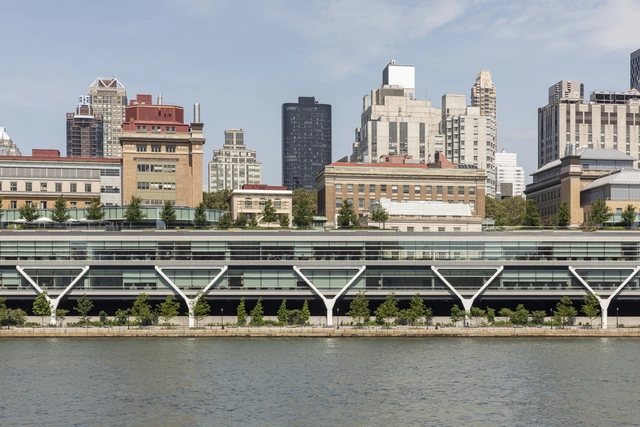
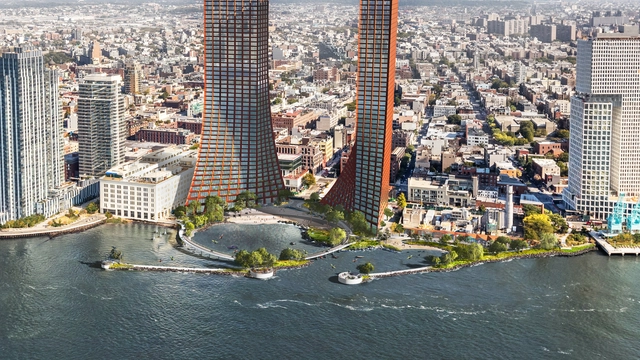
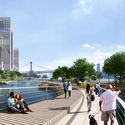
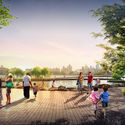
Two Trees Management Company, a New York-based real estate development firm, has presented a master plan for the Northern Brooklyn waterfront, a new approach to urban resiliency. Designed by BIG and Field Operations, the project puts in place a mixed-use development and a resilient park.
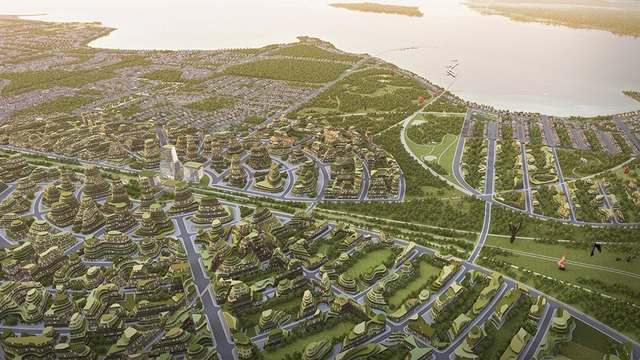
Lisi Green Town. Image Courtesy of Lisi Development
Architects and developers have always been on opposite ends of the construction world. While the first wanted to create dreamy spaces, the latter just wanted to cater to the basic needs. In these past few years, the world has witnessed significant changes, with the aggravation of climate-related issues, the evolution of technological solutions, and the newly acquired awareness and growth of the population.
While everything is transforming, building trends also evolved, mainly due to an alteration in people’s perceptions and priorities. However, one question remains unanswered: Could all these changes mean that the never-ending conflict between architects and developers reached some sort of common grounds? And could they finally be seeking one same goal, of a sustainable, resilient and inclusive future?







_7898.jpg?1576293443&format=webp&width=640&height=580)
_8843.jpg?1576293185 "© Laurian Ghinitoiu")
_0020.jpg?1576293369 "© Laurian Ghinitoiu")
_0638.jpg?1576293455 "Skanderbeg Square, Tirana, Albania by 51N4E. Ghinitoiu's third win. Image © Laurian Ghinitoiu")
_9154.jpg?1576293270 "© Laurian Ghinitoiu")
_7898.jpg?1576293443)







.jpg?1576062728&format=webp&width=640&height=580)