People perceive architecture in different ways. “Style” is often an easy classification, traditional or modern. Popular residential work is often categorized dismissively by architects as “vernacular.” The branding of the product of the profession, an oeuvre of work embodied in buildings and their meaning in our culture as celebrated by the American Institute of Architects, has many levels of recognition, from local AIA Chapter Awards, to national Awards.
No AIA Award has more meaning or lustre inside the profession than the “Twenty-five Year Award” for buildings that have “stood the test of time.” The award has been given continuously for the last 56 years. This year, the Design Jury chosen to select a seminal building has opted not to give an award to anything, any building 25-35 years old.
While the exterior of Philip Johnson’s iconic AT&T awaits its fate in an upcoming New York City landmarks designation hearing, demolition of its granite-clad interior lobby has already begun.
Citing the fact that the lobby had already been altered in the 1990s – including the removal of the “Golden Boy” statue – when the building switched tenants from AT&T to the Sony Corporation, the Landmarks Preservation Commission decided last month that the interiors were not deserving of landmark status.
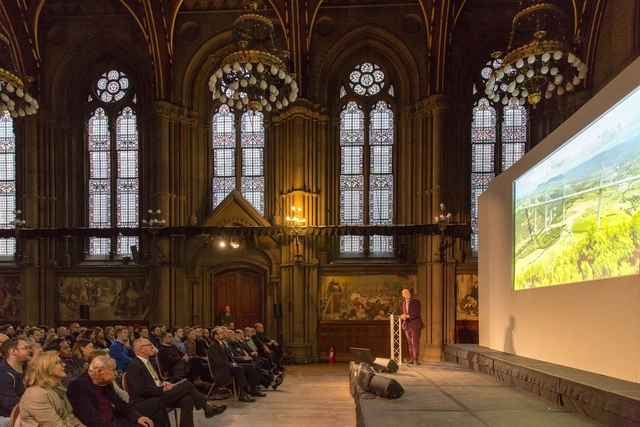
Lord Norman Foster speaking at the Royal Fine Art Commission Trust’s annual lecture in Manchester last year. Image Courtesy of Royal Fine Art Commission Trust
Lord Norman Foster has been named the next President of the UK’s Royal Fine Art Commission Trust, an independent charity aimed at promoting “visual awareness and public appreciation of high-quality design” within the United Kingdom.
Chaired by one of architecture’s foremost patrons, Lord Peter Palumbo, the organization was established in 1987 as a complement to the Royal Fine Art Commission (since absorbed into the UK Design Council), the Government’s advisor on matters affecting public amenity and aesthetics in England and Wales.
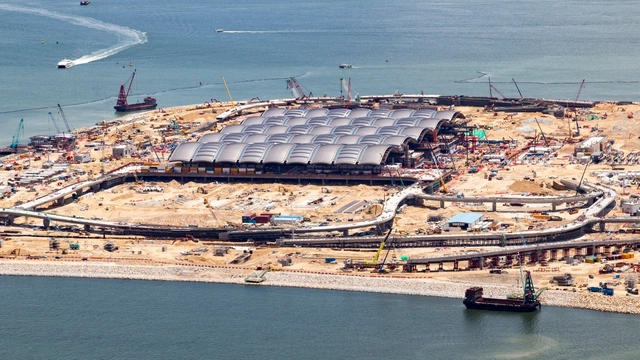
Rogers Stirk Harbour + Partners (RSHP) and Aedas have unveiled the design of a new boundary crossing that will serve as an important transportation exchange point within the Pearl River Delta, linking Hong Kong, Macau and mainland China. Already under construction, the project is expected to be completed in 2019.
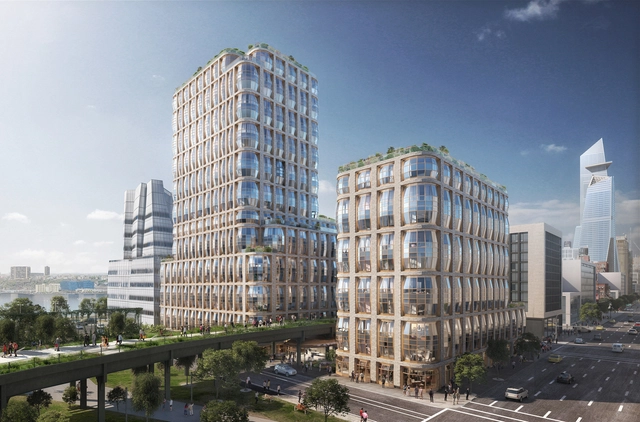
Thomas Heatherwick is touching the New York Architecture Scene again, revealing his design for a pair of residential towers in a pair of renderings. The two towers will flank either side of the New York High Line, located at 18th Street, it will situate itself adjacent to Frank Gehry’s IAC Headquarters building.
Fact-checking website Snopes (also known as the internet's first fact-checking website) has now been debunking Urban Legends and setting the record straight when it comes to "questionable" and/or fantastic stories for 23 years. In its two decades of operation, it has amassed not only thousands of well-researched explanations to perplexing myths but has also garnered the praise of news outlets like The New York Times, CNN, and Forbes. So what can Snopes tell us about our dear profession? Get your facts right with our list of dubious (and some not-so-dubious) claims about architecture, buildings, and city design.
https://www.archdaily.com/886227/fact-check-which-of-these-architecture-rumors-are-actually-trueAD Editorial Team
A city’s monuments are integral parts of its metropolitan identity. They stand proud and tall and are often the subject of a few of your vacation photos. It is their form and design which makes them instantly recognizable, but what if their design had turned out differently?
Paris’ iconic and stunning Arc de Triomphe could have been a giant elephant, large enough to hold banquets and balls, and the Lincoln Memorial in Washington D.C. could have featured an impressive pyramid.
GoCompare has compiled and illustrated a series of rejected designs for monuments and placed them in a modern context to commemorate what could have been. Here are a few of our favorites:
Videos
Courtesy of Eindhoven University of Technology
Beyonds igloos, sculptures, and Sweden’s ICEHOTEL, ice is not often seen as building material. An international team of Dutch-end Chinese students and professors from Eindhoven University of Technology (TU/e), Summa College, and the Harbin Institute of Technology (HIT) have used the freezing material to construct “Flamenco Ice Tower” in Harbin, China - the home of the International Ice and Snow Sculpture Festival.
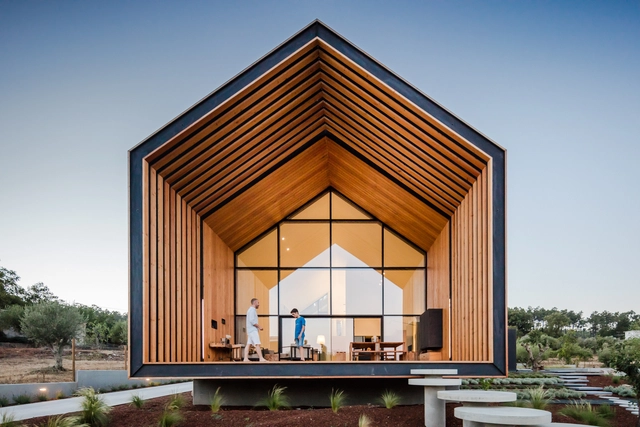
The appearance of people in architectural photography is rare. When they do show up, people are usually added to help the viewer better understand the size and design elements of a building. However, in recent times, several photographers have warmed to the idea of capturing houses with their inhabitants, showing the people who live there and how they inhabit the spaces. After the success of our previous round-up of people photographed with their houses, this week we bring you 10 more houses captured by renowned photographers such as Hiroyuki Oki, Peter Bennetts, and Ricardo Oliveira Alves.
After years of publishing projects and articles related to bamboo, we are strongly aware of its qualities as a construction material. But is it really an option that you would use into your next project? Despite widespread appreciation, bamboo seems to be a material that is rarely considered for use in everyday designs.
The team of Manasaram Architects and CGBMT asked themselves the same question. Together they are seeking to understand the current perceptions of bamboo and to discover its potential as a commonly-used material in the construction sector. To help in this pursuit, they have shared a survey with us which seeks to evaluate how often architects and building professionals use bamboo, the problems they face, and how informed they are about the material.
We would like to invite our readers to spare 10 minutes of their time to help us expand knowledge about the use of bamboo using the survey below. The results will be shared on ArchDaily once the study is complete.
https://www.archdaily.com/886269/is-it-possible-to-massify-the-bamboo-as-a-building-material-in-the-construction-sectorAD Editorial Team
This short excerpt is from Places Journal's article "Prop and Property: The house in American cinema, from the plantation to Chavez Ravine," which in turn was adapted from John David Rhodes' book Spectacle of Property. The article, which investigates the many layers of property inherent in the production and viewing of movies, investigates in particular the films Gone with the Wind and To Kill a Mockingbird, revealing how their themes of race and property are made even more complex by the practicalities of Hollywood filmmaking.
Perhaps the most mysterious and desired feature of housing is the privacy of property, and especially the property of and in the house. Property, however, is fungible and alienable. Whatever is promised by the house is radically susceptible to violation, displacement, and loss. Often the experience of property’s violation or redefinition involves an unwelcome reminder that the house is not a very private place after all. Partly we know this: we have all spent time in living rooms, on porches, or in other spaces of the house in which it is nearly impossible to say where the public ends and the private begins. But when property’s inherent instability is experienced vividly—whether in “real life” or in representation—we are forced to confront the tenuous relationship between public and private, as well as the tenuousness of all property relations as such.
https://www.archdaily.com/886807/how-the-portrayal-of-houses-in-cinema-shows-uncomfortable-truths-about-hollywoods-relationship-to-raceJohn David Rhodes
Seventeen projects chosen by the American Institute of Architects (AIA) have been selected for this year’s Institute Honor Awards for Architecture, an award known to be the profession’s highest recognition of works in America that exemplify an excellence in architecture, interior architecture and urban design.
Out of 500 submissions, the 17 recipients will be honoured with the award at the AIA Conference on Architecture in New York City in June.
As part of a generation of designers that have, in recent years, put Mexico on the map, Tatiana Bilbao is an architect that is increasingly part of the profession’s global consciousness. But, while some Mexican architects have made their mark with spectacular architecture following the international trend of “iconic” architecture, Bilbao opted instead for a more people-focused approach. In this interview, the latest in Vladimir Belogolovsky’s “City of Ideas” series, Bilbao explains how she got into this type of community-building architecture, her thoughts on architectural form, and her ambitions for the future.
Vladimir Belogolovsky:The more I talk to architects of your generation or my generation, the more it becomes apparent that architecture has absolutely no boundaries. In other words, architecture is not just about buildings. More and more, architecture is about building communities.
Tatiana Bilbao: Absolutely. For me, that is the most important part of architecture. Architecture is not about building a building; architecture is about building a community.
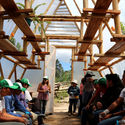
The social design from Natura Futura Arquitectura for a greenhouse in the warm subtropical climate of Nayón, Ecuador, the proposal approaches the use of local material resources in the construction of low-budget productive structures for the development of the collective.
The project, materialized with bamboo, wood and greenhouse plastic, is based on the basic geometrical figure of the triangle, proposing sectors with different levels of illumination for different types of farming.
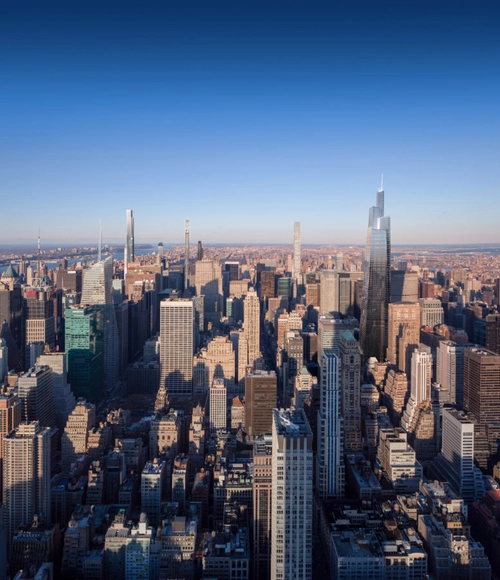
The 2020 skyline, photo by Andrew Campbell Nelson, rendering by Jose Hernandez. Image Courtesy of YIMBY
2017’s building applications has seen a rise in both Brooklyn and the Bronx, according to YIMBY’s construction report on New York. Despite a drop within Manhattan and Queens, the number of new building applications over the five boroughs seems to be stabilising; 2016 saw the number of multi-family units decrease by over 40% to 19,356, a pattern which fortunately appears to have stopped as 2017 saw fillings for 19,180. After the last two years of massive drops, this couldn’t be more welcomed by New York.
We were hoping for it to happen in the early 2000s. We saw it coming with the opening of the exhibition “Postmodernism: Style and Subversion, 1970 – 1990” at the V&A in London in 2011. But now, after recent discussions on the umpteenth supposed “postmodern revival,” it is finally sure: the word “postmodernism” is back and it’s here to stay. But as clear as it is that the word “postmodernism” is once again fashionable, it is not really clear what we mean when using it. Indeed, this word has been used to imply every possible meaning: architects have used it to describe fashionable and “cute” designs, some critics have used it to categorize everything that is colorful, while some theorists have been using it to affirm that, because of this concept, architecture has surrendered to technology or form, becoming nothing more than a caricature of its own presupposed moral values.
Whether we agree with such commentaries or not, there is one thing that we still need to discuss: what does “postmodern” mean? And, even more urgently: what could it mean today? After all, if we have to deal once again with one of the most misinterpreted and contradictory words ever introduced in our field, we should at least discuss what it means, before using it.
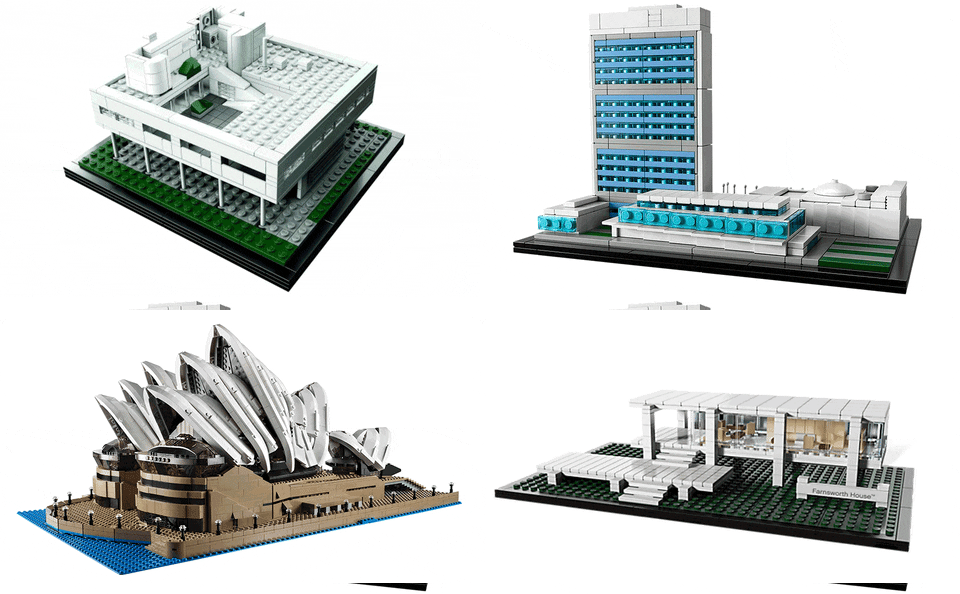
It’s hard to find an architecture enthusiast who wasn’t obsessed with LEGO as a kid. Many of us would spend hours carefully placing the small, colorful blocks to make our crazy, imaginary environments in our heads a reality—well, somewhat. Whether it was building a dream home for your dolls or simply trying to construct the tallest tower, LEGO was certainly responsible for the first flirtations with the profession. It is no question this tool unleashes our creativity, and this can be demonstrated in a variety of ways.
For this reason, we searched our archive for some architects which highlight the creative and innovative ways LEGO is being used in adult-life. From a few pieces of the LEGO® Architecture Series to the appropriation of some important offices such as Zaha Hadid Architects and MVRDV, urban interventions are being inspired by toys and even serving as a furniture mold.
We are starting the new year with an announcement from the American Institute of Architects that there will be no winner for their Twenty-five Year Award in 2018. This will be the first time this has occurred since the award was officially established in 1971. The AIA award recognises buildings that have “stood the test of time for 25-35 years and continues to set the standards of excellence for its architectural design and significance.”
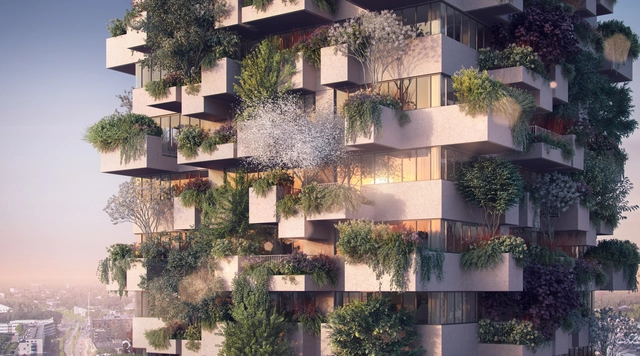
The new social housing project by Stefano Boeri Architetti is the first to integrate a vertical forest into an affordable residential skyscraper, improving the living conditions often incurred within such developments. 5,200 shrubs and 125 trees will be planted up the 75m tall structure in Eindhoven.
Trudo Vertical Forest will contain 125 social housing units over 19 floors to house lower income social groups, particularly young people. Each apartment will include a balcony filled with an array of trees, plants and shrubs for a forest soaring into the city's sky.
Small unmanned aerial vehicles (UAVs), commonly called drones, are gaining in popularity not only among the general public and consumers, but also among professionals working in the AEC industry. We’ve seen ambitious predictions for the use of drones on construction sites, as transportation vehicles and marketing tools.
While this new technology, like 3D printing and robotic fabrication in general, promises to revolutionize the architectural profession, it is useful to know to what extent its practical application can affect the way archipreneurs work. It seems that, for now, drones have great potentials when it comes to several aspects of the profession.
https://www.archdaily.com/886743/how-drones-can-be-used-in-architecture-and-how-to-use-them-without-breaking-the-lawLidija Grozdanic for Archipreneur.com
According to The Economist, 47% of the work done by humans will have been replaced by robots by 2037, even those traditionally associated with university education. While the World Economic Forum estimates that between 2015 and 2020, 7.1 million jobs will be lost around the world, as "artificial intelligence, robotics, nanotechnology and other socio-economic factors replace the need for human employees."
It's not science fiction: the MIT Technology Review warns that the current debate over raising the minimum wage for fast food employees in the United States would accelerate their own automation. On the other hand, Silicon Valley personalities and millionaires like Elon Musk and Richard Branson warned that the impact of automation will force the creation of a universal basic income to compensate not only the massive unemployment that would generate these new technologies but also the hyper-concentration of the global wealth.
One advocate of this idea is the British economist Guy Standing who wrote at the Davos Forum that it "would be a sensible precaution against the possibility of mass displacement by robotization and artificial intelligence," but will automation affect architects? Will we really be replaced by robots?
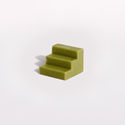
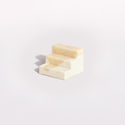
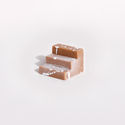
Universal Favourite have developed a range of modular chocolates Complementary that are formed in 3D printed moulds to satisfy any architect with a sweet tooth. The architectural forms have been developed to establish a connection between the two pieces to be eaten as one, complementing one and other.
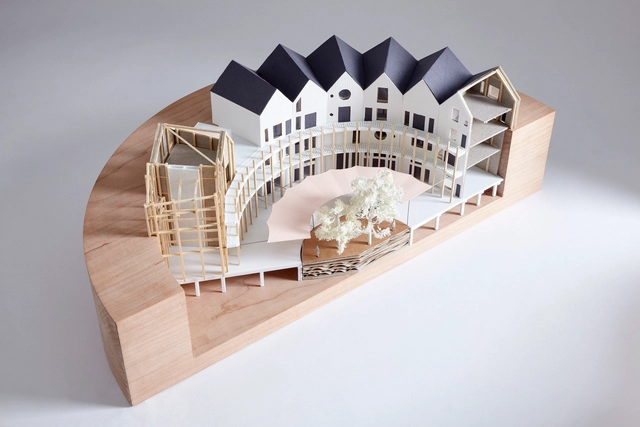
The RIBA have announced the winner of their competition in collaboration with the National Grid to give function to the sub-terrain voids left behind when the steel frame of a gasholder is dismantled. Outpost, the winning London studio, proposed a mixed-use scheme for a ring of four storey buildings descending into the well below. The other shortlisted teams included CF Architects, 318 Studio, Max Architects, Wilson Owens Owens Architects and Jan Verhagen and Priscille Rodriguez of Unit Architects.
Outpost’s proposal solves Britain’s shortage of affordable housing and creates an opportunity for flexible workshops, studios and workspaces to be integrated into the structure. The simple, economical vision makes full use of the gasholder base and presents a familiar domestic setting on street level, appearing as one storey.




.jpg?1516086194&format=webp&width=640&height=580)