

This guide outlines how to implement structured templates effectively, maintain design quality, and support firm-wide governance.
News
How to Create Board Templates for Architecture Teams
| Sponsored Content
https://www.archdaily.comhttps://www.archdaily.com/catalog/us/products/38861/how-to-create-board-templates-for-architecture-teams-rundiffusion
MIT Team Working with Neri Oxman Design "Fiberbots" to Respond Quickly to Natural Disaster

The MIT-based Mediated Matter Group have created Fiberbots, an autonomous digital fabrication platform designed to quickly build architecture during disaster. By utilizing cooperative robotic manufacturing, Fiberbots can create highly sophisticated material structures. The small robots work as a group to wind fiberglass filament and create high-strength tubular structures. MIT researchers envision the bots building in extreme environments and natural disaster zones.





https://www.archdaily.com/903758/mit-designs-autonomous-fiberbots-to-build-for-natural-disasterEric Baldwin
Biohm's "Vegan Insulation" System offers a Future for Green Construction

UK entrepreneur Ehab Syed has developed a mushroom-based insulation with his company Biohm, embodying techniques that are “completely natural, biodegradable and vegan.”
As reported by Global Construction Review, the material will come to the market in the coming months, with interest expressed by Tata Steel, Heathrow Airport, and leading UK house builders.
https://www.archdaily.com/903744/biohms-vegan-insulation-system-offers-a-future-for-green-constructionNiall Patrick Walsh
Updated $13 Billion Plans for New York JFK Airport Overhaul Released
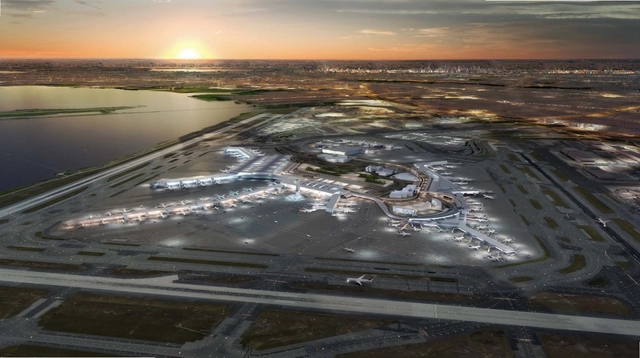
New York Governor Andrew Cuomo has unveiled an updated $13 billion plan to transform John F. Kennedy International Airport into a “world-class 21st-century airport.” The scheme will add two major international terminals at the North and South sides, increasing airport capacity by 4 million square feet and 15 million annual passengers.
The plans are derived from a 2017 masterplan led by Grimshaw Architects and Mott MacDonald, which sought to combine the airport’s eight disparate terminal sites into one unified system.


https://www.archdaily.com/903738/updated-13-dollars-billion-plans-for-new-york-jfk-airport-overhaul-releasedNiall Patrick Walsh
Barclay & Crousse's University of Piura Edificio E in Peru wins the 2018 Mies Crown Hall Americas Prize
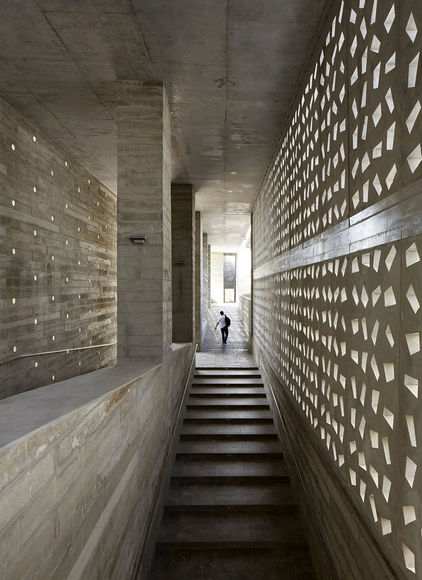
Barclay & Crousse Architecture’s Edificio E, University of Piura in Peru has been announced as the winner of the 2018 Mies Crown Hall Americas Prize (MCHAP), recognizing the most distinguished architectural works built on the North and South American continents.
The project was selected from a shortlist of six finalists, joining SANAA’s Grace Farms, Alvaro Siza’s Iberê Camargo Foundation and Herzog & de Meuron’s 1111 Lincoln Road as winners of the highly-regarded prize which was established in 2003.

https://www.archdaily.com/903653/barclay-and-crousses-university-of-piuru-edificio-e-in-peru-wins-the-2018-mies-crown-hall-americas-prizeNiall Patrick Walsh
Foster + Partners' Bloomberg HQ Wins 2018 RIBA Stirling Prize for the UK's Best New Building
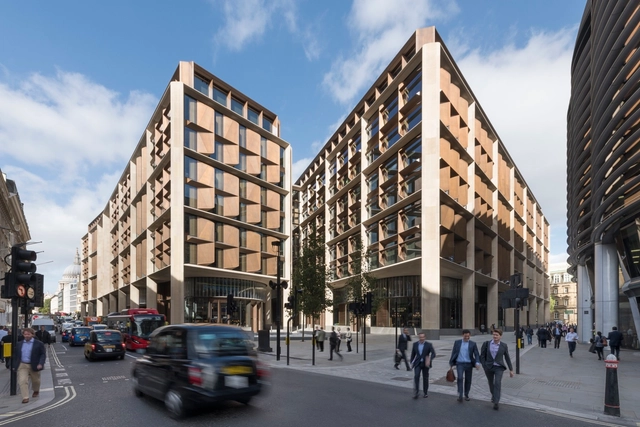
The Royal Institute of British Architects (RIBA) have announced Foster + Partner's Bloomberg HQ as the winner of the 2018 Stirling Prize. Seen as the UK's most prestigious architecture award, this award is given to the building " that has made the biggest contribution to the evolution of architecture in a given year." Selected from a list of six projects, the design highlights the collaboration between a civic-minded client and architect, as well as addressing the public realm.

_James_Newton.jpg?1539114598 "© James Newton")

_Nigel_YoungFoster___Partners.jpg?1539114234 "© Nigel Young")

https://www.archdaily.com/903596/foster-partners-bloomberg-hq-wins-2018-riba-stirling-prize-for-the-uks-best-new-buildingAD Editorial Team
Alternative Ways for Architects to Architect

The more architecture students that I converse with, the more I hear this common dissent amongst them: “I don’t want to become an architect.” Despite participating in long studio hours for a five-year professional degree, somehow very few peers actually want to become the kind of architects that create buildings.
Aside from the conventional alternatives of interior or graphic design, there is a rising trend in the popularity of firms that use architectural skills for beyond the scope of designing luxury condominiums for wealthy clients. For prospective architects (and current ones), below are examples of firms that may not be what one initially imagines to do with their degree, but a taste of the potential of what they can.




https://www.archdaily.com/903212/alternative-ways-for-architects-to-architectVasundhra Aggarwal
This Sound-Proof Installation was Built by Compressing Concrete and Bubble Wrap
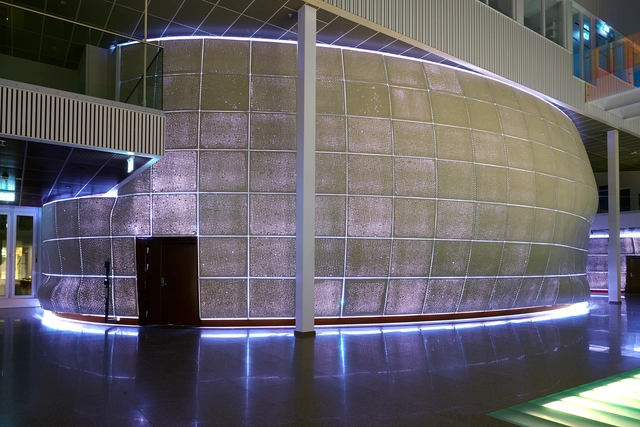

An installation at the Karolinska Institutet in Sweden is made entirely of translucent concrete panels. Composed of concrete and bubble wrap, the site blends both high and low technology processes. This high-tech lecture hall is an amorphous space with unique acoustic qualities.
The panels were created by compressing High-Performance Concrete between two layers of Bubble-Wrap. With 262,500 cavities and 1,000,000 membrane-perforations, the material creates a diffused echo-free ambiance.
https://www.archdaily.com/901174/this-sound-proof-installation-was-built-using-compressed-concrete-and-bubble-wrapEduardo Souza
Lahdelma & Mahlamäki Create Triangular Towers for a New High-Rise District in Helsinki
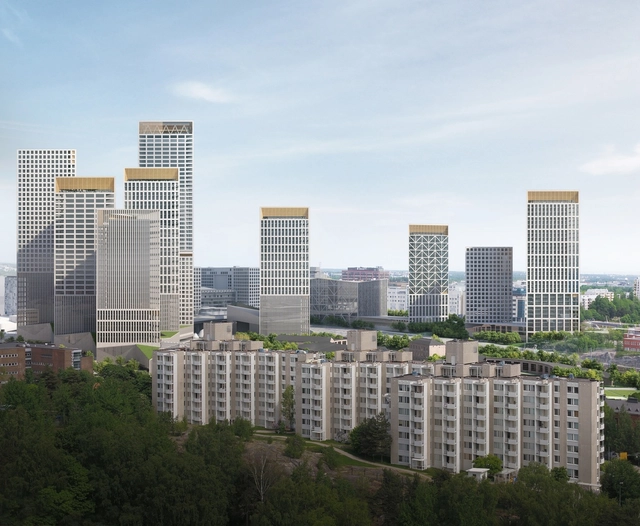
Finnish office Lahdelma & Mahlamäki architects have won the competition to design a new high-rise district in Helsinki. Proposing a cluster of public space and triangular plan towers, the firm will see the phased construction of the high-density, mixed-use towers and public space alongside construction firm YIT. Located in the Pasila district, the project is called Trigoni as a reference to the triangular plan of the towers and the desire to create strong connections around sustainable development.



https://www.archdaily.com/903694/lahdelma-and-mahlamaki-create-triangular-towers-for-a-new-high-rise-district-in-helsinkiEric Baldwin
AIA Announces 2018 Film Challenge Winners
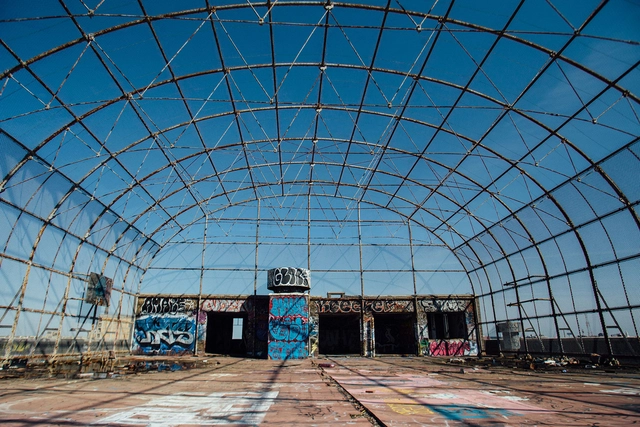
The American Institute of Architects have released the winning films for the 2018 Film Challenge. As part of the institute's larger Blueprint for Better campaign, the film challenge asked participants to produce, shoot, and edit 3 to 5 minute documentary-style short films. The AIA invited architects and filmmakers to collaborate in telling stories of architects, civic leaders and communities working together toward positive community impact.





https://www.archdaily.com/903662/aia-announces-2018-film-challenge-winnersEric Baldwin
"I Prefer When Form Follows Force": an Interview with Helmut Jahn
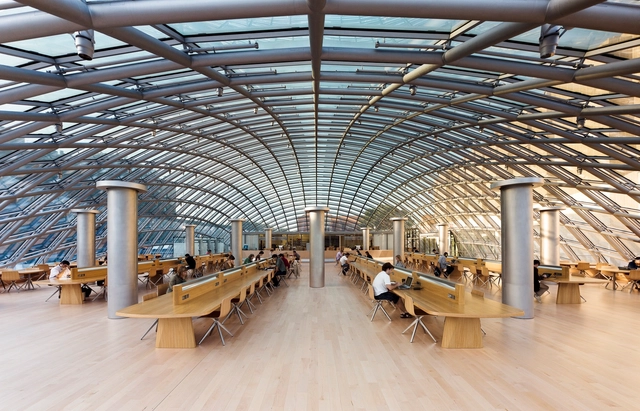
In the last few years something has happened to architects’ willingness to strive for originality. The boldest visions now often come from the old guard of architecture - and frankly, I enjoy conversations with them much more. The current insistence on having common ground pushed so many younger architects into a zombie-like copycat state of mind. But to me, common ground means not to think alike – then there is space for discourse.
My most recent conversation with Helmut Jahn at his Chicago office is a case in point. “Architecture is all about going with your gut. I prefer when form follows force rather than function,” he told me. His distinguished career has been one of twists and turns, and he is not planning to give up exploring new ideas any time soon. His 1985 quadrant-in-plan Thompson Center reinvented a mundane government typology into a soaring public place, with its curved colored glass facade decisively welcoming a postmodernist period to Chicago (one we thought had finished, but now seems to be ongoing, encompassing all of post-Modern movements as its mere shades and variations.) Jahn’s architecture shook and modernized a number of global cities, and with time and experience, what began as a rebellion against Mies’s “less is more” modus operandi matured into nuanced, measured, though unquestionably gutsy, production of towers, airports, convention centers, headquarters, and, most importantly, public spaces. As Jahn himself says, “...anything you don’t need is a benefit. Not only you have to have less things but with the things you have left you have to do more.”




https://www.archdaily.com/903456/i-prefer-when-form-follows-force-an-interview-with-helmut-jahnVladimir Belogolovsky
David Chipperfield and Euroboden's Munich Apartments to be a Modern City Palace
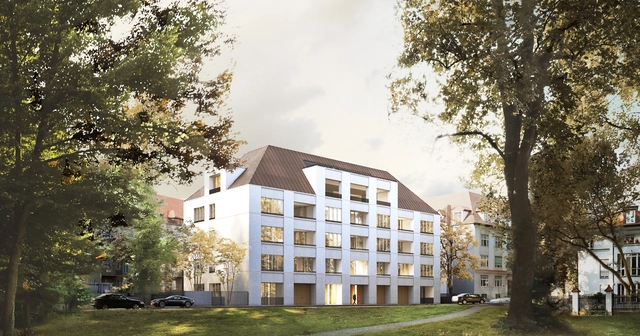
David Chipperfield and Euroboden have collaborated on the design of a five-story building in Munich, located near the city’s Herzog Park. The 2800-square-meter scheme seeks to “fit sensitively into the historic fabric of the neighborhood.”
The design process revolved around the incorporation of history and pattern from the surrounding environment, without copying or resorting to historicization. The result is a scheme which is “simultaneously self-confident yet restrained, a building that integrates itself into its context without subordinating itself.”


https://www.archdaily.com/903650/david-chipperfield-and-eurobodens-munich-apartments-to-be-a-modern-city-palaceNiall Patrick Walsh
New Plans to Revitalize Birmingham’s Jewellery Quarter
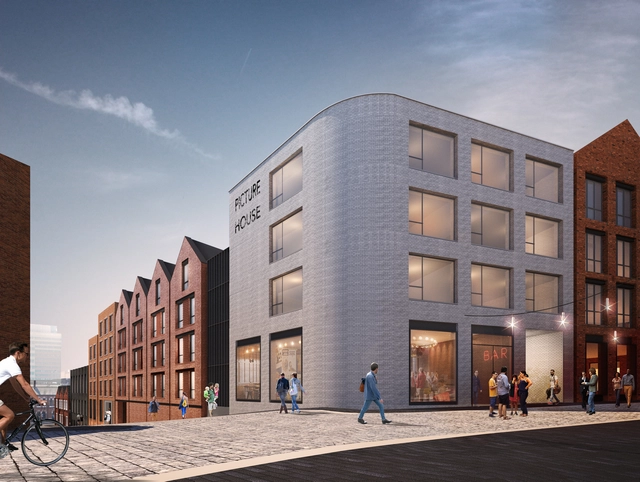
Home to the historic engineering firm, AE Harris, for over 50 years, Birmingham’s treasured Jewellery Quarter is being revamped on account of modernized manufacturing methods adopted by the company.
Joint venture partners Galliard Homes and Apsley House Capital are working alongside Glenn Howells Architects to transform the site into a residential-led, mixed-use hub for the quarter.
https://www.archdaily.com/903209/new-plans-to-revitalize-birminghams-jewellery-quarterVasundhra Aggarwal
What Industrialized Construction Could Learn from Ford's Model T

On October 1, 1908, Ford launched its first model car in the American market, the Ford T, starting the automotive industry and establishing new paths for industrialization. Inspired by the manufacturing systems of weapons and sewing machines, in 1913, Henry Ford revolutionized production with the first moving assembly line to produce the Model T; a simple, safe, reliable and cheap car.
The price decreased over time as production became more efficient. The Model T cost $850 in its first year and, as the manufacturing process became more efficient, it decreased to $290 in 1927, the last year it was produced. Industrialization led to optimized costs, time, and logistics.
https://www.archdaily.com/903298/what-industrialized-construction-could-learn-from-fords-model-tJulia Daudén
Architools Crafts the Perfect Minimalist Notebook for Architects

After creating the perfect sketchbook, Architools is back with a minimalist notebook made for designers and architects alike. The project is now raising funds on Kickstarter, and aims to bring a subtle elegance to the humble notebook. Named the Dérive, or “drift” in French, the notebook embodies qualities of wanderlust and sensory exploration. Featuring refined materials and design, it was made to inspire the next project or adventure.
https://www.archdaily.com/903588/architools-crafts-the-perfect-minimalist-notebook-for-architectsEric Baldwin
Woods Bagot and Peddle Thorp Win Auckland Skyscraper Competition
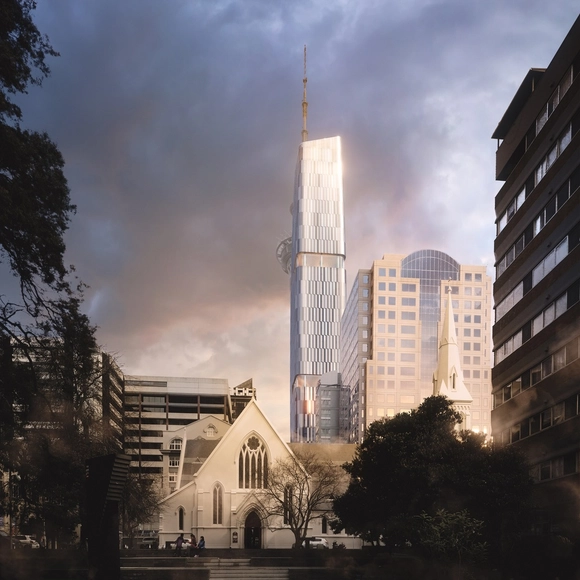
Woods Bagot and Peddle Thorp have been announced as the winners of the international competition to create a new high-rise tower in central Auckland. Drawn from five finalists including Warren and Mahoney, Cox Architecture, Zaha Hadid Architects, and Elenberg Fraser, the winning design will stand 180m high. The building design is inspired by New Zealand’s natural landscape and the country’s unique geology and fauna.




https://www.archdaily.com/903561/woods-bagot-and-peddle-thorp-win-auckland-skyscraper-competitionEric Baldwin
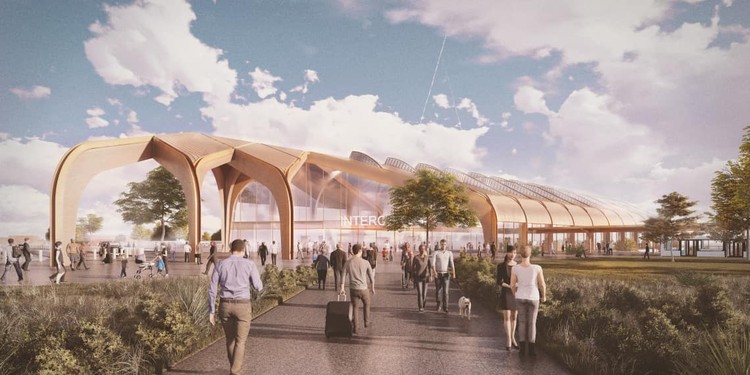
Designs by Grimshaw and Arup Revealed for the UK's High Speed Rail Stations
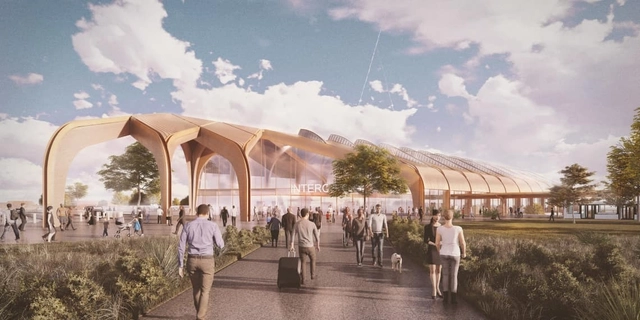
New images have been published of Grimshaw and Arup-designed stations for the UK’s ”High Speed 2” railway system. Connecting London to the British Midlands, the mega-infrastructure project will be the UK’s second high-speed rail system, with HS1 already connecting London and the South East to the Channel Tunnel.
The Grimshaw and WSP-designed Curzon Street station in Birmingham will be the first brand new intercity station to be built in Britain since the 1800s, while Interchange Station, designed by Arup, will serve as a gateway station to the West Midlands and Birmingham Airport.


https://www.archdaily.com/903542/designs-by-grimshaw-and-arup-revealed-for-the-uks-high-speed-rail-stationsNiall Patrick Walsh
Rogers Stirk Harbour + Partners' Sky Garden will be an "Urban Living Room" for Shenzhen
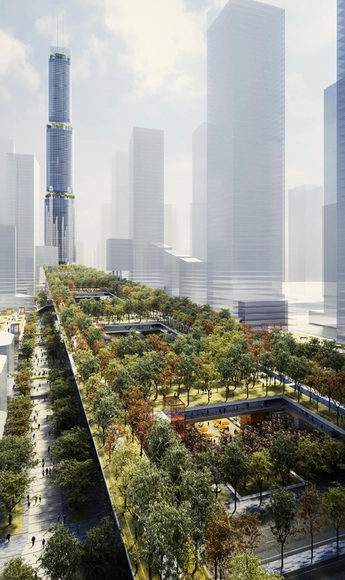
Rogers Stirk Harbour + Partners has been confirmed as designers for an “Urban Living Room” masterplan in the Qianhai area of Shenzhen, China. Formed on already existing reclaimed land, the scheme will feature a 1.2-kilometer elevated sky garden.
The scheme is envisioned as a “heart and a new horizon against which people can orientate themselves” in an emerging urban center.
https://www.archdaily.com/903539/rogers-stirk-harbour-plus-partners-sky-garden-will-be-an-urban-living-room-for-shenzhenNiall Patrick Walsh
How Berlin's Floating University Charts the Course for Future Architectural Education
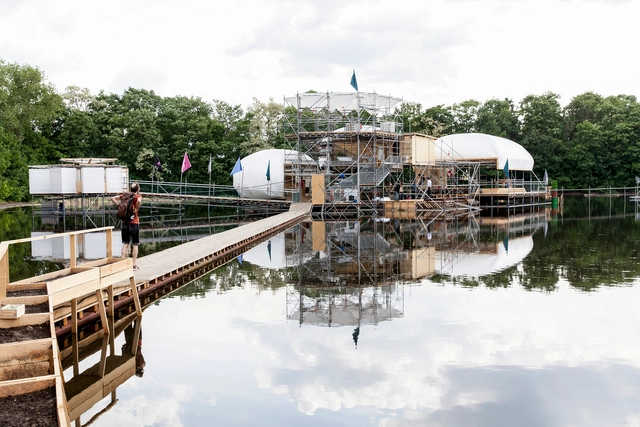
This article was originally published on Metropolis Magazine as "How a DIY Floating Universiity in Berlin Could Be An Unorthodox Prototype for Design Education."
On the north side of Tempelhofer Feld, an airport-turned-park in southern Berlin, lays a large ditch. Surrounded by lots and bungalows and noticeable only to those in the know, this 19th century basin holds rainwater drained from the airport’s defunct runways before it is fed into Berlin’s canal network.


Seiffert.jpg?1539004277 "© Daniel Seiffert")

https://www.archdaily.com/903465/how-berlins-floating-university-charts-the-course-for-future-architectural-educationGeorge Kafka
New Renderings Reveal Vancouver's 'Gateway Tower' Counterpart to BIG's Vancouver House

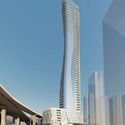
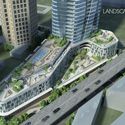
Shanghai-based JYOM Architecture and GBL Architects have released new renderings of 601 Beach Crescent, the 'Gateway Tower' counterpart to Bjarke Ingels Group's Vancouver House project. As the Daily Hive reports, developer Pinnacle International recently submitted its formal rezoning application to develop the vacant site on the north end of the Granville Street Bridge in downtown Vancouver. Conceptually, the tower was designed to replicate the motions of the dancing female form.


https://www.archdaily.com/903490/new-renderings-reveal-vancouvers-gateway-tower-counterpart-to-bigs-vancouver-houseEric Baldwin
Building Better Schools: 6 Ways to Help Our Children Learn

Did you know that 64 million European children spend more time at school than anywhere else other than their home? European children spend approximately 200 days each year at their primary schools. With this information, how do we go about designing healthier classrooms that create productive learning environments? This question is perhaps more important than ever, as this will be the first time since the 1970s that Europe and the UK will see a boom in the construction and renovation of schools. What a tremendous opportunity this is for both architects and educators to rethink what an educational facility should be and how the physical environment can be designed to have a positive impact on learning.





https://www.archdaily.com/903061/building-better-schools-6-ways-to-help-our-children-learnMaterials
BIG Selected to Design First Phase of Airport City in Luxembourg
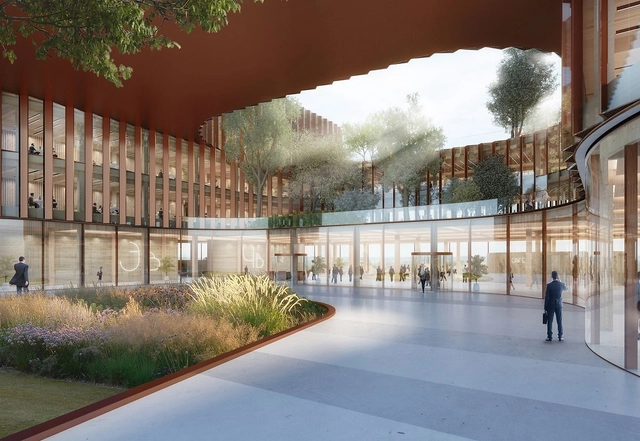
Bjarke Ingels Group has been selected to design the Skypark Business Center South as part of Luxembourg's new Airport City plan. Located just outside of Luxembourg City, the project is the first development within the masterplan, and is expected to start construction during 2019. The new airport district aims to become an economic hub comprised of four floors of shops, restaurants, fitness activities, and offices. The news of Skypark Business Center South comes two years after the presentation of the airport district’s master plan.
https://www.archdaily.com/903488/big-selected-to-design-first-phase-of-airport-city-in-luxembourgEric Baldwin
WXCA's Polish Pavilion for Expo 2020 Dubai Features Kinetic Flocks of Birds
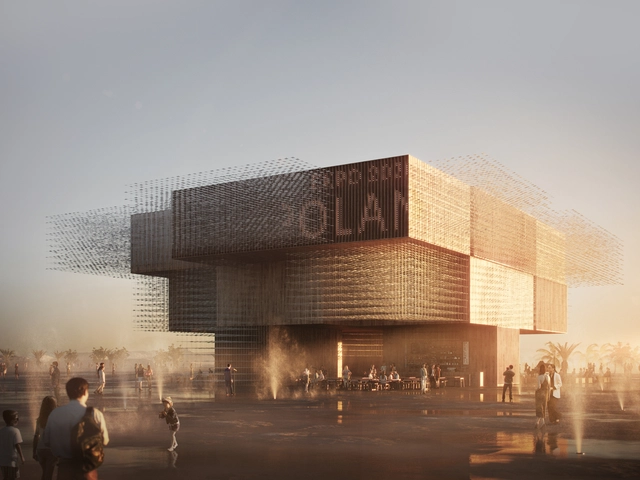
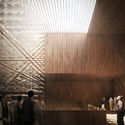
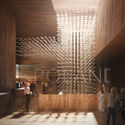
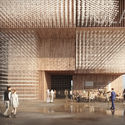
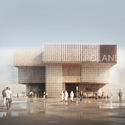
WXCA and Bellprat will design the Polish Pavilion for Expo 2020 Dubai, having overcome more than 30 other proposals. The winning scheme seeks to create an “open, tree-like modular structure” inspired by Poland’s rich wildlife.
The pavilion will feature an integrated exhibition with “kinetic flocks of birds floating over visitors’ heads,” referring to the many migratory birds which settle in Poland each year “inspiring legends, connecting minds, and creating the future.”

https://www.archdaily.com/903469/wxcas-polish-pavilion-for-dubai-expo-2020-features-kinetic-flocks-of-birdsNiall Patrick Walsh
SLICE Creates Apartments from Plugin Modules for Future City Living
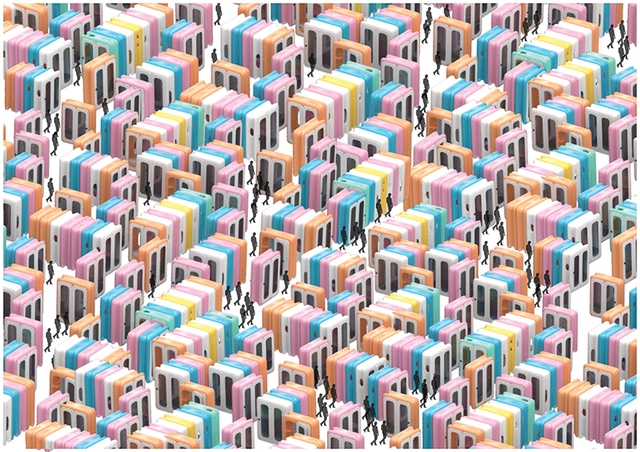
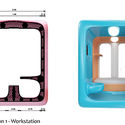
Iranian architect and concept designer Nasim Sehat has developed an alternative living module driven by adaptability for the gig economy. SLICE is described as a “sustainable, people centric, connected, self-contained, and flexible plug’n-play urban solution” targeted at future city dwellers.
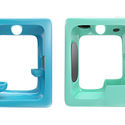
SLICE consists of a layered module of functional plugins, combined to create basic spatial configurations. In tandem with the design of SLICE’s spatial profile, Shanghai-based Sehat has proposed a shared, on-demand digital service for module rental, maintenance, and payment.



https://www.archdaily.com/903460/slice-creates-apartments-from-plugin-modules-for-future-city-livingNiall Patrick Walsh
Architecture: the Unsung Hero of Your Favorite Film
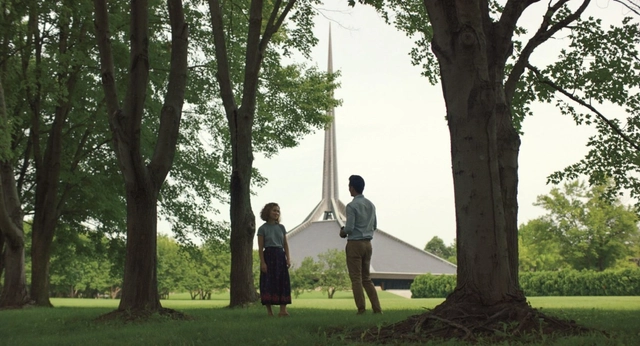
How does the built environment--whether fictitious or entirely founded in reality--impact how we experience and process film? From lesser-known indies to blockbuster movies, the ways in which architecture and the built environment inform everything from scene and setting, to dialogue and character development has far-reaching effects on the audience’s cinematic experience. Below, a roundup of everything from recent releases to classic cinephile favorites uncovers the myriad ways in which film utilizes architecture as a means of achieving a more authentic and all-encompassing form of storytelling.
https://www.archdaily.com/903182/the-built-environment-is-the-unsung-hero-of-your-favorite-blockbusterOlivia Jia
Oops! We don't have this page.
But you can browse the last one: 417